Kirjojen hintavertailu. Mukana 11 699 587 kirjaa ja 12 kauppaa.

Kirjahaku

Etsi kirjoja tekijän nimen, kirjan nimen tai ISBN:n perusteella.

1000 tulosta hakusanalla S Presti

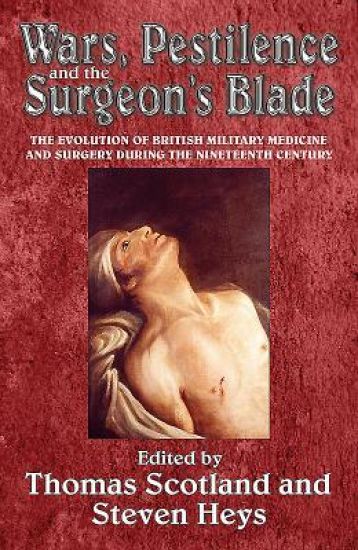
Wars, Pestilence and the Surgeon's Blade
Wars in the 19th century were accompanied by a very heavy loss of life from infectious diseases. Typhus fever, dysentery, malaria, typhoid fever and yellow fever caused many more deaths than wounds inflicted by enemy actions. During the Peninsular War, for example, for every soldier dying of a wound, four succumbed to disease. This book examines the development and evolution of surgical practice against this overwhelming risk of death due to disease. It reviews three major conflicts during this time: the Peninsular War, the Crimean War and the Boer War and also considers many minor wars fought by the British Empire in the intervening years, and highlights significant medical and surgical developments during these conflicts. War surgery in the first part of the 19th Century was brutal and it had to be carried out swiftly. It was performed at speed because there were no anaesthetics and the wounded often died during the procedure. Surgeons focussed their attention on wounds of the arms and legs, because limbs were both easily accessible to the surgeon (unlike organs inside the abdomen and chest) and lent themselves well to amputation. This was commonly the operation of choice for many war wounds of arms and legs. Some surgeons performed more difficult surgical procedures to try to preserve the limbs and attempted to repair damaged tissues but these operations took longer and caused greater suffering to the patient. Abdominal and chest wounds were not treated since surgeons did not have the means, the ability, or the understanding, to cut into the abdomen and chest to repair the damaged organs successfully. An important development which contributed to surgery moving forwards was the discovery of general anaesthesia, which became available in time for the Crimean War. However, whilst it certainly rendered operations pain-free, it was associated with significant numbers of deaths during surgery on wounded soldiers because of the poorly understood effects that anaesthetics had, particularly on the heart. As a result, operative surgery did not extend its scope a great deal, and military surgery remained focussed on surgery of the limbs. However, fewer amputations were performed during the Boer War at the end of this period.
Wars, Pestilence and the Surgeon's Blade

Wars, Pestilence and the Surgeon's Blade

Steven Heys; Thomas Scotland

Helion Company
2019
nidottu
Wars in the 19th Century were accompanied by a very heavy loss of life from infectious diseases. Typhus fever, dysentery, malaria, typhoid fever and yellow fever caused many more deaths than wounds inflicted by enemy actions. During the Peninsular War, for example, for every soldier dying of a wound, four succumbed to disease. This book examines the development and evolution of surgical practice against this overwhelming risk of death due to disease. It reviews three major conflicts during this time: the Peninsular War, the Crimean War and the Boer War and also considers many minor wars fought by the British Empire in the intervening years, and highlights significant medical and surgical developments during these conflicts. War surgery in the first part of the 19th Century was brutal, and it had to be carried out swiftly. It was performed at speed because there were no anaesthetics and the wounded often died during the procedure. Surgeons focussed their attention on wounds of the arms and legs, because limbs were both easily accessible to the surgeon (unlike organs inside the abdomen and chest) and lent themselves well to amputation. This was commonly the operation of choice for many war wounds of arms and legs. Some surgeons performed more difficult surgical procedures to try to preserve the limbs and attempted to repair damaged tissues, but these operations took longer and caused greater suffering to the patient. Abdominal and chest wounds were not treated since surgeons did not have the means, the ability, or the understanding, to cut into the abdomen and chest to repair the damaged organs successfully. An important development which contributed to surgery moving forwards was the discovery of general anaesthesia, which became available in time for the Crimean War. However, whilst it certainly rendered operations pain-free, it was associated with significant numbers of deaths during surgery on wounded soldiers because of the poorly understood effects that anaesthetics had, particularly on the heart. As a result, operative surgery did not extend its scope a great deal, and military surgery remained focussed on surgery of the limbs. However, fewer amputations were performed during the Boer War at the end of this period. Britain sent observers to several wars in which it was not involved to learn military lessons and to understand the medical and surgical aspects of war. The American Civil War and the Franco-Prussian War were two such conflicts. The Russo-Japanese War resulted in a very significant advance in surgery for abdominal wounds, but Western observers either failed to notice or ignored pioneering work performed by a Russian female surgeon called Vera Gedroits. As a result, when the Great War began in 1914, lessons had to be re-learned by British surgeons, and many soldiers who suffered penetrating abdominal wounds lost their lives when they should have survived. Unfortunately, one of the hallmarks of war surgery is that successive generations of surgeons make the same mistakes as their forebears and the same lessons have to be learned time and again.

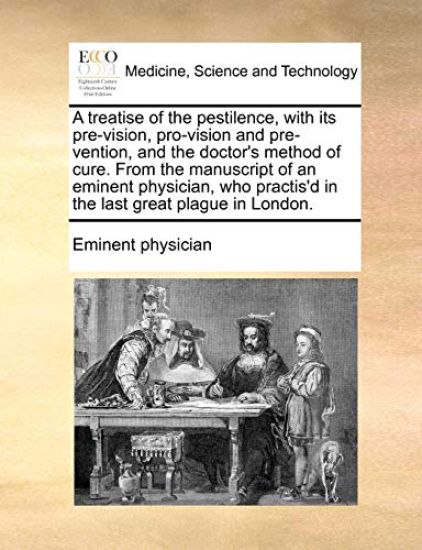
A Treatise of the Pestilence, With its Pre-vision, Pro-vision and Pre-vention, and the Doctor's Method of Cure. From the Manuscript of an Eminent Physician, who Practis'd in the Last Great Plague in London
The 18th century was a wealth of knowledge, exploration and rapidly growing technology and expanding record-keeping made possible by advances in the printing press. In its determination to preserve the century of revolution, Gale initiated a revolution of its own: digitization of epic proportions to preserve these invaluable works in the largest archive of its kind. Now for the first time these high-quality digital copies of original 18th century manuscripts are available in print, making them highly accessible to libraries, undergraduate students, and independent scholars.Medical theory and practice of the 1700s developed rapidly, as is evidenced by the extensive collection, which includes descriptions of diseases, their conditions, and treatments. Books on science and technology, agriculture, military technology, natural philosophy, even cookbooks, are all contained here.++++The below data was compiled from various identification fields in the bibliographic record of this title. This data is provided as an additional tool in helping to insure edition identification: ++++British LibraryT053877With a half-title.London: printed for J. Roberts, 1721. 22p.; 8
Copies de Mémoires Présentés À S. M. I. Napoléon III Sur Les Maladies Pestilentielles
Copies de memoires presentes a S. M. I. Napoleon III... par M. Laurent (Francois)... sur les maladies pestilentielles... et moyen tres-avantageux pour les faire cesserDate de l'edition originale: 1858Ce livre est la reproduction fidele d'une oeuvre publiee avant 1920 et fait partie d'une collection de livres reimprimes a la demande editee par Hachette Livre, dans le cadre d'un partenariat avec la Bibliotheque nationale de France, offrant l'opportunite d'acceder a des ouvrages anciens et souvent rares issus des fonds patrimoniaux de la BnF.Les oeuvres faisant partie de cette collection ont ete numerisees par la BnF et sont presentes sur Gallica, sa bibliotheque numerique.En entreprenant de redonner vie a ces ouvrages au travers d'une collection de livres reimprimes a la demande, nous leur donnons la possibilite de rencontrer un public elargi et participons a la transmission de connaissances et de savoirs parfois difficilement accessibles.Nous avons cherche a concilier la reproduction fidele d'un livre ancien a partir de sa version numerisee avec le souci d'un confort de lecture optimal. Nous esperons que les ouvrages de cette nouvelle collection vous apporteront entiere satisfaction.Pour plus d'informations, rendez-vous sur www.hachettebnf.fr
Frieda's Song

Frieda's Song

Ellen Prentiss Campbell

Loyola College/Apprentice House
2021
sidottu
Frieda's Song, a novel, is inspired by renowned psychiatrist Frieda Fromm-Reichmann. Fleeing Nazi Germany in 1935, she came to the Chestnut Lodge Sanatorium in Rockville, Maryland. Frieda worked there for the rest of her life, establishing the Lodge's reputation for innovative treatment of mental illness, dying in her custom-built cottage on the grounds under mysterious circumstances in 1957. Decades later, psychotherapist Eliza Kline and her teenage son Nick live in Frieda's Cottage, next door to the closed and abandoned hospital. As told by Frieda, Eliza, and Nick, the novel explores the tension between love and work, the strength and limits of relationship, and what healers must do to heal themselves. Frieda's Song is a tale of the way history and chance, and the work and people we love, shape our lives-and how the past is always present, haunting us.
Frieda's Song

Frieda's Song

Ellen Prentiss Campbell

Loyola College/Apprentice House
2021
pokkari
Frieda's Song, a novel, is inspired by renowned psychiatrist Frieda Fromm-Reichmann. Fleeing Nazi Germany in 1935, she came to the Chestnut Lodge Sanatorium in Rockville, Maryland. Frieda worked there for the rest of her life, establishing the Lodge's reputation for innovative treatment of mental illness, dying in her custom-built cottage on the grounds under mysterious circumstances in 1957. Decades later, psychotherapist Eliza Kline and her teenage son Nick live in Frieda's Cottage, next door to the closed and abandoned hospital. As told by Frieda, Eliza, and Nick, the novel explores the tension between love and work, the strength and limits of relationship, and what healers must do to heal themselves. Frieda's Song is a tale of the way history and chance, and the work and people we love, shape our lives-and how the past is always present, haunting us.