Kirjojen hintavertailu. Mukana 12 016 292 kirjaa ja 12 kauppaa.

Kirjahaku

Etsi kirjoja tekijän nimen, kirjan nimen tai ISBN:n perusteella.

1000 tulosta hakusanalla S. C. Cunningham

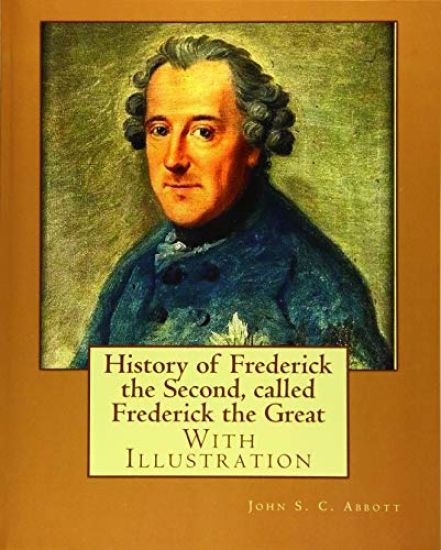
History of Frederick the Second, called Frederick the Great. By: John S. C. Abbott (With Illustration).: Frederick II, King of Prussia, 1712-1786, Pru
John Stevens Cabot Abbott (September 19, 1805 - June 17, 1877), an American historian, pastor, and pedagogical writer, was born in Brunswick, Maine to Jacob and Betsey Abbott.John Stevens Cabot Abbott (September 19, 1805 - June 17, 1877), an American historian, pastor, and pedagogical writer, was born in Brunswick, Maine to Jacob and Betsey Abbott. Early life He was a brother of Jacob Abbott, and was associated with him in the management of Abbott's Institute, New York City, and in the preparation of his series of brief historical biographies.... Frederick II (German: Friedrich; 24 January 1712 - 17 August 1786) was King of Prussia from 1740 until 1786, the longest reign of any Hohenzollern king. His most significant accomplishments during his reign included his military victories, his reorganization of Prussian armies, his patronage of the arts and the Enlightenment in Prussia, and his final success against great odds in the Seven Years' War. Frederick was the last titled King in Prussia and declared himself King of Prussia after achieving full sovereignty for all historical Prussian lands. Prussia had greatly increased its territories and became a leading military power in Europe under his rule. He became known as Frederick the Great and was affectionately nicknamed Der Alte Fritz ("Old Fritz") by the Prussian and later by all German people. In his youth, Frederick was more interested in music and philosophy than the art of war. Nonetheless, upon ascending to the Prussian throne, he attacked Austria and claimed Silesia during the Silesian Wars, winning military acclaim for himself and Prussia. Toward the end of his reign, Frederick physically connected most of his realm by acquiring Polish territories in the First Partition of Poland. He was an influential military theorist whose analysis emerged from his extensive personal battlefield experience and covered issues of strategy, tactics, mobility and logistics. Considering himself "the first servant of the state", Frederick was a proponent of enlightened absolutism. He modernized the Prussian bureaucracy and civil service and pursued religious policies throughout his realm that ranged from tolerance to segregation. He reformed the judicial system and made it possible for men not of noble stock to become judges and senior bureaucrats. Frederick also encouraged immigrants of various nationalities and faiths to come to Prussia. Some critics, however, point out his oppressive measures against conquered Polish subjects during the First Partition. Frederick supported arts and philosophers he favored, as well as allowing complete freedom of the press and literature.Frederick is buried at his favorite residence, Sanssouci in Potsdam. Because he died childless, Frederick was succeeded by his nephew, Frederick William II, son of his brother, Augustus William. Nearly all 19th-century German historians made Frederick into a romantic model of a glorified warrior, praising his leadership, administrative efficiency, devotion to duty and success in building up Prussia to a great power in Europe. Historian Leopold von Ranke was unstinting in his praise of Frederick's "Heroic life, inspired by great ideas, filled with feats of arms ... immortalized by the raising of the Prussian state to the rank of a power." Johann Gustav Droysen was even more extolling. Frederick remained an admired historical figure through the German Empire's defeat in the First World War, and the Nazis glorified him as a great German leader pre-figuring Hitler, but his reputation in both East and West Germany became far less favorable after the fall of the Nazi regime, largely due to his status as a favorite icon of the Nazis. However, by the 21st century, a re-evaluation of his legacy as a great warrior and enlightened monarch returned opinion of him to favour............
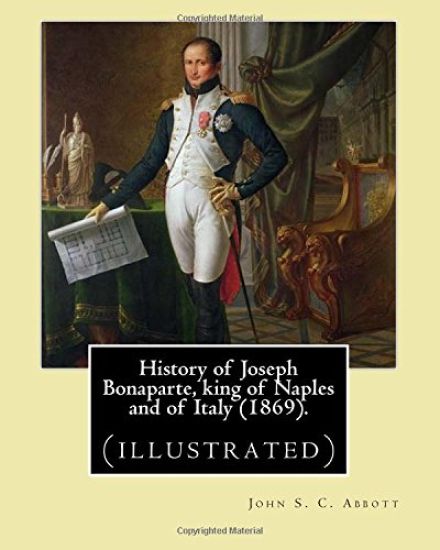
History of Joseph Bonaparte, king of Naples and of Italy (1869). By: John S. C. Abbott: Joseph Bonaparte, King of Spain, 1768-1844. (illustrated)
Joseph-Napoleon Bonaparte (born Giuseppe Buonaparte; 7 January 1768 - 28 July 1844) was a French diplomat and nobleman, the elder brother of Napoleon Bonaparte, who made him King of Naples and Sicily (1806-1808), and later King of Spain (1808-1813, as Jos I). After the fall of Napoleon, Joseph styled himself Comte de Survilliers....... John Stevens Cabot Abbott (September 19, 1805 - June 17, 1877), an American historian, pastor, and pedagogical writer, was born in Brunswick, Maine to Jacob and Betsey Abbott.John Stevens Cabot Abbott (September 19, 1805 - June 17, 1877), an American historian, pastor, and pedagogical writer, was born in Brunswick, Maine to Jacob and Betsey Abbott. Early life He was a brother of Jacob Abbott, and was associated with him in the management of Abbott's Institute, New York City, and in the preparation of his series of brief historical biographies. Dr. Abbott graduated at Bowdoin College in 1825, prepared for the ministry at Andover Theological Seminary, and between 1830 and 1844, when he retired from the ministry in the Congregational Church, preached successively at Worcester, Roxbury and Nantucket, all in Massachusetts. 1] Literary career Owing to the success of a little work, The Mother at Home, he devoted himself, from 1844 onwards, to literature. He was a voluminous writer of books on Christian ethics, and of popular histories, which were credited with cultivating a popular interest in history. He is best known as the author of the widely popular History of Napoleon Bonaparte (1855), in which the various elements and episodes in Napoleon's career are described. Abbott takes a very favourable view towards his subject throughout. Also among his principal works are: History of the Civil War in America (1863-1866), and The History of Frederick II, Called Frederick the Great (New York, 1871). He also did a forward to a book called Life of Boone by W.M. Bogart, about Daniel Boone in 1876. In general, except that he did not write juvenile fiction, his work in subject and style closely resembles that of his brother, Jacob Abbott. Marriage and children On August 17, 1835 he married Jane Williams Bourne, daughter of Abner Bourne and Abagail Williams. John and Jane had issue: John Brown Abbott (November 29, 1831 - May 24, 1839) Jane Maria Abbott (born November 25, 1833) Waldo Abbott (September 8, 1836 - July 7, 1864) Harriet Vaughan Abbott (born February 18, 1838) Ellen Williams Abbott(born January 11, 1840) Laura Sallucia Abbott (born October 30, 1843) Elizabeth Ballister Abbott (March 15, 1847 - February 23, 1864) Emma Susan Abbott (born July 12, 1849) Gorham Dummer Abbott (born March 29, 1851) As a part of the 1872 Iwakura Mission Mr. Abbott was given guardianship of Shige Nagai, a Japanese girl sent to the United States to be educated. John Stevens Cabot Abbott died at Fair Haven, Connecticut. In 1910, a series of twenty short biographies of historical characters by J. S. C. and Jacob Abbott, was published. Their brother, Gorham Dummer Abbott, was also an author. Abbott's grandson, Willis Abbott, was a Christian Scientist and an editor of the Christian Science Monitor..................
History of King Philip, sovereign chief of the Wampanoags: including the early history of the settlers of New England. By: John S. C. Abbott: King Phi
King Philip's War (sometimes called the First Indian War, Metacom's War, Metacomet's War, or Metacom's Rebellion) was an armed conflict between American Indian inhabitants of present-day New England and English colonists and their Indian allies in 1675-78. The war is named for Metacomet, the Wampanoag chief who adopted the English name Philip due to the friendly relations between his father and the Mayflower Pilgrims. The war continued in the most northern reaches of New England until the signing of the Treaty of Casco Bay in April 1678.Metacom (c. 1638-1676) was the second son of Wampanoag chief Massasoit, who had coexisted peacefully with the Pilgrims. He succeeded his brother in 1662 and reacted to rising tensions between the Wampanoags and the colonists. At Taunton in 1671, he was humiliated when colonists forced him to sign a new peace agreement that included the surrender of Indian guns. Officials in Plymouth Colony hanged three Wampanoags in 1675 for the murder of an Indian, and Metacom's followers and allies launched a united assault on colonial towns throughout the region. Metacom's forces gained initial victories in the first year, but then the Indian alliance began to unravel. By the end of the conflict, the Wampanoags and their Narragansett allies were almost completely destroyed. Metacom anticipated their defeat, and returned to his ancestral home at Mt. Hope, where he was killed fleeing an English attack. The war was the single greatest calamity to occur in seventeenth century Puritan New England and is considered by many to be the deadliest war in the history of European settlement in North America in proportion to the population. In the space of little more than a year, twelve of the region's towns were destroyed and many more damaged, the colony's economy was all but ruined, and its population was decimated, losing one-tenth of all men available for military service. More than half of New England's towns were attacked by Indians. King Philip's War began the development of an independent American identity. The colonists faced their trials without significant English government support, and this gave them a group identity separate and distinct from those who lived in Britain.................. John Stevens Cabot Abbott (September 19, 1805 - June 17, 1877), an American historian, pastor, and pedagogical writer, was born in Brunswick, Maine to Jacob and Betsey Abbott.John Stevens Cabot Abbott (September 19, 1805 - June 17, 1877), an American historian, pastor, and pedagogical writer, was born in Brunswick, Maine to Jacob and Betsey Abbott. Early life He was a brother of Jacob Abbott, and was associated with him in the management of Abbott's Institute, New York City, and in the preparation of his series of brief historical biographies. Dr. Abbott graduated at Bowdoin College in 1825, prepared for the ministry at Andover Theological Seminary, and between 1830 and 1844, when he retired from the ministry in the Congregational Church, preached successively at Worcester, Roxbury and Nantucket, all in Massachusetts. 1] Literary career Owing to the success of a little work, The Mother at Home, he devoted himself, from 1844 onwards, to literature. He was a voluminous writer of books on Christian ethics, and of popular histories, which were credited with cultivating a popular interest in history. He is best known as the author of the widely popular History of Napoleon Bonaparte (1855), in which the various elements and episodes in Napoleon's career are described. Abbott takes a very favourable view towards his subject throughout. Also among his principal works are: History of the Civil War in America (1863-1866), and The History of Frederick II, Called Frederick the Great (New York, 1871). He also did a forward to a book called Life of Boone by W.M. Bogart, about Daniel Boone in 1876. In general, except that he did not write juvenile fiction, his work in subject and style closely resembles that of his brother, Ja
History of Maria Antoinette. By: John S. C. Abbott (illustrated): Marie Antoinette ( born Maria Antonia Josepha Johanna; 2 November 1755 - 16 October
Marie Antoinette ( born Maria Antonia Josepha Johanna; 2 November 1755 - 16 October 1793) was the last Queen of France before the French Revolution. She was born an Archduchess of Austria, and was the penultimate child of Empress Maria Theresa and Francis I, Holy Roman Emperor. In April 1770, upon her marriage to Louis-Auguste, heir apparent to the French throne, she became Dauphine of France. On 10 May 1774, when her husband ascended the throne as Louis XVI, she assumed the title Queen of France and Navarre, which she held until September 1791, when, as the French Revolution proceeded, she became Queen of the French, a title she held until 21 September 1792. After eight years of marriage, Marie Antoinette gave birth to a daughter, Marie Th r se of France, the first of her four children. Despite her initial popularity, a growing number of the population eventually came to dislike her, accusing her of being profligate, promiscuous, 2] and of harbouring sympathies for France's enemies, particularly her native Austria. 3] The Affair of the Diamond Necklace damaged her reputation further. During the Revolution, she became known as Madame D ficit because the country's financial crisis was blamed on her lavish spending and her opposition to the social and financial reforms of Turgot and Necker. During the Revolution, after the government had placed the royal family under house arrest in the Tuileries Palace in October 1789, several events linked to Marie Antoinette, in particular the June 1791 attempted flight to Varennes and her role in the War of the First Coalition, had disastrous effects on French popular opinion. On 10 August 1792, the attack on the Tuileries forced the royal family to take refuge at the Assembly, and on 13 August the family was imprisoned in the Temple. On 21 September 1792, the monarchy was abolished. After a two-day trial begun on 14 October 1793, Marie Antoinette was convicted by the Revolutionary Tribunal of high treason and executed by guillotine on the Place de la R volution on 16 October 1793.............. John Stevens Cabot Abbott (September 19, 1805 - June 17, 1877), an American historian, pastor, and pedagogical writer, was born in Brunswick, Maine to Jacob and Betsey Abbott.John Stevens Cabot Abbott (September 19, 1805 - June 17, 1877), an American historian, pastor, and pedagogical writer, was born in Brunswick, Maine to Jacob and Betsey Abbott. Early life He was a brother of Jacob Abbott, and was associated with him in the management of Abbott's Institute, New York City, and in the preparation of his series of brief historical biographies. Dr. Abbott graduated at Bowdoin College in 1825, prepared for the ministry at Andover Theological Seminary, and between 1830 and 1844, when he retired from the ministry in the Congregational Church, preached successively at Worcester, Roxbury and Nantucket, all in Massachusetts. 1] Literary career Owing to the success of a little work, The Mother at Home, he devoted himself, from 1844 onwards, to literature. He was a voluminous writer of books on Christian ethics, and of popular histories, which were credited with cultivating a popular interest in history. He is best known as the author of the widely popular History of Napoleon Bonaparte (1855), in which the various elements and episodes in Napoleon's career are described. Abbott takes a very favourable view towards his subject throughout. Also among his principal works are: History of the Civil War in America (1863-1866), and The History of Frederick II, Called Frederick the Great (New York, 1871). He also did a forward to a book called Life of Boone by W.M. Bogart, about Daniel Boone in 1876. In general, except that he did not write juvenile fiction, his work in subject and style closely resembles that of his brother, Jacob Abbott....
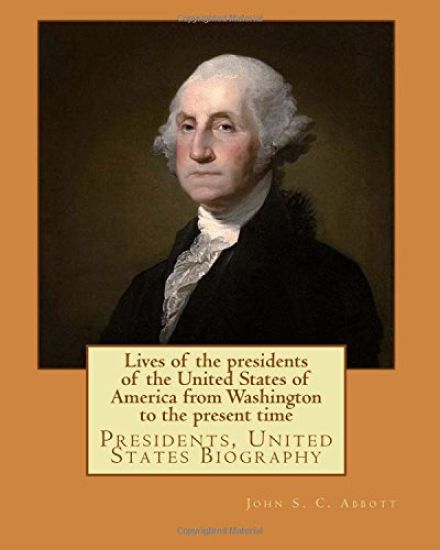
Lives of the presidents of the United States of America from Washington to the present time. By: John S. C. Abbott: Presidents, United States Biograph
John Stevens Cabot Abbott (September 19, 1805 - June 17, 1877), an American historian, pastor, and pedagogical writer, was born in Brunswick, Maine to Jacob and Betsey Abbott.John Stevens Cabot Abbott (September 19, 1805 - June 17, 1877), an American historian, pastor, and pedagogical writer, was born in Brunswick, Maine to Jacob and Betsey Abbott. Early life He was a brother of Jacob Abbott, and was associated with him in the management of Abbott's Institute, New York City, and in the preparation of his series of brief historical biographies. Dr. Abbott graduated at Bowdoin College in 1825, prepared for the ministry at Andover Theological Seminary, and between 1830 and 1844, when he retired from the ministry in the Congregational Church, preached successively at Worcester, Roxbury and Nantucket, all in Massachusetts. 1] Literary career Owing to the success of a little work, The Mother at Home, he devoted himself, from 1844 onwards, to literature. He was a voluminous writer of books on Christian ethics, and of popular histories, which were credited with cultivating a popular interest in history. He is best known as the author of the widely popular History of Napoleon Bonaparte (1855), in which the various elements and episodes in Napoleon's career are described. Abbott takes a very favourable view towards his subject throughout. Also among his principal works are: History of the Civil War in America (1863-1866), and The History of Frederick II, Called Frederick the Great (New York, 1871). He also did a forward to a book called Life of Boone by W.M. Bogart, about Daniel Boone in 1876. In general, except that he did not write juvenile fiction, his work in subject and style closely resembles that of his brother, Jacob Abbott. Marriage and children On August 17, 1835 he married Jane Williams Bourne, daughter of Abner Bourne and Abagail Williams. John and Jane had issue: John Brown Abbott (November 29, 1831 - May 24, 1839) Jane Maria Abbott (born November 25, 1833) Waldo Abbott (September 8, 1836 - July 7, 1864) Harriet Vaughan Abbott (born February 18, 1838) Ellen Williams Abbott(born January 11, 1840) Laura Sallucia Abbott (born October 30, 1843) Elizabeth Ballister Abbott (March 15, 1847 - February 23, 1864) Emma Susan Abbott (born July 12, 1849) Gorham Dummer Abbott (born March 29, 1851) As a part of the 1872 Iwakura Mission Mr. Abbott was given guardianship of Shige Nagai, a Japanese girl sent to the United States to be educated. John Stevens Cabot Abbott died at Fair Haven, Connecticut. In 1910, a series of twenty short biographies of historical characters by J. S. C. and Jacob Abbott, was published. Their brother, Gorham Dummer Abbott, was also an author. Abbott's grandson, Willis Abbott, was a Christian Scientist and an editor of the Christian Science Monitor .....................
David Crockett: his life and adventures. By: John S. C. Abbott / Illustrated /

David Crockett: his life and adventures. By: John S. C. Abbott / Illustrated /

John S. C. Abbott

Createspace Independent Publishing Platform
2017
nidottu
John Stevens Cabot Abbott (September 19, 1805 - June 17, 1877), an American historian, pastor, and pedagogical writer, was born in Brunswick, Maine to Jacob and Betsey Abbott.He was a brother of Jacob Abbott, and was associated with him in the management of Abbott's Institute, New York City, and in the preparation of his series of brief historical biographies. Dr. Abbott graduated at Bowdoin College in 1825, prepared for the ministry at Andover Theological Seminary, and between 1830 and 1844, when he retired from the ministry in the Congregational Church, preached successively at Worcester, Roxbury and Nantucket, all in Massachusetts
Messiah's Handle: A Life Worth Living: C.S. Woods (1943-2007)

Messiah's Handle: A Life Worth Living: C.S. Woods (1943-2007)

Francis Woods

Createspace Independent Publishing Platform
2017
nidottu
Following his obituary in The Daily Telegraph, I decided to write a book about the life of my father, Rev C.S. Woods. Two lives really, because his 64 years on this earth came in two quite distinct halves. As his brother Richard said in his funeral eulogy, "During the first half no one would have predicted the second half." His life was sharply divided between a rumbustious youth (in 1962, he was released from a Hawaiian jail cell by the Bishop of Honolulu's wife), and - after a miraculous conversion on a rural highway in New Zealand - ordination into the Church of England, followed by three decades of unstinting religious dedication in one of the toughest parishes in the UK. "Kik is one of those people who most shaped my own life and ministry." From the Foreword by Justin Welby, Archbishop of Canterbury.
Henchman's Light Rangers: In War Zone C 1967-68, A Vietnam Diary

Henchman's Light Rangers: In War Zone C 1967-68, A Vietnam Diary

Todd P. Dexter

Createspace Independent Publishing Platform
2018
nidottu
Dexter's autobiographical diary in Henchman's Light Rangers, gives us an intimate view of what it was like to be an infantryman during the war in Vietnam. With his clear and honest portrayal, we experience the ordeals - from long periods of extreme boredom to sequences of extreme violence and chaos - that can take a lifetime to overcome.
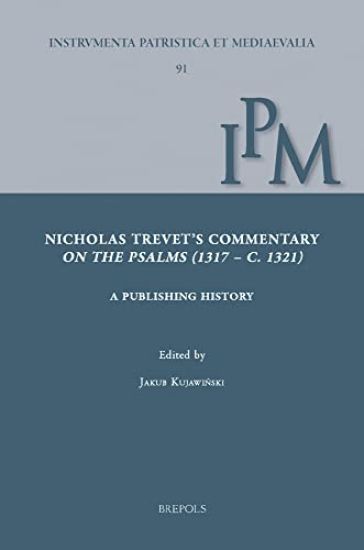
Nicholas Trevet's Commentary on the Psalms (1317-C.1321): A Publishing History
How did medieval authors publish their works in the age before print? This study seeks to achieve new insights into the publishing strategies of medieval authors by focusing on Nicholas Trevet, an English Dominican friar and Oxford master. Shortly after 1317, Trevet was commissioned by his provincial prior to write a literal commentary on the Psalter. He chose as his reference version the less commonly used Latin translation by Jerome from the Hebrew, and delivered his work before 1321/22. The first book-length examination of Trevet's commentary, this detailed study traces the ways in which the work was circulated by the author and his proxies. Through a combined analysis of codicological, textual, and historical features of the nine extant fourteenth-century manuscripts, this study identifies contemporary efforts to make Trevet's work available to readers within and without the Dominican Order, in England and on the Continent. Even during the author's lifetime the commentary was copied in Paris and reached readers in Avignon and likely in Naples.
Thaddeus S. C. Lowe

Thaddeus S. C. Lowe

VDM Publishing House
2010
nidottu
Observera att förlaget som ger ut denna produkt baserar innehållet i sina produkter på fria källor som Wikipedia. Boken är med stor sannolikhet endast ett utdrag ur dessa informationskällor, alltså inte en vanlig bok i den bemärkelsen.
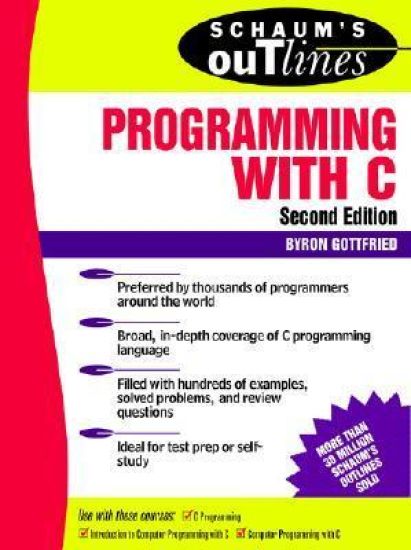
Schaum's Outline of Programming with C

Schaum's Outline of Programming with C

Byron Gottfried

McGraw-Hill Professional
1996
nidottu
Confusing Textbooks? Missed Lectures? Not Enough Time?Fortunately for you, there's Schaum's Outlines. More than 40 million students have trusted Schaum's to help them succeed in the classroom and on exams. Schaum's is the key to faster learning and higher grades in every subject. Each Outline presents all the essential course information in an easy-to-follow, topic-by-topic format. You also get hundreds of examples, solved problems, and practice exercises to test your skills. This Schaum's Outline gives youPractice problems with full explanations that reinforce knowledgeCoverage of the most up-to-date developments in your course fieldIn-depth review of practices and applicationsFully compatible with your classroom text, Schaum's highlights all the important facts you need to know. Use Schaum's to shorten your study time-and get your best test scores!Schaum's Outlines-Problem Solved.
Schaum's Outline of Programming with C++

Schaum's Outline of Programming with C++

John Hubbard

McGraw-Hill Professional
2000
nidottu
Tough Test Questions? Missed Lectures? Not Enough Time?Fortunately for you, there's Schaum's Outlines. More than 40 million students have trusted Schaum's to help them succeed in the classroom and on exams. Schaum's is the key to faster learning and higher grades in every subject. Each Outline presents all the essential course information in an easy-to-follow, topic-by-topic format. You also get hundreds of examples, solved problems, and practice exercises to test your skills. This Schaum's Outline gives youPractice problems with full explanations that reinforce knowledgeCoverage of the most up-to-date developments in your course fieldIn-depth review of practices and applicationsFully compatible with your classroom text, Schaum's highlights all the important facts you need to know. Use Schaum's to shorten your study time-and get your best test scores!Schaum's Outlines-Problem Solved.
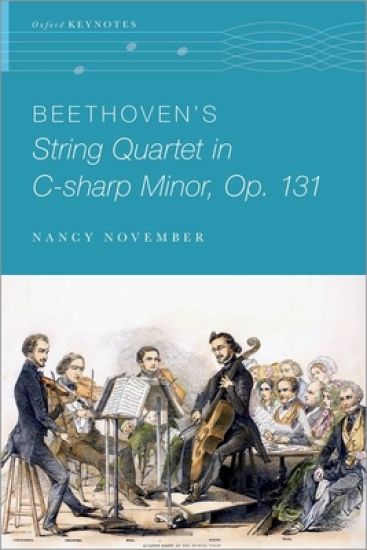
Beethoven's String Quartet in C-sharp Minor, Op. 131

Beethoven's String Quartet in C-sharp Minor, Op. 131

Nancy November

Oxford University Press Inc
2021
sidottu
Beethoven's String Quartet in C-sharp minor Op. 131 (1826) is not only firmly a part of the scholarly canon, the performing canon, and the pedagogical canon, but also makes its presence felt in popular culture. Yet in recent times, the terms in which the C-sharp minor quartet is discussed and presented tend to undermine the multivalent nature of the work. Although it is held up as a masterpiece, Op. 131 has often been understood in monochrome terms as a work portraying tragedy, struggle, and loss. In Beethoven's String Quartet in C-sharp Minor, Op. 13, author Nancy November takes the modern-day listener well beyond these categories of adversity or deficit. The book goes back to early reception documents, including Beethoven's own writings about the work, to help the listener reinterpret and re-hear it. This book reveals the diverse musical ideas present in Op. 131 and places the work in the context of an emerging ideology of silent or 'serious' listening in Beethoven's Europe. It considers how this particular 'late' quartet could speak with special eloquence to a highly select but passionately enthusiastic audience and examines how and why the reception of Op. 131 has changed so profoundly from Beethoven's time to our own.
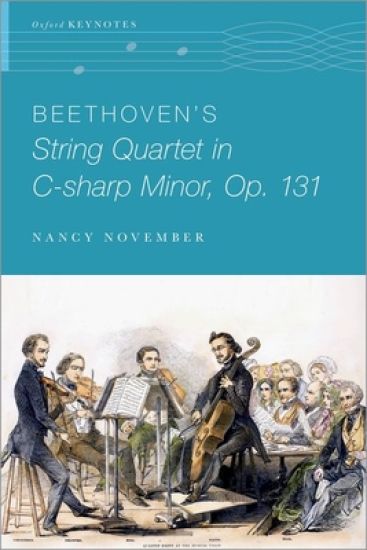
Beethoven's String Quartet in C-sharp Minor, Op. 131

Beethoven's String Quartet in C-sharp Minor, Op. 131

Nancy November

Oxford University Press Inc
2021
nidottu
Beethoven's String Quartet in C-sharp minor Op. 131 (1826) is not only firmly a part of the scholarly canon, the performing canon, and the pedagogical canon, but also makes its presence felt in popular culture. Yet in recent times, the terms in which the C-sharp minor quartet is discussed and presented tend to undermine the multivalent nature of the work. Although it is held up as a masterpiece, Op. 131 has often been understood in monochrome terms as a work portraying tragedy, struggle, and loss. In Beethoven's String Quartet in C-sharp Minor, Op. 13, author Nancy November takes the modern-day listener well beyond these categories of adversity or deficit. The book goes back to early reception documents, including Beethoven's own writings about the work, to help the listener reinterpret and re-hear it. This book reveals the diverse musical ideas present in Op. 131 and places the work in the context of an emerging ideology of silent or 'serious' listening in Beethoven's Europe. It considers how this particular 'late' quartet could speak with special eloquence to a highly select but passionately enthusiastic audience and examines how and why the reception of Op. 131 has changed so profoundly from Beethoven's time to our own.
S.H.O.C.K. Business Breakthroughs-  8 Strategies Proven to Increase Business Cash Flow by $100K
Tim works directly with small business owners to implement his proven five-step formula: * Substantially increase lead generate* Heighten Conversion of prospects to members * Optimize and increase transactions per members* Cost Reduction* Keep Creating more profitsSo, if you're struggling, or you're stuck and can't figure out how to grow past a certain point in your business, it's not your fault. You were simply never taught the right way to separate yourself from your competition so you never have to compete on price or how to consistently bring in new clients while getting your existing clients to buy more and more often.Tim shows small business owners and entrepreneurs how to out-think, out-market and out-sell their competition, and he has the unprecedented ability to find you a minimum of $10,000 hidden inside your business within 45 minutes... and without spending a cent on marketing or advertising.