Kirjojen hintavertailu. Mukana 12 595 353 kirjaa ja 12 kauppaa.

Kirjahaku

Etsi kirjoja tekijän nimen, kirjan nimen tai ISBN:n perusteella.

1000 tulosta hakusanalla STEPHEN N. HASKELL

The National Gazetteer of Great Britain and Ireland. [Edited by N. E. S. A. H.]

The National Gazetteer of Great Britain and Ireland. [Edited by N. E. S. A. H.]

Nicholas Esterhazy Stephen Arm Hamilton

British Library, Historical Print Editions
2011
pokkari
Title: The National Gazetteer of Great Britain and Ireland. Edited by N. E. S. A. H.]Publisher: British Library, Historical Print EditionsThe British Library is the national library of the United Kingdom. It is one of the world's largest research libraries holding over 150 million items in all known languages and formats: books, journals, newspapers, sound recordings, patents, maps, stamps, prints and much more. Its collections include around 14 million books, along with substantial additional collections of manuscripts and historical items dating back as far as 300 BC.The HISTORY OF TRAVEL collection includes books from the British Library digitised by Microsoft. This collection contains personal narratives, travel guides and documentary accounts by Victorian travelers, male and female. Also included are pamphlets, travel guides, and personal narratives of trips to and around the Americas, the Indies, Europe, Africa and the Middle East. ++++The below data was compiled from various identification fields in the bibliographic record of this title. This data is provided as an additional tool in helping to insure edition identification: ++++ British Library Hamilton, Nicholas Esterhazy Stephen Armytage; 1868. 3 vol.; 8 . 10348.i.7.
Descent Map From Automorphic Representations Of Gl(n) To Classical Groups, The

Descent Map From Automorphic Representations Of Gl(n) To Classical Groups, The

David Soudry; David Ginzburg; Stephen Rallis

World Scientific Publishing Co Pte Ltd
2011
sidottu
This book introduces the method of automorphic descent, providing an explicit inverse map to the (weak) Langlands functorial lift from generic, cuspidal representations on classical groups to general linear groups. The essence of this method is the study of certain Fourier coefficients of Gelfand-Graev type, or of Fourier-Jacobi type when applied to certain residual Eisenstein series. This book contains a complete account of this automorphic descent, with complete, detailed proofs. The book will be of interest to graduate students and mathematicians, who specialize in automorphic forms and in representation theory of reductive groups over local fields. Relatively self-contained, the content of some of the chapters can serve as topics for graduate students seminars.
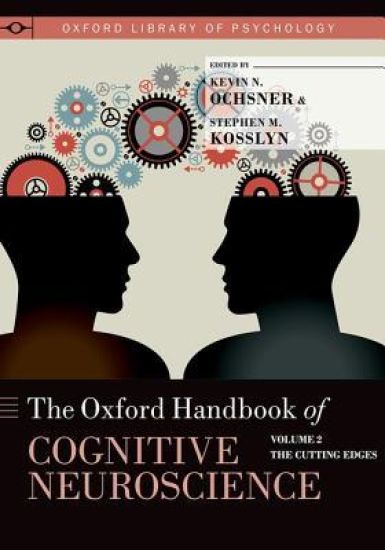
The Oxford Handbook of Cognitive Neuroscience

The Oxford Handbook of Cognitive Neuroscience

Kevin N Ochsner; Stephen M Kosslyn

Oxford University Press Inc
2016
nidottu
Cognitive neuroscience has grown into a rich and complex discipline, some 35 years after the term was coined. Given the great expanse of the field, an inclusive and authoritative resource such as this handbook is needed for examining the current state-of-the-science in cognitive neuroscience. Spread across two volumes, the 59 chapters included in this handbook systemically survey all aspects of cognitive neuroscience, spanning perception, attention, memory, language, emotion, self and social cognition, higher cognitive functions, and clinical applications. Additional chapters cover topics ranging from the use of top-down cognitive processes in visual perception to the representation and recognition of objects and spatial relations; attention and its relationship to action as well as visual motor control; language and related core abilities including semantics, speech perception and production, the distinction between linguistic competence and performance, and the capacity for written language. Special coverage is also given to chapters describing the psychopharmacology of cognition, the theory of mind, the neuroscience underlying the regulation of emotion, and neuropsychological and neuroimaging evidence that supports the special status of self-knowledge in memory. This handbook provides a comprehensive compendium of research on cognitive neuroscience that will be widely accessible to students, researchers, and professionals working in this exciting and growing field.
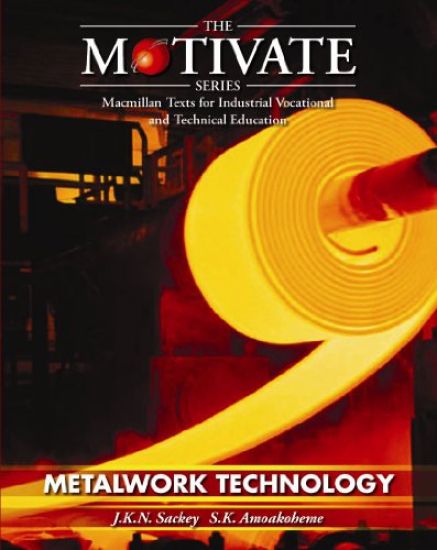
Metalwork Technology

Metalwork Technology

Stephen K Amoakohene; J K N Sackey

Macmillan Education
1996
nidottu
Metalwork Technology is a well illustrated core text covering all the key areas of the subject in one accessible volume. There is a focus on practical work and it is suitable for technical and vocational syllabi from numerous countries including the UK and South Africa. Each clearly structured chapter has an introduction to the topic followed by a deeper explanation of the theory. Questions, practical activities and projects follow with a chapter summary for self-check. There is a special section on occupational information, answering hints and a comprehensive list of key words. Safety points and key ideas are highlighted.
Beyond Atlanta

Beyond Atlanta

Stephen G. N. Tuck

University of Georgia Press
2003
pokkari
This sweeping history of the civil rights movement in the South's largest state tells of many Georgias. On one extreme is Atlanta, a metropolitan center of relative black prosperity and training ground of many movement leaders. On another is Albany. A city deep in the "black belt" of the plantation South, it is the site of Martin Luther King Jr.'s greatest civil rights setback. Somewhere in between is yet another Georgia, a Georgia whose communities once constituted hundreds of Jim Crow fiefdoms. In places like "Bad" Baker County near the southern border, or in the relatively moderate town of Rome in the northern hills, black-white relations were as crude or as nuanced as the outlook of the local sheriff.Beyond Atlanta draws on interviews with almost two hundred people—black and white—who worked for, or actively resisted, the freedom movement. Among the topics Stephen Tuck covers are the absence of consistent support from the movement's national leadership and the frustration and innovation it alternately inspired at the local level. In addition, Tuck reveals friction, along urban-rural and poor-prosperous lines, about movement goals and tactics, and he highlights the often unheralded roles played by African American women, veterans, masons, unions, neighborhood clubs, and local NAACP branches.Tuck's narrative begins before, and continues after, the well-documented years of direct action protest in the 1960s. Though grounded in local and state matters, it is attuned to such national developments as World War II, the 1954 Brown decision, the Civil Rights Acts of 1964-65, and the growth of the Black Power movement. Perhaps most important, Beyond Atlanta makes clear the exorbitant cost of racial oppression, in terms of hampered economic and social progress, for all Georgians.
It Came from the Garage!

It Came from the Garage!

Stephen King; Guy N Smith; Antonio Simon

Darkwater Media Group, Inc.
2021
nidottu
Shift your fear into top gear. Set your pulse racing with this collection of automotive horror that fires on all cylinders. This bad boy comes fully-optioned with fifteen tales of classic cars and motorcycles behaving badly; and the star-studded lineup is sure to provide all the nightmare fuel you can handle. So strap in and hold on, because we're going pedal to the metal. It's blood-soaked horror or bust, and we aren't stopping for anything. You're in for a ride.
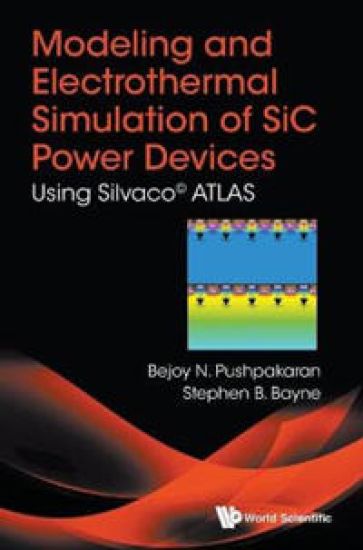
Modeling And Electrothermal Simulation Of Sic Power Devices: Using Silvaco© Atlas

Modeling And Electrothermal Simulation Of Sic Power Devices: Using Silvaco© Atlas

Bejoy N Pushpakaran; Stephen B Bayne

World Scientific Publishing Co Pte Ltd
2019
sidottu
The primary goal of this book is to provide a sound understanding of wide bandgap Silicon Carbide (SiC) power semiconductor device simulation using Silvaco© ATLAS Technology Computer Aided Design (TCAD) software. Physics-based TCAD modeling of SiC power devices can be extremely challenging due to the wide bandgap of the semiconductor material. The material presented in this book aims to shorten the learning curve required to start successful SiC device simulation by providing a detailed explanation of simulation code and the impact of various modeling and simulation parameters on the simulation results. Non-isothermal simulation to predict heat dissipation and lattice temperature rise in a SiC device structure under switching condition has been explained in detail. Key pointers including runtime error messages, code debugging, implications of using certain models and parameter values, and other factors beneficial to device simulation are provided based on the authors' experience while simulating SiC device structures. This book is useful for students, researchers, and semiconductor professionals working in the area of SiC semiconductor technology. Readers will be provided with the source code of several fully functional simulation programs that illustrate the use of Silvaco© ATLAS to simulate SiC power device structure, as well as supplementary material for download.Related Link(s)
The P.G. Wodehouse Miscellany

The P.G. Wodehouse Miscellany

N.T.P Murphy; Stephen Fry

The History Press Ltd
2015
sidottu
P.G. Wodehouse saw his first article published when still at school, and went on to become the leading humour writer of the twentieth century. He created characters famous across the English-speaking world, such as Rupert Psmith, Stanley Ukridge, Uncle Fred, the inhabitants of the Drones Club, Bertie Wooster and Jeeves, and Lord Emsworth and his beloved Empress, all of whom remain as popular today as they were when they first appeared all those years ago. But behind all the brilliant metaphors that make us laugh out loud, there is a surprising background of reality. Wodehouse didn’t create his stories from scratch; he used real settings and exaggerated the characteristics of people he knew. With examples of Wodehouse’s unique imagery, the P.G. Wodehouse Miscellany follows the development and progress of his legendary characters, tells us where Wodehouse got his ideas from and demonstrates why his admirers included Bertrand Russell, Berthold Brecht, George Orwell, Rudyard Kipling and the Kaiser. This informative little miscellany will be a must for all fans of P.G. Wodehouse.
Applied Microsoft Excel (App-XL) in Statistics, Economics, Business, and Finance Perspective For Microsoft Excel Users and Learners
Applied Microsoft Excel (shortly called App-XL) is strictly an application of Spreadsheet tech book with problems applications in the field of Business, Finance, Economics, and Statistical works. The key topics are - Data Analysis and Management tools, - Financial and Investment Analyzes, - Basic Statistics in Economic and Business Application, - Advance Statistics for Data Analysis of Research works, - Resources Optimization with MS Excel, including others. The key FUNCTIONS and TOOLS are: - Pivot Table, and Chart for table data analysis and management, - Solver for Linear Programming, - Analysis Toolpak for advance statistical works, - Basic Statistics tools for Measure of Central Tendency and Dispersion, - Data Analysis with chart, Slope and Intercept for Market Equilibrium Analysis, Finance, and - Investment tools like DDB, SNL, SYD, FV, PMT, IPMT, PPMT, PV, RATE, IRR, and NPV. It is prepared for MS Excel Users (MEUs) and MS Excel Beginners (MEBs). The name "Applied" is associated with the book due to its attribute of personal practical and real world work Applications in Statistics, Economics, Business, and Finance. It is very friendly in use, consists community (i.e. forums) technical support, open to all MEUs and MEBs, and as well been accompanied with App-XL Solution Pack 1.0.0 downloadable zip file.
Why You Are Acting That Way in Your Love-Relationship, (A Love Psychology Book), For Single and Married: Why You Are Acting That Way in Your Love-Rela
"Why You Are Acting That Way in Your Love Relationship" is a love psychology book written by N. Stephen. The Author derived a new philosophy, and expressed a pyschological state of love, the nature, and existence of love relationship in a different view. For you as a being, it exposes the two strong factors responsible for your temperament (i.e. quality of mind) over the way you behave, reciprocate and response in your love life and relationship. These two strong factors are in one hand "the state of your conscious and subconscious mind" and in the other hand, a popular economic concept called 'marginal utility'. The purpose of the book is to reveal the forces behind your love relationship, and as well let you know why you are acting that way in your love relationship and life. It is a counseling book for love relationship, and a guide to build and manage ones love life and relationship. It is expressively on the notion of "whys, answers, and reasons", and it may expose your love relationship strengths and weaknesses.
Selling Reagan's Foreign Policy

Selling Reagan's Foreign Policy

N. Stephen Kane

Lexington Books
2018
sidottu
This book examines President Reagan’s and his administration’s efforts to mobilize public and congressional support for seven of the president’s controversial foreign policy initiatives. Each chapter deals with a distinct foreign policy issue, but they each is related in one way or another to alleged threats to U.S. national security interests by the Soviet Union and its allies. When taken together these case studies clearly illustrate the book’s larger thrust: a challenge to the conventional wisdom that Reagan was the indisputable “Great Communicator.” This book contests the accepted wisdom that Reagan was an exemplary and highly effective practitioner of the going public model of presidential communication and leadership, that the bargaining model was relatively unimportant during his administration, and that the so-called public diplomacy regime was a high-value addition to the administration’s public communication assets. The author employs an analytical approach to the historical record, draws on several academic disciplines and grounds his arguments in extensive archival and empirical research. The book concludes that the public communication efforts of the Reagan administration in the field of foreign policy were neither exceptionally skillful nor notably successful, that the public diplomacy regime had more negative than positive impact, that the going public model had minimal utility in the president’s efforts to sell his foreign policy initiatives, and that the executive bargaining model played a central role in Reagan’s governing strategy and essentially defined his presidential leadership role in the area of foreign policy making. This study vividly demonstrates the enormous gap between the real-word Reagan and the one that often exists in public mythology.
Selling Reagan's Foreign Policy

Selling Reagan's Foreign Policy

N. Stephen Kane

Lexington Books
2020
nidottu
This book examines President Reagan’s and his administration’s efforts to mobilize public and congressional support for seven of the president’s controversial foreign policy initiatives. Each chapter deals with a distinct foreign policy issue, but they each is related in one way or another to alleged threats to U.S. national security interests by the Soviet Union and its allies. When taken together these case studies clearly illustrate the book’s larger thrust: a challenge to the conventional wisdom that Reagan was the indisputable “Great Communicator.” This book contests the accepted wisdom that Reagan was an exemplary and highly effective practitioner of the going public model of presidential communication and leadership, that the bargaining model was relatively unimportant during his administration, and that the so-called public diplomacy regime was a high-value addition to the administration’s public communication assets. The author employs an analytical approach to the historical record, draws on several academic disciplines and grounds his arguments in extensive archival and empirical research. The book concludes that the public communication efforts of the Reagan administration in the field of foreign policy were neither exceptionally skillful nor notably successful, that the public diplomacy regime had more negative than positive impact, that the going public model had minimal utility in the president’s efforts to sell his foreign policy initiatives, and that the executive bargaining model played a central role in Reagan’s governing strategy and essentially defined his presidential leadership role in the area of foreign policy making. This study vividly demonstrates the enormous gap between the real-word Reagan and the one that often exists in public mythology.
CAplus: Computer Appreciation for Basic and Advance Learning

CAplus: Computer Appreciation for Basic and Advance Learning

N. Stephen

Createspace Independent Publishing Platform
2014
nidottu
Computer appreciation is the technology impart of understanding computer through learning and practicing the first-step of its composition, scope, and operations in ICT World. This is for basic, but for advanced, it is to support the computer application knowledge of the intermediate and advance computer users, who perform their daily activities with computer. By comparison, appreciation is different from application, which is the technical impart of understanding how to use application programs of computer through practices. Meaning that their key different is the ability to perform effectively in application via the knowledge gained from the appreciation. Following this point, the package of CAplus is to help users gain and improve in both appreciation and application. To achieve this point, the package is organized into CAplus-1, 2, 3, and 4 books. The CAplus-1 consists of section-one and two. The Section-One contains chapter one to five with topics on history of computer, the meaning, attributes and uses of computers, including the classifications of computer, common components basic operations of computer relatively. The Section-Two is titled "building computer career", which comprises six examples of computer career topics, with cases of teaching students on how to build and enhance computer careers through educational system, participatory in application program training, and relative software to each specialized area of the career. The CAplus-2 was written for advanced-level in order to help students in studying of computer's components. To support its central teaching, the book explained the hardware and software components of computer, and how they function systematically in the work process of computation. In this form, the knowledge-gained about these components will help students in learning computer maintenance and repair, troubleshooting identification, and how to manage computer threats as all of them are the central teachings in CAplus-4, which also taught about the basic maintenance and repair of Windows Computers. For the CAplus-3, the general study of computer appreciation is not complete without the introduction of computer application, and since Windows Operating System (OS) is the main OS in the work of CAplus, therefore "windows appreciation" was written as a prepared take-off ground for computer application training. To widen the book (i.e. the CAplus-3), the concept of file, and folder were treated, including other Chapter topics on "internet appreciation", "computer threats appreciation", and "evaluating of PC quality." So the studying objectives are as follows: know how to setup a desktop computer; know the basic integral parts of Desktop; know the basic integral parts of Windows; know the basic, necessary, uses and functions of the control panel of Windows OS; gain the preparation ground for Windows and other software maintenance; know how to access the Windows tools of a computer; know the components of Windows Operating System; understand the scope of Internet and its application; understand what is virus and malware; understand how to remove and prevent computer threat; and how to evaluate the quality of a personal computer. Generally, it is advisable to use both CAplus-1, 2, 3, and 4 in order to achieve the complete benefit-effectiveness of the package.
CAplus-3: Computer Appreciation for Basic and Advanced Learning

CAplus-3: Computer Appreciation for Basic and Advanced Learning

N. Stephen

Createspace Independent Publishing Platform
2015
nidottu
Computer appreciation is the technology impart of understanding computer through learning and practicing the first-step of its composition, scope, and operations in ICT World. This is for basic, but for advanced, it is to support the computer application knowledge of the intermediate and advance computer users, who perform their daily activities with computer. By comparison, appreciation is different from application, which is the technical impart of understanding how to use application programs of computer through practices. Meaning that their key different is the ability to perform effectively in application via the knowledge gained from the appreciation. Following this point, the package of CAplus is to help users gain and improve in both appreciation and application. To achieve this point, the package is organized into CAplus-1, 2, 3, and 4 books. The CAplus-1 consists of section-one and two. The Section-One contains chapter one to five with topics on history of computer, the meaning, attributes and uses of computers, including the classifications of computer, common components basic operations of computer relatively. The Section-Two is titled "building computer career", which comprises six examples of computer career topics, with cases of teaching students on how to build and enhance computer careers through educational system, participatory in application program training, and relative software to each specialized area of the career. The CAplus-2 was written for advanced-level in order to help students in studying of computer's components. To support its central teaching, the book explained the hardware and software components of computer, and how they function systematically in the work process of computation. In this form, the knowledge-gained about these components will help students in learning computer maintenance and repair, troubleshooting identification, and how to manage computer threats as all of them are the central teachings in CAplus-4, which also taught about the basic maintenance and repair of Windows Computers. For the CAplus-3, the general study of computer appreciation is not complete without the introduction of computer application, and since Windows Operating System (OS) is the main OS in the work of CAplus, therefore "windows appreciation" was written as a prepared take-off ground for computer application training. To widen the book (i.e. the CAplus-3), the concept of file, and folder were treated, including other Chapter topics on "internet appreciation", "computer threats appreciation", and "evaluating of PC quality." So the studying objectives are as follows: know how to setup a desktop computer; know the basic integral parts of Desktop; know the basic integral parts of Windows; know the basic, necessary, uses and functions of the control panel of Windows OS; gain the preparation ground for Windows and other software maintenance; know how to access the Windows tools of a computer; know the components of Windows Operating System; understand the scope of Internet and its application; understand what is virus and malware; understand how to remove and prevent computer threat; and how to evaluate the quality of a personal computer. Generally, it is advisable to use both CAplus-1, 2, 3, and 4 in order to achieve the complete benefit-effectiveness of the package.
CAplus 2 and 4

CAplus 2 and 4

N. Stephen

Createspace Independent Publishing Platform
2015
nidottu
Computer appreciation is the technology impart of understanding computer through learning and practicing the first-step of its composition, scope, and operations in ICT World. This is for basic, but for advanced, it is to support the computer application knowledge of the intermediate and advance computer users, who perform their daily activities with computer. By comparison, appreciation is different from application, which is the technical impart of understanding how to use application programs of computer through practices. Meaning that their key different is the ability to perform effectively in application via the knowledge gained from the appreciation. Following this point, the package of CAplus is to help users gain and improve in both appreciation and application. To achieve this point, the package is organized into CAplus-1, 2, 3, and 4 books. The CAplus-1 consists of section-one and two. The Section-One contains chapter one to five with topics on history of computer, the meaning, attributes and uses of computers, including the classifications of computer, common components basic operations of computer relatively. The Section-Two is titled "building computer career", which comprises six examples of computer career topics, with cases of teaching students on how to build and enhance computer careers through educational system, participatory in application program training, and relative software to each specialized area of the career. The CAplus-2 was written for advanced-level in order to help students in studying of computer's components. To support its central teaching, the book explained the hardware and software components of computer, and how they function systematically in the work process of computation. In this form, the knowledge-gained about these components will help students in learning computer maintenance and repair, troubleshooting identification, and how to manage computer threats as all of them are the central teachings in CAplus-4, which also taught about the basic maintenance and repair of Windows Computers. For the CAplus-3, the general study of computer appreciation is not complete without the introduction of computer application, and since Windows Operating System (OS) is the main OS in the work of CAplus, therefore "windows appreciation" was written as a prepared take-off ground for computer application training. To widen the book (i.e. the CAplus-3), the concept of file, and folder were treated, including other Chapter topics on "internet appreciation", "computer threats appreciation", and "evaluating of PC quality." So the studying objectives are as follows: know how to setup a desktop computer; know the basic integral parts of Desktop; know the basic integral parts of Windows; know the basic, necessary, uses and functions of the control panel of Windows OS; gain the preparation ground for Windows and other software maintenance; know how to access the Windows tools of a computer; know the components of Windows Operating System; understand the scope of Internet and its application; understand what is virus and malware; understand how to remove and prevent computer threat; and how to evaluate the quality of a personal computer. Generally, it is advisable to use both CAplus-1, 2, 3, and 4 in order to achieve the complete benefit-effectiveness of the package.