Richard Alexander Streatfeild (22 June 1866 - 6 February 1919) was an English musicologist and critic. His career was spent at the British Museum, although not in its music department. His publications included books on opera, Handel and modern music. He had literary interests, and arranged for posthumous publication of his friend Samuel Butler's The Way of All Flesh.... Samuel Butler (4 December 1835 - 18 June 1902) was the iconoclastic English author of the Utopian satirical novel Erewhon (1872) and the semi-autobiographical Bildungsroman The Way of All Flesh, published posthumously in 1903. Both have remained in print ever since. In other studies he examined Christian orthodoxy, evolutionary thought, and Italian art, and made prose translations of the Iliad and Odyssey that are still consulted today. He was also an artist. CAREER: After Cambridge he went to live in a low-income parish in London 1858-59 as preparation for his ordination into the Anglican clergy; there he discovered that baptism made no apparent difference to the morals and behaviour of his peers and began questioning his faith. This experience would later serve as inspiration for his work The Fair Haven. Correspondence with his father about the issue failed to set his mind at peace, inciting instead his father's wrath. As a result, he emigrated in September 1859, on the ship Roman Emperor to New Zealand. Butler went there like many early British settlers of privileged origins, to put as much distance as possible between himself and his family. He wrote of his arrival and life as a sheep farmer on Mesopotamia Station in A First Year in Canterbury Settlement (1863), and made a handsome profit when he sold his farm, but the chief achievement of his time there was the drafts and source material for much of his masterpiece Erewhon. Erewhon revealed Butler's long interest in Darwin's theories of biological evolution. In 1863, four years after Darwin published On the Origin of Species, the editor of a New Zealand newspaper, The Press, published a letter captioned "Darwin among the Machines." Written by Butler but signed Cellarius (q.v., ) it compares human evolution to machine evolution, prophesying that machines would eventually replace man in the supremacy of the earth: "In the course of ages we shall find ourselves the inferior race." The letter raises many of the themes now debated by proponents of the technological singularity, i. e. that computers evolve much faster than humans and that we are racing towards an unknowable future through explosive technological change. Butler also spent much time criticising Darwin, partly because Butler (himself a man living in the shadow of a previous Samuel Butler) believed that Darwin had not sufficiently acknowledged his grandfather Erasmus Darwin's contribution to the origins of his theory. Butler returned to England in 1864, settling in rooms in Clifford's Inn (near Fleet Street), where he lived for the rest of his life. In 1872, the Utopian novel Erewhon appeared anonymously, causing some speculation as to the identity of the author. When Butler revealed himself, Erewhon made him a well-known figure, more because of this speculation than for its literary merits, which have been undisputed..................
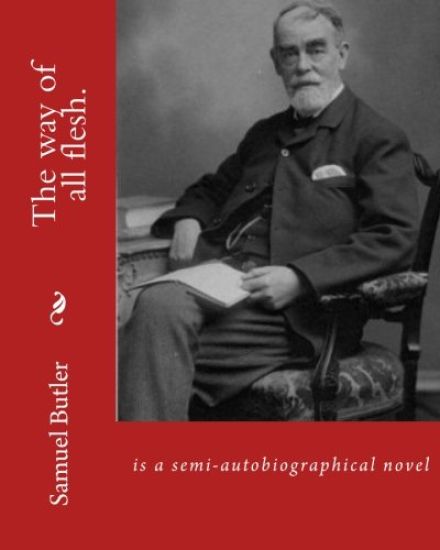
The Way of All Flesh (1903) is a semi-autobiographical novel by Samuel Butler that attacks Victorian-era hypocrisy. 1] Written between 1873 and 1884, it traces four generations of the Pontifex family. Butler dared not publish it during his lifetime, but when it was published it was accepted as part of the general reaction against Victorianism.In 1998, the Modern Library ranked The Way of All Flesh twelfth on its list of the 100 best English-language novels of the 20th century........ Samuel Butler (4 December 1835 - 18 June 1902) was an iconoclastic Victorian-era English author who published a variety of works. Two of his most famous pieces are the Utopian satire Erewhon and a semi-autobiographical novel published posthumously, The Way of All Flesh. He is also known for examining Christian orthodoxy, substantive studies of evolutionary thought, studies of Italian art, and works of literary history and criticism. Butler made prose translations of the Iliad and Odyssey, which remain in use to this day.Butler was born on 4 December 1835 at the rectory in the village of Langar, near Bingham, Nottinghamshire, England, to the Rev. Thomas Butler, son of Dr. Samuel Butler, then headmaster of Shrewsbury School and later Bishop of Lichfield. Dr Butler was the son of a tradesman and descended from a line of yeomen, but his scholarly aptitude being recognised at young age, was sent to Rugby and Cambridge, where he distinguished himself and launched his successful career. His only son Thomas wished to go into the Navy, but succumbed to paternal pressure and entered the Church, in which he led a wholly undistinguished career, all the more so in contrast with his father's. It has been suggested that this family dynamic had some impact on Samuel, insofar as it created the oppressive home environment (chronicled in The Way of All Flesh) which formed his approach to the world. Thomas Butler, states one critic, "to make up for having been a servile son, became a bullying father.".......... Richard Alexander Streatfeild (22 June 1866 - 6 February 1919) was an English musicologist and critic. His career was spent at the British Museum, although not in its music department. His publications included books on opera, Handel and modern music. He had literary interests, and arranged for posthumous publication of his friend Samuel Butler's The Way of All Flesh......... William Lyon Phelps (January 2, 1865 New Haven, Connecticut - August 21, 1943 New Haven, Connecticut) was an American author, critic and scholar. He taught the first American university course on the modern novel. He was a well-known speaker who drew large crowds. He had a radio show, wrote a daily syndicated newspaper column, lectured frequently, and published numerous popular books and articles...........
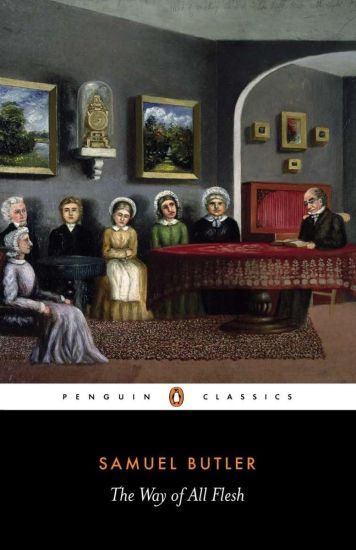
'I am the enfant terrible of literature and science. If I cannot, and I know I cannot, get the literary and scientific big-wigs to give me a shilling, I can, and I know I can, heave bricks into the middle of them.' With The Way of All Flesh, Samuel Butler threw a subversive brick at the smug face of Victorian domesticity. Published in 1903, a year after Butler's death, the novel is a thinly disguised account of his own childhood and youth 'in the bosom of a Christian family'. With irony, wit and sometimes rancour, he savaged contemporary values and beliefs, turning inside-out the conventional novel of a family's life through several generations.
A scholarly edition of Hudibras by John Wilders. The edition presents an authoritative text, together with an introduction, commentary notes, and scholarly apparatus.
A scholarly edition of Samuel Butler: Prose Observations by Helen Darbishire. The edition presents an authoritative text, together with an introduction, commentary notes, and scholarly apparatus.