No one is right or wrong - just different! Tracing the growth of the study of personality type from its roots in the work of Carl Jung to today's subtly nuanced type theory, I'm Not Crazy, I'm Just Not You shows how greatly our individual personality preferences affect our interactions with others. By shedding light on individual characteristics and tendencies, consultants and coaches, Roger R. Pearman and Sarah C. Albritton teach us how to overcome our natural inclination to judge difference in order to recognize and celebrate it. This new edition includes current research into psychological type, information about the benefits of using type to enhance health and manage stress, discussion of the link between type and emotional intelligence and analysis of how personality preferences translate across generational and cultural divides.
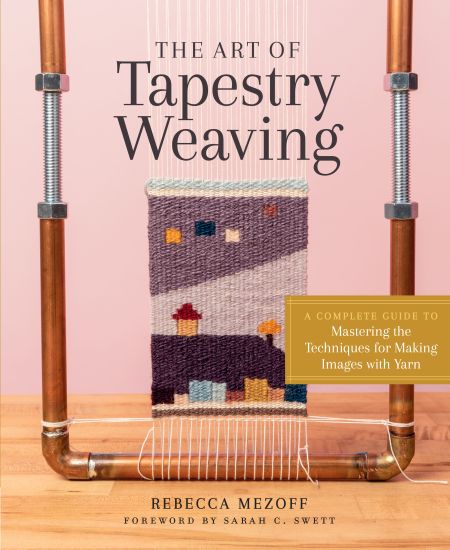
Put aside those preconceptions of dusty, medieval tapestries hanging on castle walls! Tapestry weaving has a whole new look, and fiber enthusiasts of all levels are eager to try their hand at creating images with yarn. Rebecca Mezoff, a renowned teacher of contemporary tapestry weaving, shares her techniques in this in-depth guide to every aspect of the process, from developing a color palette to selecting yarn, warping the loom, and weaving the image. Crafters can choose from inexpensive tabletop and hand-held looms to larger floor looms. Detailed step-by-step photos and inspiring examples from a range of weaver-artists make this a one-stop resource for tapestry weaving how-to.
An exquisite photographic narrative chronicling a turbulent mother-daughter relationship in the serene setting of a beautiful but decrepit Maine home, Frozen in Time is at once beautiful and heart-wrenching. Sarah C. Butler's luminous photographs tell a poignant story of coming to terms with a difficult mother in a way that is both intimately personal and universally relatable.Drawn to reconnect with her mother after a long estrangement, Butler found that taking photographs of the partially restored Maine farmhouse where the older woman chose to live ultimately gave her the perspective to understand and respect her mother's choices. The images Butler made there are striking and evocative. A pair of little girls' dresses that once belonged to Butler and her sibling, which her mother kept for decades; a corner of the beloved but fading house with its foundation jacked up on a pile of rocks; a partial glimpse of her mother, present yet unknowable-- these and others reveal a complex and compelling psychological narrative. This is a book about family, distance and reconciliation, and, finally, the beauty to be found in acceptance. It is also a stunning visual tour de force that will mesmerize photography aficionados and students of family relations alike.
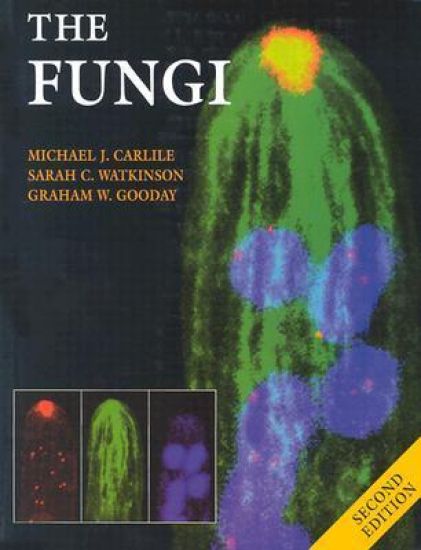
The fungi are one of the great groups of living organisms, comparable in numbers of species, diversity and ecological significance with animals, plants, protists and bacteria. This textbook deals with all fundamental and applied aspects of mycology, illustrated by reference to well studied species from major fungal groups. Since the publication of the first edition of The Fungi, there have been many important advances in the field of mycology. This second up-to-date edition has been revised and substantially expanded, and incorporates the application of methods of molecular biology, especially DNA technology to mycology.
Solve potential behavior problems before they arise with this practical guide Veterinary Guide to Preventing Behavior Problems in Dogs and Cats offers a practical, easy-to-read manual on effective interventions to avoid behavior problems. Written to support veterinarians and staff, this guide supplies concrete recommendations to use in veterinary clinics and the home environment. The book emphasizes learning theory, animal body language, and normal puppy and kitten development, and discusses shelter animals and their unique needs. The book includes chapters on the veterinary clinic environment and ways to reduce fear, anxiety, and stress associated with medical care. It also covers how to recognize problem behaviors, pet selection, and important information about kids and pets. Veterinary Guide to Preventing Behavior Problems in Dogs and Cats provides: Knowledge and tools for client education, environmental management, and preventionDetailed discussion of topics including body language, basic learning theory, and specific strategies for particular animalsAdvice on how to reduce fear, anxiety, and stress in the veterinary clinic Veterinary Guide to Preventing Behavior Problems in Dogs and Cats is an ideal reference for veterinarians, veterinary technicians, veterinary staff and trainers, and veterinary students.
Creating a Person-Centered Library provides a comprehensive overview of various services, programs, and collaborations to help libraries serve high-needs patrons as well as strategies for supporting staff working with these individuals.While public libraries are struggling to address growing numbers of high-needs patrons experiencing homelessness, food insecurity, mental health problems, substance abuse, and poverty-related needs, this book will help librarians build or contribute to library services that will best address patrons' psychosocial needs.The authors, experienced in both library and social work, begin by providing an overview of patrons' psychosocial needs, structural and societal reasons for the shift in these needs, and how these changes impact libraries and library staff. Chapters focus on best practices for libraries providing person-centered services and share lessons learned, including information about special considerations for certain patron populations that might be served by individual libraries. The book concludes with information about how library organizations can support public library staff.Librarians and library students who are concerned about both patrons and library staff will find the practical advice in this book invaluable.
Ross Douthat; Edwidge Danticat; Sarah C. Williams; Rabbi Jonathan Sacks; Cardinal Christoph Schönborn; Leah Libresco Sargeant; Gina Dalfonzo; Zito Madu; Norann Voll; Noah Van Niel
What is a family and what is it good for? Story 1: Families are in crisis, and the cause is moral breakdown. We urgently need a deep renewal of our family culture, supported by public policies that strengthen traditional marriage and encourage childbearing. Story 2: Families are in crisis, and the cause is capitalism. We need structural changes in society so that all families can flourish: parental leave, guaranteed healthcare, flexible work hours for parents, restorative justice. What if both these stories are true? This issue of Plough reflects on what a family is and what it is for, so that the transformations needed to solve the crisis of the family start from a firm basis, not a nostalgic ideal or progressive theorizing. As always, we take as a starting point the teachings of Jesus. It turns out his idea of family values might not be what people think. He calls us to extend our natural love for our biological family to a vast new throng of siblings – a family of many ethnicities and cultures that includes the widowed, the unmarried, the outsider, and the stranger. In this issue: - Ross Douthat asks what is stopping people from having the one more child they desire. - Edwidge Danticat says families are not nuclear. - Gina Dalfonzo reveals what singles know best about the church as family. - Norann Voll remembers a Jewish woman who escaped the Holocaust and married a German. - W. Bradford Wilcox and Alysse ElHage report on how the Covid pandemic has impacted the family. - Noah Van Niel asks whether masculinity is OK anymore. - Cardinal Christoph Schönborn reflects the burden of family history, celibacy, and monument toppling. - Sarah C. Williams pinpoints the source of feminist pioneer Josephine Butler’s daring. - Rabbi Jonathan Sacks begins the story of marriage 385 million years ago in a lake in Scotland. - Zito Madu recalls how his father’s amazing storytelling saved the past from oblivion. You’ll also find: - M. M. Townsend on what Louisa May Alcott and Simone de Beauvoir had in common - A special announcement about Plough’s new poetry contest: the Rhina Espaillat Poetry Award - A reading from G. K. Chesterton - Two new poems by Rachel Hadas - Reviews of Eric Edstrom’s Un-American, Maya Schenwar and Victoria Law’s Prison by Any Other Name, Brian Doyle’s One Long River of Song, and Martín Caparrós’s Hunger Plough Quarterly features stories, ideas, and culture for people eager to put their faith into action. Each issue brings you in-depth articles, interviews, poetry, book reviews, and art to help you put Jesus’ message into practice and find common cause with others.
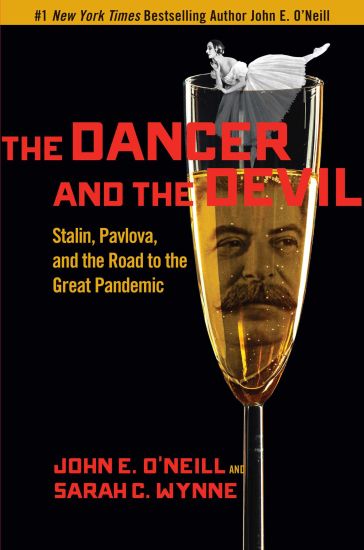
Communism must kill what it cannot control. So for a century, it has killed artists, writers, musicians, and even dancers. It kills them secretly, using bioweapons and poison to escape accountability. Among its victims was Anna Pavlova, history’s greatest dancer, who was said to have God-given wings and feet that never touched the ground. But she defied Stalin, and for that she had to die. Her sudden death in Paris in 1931 was a mystery until now. The Dancer and the Devil traces Marxism’s century-long fascination with bioweapons, from the Soviets’ leak of pneumonic plague in 1939 that nearly killed Stalin to leaks of anthrax at Kiev in 1972 and Yekaterinburg in 1979; from the leak of a flu in northeast China in 1977 that killed millions to the catastrophic COVID-19 leak from biolabs in Wuhan, China. Marxism’s dark past must not be a parent to the world’s dark future.COMMUNIST CHINA PLAYED WITH FIRE AND THE WORLD IS BURNING Nearly ten million people have died so far from the mysterious Covid-19 virus. These dead follow a long line of thousands of other brave souls stretching back nearly a century who also suffered mysterious “natural” deaths, including dancers, writers, saints and heroes. These honored dead should not be forgotten by amnesiac government trying to avoid inconvenient truth. The dead and those who remember and loved them deserve answers to two great questions. How? Why?The Dancer and the Devil answers these questions. It tracks a century of Soviet and then Chinese Communist poisons and bioweapons through their development and intentional use on talented artists and heroes like Anna Pavlova, Maxim Gorky, Raoul Wallenberg and Alexis Navalny. It then tracks leaks of bioweapons beginning in Saratov, Russia in 1939 and Soviet Yekaterinburg in 1979 through Chinese leaks concluding in the recent concealed leak of the manufactured bioweapon Covid-19 from the military lab in Wuhan, China. Stalin, Putin, and Xi, perpetrators of these vast crimes against humanity itself, should not be allowed to escape responsibility. This book assembles the facts on these cowardly murderers, calling them to account for their heartless crimes against man concluding in Covid-19.
She only wanted to be a Mother to her own children-FLDS Cult leader had other plans. Sarah was born in 1979 in the FLDS compound. At eighteen, Sarah entered into an arranged marriage to Richard S Allred who was the grandson and personal bodyguard to leader Rulon Jeffs, and later Warren Jeffs. Sarah was the first of five wives and was often used to set the example. Sarah's husband was given Warren's prized daughter as his third wife who became Warren's source to control Sarah's family. As the Leadership adjusted, her world turned upside down. Rich was taken to a secret project to begin "Zion", and only those who are worthy could go. Rich came for her children, but Sarah was not worthy. She wasn't allowed to see or have contact with her children. Sarah came to realize Warren Jeffs was grooming her daughter to eventually become his wife. She wrote a letter, refusing to give permission. While traveling on a four-wheeler, the vehicle flipped and fell on her. She was in the hospital fighting for a month to survive told she would most likely be a paraplegic if she did survive.A few months later, still trying to heal from the accident, Sarah was told God no longer had a use for her. Therefore Sarah was cast out, thrown into a world she was taught to abhor and fear from birth.
Although Pathological Demand Avoidance (PDA) has been a recognized autistic profile in the UK for some time, awareness is still growing in America. When parents first learn about it they talk about having a lightbulb moment of understanding their child better. Many described how, having found traditional parenting and behavioral techniques made things worse instead of better, they felt judged and alone. Teachers and school administrators also reported struggling to support their PDA students. The children, teens and young adults themselves were often left feeling misunderstood.The authors of this book explain PDA with an emphasis on promoting well-being both for PDA individuals and all those who support them. They provide a neurodiversity-affirming framework for supporting anxious, demand avoidant individuals across a range of settings and services. As awareness spreads across the pond, the compassion and clarity in this book will become a valuable guide to many.
This new edition of the Oxford Handbook in Geriatric Medicine has been expanded and updated to reflect the substantial changes in clinical practice since the previous edition, including the Francis report and the impact on care for the older patient, the National Dementia Strategy and screening, and the evolution of the role of Geriatricians in other specialities. It includes new material on risk scoring management of TIA, and a new chapter on the older surgical patient. With an ageing population, geriatric medicine is increasingly central to emergency and internal medicine in hospital settings and in general practice. Diseases are more common in the older person, and can be particularly difficult to assess and to treat effectively in a field that has limited evidence, yet makes up a substantial proportion of the work of most clinicians. Using clinical vignettes and how-to boxes to provide practical advice on common problems, this is a practical, accessible, and essential handbook for all medical staff who manage older patients.
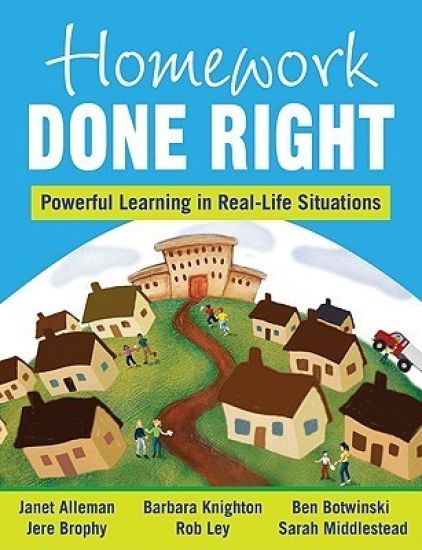
What is the rationale for homework? How can you design meaningful homework, and how can changing homework influence your practice? Homework Done Right: Powerful Learning in Real Life Situations provides answers to these questions and other issues surrounding the hot topic of homework and the impact it can have on both students and teachers. Written in an accessible, practical style, this resource provides a general overview of homework and a brief look at traditional approaches, along with concrete examples of how homework can be made meaningful. The authors take an in-depth look at authentic homework—assignments that are engaging, motivational, and promote real-life applications of knowledge leading to deeper levels of learning. The book is filled with concrete examples across grade levels that demonstrate the process of matching assignments to the goals and major understandings associated with specific course content. The authors invite classroom teachers and building leaders to rethink out-of-school time and reclaim at least part of it as learning time in order to regain spirit and passion for teaching and learning. Readers will find: - Guidance for designing out-of-school assignments that are authentic, meaningful, and tied to real-life experience - Sample homework assignments for various grade levels and subject areas, examples of student work, reflection questions, discussion prompts, protocols, and reproducible forms - Richly-detailed vignettes describing teachers' evolving beliefs and practices around homework.
Nonprofits' behind-the-scenes fundraising functions--information systems, development technologies, research, managing prospects, and stewardship--not only support an organizations' overall development efforts but also are key to long-term success.A first-of-its-kind resource, Conducting a Successful Development Services Program draws together in one book a tremendous body of knowledge on planning and managing an innovative and effective development services program. Written by master fundraiser Kent Dove, the book guides you through the process of identifying, researching, and managing prospects; creating, storing, and using data and information; and, properly administering gifts and showing appreciation to donors. An extensive resource section offers you a wealth of examples from real-life organizations.
Molly McCully Brown; Victoria Reynolds Farmer; Edwidge Danticat; Stephanie Saldaña; Kelsey Osgood; Christian Wiman; Amy Julia Becker; Ross Douthat; Eugene Vodolazkin; Sarah C. Williams; Isaac T. Soon; Leah Libresco Sargeant
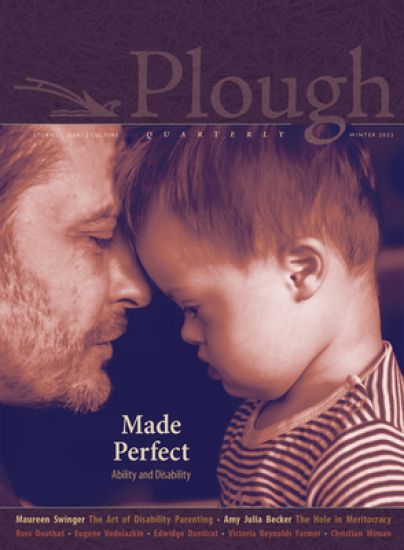
Whose lives count as fully human? The answer matters for everyone, disabled or not.The ancient Greek ideal linked physical wholeness to moral wholeness – the virtuous citizen was “beautiful and good.” It’s an ideal that has all too often turned deadly, casting those who do not measure up as less than human. In the pre-Christian era, infants with disabilities were left on the rocks; in modern times, they have been targeted by eugenics.Much has changed, thanks to the tenacious advocacy of the disability rights movement. Yesteryear’s hellish institutions have given way to customized educational programs and assisted living centers. Public spaces have been reconfigured to improve access. Therapies and medical technology have advanced rapidly in sophistication and effectiveness. Protections for people with disabilities have been enshrined in many countries’ antidiscrimination laws.But these victories, impressive as they are, mask other realities that collide awkwardly with society’s avowals of equality. Why are parents choosing to abort a baby likely to have a disability? Why does Belgian law allow for euthanasia in cases of disability, even absent a terminal diagnosis or physical pain? Why, when ventilators were in short supply during the first Covid wave, did some states list disability as a reason to deny care?On this theme: - Heonju Lee tells how his son with Down syndrome saved another child’s life.- Molly McCully Brown and Victoria Reynolds Farmer recount their personal experiences with disability.- Amy Julia Becker says meritocracies fail because they value the wrong things.- Maureen Swinger asks six mothers around the world about raising a child with disabilities.- Joe Keiderling documents the unfinished struggle for disability rights.- Isaac T. Soon wonders if Saint Paul’s “thorn in the flesh” was a disability.- Leah Libresco Sargeant reviews What Can a Body Do? and Making Disability Modern.- Sarah C. Williams says testing for fetal abnormalities is not a neutral practice.Also in the issue: - Ross Douthat is brought low by intractable Lyme disease.- Edwidge Danticat flees an active shooter in a packed mall.- Eugene Vodolazkin finds comic relief at funerals, including his own father’s.- Kelsey Osgood discovers that being an Orthodox Jew is strange, even in Brooklyn.- Christian Wiman pens three new poems.- Susannah Black profiles Flannery O’Conner.- Our writers review Eyal Press’s Dirty Work, Steve Coll’s Directorate S, and Millennial Nuns by the Daughters of Saint Paul.Plough Quarterly features stories, ideas, and culture for people eager to apply their faith to the challenges we face. Each issue includes in-depth articles, interviews, poetry, book reviews, and art.