

Kirjahaku
Etsi kirjoja tekijän nimen, kirjan nimen tai ISBN:n perusteella.
1000 tulosta hakusanalla Saul Bellow


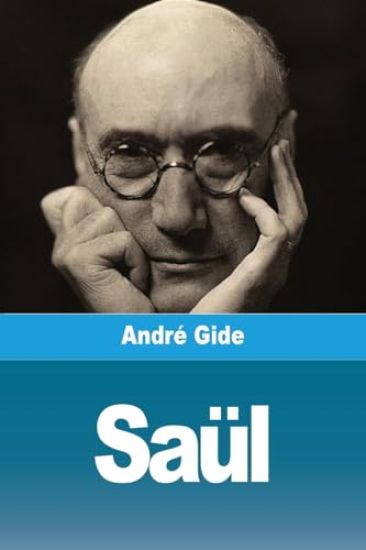
crite en Italie et publi e en 1903, la premi re pi ce de th tre de ce recueil reprend le mythe biblique de Sa l et David. Priv de vision, hant de d mons, Sa l a compris que son fils Jonathan ne lui succ dera jamais. Pour conna tre le secret qui hante le roi, la reine fait appel David, un berger joueur de lyre. Se d couvrant trahi, Sa l tue la reine. Ne reste plus que des hommes. Sa l, ridicule avec sa barbe ras e afin de garder un air de jeunesse, consulte en vain la pythie puis est hu par la foule et Jonathan, aux traits f minins a un penchant pour le jeune roi en devenir, David. Cr e en 1901, la seconde pi ce revisite librement la l gende du roi Candaule assassin par son ami Gyg s. Tyran fantasque et monarque absolu, Candaule manipule ses proches et, avec de bonnes intentions, provoque leur malheur. Il offre Gyg s un anneau d'invisibilit et le pousse regarder ainsi sa femme Nyssia d nud e. Trahie par son poux, Nyssia se venge en faisant assassiner Candaule par Gyg s.





Saul
Antigonos Verlag
2025
sidottu

Saul
Antigonos Verlag
2025
sidottu

Alkuper isen j ljenn s. Kustannusyhti Antigonos on erikoistunut historiallisten kirjojen uusintapainosten julkaisemiseen. Huolehdimme siit , ett n m teokset saatetaan yleis n saataville hyv ss kunnossa kulttuuriperinn n s ilytt miseksi.

Alkuper isen j ljenn s. Kustannusyhti Antigonos on erikoistunut historiallisten kirjojen uusintapainosten julkaisemiseen. Huolehdimme siit , ett n m teokset saatetaan yleis n saataville hyv ss kunnossa kulttuuriperinn n s ilytt miseksi.

Saul
VDM Publishing House
2010
nidottu
Observera att förlaget som ger ut denna produkt baserar innehållet i sina produkter på fria källor som Wikipedia. Boken är med stor sannolikhet endast ett utdrag ur dessa informationskällor, alltså inte en vanlig bok i den bemärkelsen.
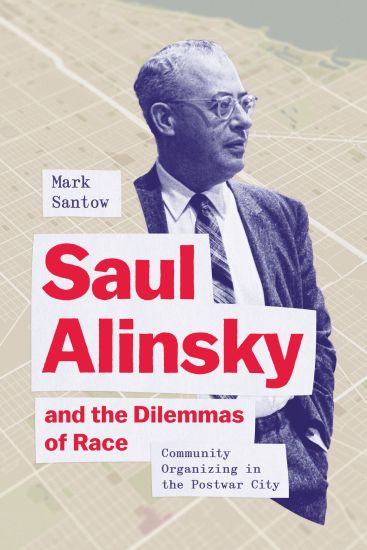
A groundbreaking examination of Saul Alinsky's organizing work as it relates to race. Saul Alinsky is the most famous—even infamous—community organizer in American history. Almost single-handedly, he invented a new political form: community federations, which used the power of a neighborhood’s residents to define and fight for their own interests. Across a long and controversial career spanning more than three decades, Alinsky and his Industrial Areas Foundation organized Eastern European meatpackers in Chicago, Kansas City, Buffalo, and St. Paul; Mexican Americans in California and Arizona; white middle-class homeowners on the edge of Chicago’s South Side black ghetto; and African Americans in Rochester, Buffalo, Chicago, and other cities. Mark Santow focuses on Alinsky’s attempts to grapple with the biggest moral dilemma of his age: race. As Santow shows, Alinsky was one of the few activists of the period to take on issues of race on paper and in the streets, on both sides of the color line, in the halls of power, and at the grassroots, in Chicago and in Washington, DC. Alinsky’s ideas, actions, and organizations thus provide us with a unique and comprehensive viewpoint on the politics of race, poverty, and social geography in the United States in the decades after World War II. Through Alinsky’s organizing and writing, we can see how the metropolitan color line was constructed, contested, and maintained—on the street, at the national level, and among white and black alike. In doing so, Santow offers new insight into an epochal figure and the society he worked to change.

From the winner of the PEN/Malamud Award for Excellence and "one of our most gifted writers" (Chicago Tribune), Saul and Patsy is "stunning, never predictable, glimmering fiction, full of mischief and insight" (The Los Angeles Times). Five Oaks, Michigan is not exactly where Saul and Patsy meant to end up. Both from the East Coast, they met in college, fell in love, and settled down to married life in the Midwest. Saul is Jewish and a compulsively inventive worrier; Patsy is gentile and cheerfully pragmatic. On Saul's initiative (and to his continual dismay) they have moved to this small town-a place so devoid of irony as to be virtually "a museum of earlier American feelings"-where he has taken a job teaching high school. Soon this brainy and guiltily happy couple will find children have become a part of their lives, first their own baby daughter and then an unloved, unlovable boy named Gordy Himmelman. It is Gordy who will throw Saul and Patsy's lives into disarray with an inscrutable act of violence. As timely as a news flash yet informed by an immemorial understanding of human character, Saul and Patsy is a genuine miracle.

An in-depth look at Saul Leiterâ??s entire body of work.
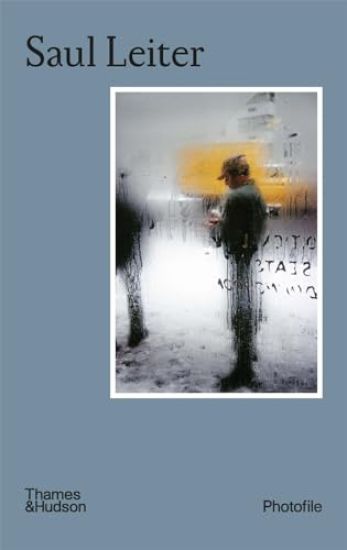
A new edition of this collection of Saul Leiter's distinctive work, featuring twelve new photographs. Saul Leiter was one of those photographers who sought neither fame nor commercial success, despite his talent for imagemaking. Born in Pittsburgh, he spent his entire adult life in New York City's East Village, in an intensely creative environment where ideas from Europe and America came together and intermingled. There he encountered Rothko and the Abstract Expressionists, and discovered street photography and the work of Henri Cartier-Bresson. His mastery of colour is displayed in unconventional cityscapes in which reflections, transparency, complex framing and mirroring effects are married to a very personal printing style, creating a unique kind of urban view.

Celebrating the centennial of Saul Leiter’s birth, the official retrospective of a revolutionary figure in twentieth-century photography. Saul Leiter photographed and painted nearly every day for over sixty years, amassing an enormous archive, most of which remained unseen during his lifetime. Finding inspiration within a few blocks of his apartment in Lower Manhattan, he was a master at discovering beauty in the most ordinary places. Celebrated today for his evocative colour photographs of New York in the 1950s and 1960s, which were unknown in their day, Leiter also found success as a fashion photographer for Harper’s Bazaar. All the while he was shooting black-and-white street scenes on his daily walks, and nudes and intimate portraits back home, while continuing his painting explorations with abstract watercolours, whimsical sketchbooks and painted photographs. Created in collaboration with the Saul Leiter Foundation, this definitive monograph brings together these diverse yet interconnected bodies of work – including much that was previously unpublished – to reveal the complete artist for the first time.
Saul Kripke
Cambridge University Press
2011
pokkari
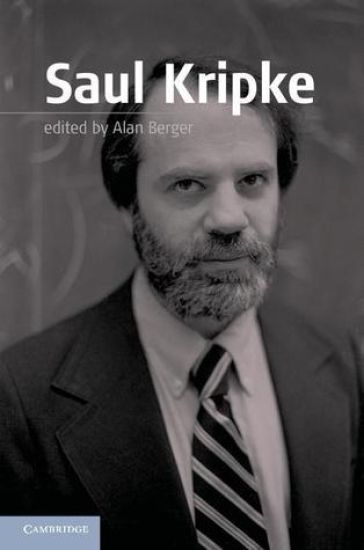
This collection of essays on Saul Kripke and his philosophy is the first and only collection of essays to examine both published and unpublished writings by Kripke. Its essays, written by distinguished philosophers in the field, present a broader picture of Kripke's life and work than has previously been available to scholars of his thought. New topics covered in these essays include vacuous names and names in fiction, Kripke on logicism and de re attitude toward numbers, Kripke on the incoherency of adopting a logic, Kripke on colour words and his criticism of the primary versus secondary quality distinction, and Kripke's critique of functionalism. These essays not only present Kripke's basic arguments but also engage with the arguments and controversies engendered by his work, providing the most comprehensive analysis of his philosophy and writings available. This collection will become a classic in contemporary analytic philosophy.
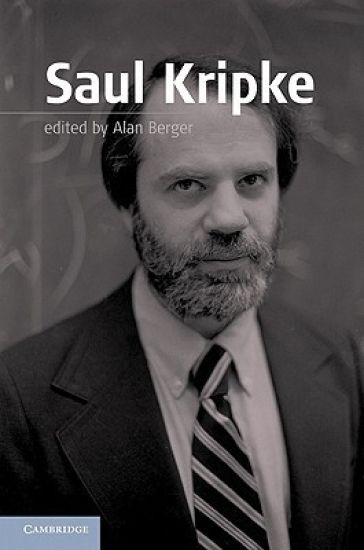
Saul Kripke
Cambridge University Press
2011
sidottu
This collection of essays on Saul Kripke and his philosophy is the first and only collection of essays to examine both published and unpublished writings by Kripke. Its essays, written by distinguished philosophers in the field, present a broader picture of Kripke's life and work than has previously been available to scholars of his thought. New topics covered in these essays include vacuous names and names in fiction, Kripke on logicism and de re attitude toward numbers, Kripke on the incoherency of adopting a logic, Kripke on colour words and his criticism of the primary versus secondary quality distinction, and Kripke's critique of functionalism. These essays not only present Kripke's basic arguments but also engage with the arguments and controversies engendered by his work, providing the most comprehensive analysis of his philosophy and writings available. This collection will become a classic in contemporary analytic philosophy.