Kirjojen hintavertailu. Mukana 12 390 323 kirjaa ja 12 kauppaa.

Kirjahaku

Etsi kirjoja tekijän nimen, kirjan nimen tai ISBN:n perusteella.

1000 tulosta hakusanalla Shaun Crowe

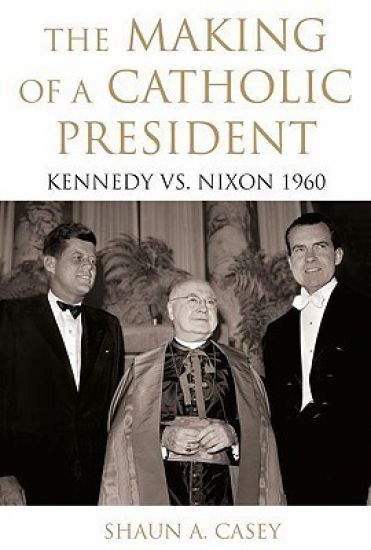
The Making of a Catholic President

The Making of a Catholic President

Shaun A. Casey

Oxford University Press Inc
2009
sidottu
The 1960 presidential election, won ultimately by John F. Kennedy, was one of the closest and most contentious in American history. The country had never elected a Roman Catholic president, and the last time a Catholic had been nominated-New York Governor Al Smith in 1928-he was routed in the general election. From the outset, Kennedy saw the religion issue as the single most important obstacle on his road to the White House. He was acutely aware of, and deeply frustrated by, the possibility that his personal religious beliefs could keep him out of the White House. In The Making of a Catholic President, Shaun Casey tells the fascinating story of how the Kennedy campaign transformed the "religion question" from a liability into an asset, making him the first (and still only) Catholic president. Drawing on extensive archival research, including many never-before-seen documents, Casey takes us inside the campaign to show Kennedy's chief advisors-Ted Sorensen, John Kenneth Galbraith, Archibald Cox-grappling with the staunch opposition to the candidate's Catholicism. Casey also reveals, for the first time, many of the Nixon campaign's efforts to tap in to anti-Catholic sentiment, with the aid of Billy Graham and the National Association of Evangelicals, among others. The alliance between conservative Protestants and the Nixon campaign, he shows, laid the groundwork for the rise of the Religious Right. This book will shed light on one of the most talked-about elections in American history, as well as on the vexed relationship between religion and politics more generally. With clear relevance to our own political situation-where politicians' religious beliefs seem more important and more volatile than ever-The Making of a Catholic President offers rare insights into one of the most extraordinary presidential campaigns in American history.
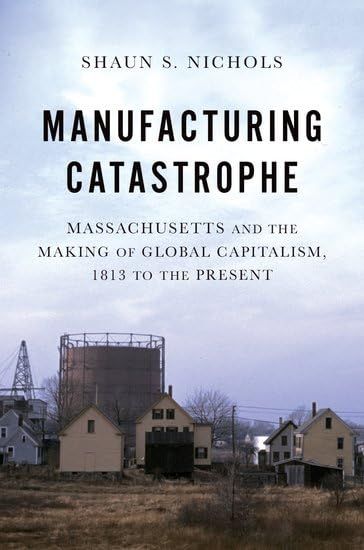
Manufacturing Catastrophe

Manufacturing Catastrophe

Shaun S. Nichols

OXFORD UNIVERSITY PRESS INC
2024
sidottu
American economic history has traditionally been told as a narrative of industrialization and affluence collapsing into globalization and industrial decay. Offering a reappraisal of this pattern, Manufacturing Catastrophe traces the successive rise and fall of the whaling, textile, garment, electronics, and high-tech industries in Massachusetts over the past two hundred years. It shows how business, labor, and political leaders repeatedly mobilized the lure of crisis—cheap labor, low taxes, and generous manufacturing subsidies—to pull and push both capital and workers across the continents, repeatedly remaking the pioneering industrial cities of Fall River and New Bedford. Workers—ranging from migrating Azorean seamen to British weavers to Quebecois farmers—and capitalists—including mobile manufacturers, globetrotting whalers, and multinational conglomerators—participated in the creation of regional growth and, with it, American industrial ascendance. Exploring the paradoxical and recurring coexistence of high unemployment and labor shortages in these cities, this book explains why recovery and growth have not necessarily translated into long-term prosperity. In doing so, it illuminates how economic catastrophe was, ironically, a critical ingredient in the making of America's industrial hegemony.
Manufacturing Catastrophe

Manufacturing Catastrophe

Shaun S. Nichols

OXFORD UNIVERSITY PRESS INC
2024
nidottu
American economic history has traditionally been told as a narrative of industrialization and affluence collapsing into globalization and industrial decay. Offering a reappraisal of this pattern, Manufacturing Catastrophe traces the successive rise and fall of the whaling, textile, garment, electronics, and high-tech industries in Massachusetts over the past two hundred years. It shows how business, labor, and political leaders repeatedly mobilized the lure of crisis—cheap labor, low taxes, and generous manufacturing subsidies—to pull and push both capital and workers across the continents, repeatedly remaking the pioneering industrial cities of Fall River and New Bedford. Workers—ranging from migrating Azorean seamen to British weavers to Quebecois farmers—and capitalists—including mobile manufacturers, globetrotting whalers, and multinational conglomerators—participated in the creation of regional growth and, with it, American industrial ascendance. Exploring the paradoxical and recurring coexistence of high unemployment and labor shortages in these cities, this book explains why recovery and growth have not necessarily translated into long-term prosperity. In doing so, it illuminates how economic catastrophe was, ironically, a critical ingredient in the making of America's industrial hegemony.
Mindreading

Mindreading

Shaun Nichols; Stephen P. Stich

Clarendon Press
2003
sidottu
The everyday capacity to understand the mind, or "mindreading", plays an enormous role in our ordinary lives. Shaun Nichols and Stephen Stich provide a detailed and integrated account of the intricate web of mental components underlying this fascinating and multifarious skill. The imagination, they argue, is essential to understanding others, and there are special cognitive mechanisms for understanding oneself. The account that emerges has broad implications for longstanding philosophical debates over the status of folk psychology.
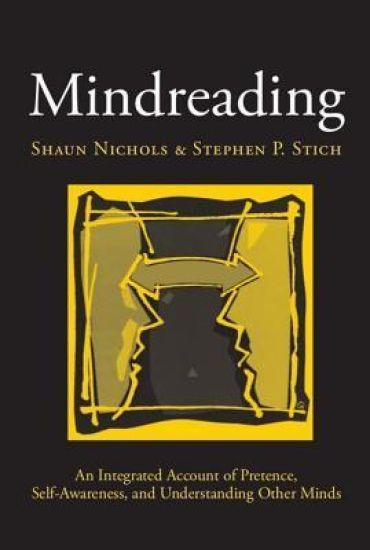
Mindreading

Mindreading

Shaun Nichols; Stephen P. Stich

Clarendon Press
2003
nidottu
The everyday capacity to understand the mind, fancifully dubbed 'mindreading', plays an enormous role in our lives. In the latter half of the 20th century mindreading became the object of sustained scientific and theoretical research, capturing the attention of a wide range of disciplines, including philosophy, developmental psychology, behavioral ecology, anthropology, and cognitive psychopathology. What has been missing is a detailed and integrated account of the mental components that underlie this remarkable capacity. Nichols and Stich develop and defend a new account of the psychological mechanisms underlying mindreading. They maintain that it is, as common sense would suggest, vital to distinguish between reading others' minds and reading one's own. In reading other minds, the imagination plays a central role. As a result, the authors begin with an explicit and systematic account of pretence and imagination which proposes that pretence representations are contained in a separate mental workspace, the 'Possible World Box', which is part of the basic architecture of the human mind. The mechanisms underlying pretence get recruited when people attempt to understand others and predict their behaviour. In some cases, we use our own mental mechanisms to simulate the mental processes of another, as suggested by the 'simulation theory' of mindreading. However, mindreading also implicates very different kinds of mechanisms that rely on rich bodies of information, as suggested by information-based accounts of mindreading. In addition, the authors argue, reading other minds involves important processes that don't fit into either category. None of these mechanisms, though, explain how we read our own minds, which, according to the authors, requires invoking an entirely independent set of mechanisms. What we find, then, is an intricate web of mental components to explain our fascinating and multifarious knack of understanding minds. This account provides a valuable framework for future work on mindreading and has broad implications for philosophical debates that have surrounded the issue for the last quarter century.
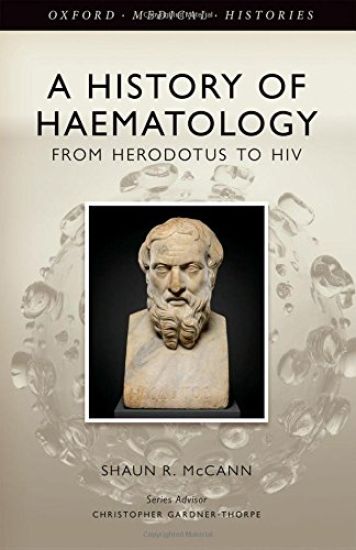
A History of Haematology

A History of Haematology

Shaun R. McCann

Oxford University Press
2016
sidottu
Blood has long been an object of intrigue for many of the world's philosophers and physicians, and references to it have existed since the earliest studies of human anatomy. Herodotus of Halicarnassus, whose writings 500 years before the birth of Christ drew on stories collected during his widespread travels, was amongst the first to identify the ritualistic and medical significance of blood. However, despite this long established history, haematology as a medical specialty is relatively new. A History of Haematology: From Herodotus to HIV traces the history of haematology from biblical times to the present, discussing the major defining discoveries in the specialty, ranging from war as a catalyst for the development of new techniques in blood transfusion, to the medical response to the HIV/AIDS epidemic. In this beautifully illustrated and passionately rendered history of the field of haematology, Professor Shaun McCann traces the remarkable developments within haematology and the work of the scientists and pioneers central to these advances. This engaging and authoritative history will appeal to a wide audience including haematologists, nurses and other health care workers in haematology, as well as medical students, and general physicians with an interest in haematology.
Enactivist Interventions

Enactivist Interventions

Shaun Gallagher

Oxford University Press
2017
sidottu
Enactivist Interventions is an interdisciplinary work that explores how theories of embodied cognition illuminate many aspects of the mind, including intentionality, representation, the affect, perception, action and free will, higher-order cognition, and intersubjectivity. Gallagher argues for a rethinking of the concept of mind, drawing on pragmatism, phenomenology and cognitive science. Enactivism is presented as a philosophy of nature that has significant methodological and theoretical implications for the scientific investigation of the mind. Gallagher argues that, like the basic phenomena of perception and action, sophisticated cognitive phenomena like reflection, imagining, and mathematical reasoning are best explained in terms of an affordance-based skilled coping. He offers an account of the continuity that runs between basic action, affectivity, and a rationality that in every case remains embodied. Gallagher's analysis also addresses recent predictive models of brain function and outlines an alternative, enactivist interpretation that emphasizes the close coupling of brain, body and environment rather than a strong boundary that isolates the brain in its internal processes. The extensive relational dynamics that integrates the brain with the extra-neural body opens into an environment that is physical, social and cultural and that recycles back into the enactive process. Cognitive processes are in-the-world rather than in-the-head; they are situated in affordance spaces defined across evolutionary, developmental and individual histories, and are constrained by affective processes and normative dimensions of social and cultural practices.
Bound

Bound

Shaun Nichols

Oxford University Press
2017
nidottu
The problem of free will arises from ordinary, commonsense reflection. Shaun Nichols examines these ordinary attitudes from a naturalistic perspective. He offers a psychological account of the origins of the problem of free will. According to his account the problem arises because of two naturally emerging ways of thinking about ourselves and the world, one of which makes determinism plausible while the other makes determinism implausible. Although contemporary cognitive science does not settle whether choices are determined, Nichols argues that our belief in indeterminist choice is grounded in faulty inference and should be regarded as unjustified. However, even if our belief in indeterminist choice is false, it's a further substantive question whether that means that free will doesn't exist. Nichols argues that, because of the flexibility of reference, there is no single answer to whether free will exists. In some contexts, it will be true to say 'free will exists'; in other contexts, it will be false to say that. With this substantive background in place, Bound promotes a pragmatic approach to prescriptive issues. In some contexts, the prevailing practical considerations suggest that we should deny the existence of free will and moral responsibility; in other contexts the practical considerations suggest that we should affirm free will and moral responsibility. This allows for the possibility that in some contexts, it is morally apt to exact retributive punishment; in other contexts, it can be apt to take up the exonerating attitude of hard incompatibilism.
Action and Interaction

Action and Interaction

Shaun Gallagher

Oxford University Press
2020
sidottu
Shaun Gallagher presents a ground-breaking interdisciplinary account of human action, bringing out its essentially social dimension. He explores and synthesizes the different approaches of action theory, social cognition, and critical social theory. He shows that in order to understand human agency and the aspects of mind that are associated with it, we need to grasp the crucial role of context or circumstance in action, and the normative constraints of social and cultural practices. He also investigates issues concerning social cognition and embodied intersubjective interaction, including direct social perception and the role of narrative and communicative practices from an interdisciplinary perspective. Gallagher thereby brings together embodied and enactive approaches to action for the first time in this book and, in developing an alternative to standard conceptions of understanding others, he bridges social cognition and critical social theory, drawing out the implications for recognition, autonomy, and justice.
Enactivist Interventions

Enactivist Interventions

Shaun Gallagher

Oxford University Press
2019
nidottu
Enactivist Interventions is an interdisciplinary work that explores how theories of embodied cognition illuminate many aspects of the mind, including intentionality, representation, the affect, perception, action and free will, higher-order cognition, and intersubjectivity. Gallagher argues for a rethinking of the concept of mind, drawing on pragmatism, phenomenology and cognitive science. Enactivism is presented as a philosophy of nature that has significant methodological and theoretical implications for the scientific investigation of the mind. Gallagher argues that, like the basic phenomena of perception and action, sophisticated cognitive phenomena like reflection, imagining, and mathematical reasoning are best explained in terms of an affordance-based skilled coping. He offers an account of the continuity that runs between basic action, affectivity, and a rationality that in every case remains embodied. Gallagher's analysis also addresses recent predictive models of brain function and outlines an alternative, enactivist interpretation that emphasizes the close coupling of brain, body and environment rather than a strong boundary that isolates the brain in its internal processes. The extensive relational dynamics that integrates the brain with the extra-neural body opens into an environment that is physical, social and cultural and that recycles back into the enactive process. Cognitive processes are in-the-world rather than in-the-head; they are situated in affordance spaces defined across evolutionary, developmental and individual histories, and are constrained by affective processes and normative dimensions of social and cultural practices.
Vatican II

Vatican II

Shaun Blanchard; Stephen Bullivant

Oxford University Press
2023
nidottu
Very Short Introductions: Brilliant, Sharp, Inspiring The Second Vatican Council (1962-1965), or Vatican II, is arguably the most significant event in the life of the Catholic Church since the Reformation. The Council initiated, intentionally or not, profound changes not simply within Catholic theology, but in the religious, social, and moral lives of the world's billion Catholics. It also reconfigured, intellectually and practically, the Church's engagements with those outside of it - most obviously with regard to other religions. The sixteen documents formally issued by Vatican II constitute some of the most influential writings of the whole twentieth century. Debates over their correct interpretation and authority are constant, but they remain an indispensable point-of-reference for all areas of Catholic life, from liturgy and sacraments, to the Church's vast network of charitable and educational endeavours the world over. In this Very Short Introduction, Shaun Blanchard and Stephen Bullivant present the backstory to this event. Vatican II is explored in light of the wider history of the Catholic Church and placed in the tumultuous context of the 1960s. It distils the research on Vatican II, employing the first-hand accounts of participants and observers, and the official proceedings of the Council to paint a rich picture of one of the most important events of the last century. ABOUT THE SERIES: The Very Short Introductions series from Oxford University Press contains hundreds of titles in almost every subject area. These pocket-sized books are the perfect way to get ahead in a new subject quickly. Our expert authors combine facts, analysis, perspective, new ideas, and enthusiasm to make interesting and challenging topics highly readable.
Rational Rules

Rational Rules

Shaun Nichols

Oxford University Press
2021
sidottu
Moral systems, like normative systems more broadly, involve complex mental representations. Rational Rules proposes that moral learning can be understood in terms of general-purpose rational learning procedures. Nichols argues that statistical learning can help answer a wide range of questions about moral thought: Why do people think that rules apply to actions rather than consequences? Why do people expect new rules to be focused on actions rather than consequences? How do people come to believe a principle of liberty, according to which whatever is not expressly prohibited is permitted? How do people decide that some normative claims hold universally while others hold only relative to some group? The resulting account has both empiricist and rationalist features: since the learning procedures are domain-general, the result is an empiricist theory of a key part of moral development, and since the learning procedures are forms of rational inference, the account entails that crucial parts of our moral system enjoy rational credentials. Moral rules can also be rational in the sense that they can be effective for achieving our ends, given our ecological settings. Rational Rules argues that at least some central components of our moral systems are indeed ecologically rational: they are good at helping us attain common goals. Nichols argues that the account might be extended to capture moral motivation as a special case of a much more general phenomenon of normative motivation. On this view, a basic form of rule representation brings motivation along automatically, and so part of the explanation for why we follow moral rules is that we are built to follow rules quite generally.
The Self and its Disorders

The Self and its Disorders

Shaun Gallagher

Oxford University Press
2024
sidottu
Shaun Gallagher offers an account of psychopathologies as disorders of the self. The Self and its Disorders develops an interdisciplinary approach to an 'integrative' perspective in psychiatry. In contrast to some integrative approaches that focus on narrow brain-based conceptions, or on symptomology, this book takes its bearings from embodied and enactive conceptions of human experience. Gallagher offers an understanding of the self as a pattern of processes that include bodily, experiential, affective, cognitive, intersubjective, narrative, ecological and normative factors. He provides a philosophical analysis of the notion of self-pattern; then, drawing on phenomenological, developmental, clinical and experimental evidence, he proposes a method to study the effects of psychopathologies on the self-pattern. The book includes specific discussions of schizophrenia, anxiety disorders, depression, borderline personality disorder, and autism, among other disorders, as well as the effects of torture and solitary confinement. It also explores a variety of issues that relate to therapeutic approaches, including deep brain stimulation, meditation-based interventions, and the use of artificial intelligence and virtual reality.
How the Body Shapes the Mind

How the Body Shapes the Mind

Shaun Gallagher

Clarendon Press
2006
nidottu
How the Body Shapes the Mind is an interdisciplinary work that addresses philosophical questions by appealing to evidence found in experimental psychology, neuroscience, studies of pathologies, and developmental psychology. There is a growing consensus across these disciplines that the contribution of embodiment to cognition is inescapable. Because this insight has been developed across a variety of disciplines, however, there is still a need to develop a common vocabulary that is capable of integrating discussions of brain mechanisms in neuroscience, behavioural expressions in psychology, design concerns in artificial intelligence and robotics, and debates about embodied experience in the phenomenology and philosophy of mind. Shaun Gallagher's book aims to contribute to the formulation of that common vocabulary and to develop a conceptual framework that will avoid both the overly reductionistic approaches that explain everything in terms of bottom-up neuronal mechanisms, and inflationistic approaches that explain everything in terms of Cartesian, top-down cognitive states. Gallagher pursues two basic sets of questions. The first set consists of questions about the phenomenal aspects of the structure of experience, and specifically the relatively regular and constant features that we find in the content of our experience. If throughout conscious experience there is a constant reference to one's own body, even if this is a recessive or marginal awareness, then that reference constitutes a structural feature of the phenomenal field of consciousness, part of a framework that is likely to determine or influence all other aspects of experience. The second set of questions concerns aspects of the structure of experience that are more hidden, those that may be more difficult to get at because they happen before we know it. They do not normally enter into the content of experience in an explicit way, and are often inaccessible to reflective consciousness. To what extent, and in what ways, are consciousness and cognitive processes, which include experiences related to perception, memory, imagination, belief, judgement, and so forth, shaped or structured by the fact that they are embodied in this way?
How the Body Shapes the Mind

How the Body Shapes the Mind

Shaun Gallagher

Clarendon Press
2005
sidottu
How the Body Shapes the Mind is an interdisciplinary work that addresses philosophical questions by appealing to evidence found in experimental psychology, neuroscience, studies of pathologies, and developmental psychology. There is a growing consensus across these disciplines that the contribution of embodiment to cognition is inescapable. Because this insight has been developed across a variety of disciplines, however, there is still a need to develop a common vocabulary that is capable of integrating discussions of brain mechanisms in neuroscience, behavioural expressions in psychology, design concerns in artificial intelligence and robotics, and debates about embodied experience in the phenomenology and philosophy of mind. Shaun Gallagher's book aims to contribute to the formulation of that common vocabulary and to develop a conceptual framework that will avoid both the overly reductionistic approaches that explain everything in terms of bottom-up neuronal mechanisms, and inflationistic approaches that explain everything in terms of Cartesian, top-down cognitive states. Gallagher pursues two basic sets of questions. The first set consists of questions about the phenomenal aspects of the structure of experience, and specifically the relatively regular and constant features that we find in the content of our experience. If throughout conscious experience there is a constant reference to one's own body, even if this is a recessive or marginal awareness, then that reference constitutes a structural feature of the phenomenal field of consciousness, part of a framework that is likely to determine or influence all other aspects of experience. The second set of questions concerns aspects of the structure of experience that are more hidden, those that may be more difficult to get at because they happen before we know it. They do not normally enter into the content of experience in an explicit way, and are often inaccessible to reflective consciousness. To what extent, and in what ways, are consciousness and cognitive processes, which include experiences related to perception, memory, imagination, belief, judgement, and so forth, shaped or structured by the fact that they are embodied in this way?
Bound

Bound

Shaun Nichols

Oxford University Press
2015
sidottu
The problem of free will arises from ordinary, commonsense reflection. Shaun Nichols examines these ordinary attitudes from a naturalistic perspective. He offers a psychological account of the origins of the problem of free will. According to his account the problem arises because of two naturally emerging ways of thinking about ourselves and the world, one of which makes determinism plausible while the other makes determinism implausible. Although contemporary cognitive science does not settle whether choices are determined, Nichols argues that our belief in indeterminist choice is grounded in faulty inference and should be regarded as unjustified. However, even if our belief in indeterminist choice is false, it's a further substantive question whether that means that free will doesn't exist. Nichols argues that, because of the flexibility of reference, there is no single answer to whether free will exists. In some contexts, it will be true to say 'free will exists'; in other contexts, it will be false to say that. With this substantive background in place, Bound promotes a pragmatic approach to prescriptive issues. In some contexts, the prevailing practical considerations suggest that we should deny the existence of free will and moral responsibility; in other contexts the practical considerations suggest that we should affirm free will and moral responsibility. This allows for the possibility that in some contexts, it is morally apt to exact retributive punishment; in other contexts, it can be apt to take up the exonerating attitude of hard incompatibilism.
The Limits of Electoral Reform

The Limits of Electoral Reform

Shaun Bowler; Todd Donovan

Oxford University Press
2013
sidottu
Institutions 'matter' to electoral reform advocates and political scientists - both argue that variation in electoral institutions affect how elected officials and citizens behave. Change the rules, and citizen engagement with politics can be renewed. Yet a look at the record of electoral reform reveals a string of disappointments. This book examines a variety of reforms, including campaign finance, direct democracy, legislative term limits, and changes to the electoral system itself. This study finds electoral reforms have limited, and in many cases, no effects. Despite reform advocates' claims, and contrary to the 'institutions matter' literature, findings here suggest there are hard limits to effects of electoral reform. The explanations for this are threefold. The first is political. Reformers exaggerate claims about transformative effects of new electoral rules, yet their goal may simply be to maximize their partisan advantage. The second is empirical. Cross-sectional comparative research demonstrates that variation in electoral institutions corresponds with different patterns of political attitudes and behaviour. But this method cannot assess what happens when rules are changed. Using examples from the US, UK, New Zealand, Australia, and elsewhere this book examines attitudes and behaviour across time where rules were changed. Results do not match expectations from the institutional literature. Third is a point of logic. There is an inflated sense of the effects of institutions generally, and of electoral institutions in particular. Given the larger social and economic forces at play, it is unrealistic to expect that changes in electoral arrangements will have substantial effects on political engagement or on how people view politics and politicians. Institutional reform is an almost constant part of the political agenda in democratic societies. Someone, somewhere, always has a proposal not just to change the workings of the system but to reform it. The book is about how and why such reforms disappoint. Comparative Politics is a series for students, teachers, and researchers of political science that deals with contemporary government and politics. Global in scope, books in the series are characterised by a stress on comparative analysis and strong methodological rigour. The series is published in association with the European Consortium for Political Research. For more information visit: www.ecprnet.eu. The Comparative Politics series is edited by Professor David M. Farrell, School of Politics and International Relations, University College Dublin, and Kenneth Carty, Professor of Political Science, University of British Columbia.
Phenomenology

Phenomenology

Shaun Gallagher

Palgrave Macmillan
2012
nidottu
Shaun Gallagher offers an exciting contemporary perspective of the subject by retrieving many important insights made by the classic phenomenological philosophers, updating some of these insights in innovative ways, and showing how they directly relate to ongoing debates in philosophy and psychology.
Henry: Portrait of a Serial Killer

Henry: Portrait of a Serial Killer

Shaun Kimber

Red Globe Press
2011
nidottu
Henry: Portrait of a Serial Killer (1985) is a cold-eyed character study based on convicted murderer Henry Lee Lucas. Shaun Kimber's examination of the controversies surrounding the film considers the history and implications of censors' decisions on both sides of the Atlantic, revealing a wide range of social fears relating to film violence.