Kirjojen hintavertailu. Mukana 11 244 527 kirjaa ja 12 kauppaa.

Kirjahaku

Etsi kirjoja tekijän nimen, kirjan nimen tai ISBN:n perusteella.

1000 tulosta hakusanalla Silvia Strassi

Quando Dio Diventa Un Peso

Quando Dio Diventa Un Peso

Silvia Gomez

Lulu.com
2020
pokkari
Credere che la sofferenza ci aiuti a raggiungere uno stato di pace e ci porti in paradiso, invece che all'inferno, ci fa rimanere legati agli eventi traumatici, assumendo il ruolo di "vittima sacra". La ricerca di Dio/Padre/Madre separati da noi, innesca un gioco invisibile e distruttivo di tutta la bellezza che siamo. Quando si vive una esperienza traumatica e la nostra storia personale, familiare, sociale e morale contaminata da un credo religioso, l'esperienza non resta circoscritta all'accaduto. Automaticamente e inconsciamente si relaziona con i condizionamenti religiosi.
I frutti acerbi del mango

I frutti acerbi del mango

Silvia Luciani

Lulu.com
2019
nidottu
Khartum, Sudan, 1985. Mara, una giovane giornalista jugoslava, arriva nella capitale sudanese per realizzare un servizio sulle imminenti elezioni. Prevede anche di rivedere una coppia di amici incontrati li' alcuni anni prima, e soprattutto la donna della coppia, Nyamila, con cui ha condiviso un avventuroso viaggio nel Sud Sudan all'inizio di una devastante guerra civile. Ma una volta arrivata all'indirizzo di Mark e Nyamila, Mara trova la loro casa deserta e in stato di abbandono.L'incontro fortuito con Andrew, un giornalista britannico che lavora a Khartum, le permettera infine di localizzare Nyamila. Tuttavia, se la relazione tra Mara e Andrew si approfondisce, andando ben presto al di la di una semplice amicizia, rivedere Nyamila si rivelera traumatico, per Mara. La bellissima, enigmatica Nyamila non e piu' - e forse non e mai stata - la persona che Mara credeva di conoscere. E Andrew... Chi e Andrew in realta? Nel microcosmo della Khartum degli anni '80, niente e nessuno sembra essere cio' che appare.
L'altra città

L'altra città

Silvia Bilancia

Lulu.com
2017
pokkari
Esiste l'anima gemella? Esiste il colpo di fulmine? e se si tutto questo pu accadere a due persone mature? Questa la storia di un'intervista, ma anche qualcosa di pi . Questa la storia di 24 intensissime ore in cui i protagonisti riscopriranno le proprie vite, vaglieranno i propri errori, riscopriranno se stessi e si scopriranno l'un l'altra. Questa la storia di una calda giornata estiva in una caldissima Venezia in cui due persone loro malgrado si innamoreranno. Does the twin soul exist? Does the lightning strike exist? And if so all this can happen to two mature people? This is the story of an interview, but also something more. This is the story of 24 intense hours in which the protagonists will rediscover their lives, find their own mistakes, rediscover themselves and discover one another. This is the story of a hot summer day in a hot Venice where two people will fall in love.
Giving Bodies Back To Data

Giving Bodies Back To Data

Silvia Casini

MIT Press
2021
sidottu
An examination of the bodily, situated aspects of data-visualization work, looking at visualization practices around the development of MRI technology. Our bodies are scanned, probed, imaged, sampled, and transformed into data by clinicians and technologists. In this book, Silvia Casini reveals the affective relations and materiality that turn data into image--and in so doing, gives bodies back to data. Opening the black box of MRI technology, Casini examines the bodily, situated aspects of visualization practices around the development of this technology. Reframing existing narratives of biomedical innovation, she emphasizes the important but often overlooked roles played by aesthetics, affectivity, and craft practice in medical visualization. Combining history, theory, laboratory ethnography, archival research, and collaborative art-science, Casini retrieves the multiple presences and agencies of bodies in data visualization, mapping the traces of scientists' body work and embodied imagination. She presents an in-depth ethnographic study of MRI development at the University of Aberdeen's biomedical physics laboratory, from the construction of the first whole-body scanner for clinical purposes through the evolution of the FFC-MRI. Going beyond her original focus on MRI, she analyzes a selection of neuroscience- or biomedicine-inspired interventions by artists in media ranging from sculpture to virtual reality. Finally, she presents a methodology for designing and carrying out small-scale art-science projects, describing a collaboration that she herself arranged, highlighting the relational and aesthetic-laden character of data that are the product of craftsmanship and affective labor at the laboratory bench.
Vital Connections

Vital Connections

Silvia Borzutzky

University of Notre Dame Press
2002
sidottu
Vital Connections is the first book-length treatment in English of the evolution of social security in Chile and its privatization under the Pinochet regime. Borzutzky's study contains a dynamic history of Chilean politics, a sophisticated discussion of social inequalities, and an in-depth analysis of social security policies in Chile from 1924 to the present. Her work focuses on three critical historical periods: the mid-1920s, the late 1960s, and the early to mid-1970s. In each of these key epochs, Chile experienced a crisis which prompted a reform of its socioeconomic organization and, consequently, of its social security system. Throughout this concise, readable book, Borzutzky argues that Chile's social security system presented to the world a positive image, while hiding a political reality that was steeped in profound inequality. According to Borzutzky, Chile's social security system helped to create a narrative that portrayed the country as a unified society with a legitimate political system. Efforts on the part of the Chilean people to make this narrative a reality threatened those in power and ultimately led the Pinochet regime to destroy the political system and create a new "narrative" that stressed individualism, but in actuality perpetuated rampant human rights abuses. Borzutzky's timely analysis is particularly relevant to current considerations of social security reforms. Chile's social security system is often presented as a model for the rest of Latin America and other regions of the world, including the United States. Borzutzky's book highlights the impact of privatization on various segments and aspects of society, including women and the fiscal budget. With an impressive array of historical and current data to support her statements, Borzutzky offers a compelling counter-argument to privatization and to traditional interpretations of Chilean politics. She offers a new window on the intimate connections between politics, policies, and the distribution of socioeconomic resources in Chile.
Vital Connections

Vital Connections

Silvia Borzutzky

University of Notre Dame Press
2002
nidottu
Vital Connections is the first book-length treatment in English of the evolution of social security in Chile and its privatization under the Pinochet regime. Borzutzky's study contains a dynamic history of Chilean politics, a sophisticated discussion of social inequalities, and an in-depth analysis of social security policies in Chile from 1924 to the present. Her work focuses on three critical historical periods: the mid-1920s, the late 1960s, and the early to mid-1970s. In each of these key epochs, Chile experienced a crisis which prompted a reform of its socioeconomic organization and, consequently, of its social security system. Throughout this concise, readable book, Borzutzky argues that Chile's social security system presented to the world a positive image, while hiding a political reality that was steeped in profound inequality. According to Borzutzky, Chile's social security system helped to create a narrative that portrayed the country as a unified society with a legitimate political system. Efforts on the part of the Chilean people to make this narrative a reality threatened those in power and ultimately led the Pinochet regime to destroy the political system and create a new "narrative" that stressed individualism, but in actuality perpetuated rampant human rights abuses. Borzutzky's timely analysis is particularly relevant to current considerations of social security reforms. Chile's social security system is often presented as a model for the rest of Latin America and other regions of the world, including the United States. Borzutzky's book highlights the impact of privatization on various segments and aspects of society, including women and the fiscal budget. With an impressive array of historical and current data to support her statements, Borzutzky offers a compelling counter-argument to privatization and to traditional interpretations of Chilean politics. She offers a new window on the intimate connections between politics, policies, and the distribution of socioeconomic resources in Chile.
Queen, Mother, and Stateswoman

Queen, Mother, and Stateswoman

Silvia Z. Mitchell

Pennsylvania State University Press
2020
pokkari
When Philip IV of Spain died in 1665, his heir, Carlos II, was three years old. In addition to this looming dynastic crisis, decades of enormous military commitments had left Spain a virtually bankrupt state with vulnerable frontiers and a depleted army. In Silvia Z. Mitchell’s revisionist account, Queen, Mother, and Stateswoman, Queen Regent Mariana of Austria emerges as a towering figure at court and on the international stage, while her key collaborators—the secretaries, ministers, and diplomats who have previously been ignored or undervalued—take their rightful place in history.Mitchell provides a nuanced account of Mariana of Austria’s ten-year regency (1665–75) of the global Spanish Empire and examines her subsequent role as queen mother. Drawing from previously unmined primary sources, including Council of State deliberations, diplomatic correspondence, Mariana’s and Carlos’s letters, royal household papers, manuscripts, and legal documents, Mitchell describes how, over the course of her regency, Mariana led the monarchy out of danger and helped redefine the military and diplomatic blocs of Europe in Spain’s favor. She follows Mariana’s exile from court and recounts how the dowager queen used her extensive connections and diplomatic experience to move the negotiations for her son’s marriage forward, effectively exploiting the process to regain her position.A new narrative of the Spanish Habsburg monarchy in the later seventeenth century, this volume advances our knowledge of women’s legitimate political entitlement in the early modern period. It will be welcomed by scholars and students of queenship, women’s studies, and early modern Spain.
Queen, Mother, and Stateswoman

Queen, Mother, and Stateswoman

Silvia Z. Mitchell

Pennsylvania State University Press
2019
sidottu
When Philip IV of Spain died in 1665, his heir, Carlos II, was three years old. In addition to this looming dynastic crisis, decades of enormous military commitments had left Spain a virtually bankrupt state with vulnerable frontiers and a depleted army. In Silvia Z. Mitchell’s revisionist account, Queen, Mother, and Stateswoman, Queen Regent Mariana of Austria emerges as a towering figure at court and on the international stage, while her key collaborators—the secretaries, ministers, and diplomats who have previously been ignored or undervalued—take their rightful place in history.Mitchell provides a nuanced account of Mariana of Austria’s ten-year regency (1665–75) of the global Spanish Empire and examines her subsequent role as queen mother. Drawing from previously unmined primary sources, including Council of State deliberations, diplomatic correspondence, Mariana’s and Carlos’s letters, royal household papers, manuscripts, and legal documents, Mitchell describes how, over the course of her regency, Mariana led the monarchy out of danger and helped redefine the military and diplomatic blocs of Europe in Spain’s favor. She follows Mariana’s exile from court and recounts how the dowager queen used her extensive connections and diplomatic experience to move the negotiations for her son’s marriage forward, effectively exploiting the process to regain her position.A new narrative of the Spanish Habsburg monarchy in the later seventeenth century, this volume advances our knowledge of women’s legitimate political entitlement in the early modern period. It will be welcomed by scholars and students of queenship, women’s studies, and early modern Spain.
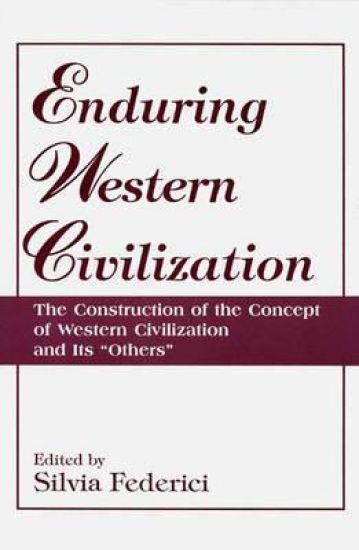
Enduring Western Civilization

Enduring Western Civilization

Silvia Federici

Praeger Publishers Inc
1995
sidottu
What do we mean by Western Civilization? When did the expression originate and why? At a time when there is a widespread perception that Western Civilization is undergoing a historic crisis, and when postmodernism, feminist theory, afrocentrism, deconstruction, and other current philosophical schools define themselves as alternatives to, or critiques of, Western Civilization, this book seeks to trace the development of the concept of Western Civilization and to examine the reasons for its endurance. It also suggests ways in which proponents of Western Civilization can co-opt ideas from opponents.Written from a multidisciplinary viewpoint, the essays in this volume trace the development of the concept of Western Civilization and seek to explode many standing beliefs—primarily those which concern the very existence of a Western tradition. Bound to be controversial, the book will be of interest to scholars and activists in the fields of cultural history, anthropology, and the history of ideas, as well as general readers interested in the enduring discussion of the notion of Western Civilization.
Enduring Western Civilization

Enduring Western Civilization

Silvia Federici

Praeger Publishers Inc
1995
nidottu
What do we mean by Western Civilization? When did the expression originate and why? At a time when there is a widespread perception that Western Civilization is undergoing a historic crisis, and when postmodernism, feminist theory, afrocentrism, deconstruction, and other current philosophical schools define themselves as alternatives to, or critiques of, Western Civilization, this book seeks to trace the development of the concept of Western Civilization and to examine the reasons for its endurance. It also suggests ways in which proponents of Western Civilization can co-opt ideas from opponents. Written from a multidisciplinary viewpoint, the essays in this volume trace the development of the concept of Western Civilization and seek to explode many standing beliefs—primarily those which concern the very existence of a Western tradition. Bound to be controversial, the book will be of interest to scholars and activists in the fields of cultural history, anthropology, and the history of ideas, as well as general readers interested in the enduring discussion of the notion of Western Civilization.
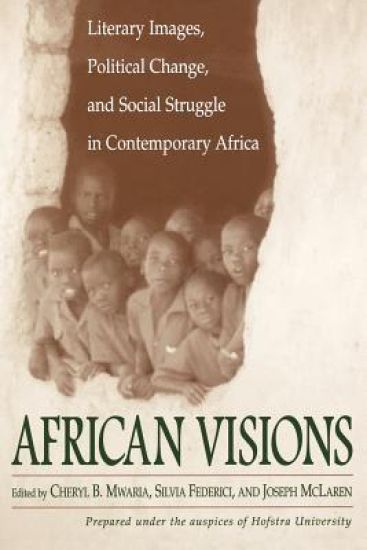
African Visions

African Visions

Silvia Federici; Joseph McLaren; Cheryl Mwaria

Praeger Publishers Inc
2000
nidottu
The complexity of African society entering the 21st century necessitates an interdisciplinary examination of Africa's political, social, and cultural developments and challenges. Focusing on Social Movements and Literature, Social Change and Culture, the book brings together a wide range of essays by committed scholars, writers, and activists concerned with progressive approaches to Africa's dilemmas.Beginning with an overview by anthropologist Cheryl Mwaria, African Visions addresses such issues as structural adjustments, religious freedom, human rights, democratization, educational movements, and health care. Particular analyses consider intellectual property, student activism, and the AIDS epidemic. Mwaria, Federici, and McLaren also explore the way social and cultural questions have been treated in literary works and theoretical studies dealing with hybridity, sexual politics, literacy, socialist orientations, and language. Noted literary scholars Odun Balogun and Alamin Mazrui consider aspects of these issues. The collection also examines trends in literature, publishing, and theater in such countries as Algeria, Niger, Nigeria, and South Africa in relation to themes such as gender, popular culture, African novels, and protest. Highlighting articles by two of Africa's leading activist/writers Dennis Brutus of South Africa, stressing regional cooperation, and Ngûgî wa Thiong'o of Kenya, advocating African languages, African Visions avoids the pessimism associated with numerous 20th century studies. Brutus and Ngûgî consider the economic and cultural effects of globalization and the necessity for promoting self-determination. An essential resource for all scholars and students concerned with contemporary African life and culture.
Misplaced Objects

Misplaced Objects

Silvia Spitta

University of Texas Press
2009
sidottu
"When things move, things change." Starting from this deceptively simple premise, Silvia Spitta opens a fascinating window onto the profound displacements and transformations that have occurred over the six centuries since material objects and human subjects began circulating between Europe and the Americas.This extended reflection on the dynamics of misplacement starts with the European practice of collecting objects from the Americas into Wunderkammern, literally "cabinets of wonders." Stripped of all identifying contexts, these exuberant collections, including the famous Real Gabinete de Historia Natural de Madrid, upset European certainties, forcing a reorganization of knowledge that gave rise to scientific inquiry and to the epistemological shift we call modernity. In contrast, cults such as that of the Virgin of Guadalupe arose out of the reverse migration from Europe to the Americas. The ultimate marker of mestizo identity in Mexico, the Virgin of Guadalupe is now fast crossing the U.S.-Mexico border, and miracles are increasingly being reported. Misplaced Objects then concludes with the more intimate and familial collections and recollections of Cuban and Mexican American artists and writers that are contributing to the Latinization of the United States.Beautifully illustrated and radically interdisciplinary, Misplaced Objects clearly demonstrates that it is not the awed viewer, but rather the misplaced object itself that unsettles our certainties, allowing new meanings to emerge.
Niccolo Machiavelli

Niccolo Machiavelli

Silvia R. Fiore

Greenwood Press
1990
sidottu
This comprehensive bibliographic guide to the books, monographs, articles and editions, translations, reviews, and dissertations on this important Renaissance writer provides the much-needed, annotated research source for scholarship and criticism published between 1935 and 1985. Research published after 1985 and available in annotated or abstracted form through computer searches is cited in an appendix. Annotations cover bibliographies, biographies, general and specific criticism, and new primary materials. It is an important and significant book, sure to provide scholars with a guide through the Florentine secretary's writings for the next several decades. Peter Bondanella Professor of Italian Studies, Indiana UniversityThose studying Niccolo Machiavelli have long endured the unavailability of a single, complete, interdisciplinary bibliographic guide to the vast number of books, articles, and reviews on the Renaissance writer and thinker who profoundly influenced the development of modern thought. This monumental bibliography provides the much-needed and comprehensive annotated research source for scholarship and criticism published on the Florentine between 1935 and 1985. To make this reference as current and complete as possible, an unannotated appendix cites research published after 1985 that is available in annotated or abstracted form through computer searches. Niccolo Machiavelli surpasses both Norsa's extensive but unannotated bibliography covering the years 1740-1935 and Fido's more recent survey which omits many articles and overlooks important studies in the social sciences especially in the last thirty years.Using a systematic, uniform, and easily accessible format, the volume, which covers more than 50 years of Machiavelli criticism, presents complete descriptions of the works with all bibliographic data. The descriptive summaries encompass the entire range of modern critical and scholarly study in all languages, including bibliographies, biographies, general and specific criticism, and new primary materials such as manuscripts. Included in this wealth of materials are books, monographs, articles, editions, translations, reviews, and dissertations. Arranged chronologically by year and alphabetically within each year the bibliography's user-friendly format includes reviews immediately following the documentation for the book or article in question. Keyed to the annotations, four separate indices (author, title, subject/name, and Machiavelli's works) enhance access to the large and varied amount of work on Machiavelli. The volume will implement the research efforts of both Machiavelli scholars and those in related general and specific fields.
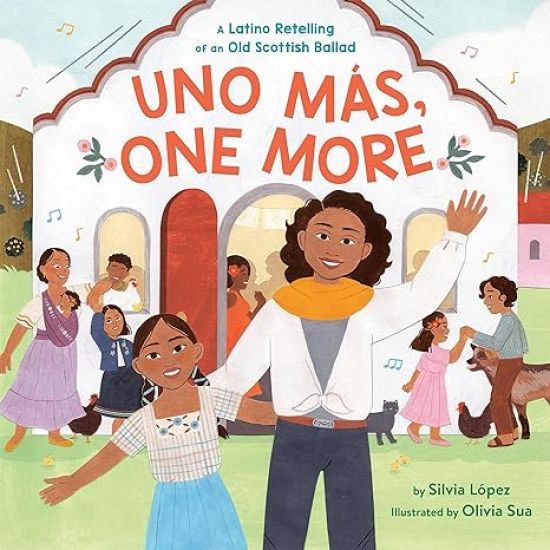
Uno Más, One More

Uno Más, One More

Silvia López

LITTLE, BROWN COMPANY
2024
sidottu
Join a family for a fiesta in their one-room casita in this exuberant Latino retelling of the beloved folktale Always Room for One More, which celebrates the importance of kindness and community, and includes Spanish words throughout the text.Don Manuel and Doña Lila love welcoming others into their home-no one is ever turned away. One day, their casita overflows with friends and loved ones and the house begins to shake and crack, causing chaos before everyone rushes out. To the family's dismay, their beloved home collapses. But where there is goodwill, there is also a way. In no time at all, their friends get to work and rebuild the casita, proving just how important teamwork is when fixing a problem.This vibrant Latino retelling of a popular Scottish ballad celebrates kindness, community, and the selfless gesture of giving back.
The Best American Food Writing 2020

The Best American Food Writing 2020

Silvia Killingsworth

Houghton Mifflin Harcourt Publishing Company
2020
nidottu
“These are stories about culture,” writes J. Kenji López-Alt in his introduction. “About how food shapes people, neighbourhoods, and history.” This year’s Best American Food Writing captures the food industry at a critical moment in history - from the confrontation of abusive kitchen culture, to the disappearance of the supermarkets, to the rise and fall of celebrity chefs, to the revolution of baby food. Spanning from New York’s premier restaurants to the chile factories of New Mexico, this collection lifts a curtain on how food arrives on our plates, revealing extraordinary stories behind what we eat and how we live. The Best American Food Writing 2020 includes Burkhard Bilger, Kat Kinsman, Laura Hayes, Tamar Haspel, Sho Spaeth, Tim Murphy and others.
Introduction to the Work of Donald Meltzer

Introduction to the Work of Donald Meltzer

Silvia Fano Cassese

Routledge
2019
sidottu
Introduction to the Work of Donald Meltzer is a critical survey of Donald Meltzer's central themes which simultaneously focuses on the most important concepts of his work. This detailed volume should not only spark the reader's interest in these fascinating, yet complex, themes but also encourage readers to deepen their knowledge of them. 'I have tried to point out an aspect which, in my view, is fundamental in Meltzer's theory: that is, the possibility of communicating those typical aspects of his analytical work which go beyond the well-established and reassuring technique. Meltzer's interest constantly turns to that area which is difficult to describe in words and perhaps cannot be expressed in conventional language: the emotional area of non-verbal communication, of reverie and unconscious thinking.'- From the Preface
A History of States and Economic Policies in Early Modern Europe
Why was early modern Europe the starting point of the economic expansion which led to the Industrial Revolution? What was the state’s role in this momentous transformation? A History of States and Economic Policies in Early Modern Europe takes a comparative approach to answer these questions, demonstrating that wars, public finance and state intervention in the economy were the key elements underlying European economic dynamics of the era.Structured in two parts, the book begins by examining the central issues of the state–economy relationship, including military revolution, the fiscal state and public finance, mercantilism, the formation of commercial empires and the economic war between Britain and France in the 1700s. The second part presents a detailed comparison between the different economic policies of the most important European states, looking at their unique demographic, economic, military and institutional contexts. Taken as a whole, this work provides a valuable analysis of early modern economic history and a picture of Europe’s global position on the eve of the Industrial Revolution.This book will be useful to students and researchers of economic history, early modern history and European history.