Kirjojen hintavertailu. Mukana 11 699 587 kirjaa ja 12 kauppaa.

Kirjahaku

Etsi kirjoja tekijän nimen, kirjan nimen tai ISBN:n perusteella.

329 tulosta hakusanalla Simonetta Carr

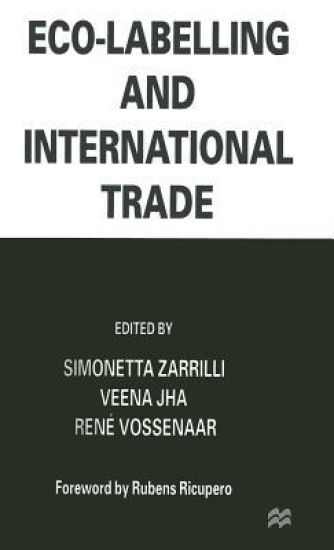
Eco-Labelling and International Trade

Eco-Labelling and International Trade

Veena Jha; Rene Vossenaar; Simonetta Zarrilli

Palgrave Macmillan
1997
sidottu
Eco-labelling is an increasingly popular way of meeting consumer's demands for environmental information about the products they purchase. The first book on this important subject collects contributions from the academic, policy-making and commercial spheres to look at the conceptual and practical issues, and to discuss how eco-labelling can be made effective and equitable, and must avoid distorting international trade to the detriment of developing countries.
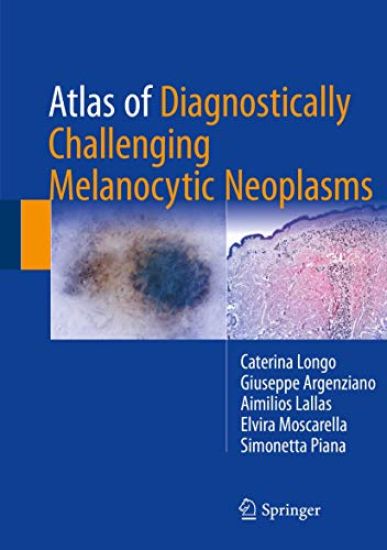
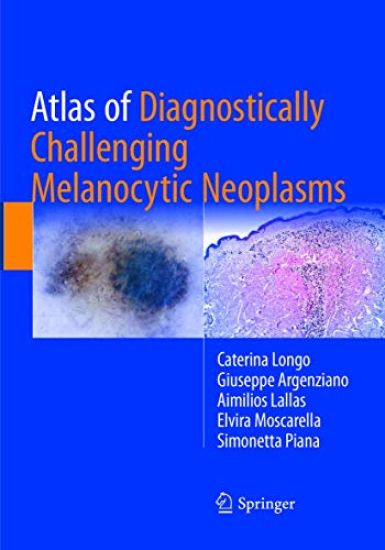
Atlas of Diagnostically Challenging Melanocytic Neoplasms

Atlas of Diagnostically Challenging Melanocytic Neoplasms

Caterina Longo; Giuseppe Argenziano; Aimilios Lallas; Elvira Moscarella; Simonetta Piana

Springer International Publishing AG
2018
sidottu
This atlas provides a clear, concise overview of the most challenging circumstances faced by clinicians and pathologists when dealing with melanocytic neoplasms. The book is structured as a case series; for each case, the clinical and dermoscopic appearances are presented, accompanied by a brief but comprehensive description and compelling histopathologic images. When available, in vivo confocal microscopy images are also included to highlight additional diagnostic clues. Identification of key messages and selected references will further guide the reader in the diagnosis and management of the neoplasm under consideration. It is well known that melanocytic lesions can be difficult to interpret. Some lesions show an ambiguous combination of morphologic criteria, and in these cases interpretation entails a high degree of subjectivity that results in low interobserver agreement even among expert pathologists. This atlas demonstrates how the addition of clinical information, including that provided by dermoscopy, can assist in reaching a more confident diagnosis.
Atlas of Diagnostically Challenging Melanocytic Neoplasms

Atlas of Diagnostically Challenging Melanocytic Neoplasms

Caterina Longo; Giuseppe Argenziano; Aimilios Lallas; Elvira Moscarella; Simonetta Piana

Springer International Publishing AG
2019
nidottu
This atlas provides a clear, concise overview of the most challenging circumstances faced by clinicians and pathologists when dealing with melanocytic neoplasms. The book is structured as a case series; for each case, the clinical and dermoscopic appearances are presented, accompanied by a brief but comprehensive description and compelling histopathologic images. When available, in vivo confocal microscopy images are also included to highlight additional diagnostic clues. Identification of key messages and selected references will further guide the reader in the diagnosis and management of the neoplasm under consideration. It is well known that melanocytic lesions can be difficult to interpret. Some lesions show an ambiguous combination of morphologic criteria, and in these cases interpretation entails a high degree of subjectivity that results in low interobserver agreement even among expert pathologists. This atlas demonstrates how the addition of clinical information, including that provided by dermoscopy, can assist in reaching a more confident diagnosis.
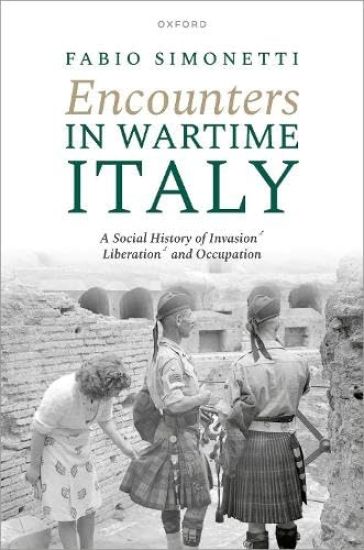
Encounters in Wartime Italy

Encounters in Wartime Italy

Fabio Simonetti

Oxford University Press
2025
sidottu
On 10 July 1943, British soldiers landed in south-eastern Sicily as part of a major Allied invasion. As they fought their way northwards through the Italian peninsula, they frequently encountered local populations, imposing a forced cohabitation that would have a lasting impact on both soldiers and civilians. For a long time, attention has focused predominantly on those who perceived their arrival as a liberation, marginalizing the daily realities of the Allied occupation of Italy. At the same time, much has been written about out-of-the-ordinary soldier-civilian encounters behind the enemy lines and the experience of GIs in Italy, which has led to the myth of the American liberation of Italy. Providing an in-depth study of ordinary encounters between British soldiers and Italian civilians in the context of the Allied invasion, liberation, and occupation of Sicily, Naples, and Rome between 1943 and 1947, Encounters in Wartime Italy aims to rebalance historiographical perspectives, shedding light on the lesser-known point of view of the British and their encounters with Italian civilians. Issues addressed include the evolving perception soldiers and civilians developed of each other, the imbalanced power dynamics between occupiers and occupied, and their complex cohabitation shaped by bartering, work relationships, illicit and violent interactions, and gendered encounters ranging from sexual exploitation to enduring love stories. Drawing on diaries, letters, memoirs, and interviews, as well as British and Italian official records, Fabio Simonetti places soldier-civilian encounters at the heart of his analysis, focusing on the complex social dynamics of Allied-occupied Italy. Encounters in Wartime Italy paints a nuanced portrait of the life and perception of occupiers and occupied, navigating the coexistence of fear, prejudice, and violence with extraordinary instances of resilience, admiration, and gratitude.
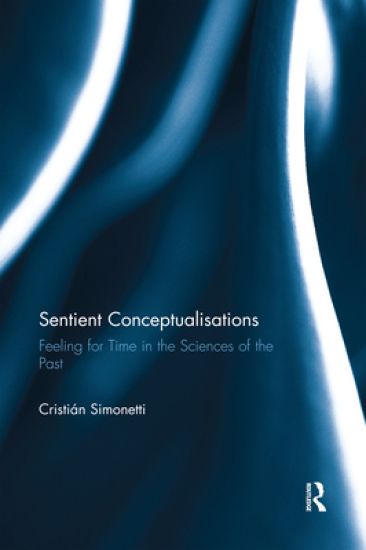
Sentient Conceptualisations

Sentient Conceptualisations

Cristian Simonetti

Routledge
2020
nidottu
Sentient Conceptualisations is about how scientists studying the past understand time in relation to space. Simonetti argues that the feelings for depths and surfaces, arising from the bodily movements and gestures of scientific practice, strongly influence conceptualisations of space and time. With an anthropological eye, Simonetti explores the ways archaeologists and those from related disciplines develop expert knowledge in varied environments. The book draws on ethnographic work carried out with Chilean and Scottish archaeologists, working both on land and underwater, to analyse in depth the visual language of science and what it reveals about the relation between thinking and feeling.
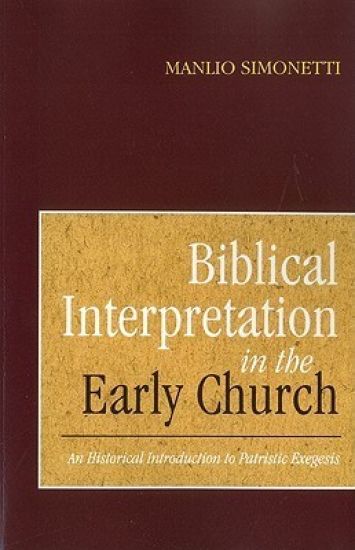
Biblical Interpretation in the Early Church

Biblical Interpretation in the Early Church

Manlio Simonetti

T. T.Clark Ltd
2002
nidottu
A comprehensive historical survey if patristic exegesis. Simonetti examines the changing understanding of the Word of God in the early Church, and describes the individual authors and 'schools' who wre active in this development. First there is a study of the role of Scripture in the infant Church. Simonetti describes the use of Scripture in orthodox circles, drawing comparisons from the Gnostic world. There follows an examination of Eastern exegesis in the 4th and 5th centuries (Eusebius, the Antiochian School, the Cappadocians, and later developments in Alexandria), and an examination of Western exegesis in the same period (including detailed discussions of Jerome and Augustine). Simonetti concludes with a study of developments in the Eastern and Western Church in the later 5th and 6th Centuries. A final section provides a theological perspective through a study of the theological interpretation of Scripture in the patristic era. Professor Manlio Simonetti teaches at the University of Rome and the 'Augustinianum', the Patristic Institute in Rome.
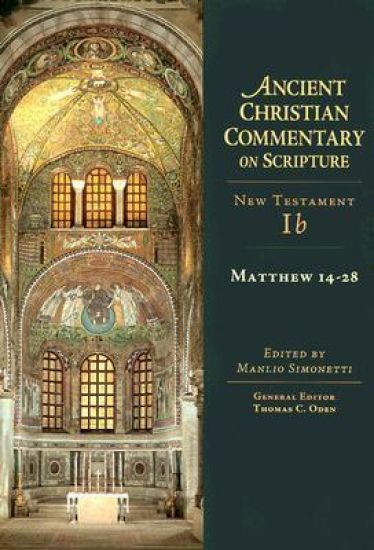
Matthew 14–28

Matthew 14–28

Manlio Simonetti; Thomas C. Oden

IVP Academic
2002
sidottu
The Gospel of Matthew stands out as a favorite biblical text among patristic commentators. The patristic commentary tradition on Matthew begins with Origen's pioneering twenty-five-volume commentary on the First Gospel in the mid-third century. In the Latin-speaking West, where commentaries did not appear until about a century later, the first commentary on Matthew was written by Hilary of Poitiers in the mid-fourth century. From that point the First Gospel became one of the texts most frequently commented on in patristic exegesis. Outstanding examples are Jerome's four-volume commentary and the valuable but anonymous and incomplete Opus imperfectum in Matthaeum. Then there are the Greek catena fragments derived from commentaries by Theodore of Heraclea, Apollinaris of Laodicea, Theodore of Mopsuestia and Cyril of Alexandria. The ancient homilies also provide ample comment, including John Chrysostom's ninety homilies and Chromatius of Aquileia's fifty-nine homilies on the Gospel of Matthew. In addition, there are various Sunday and feast-day homilies from towering figures such as Augustine and Gregory the Great, as well as other fathers. This rich abundance of patristic comment, much of it presented here in English translation for the first time by editor Manlio Simonetti, provides a bountiful and varied feast of ancient interpretation of the First Gospel.
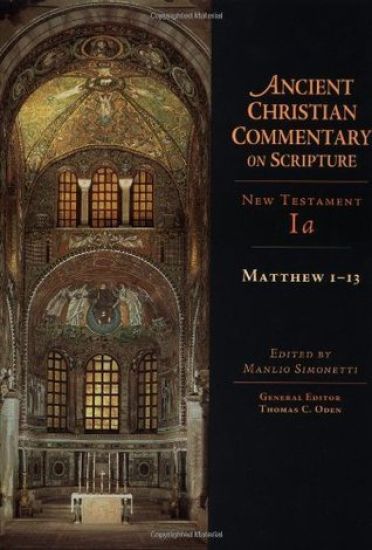
Matthew 1–13

Matthew 1–13

Manlio Simonetti; Thomas C. Oden

Inter-Varsity Press
2001
sidottu
The Gospel of Matthew stands out as a favorite biblical text among patristic commentators. The patristic commentary tradition on Matthew begins with Origen's pioneering twenty-five-volume commentary on the First Gospel in the mid-third century. In the Latin-speaking West, where commentaries did not appear until about a century later, the first commentary on Matthew was written by Hillary of Poitiers in the mid-fourth century. From that point the First Gospel became one of the most frequently commented texts in patristic exegesis. Outstanding examples are Jerome's four-volume commentary and the valuable but anonymous and incomplete Opus imperfectum in Matthaeum. Then there are the Greek catena fragments derived from commentaries by Theodore of Heraclea, Apollinaris of Laodicea, Theodore of Mopsuestia and Cyril of Alexandria. The ancient homilies also provide ample comment, including John Chrysostom's ninety homilies and Chromatius's fifty-nine homilies on the Gospel of Matthew. In addition there are various Sunday and feast-day homilies from towering figures such as Augustine and Gregory the Great as well as other fathers. This abundance of patristic comment, much of it presented here in English translation for the first time, provides a rich and varied feast of ancient interpretation of the First Gospel.
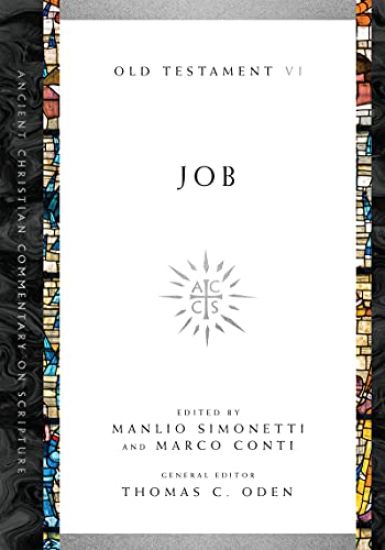
Job

Job

Manlio Simonetti; Marco Conti; Thomas C. Oden

IVP Academic
2019
nidottu
The book of Job presents its readers with a profound drama concerning innocent suffering. Such honest, forthright wrestling with the problem of evil and the silence of God has intrigued a wide gamut of readers both religious and nonreligious. Surprisingly, the earliest church fathers showed little interest in the book of Job. Not until Origen in the early third century is there much evidence of any systematic treatment of the book, and most of Origen's treatment is known to us only from the catenae. More intense interest came at the end of the fourth century and the beginning of the fifth. The excerpts in this Ancient Christian Commentary on Scripture volume focus on systematic treatment. Among Greek texts are those from Origen, Didymus the Blind, Julian the Arian, John Chrysostom, Hesychius of Jerusalem, and Olympiodorus. Among Latin sources we find Julian of Eclanum, Philip the Priest, and Gregory the Great. Among Syriac sources we find Ephrem the Syrian and Isho'dad of Merv, some of whose work is made available here for the first time in English. In store for readers of this volume is a great feast of wisdom from the ancient resources of the church with fresh relevance for today.
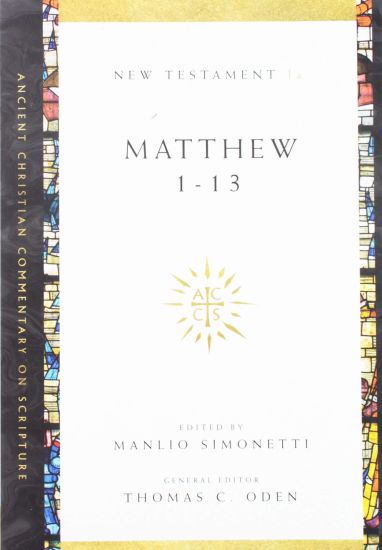
Matthew 1–13

Matthew 1–13

Manlio Simonetti; Thomas C. Oden

IVP Academic
2019
nidottu
The Gospel of Matthew stands out as a favorite biblical text among patristic commentators. The patristic commentary tradition on Matthew begins with Origen's pioneering twenty-five-volume commentary on the First Gospel in the mid-third century. In the Latin-speaking West, where commentaries did not appear until about a century later, the first commentary on Matthew was written by Hilary of Poitiers in the mid-fourth century. From that point the First Gospel became one of the texts most frequently commented on in patristic exegesis. Outstanding examples are Jerome's four-volume commentary and the valuable but anonymous and incomplete Opus imperfectum in Matthaeum. Then there are the Greek catena fragments derived from commentaries by Theodore of Heraclea, Apollinaris of Laodicea, Theodore of Mopsuestia and Cyril of Alexandria. The ancient homilies also provide ample comment, including John Chrysostom's ninety homilies and Chromatius of Aquileia's fifty-nine homilies on the Gospel of Matthew. In addition, there are various Sunday and feast-day homilies from towering figures such as Augustine and Gregory the Great as well as other fathers. In this ACCS volume, the rich abundance of patristic comment, much of it presented here in English translation for the first time, provides a bountiful and varied feast of ancient interpretation of the First Gospel.
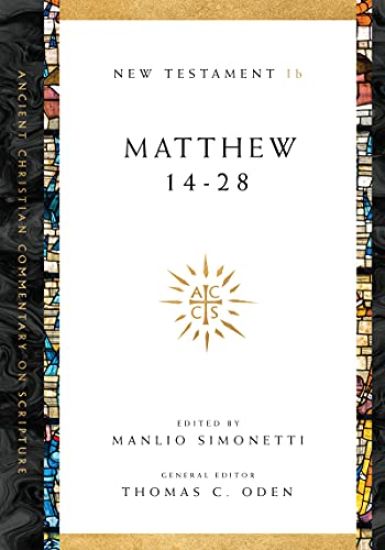
Matthew 14–28

Matthew 14–28

Manlio Simonetti; Thomas C. Oden

IVP Academic
2019
nidottu
The Gospel of Matthew stands out as a favorite biblical text among patristic commentators. The patristic commentary tradition on Matthew begins with Origen's pioneering twenty-five-volume commentary on the First Gospel in the mid-third century. In the Latin-speaking West, where commentaries did not appear until about a century later, the first commentary on Matthew was written by Hilary of Poitiers in the mid-fourth century. From that point the First Gospel became one of the texts most frequently commented on in patristic exegesis. Outstanding examples are Jerome's four-volume commentary and the valuable but anonymous and incomplete Opus imperfectum in Matthaeum. Then there are the Greek catena fragments derived from commentaries by Theodore of Heraclea, Apollinaris of Laodicea, Theodore of Mopsuestia and Cyril of Alexandria. The ancient homilies also provide ample comment, including John Chrysostom's ninety homilies and Chromatius of Aquileia's fifty-nine homilies on the Gospel of Matthew. In addition, there are various Sunday and feast-day homilies from towering figures such as Augustine and Gregory the Great as well as other fathers. In this ACCS volume, the rich abundance of patristic comment, much of it presented here in English translation for the first time, provides a bountiful and varied feast of ancient interpretation of the First Gospel.