Kirjojen hintavertailu. Mukana 11 610 591 kirjaa ja 12 kauppaa.

Kirjahaku

Etsi kirjoja tekijän nimen, kirjan nimen tai ISBN:n perusteella.

1000 tulosta hakusanalla Stanley Waterloo

Stanley Tigerman

Stanley Tigerman

Deborah Berke

YALE UNIVERSITY PRESS
2025
sidottu
A vibrant presentation of Stanley Tigerman’s imaginative architectural drawings and working methods This retrospective paints a new portrait of the legendary architect Stanley Tigerman (1930–2019) through his drawings, collages, and sketches. The book showcases a variety of creative documents and drawing styles, representative of the wide array of Tigerman’s projects and interests: master plans, urban designs, civic infrastructures such as museums and low-income housing, private residences, exhibition designs, furniture, and tableware, as well as architectural cartoons—his so-called Architoons. From the pragmatic and technical to the symbolic and narrative-driven, the drawings bring us into Tigerman’s creative process and capture his unique blend of intellect, wit, and humanistic sensibility. Featuring previously unpublished drawings from projects including the Illinois Holocaust Museum, the Commonwealth Edison Energy Museum, the Anti-Cruelty Society in Chicago, the Kalamazoo City Plan, and homeware for Swid Powell, this generously illustrated volume highlights the skillful and explorative process behind each project’s final outputs. In addition to providing a stunning example of postmodern hand-drawn architectural representations, this visual journey offers readers a deeper understanding of the working process and significance of drawing in Tigerman’s office, as well as his enduring contribution to the field of architecture. Distributed for the Yale School of Architecture
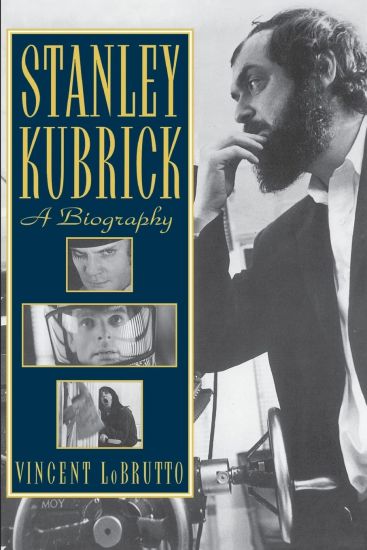
Stanley Kubrick

Stanley Kubrick

Vincent Lobrutto

Da Capo Press Inc
1999
pokkari
Stanley Kubrick, director of the acclaimed films Path of Glory, Spartacus, Lolita, Dr. Strangelove, 2001: Space Odyssey. A Clockwork Orange, The Shining, and Full Metal Jacket, is arguably one of the greatest American filmmakers. Yet, despite being hailed as a giant" by Orson Welles, little is known about the reclusive director. Stanley Kubrick ,the first full-length study of his life,is based on assiduous archival research as well as new interviews with friends, family, and colleagues.Film scholar Vincent LoBRutto provides a comprehensive portrait of the director, from his high school days, in the Bronx and his stint as a photographer for Look magazine, through the creation of his wide-ranging movies, including the long-awaited Eyes Wide Shut. The author provides behind-the-scenes details about writing, filming, financing, and reception of the director's entire output, paying close attention to the technical innovations and to his often contentious relationships with actors. This fascinating biography exposes the enigma that is Stanley Kubrick while placing him in context of film history.
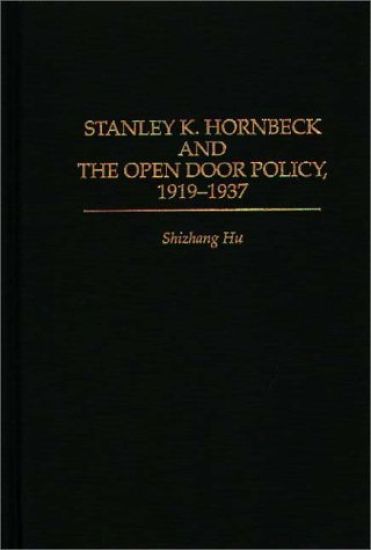
Stanley K. Hornbeck and the Open Door Policy, 1919-1937
Key to an understanding of many U.S. foreign policies, including the Open Door Policy, American extraterritoriality in China, the Stimson Doctrine, and the economic embargo against Japan, Hornbeck had more influence on policy toward Asia than any other official in the State Department from Wilson to FDR. In a book based on solid research of archival materials and the current literature in English and Chinese, Hu brings a Chinese perspective to an examination of Hornbeck's career and American policy in Asia. The book not only fills a vacuum in the study of Sino-American relations, but also corrects some traditional misperceptions and misinterpretations in the field.In Hu's view, Hornbeck has been misinterpreted by his contemporaries and by scholars. His policy was based on his perception of American interest in China, his changing views on the Chinese nationalist revolution, the relative strength of Japan, and his evaluation of the China market. Hornbeck's major weakness was a lack of understanding of the internal affairs of China. In illustrating Hornbeck's changing views on China and the East Asian situation, Hu disproves many misconceptions in current scholarship about Hornbeck being either pro-Chinese or pro-Japanese and about his consistent support for the Open Door Policy.
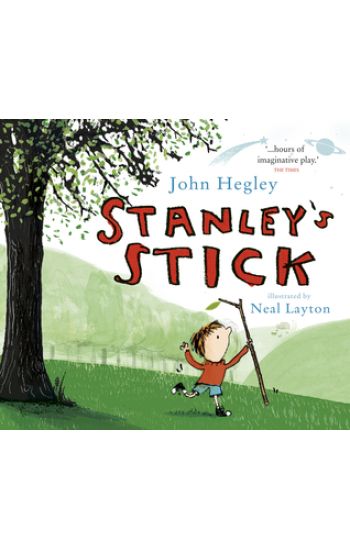
Stanley's Stick

Stanley's Stick

John Hegley

Hodder Children's Books
2012
nidottu
Stanley's Stick is a teaming-up of hefty talents - glorious poet John Hegley and award-winning illustrator Neal Layton. Stanley's stick is not just a stick. With a stick in hand, Stanley's options are endless - he flies to the moon, writes in the sand, goes fishing, plays a whistle and rides a dinosaur - and his imagination takes over and the magic begins. Hegley's lyrical prose captures the free-wheeling expressiveness of childhood, and Layton's deceptively simple illustrations are full of wit and character. Sweet, magical and thoroughly entertaining, this is Hegley and Layton's first collaboration.
Stanley Swanson - Breed of a Werewolf
Volume one, 'Breed of a Werewolf' - Stanley Swanson believes that war one day will happen of the creatures of the night but involve humans. He reaches out to a retired journalist 'Kain' in hopes that if he shares the secrets with him of both Werewolf and Vampires, that if a war does occur that humans will join sides with the Breed of Werewolf. Kain is then taken on a journey as he and 'Stanley' become very close and a friendship is made quickly as Kain agrees to write the journal. When the knowledge of what Stanley is doing with this mortal is leaked out, the highest of all vampires known as 'Drackulis', set a war in place. Stanley's family is immediately put at risk by a Drackulis known only as 'Gravakus'. It is then upon Stanley's return home with Kain that he soon learns that he himself has put his breed and more importantly his family at risk. Finding out later of the attacker, Stanley and his older brother 'Stephen' set out to take action upon Gravakus.
Stanley Kubrick, Director: A Visual Analysis

Stanley Kubrick, Director: A Visual Analysis

Ulrich Ruchti; Sybil Taylor; Alexander Walker

W. W. Norton Company
2000
nidottu
This new edition, revised and expanded to discuss all of Kubrick's films--including Eyes Wide Shut--again received the approval of the reclusive director, who before his death allowed the use of illustrations taken directly from his films' frames. The result is a frame-by-frame examination of the inimitable style that infuses every Kubrick movie, from the pitch-perfect hilarity of Lolita to the icy supremacy of 2001: A Space Odyssey to the baroque horror of The Shining. The book's beautiful design and dynamic arrangement of photographic stills offer a frame-by-frame understanding of how Kubrick constructed a film. What emerges is a deeply human study of one remarkable artist's nature and obsessions, and how these changed and shifted in his four decades as a filmmaker.
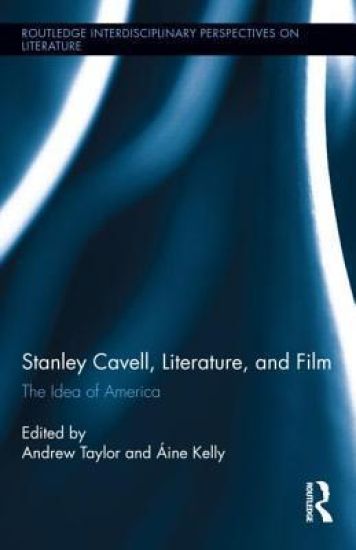
Stanley Cavell, Literature, and Film
This is the first book to offer a thorough examination of the relationship that Stanley Cavell’s celebrated philosophical work has to the ways in which the United States has been imagined and articulated in its literature. Establishing the contours of Cavell’s most significant readings of American philosophical and cultural activity, the volume explores how his philosophy and the kind of reading it demands have an important relation to broader considerations of the American national imaginary. Focused, coherent, and original essays from a wide range of philosophers and critics consider how his investigations of Henry David Thoreau and Ralph Waldo Emerson, for example, represent a sustained engagement with the ways in which philosophy might provide us with new ways of thinking and of living. This is the first detailed and comprehensive treatment of "America" as a category of enquiry in Cavell’s writing, engaging with the terms of Cavell’s various configurations of the nation and offering readings of American texts that illustrate the possibilities that Cavell’s work has, in turn, for literary and film criticism. This study of the role played by philosophy in the articulation of the American self-imaginary highlights the ways in which the reading of literature, and the practice of philosophy, are conjoined in the ethical and political project of national self-definition.
Stanley Baldwin

Stanley Baldwin

Philip Williamson

Cambridge University Press
1999
sidottu
Stanley Baldwin (1867–1947) is one of the most significant modern British politicians, but also one of the most controversial and puzzling. As Conservative leader and three times prime minister, Baldwin presided over the beginning of his party's long twentieth-century dominance. He did so in new and difficult conditions: the onset of modern democratic politics, the rise of Labour, chronic economic depression, the General Strike, persistent newspaper attacks, imperial discontent, the Abdication, and the threats from Mussolini and Hitler. This book provides an understanding of Baldwin's career, including a serious analysis of the moral and intellectual influences of his early life. Its main concerns are the investigation of a Conservative mind, and its communication with the various audiences that constituted the political nation. This is not a conventional biography, but rather an examination of the nature of political leadership, Conservative politics and 'national values'.
Stanley Baldwin

Stanley Baldwin

Philip Williamson

Cambridge University Press
2007
pokkari
Stanley Baldwin (1867–1947) is one of the most significant modern British politicians, but also one of the most controversial and puzzling. As Conservative leader and three times prime minister, Baldwin presided over the beginning of his party's long twentieth-century dominance. He did so in new and difficult conditions: the onset of modern democratic politics, the rise of Labour, chronic economic depression, the General Strike, persistent newspaper attacks, imperial discontent, the Abdication, and the threats from Mussolini and Hitler. This book provides an understanding of Baldwin's career, including a serious analysis of the moral and intellectual influences of his early life. Its main concerns are the investigation of a Conservative mind, and its communication with the various audiences that constituted the political nation. This is not a conventional biography, but rather an examination of the nature of political leadership, Conservative politics and 'national values'.
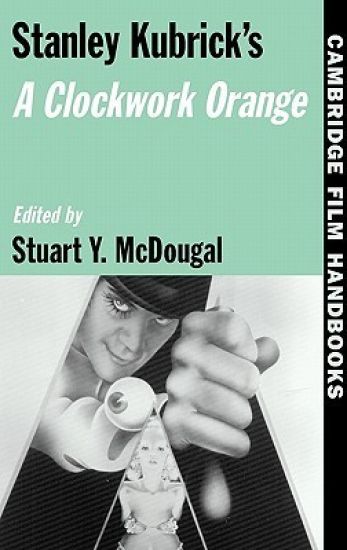
Stanley Kubrick's A Clockwork Orange

Stanley Kubrick's A Clockwork Orange

Cambridge University Press
2003
sidottu
Stanley Kubrick’s ‘A Clockwork Orange’ brings together new and critically informed essays about one of the most powerful, important and controversial films ever made. Following an introduction that provides an overview of the film and its production history, a suite of essays examine the literary origins of the work, the nature of cinematic violence, questions of gender and the film’s treatment of sexuality, and the difficulties of adapting an invented language (‘nadsat’) for the screen. This volume also includes two contemporary and conflicting reviews by Roger Hughes and Pauline Kael, a detailed glossary of ‘nadsat’ and stills from the film.
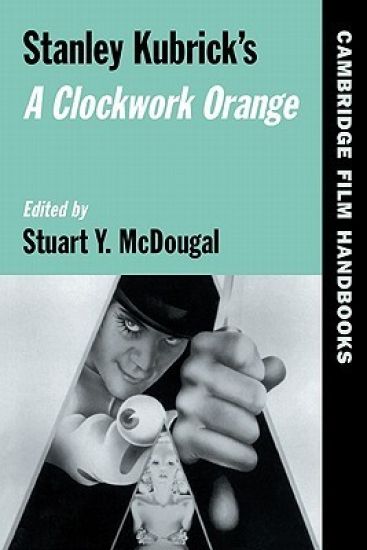
Stanley Kubrick's A Clockwork Orange

Stanley Kubrick's A Clockwork Orange

Cambridge University Press
2003
pokkari
Stanley Kubrick’s ‘A Clockwork Orange’ brings together new and critically informed essays about one of the most powerful, important and controversial films ever made. Following an introduction that provides an overview of the film and its production history, a suite of essays examine the literary origins of the work, the nature of cinematic violence, questions of gender and the film’s treatment of sexuality, and the difficulties of adapting an invented language (‘nadsat’) for the screen. This volume also includes two contemporary and conflicting reviews by Roger Hughes and Pauline Kael, a detailed glossary of ‘nadsat’ and stills from the film.
Stanley Cavell

Stanley Cavell

Cambridge University Press
2003
sidottu
Contemporary Philosophy in Focus offers a series of introductory volumes on many of the dominant philosophical thinkers of the current age. Stanley Cavell has been one of the most creative and independent of contemporary philosophical voices. At the core of his thought is the view that skepticism is not a theoretical position to be refuted by philosophical theory but is a reflection of the fundamental limits of human knowledge of the self, of others and of the external world that must be accepted. This volume is the first attempt systematically and accessibly to describe and assess the full range of Cavell’s work. There are new accounts of Cavell’s contribution to the philosophy of mind and language, the theory of action, ethics, aesthetics, Romanticism, American philosophy, Shakespeare, and film and opera. Outside philosophy the appeal of this volume will be unusually broad.
Stanley Cavell

Stanley Cavell

Cambridge University Press
2003
pokkari
Contemporary Philosophy in Focus offers a series of introductory volumes on many of the dominant philosophical thinkers of the current age. Stanley Cavell has been one of the most creative and independent of contemporary philosophical voices. At the core of his thought is the view that skepticism is not a theoretical position to be refuted by philosophical theory but is a reflection of the fundamental limits of human knowledge of the self, of others and of the external world that must be accepted. This volume is the first attempt systematically and accessibly to describe and assess the full range of Cavell’s work. There are new accounts of Cavell’s contribution to the philosophy of mind and language, the theory of action, ethics, aesthetics, Romanticism, American philosophy, Shakespeare, and film and opera. Outside philosophy the appeal of this volume will be unusually broad.
An Englishman at War: The Wartime Diaries of Stanley Christopherson DSO MC & Bar 1939-1945
‘An astonishing record...There is no other wartime diary that can match the scope of these diaries’ James Holland‘An outstanding contribution to the literature of the Second World War’Professor Gary SheffieldFrom the outbreak of war in September 1939 to the smouldering ruins of Berlin in 1945, via Tobruk, El Alamein, D-Day and the crossing of the Rhine, An Englishman at War is a unique first-person account of the Second World War. Stanley Christopherson’s regiment, the Sherwood Rangers Yeomanry, went to war as amateurs and ended up one of the most experienced, highly trained and most valued armoured units in the British Army. A junior officer at the beginning of the war, Christopherson became the commanding officer of the regiment soon after the D-Day landings. What he and his regiment witnessed presents a unique overview of one of the most cataclysmic events in world history and gives an extraordinary insight, through tragedy and triumph, into what it felt like to be part of the push for victory.
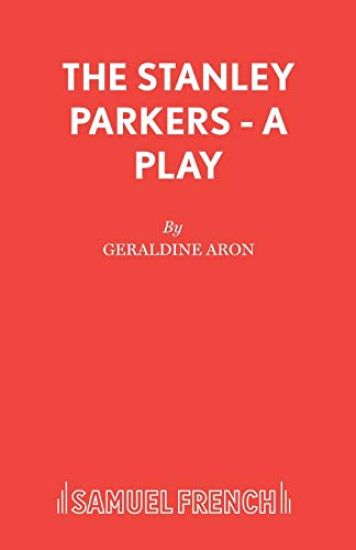
Stanley Parkers

Stanley Parkers

Geraldine Aron

Samuel French Ltd
1995
nidottu
Written in a clear and unpretentious blank verse, this play tells the story of Stanley and Dimitri, two middle-aged men who have lived together and loved each other for seventeen years. They speak directly to the audience, sharing their story with insight, humour and very obvious affection. The story ends sadly but our overriding impression is of the tenderness and warmth of a happy, unselfish relationship.2 men
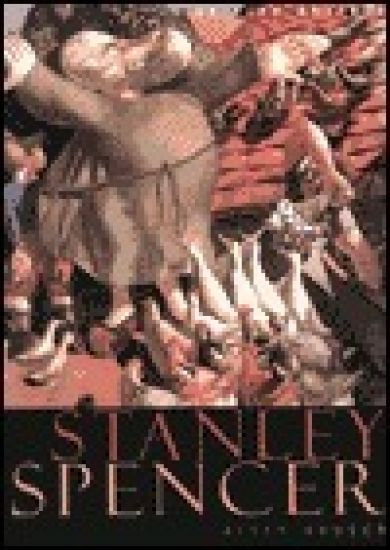
Stanley Spencer

Stanley Spencer

Kitty Hauser; Stanley Spencer

Princeton University Press
2001
pokkari
One of the most highly regarded and well known of all twentieth-century British artists, Stanley Spencer (1891-1959) is famous for two things. He immortalized the Berkshire village of Cookham, where he was born and spent most of his life. And he celebrated sex both on his canvases and through his unconventional understanding of relationships. Perhaps best known for his paintings of biblical subjects set in and around Cookham--in particular, The Resurrection, Cookham--Spencer was also an official war artist during both World Wars. In his paintings and in his life, he reveled in the intense ordinariness of the world he inhabited. His mature art fuses things most often thought of as separate: religion and sex, the real and the imaginary, public and private, the young and the old, the self and others. In this excellent introduction to the artist and his work, Kitty Hauser reveals how Spencer's art grew out of places, experiences, and social relations that enriched his imagination. Though Spencer is often described as visionary, this book shows that his brand of mysticism was firmly grounded in material reality--in landscapes, homes, and the human relationships he felt so strongly.