Kirjojen hintavertailu. Mukana 12 390 323 kirjaa ja 12 kauppaa.

Kirjahaku

Etsi kirjoja tekijän nimen, kirjan nimen tai ISBN:n perusteella.

1000 tulosta hakusanalla Stephanie Roberts

Economic Valuation of the Recreational Use of Mãe Bonifácia State Park

Economic Valuation of the Recreational Use of Mãe Bonifácia State Park

Rodrigo Lemos Gil; Stépnhanie T M F Nascimento; Roberto A T M E Souza

Our Knowledge Publishing
2024
pokkari
This study aims to extract monetary values that express the recreational use value of the M e Bonif cia State Park (PEMB), using the Contingent Valuation and Travel Cost methods. The study was carried out using data collected in the PEMB, which is located in the western region of the municipality of Cuiab , Mato Grosso, between the geographical coordinates 15 34'44"S and 56 05'16"W, with an area of 77.16 hectares, with the Avenues Miguel Sutil, Senador Filinto M ller and Rua Corsino do Amarante as its boundaries, using questionnaires. The values obtained using the Travel Cost Method show that visitors to the park are willing to pay the equivalent of 1.84/person/visit to the park. The results obtained using the Contingent Valuation Method show that 63% of those interviewed would be willing to pay between R$0.50 and R$1.00 to enter the park, 25% between R$1.00 and R$3.00, 5% between R$3.00 and R$5.00.
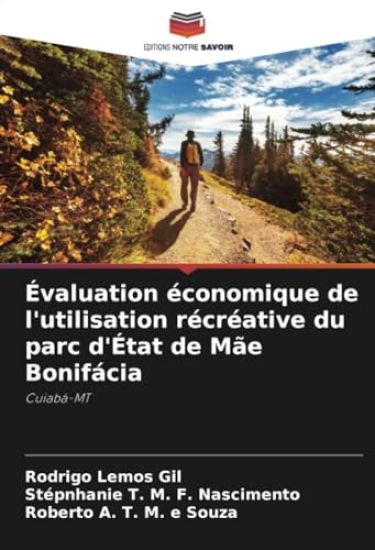
Évaluation économique de l'utilisation récréative du parc d'État de Mãe Bonifácia

Évaluation économique de l'utilisation récréative du parc d'État de Mãe Bonifácia

Rodrigo Lemos Gil; Stépnhanie T M F Nascimento; Roberto A T M E Souza

Editions Notre Savoir
2024
pokkari
Cette tude vise extraire des valeurs mon taires qui expriment la valeur de l'utilisation r cr ative du Parc d' tat de M e Bonif cia (PEMB), en utilisant les m thodes de l' valuation contingente et des co ts de d placement. L' tude a t r alis e l'aide de donn es collect es dans le PEMB, qui est situ dans la r gion ouest de la municipalit de Cuiab , Mato Grosso, entre les coordonn es g ographiques 15 34'44 "S et 56 05'16 "W, avec une superficie de 77,16 hectares, avec les avenues Miguel Sutil, Senador Filinto M ller et Rua Corsino do Amarante comme limites, l'aide de questionnaires. Les valeurs obtenues l'aide de la m thode des co ts de d placement montrent que les visiteurs du parc sont pr ts payer l' quivalent de 1,84/personne/visite du parc. Les r sultats obtenus par la m thode de l' valuation contingente montrent que 63% des personnes interrog es seraient pr tes payer entre 0,50 et 1,00 R$ pour entrer dans le parc, 25% entre 1,00 et 3,00 R$, 5% entre 3,00 et 5,00 R$.
Valutazione economica dell'uso ricreativo del Parco statale di Mãe Bonifácia

Valutazione economica dell'uso ricreativo del Parco statale di Mãe Bonifácia

Rodrigo Lemos Gil; Stépnhanie T M F Nascimento; Roberto A T M E Souza

Edizioni Sapienza
2024
pokkari
Questo studio si propone di estrarre valori monetari che esprimano il valore d'uso ricreativo del Parco Statale M e Bonif cia (PEMB), utilizzando i metodi della Contingent Valuation e del Travel Cost. Lo studio stato condotto utilizzando i dati raccolti nel PEMB, che si trova nella regione occidentale del comune di Cuiab , nel Mato Grosso, tra le coordinate geografiche 15 34'44 "S e 56 05'16 "W, con una superficie di 77,16 ettari, con le avenidas Miguel Sutil, Senador Filinto M ller e Rua Corsino do Amarante come confini, utilizzando questionari. I valori ottenuti con il metodo del costo del viaggio mostrano che i visitatori del parco sono disposti a pagare l'equivalente di 1,84/persona/visita al parco. I risultati ottenuti con il metodo della valutazione contingente mostrano che il 63% degli intervistati sarebbe disposto a pagare tra 0,50 e 1,00 R$ per entrare nel parco, il 25% tra 1 e 3,00 R$, il 5% tra 3 e 5,00 R$.
National Guard Youth Challenge

National Guard Youth Challenge

Jennie W Wenger; Robert Bozick; Linda Cottrell; Stephani L Wrabel

RAND Corporation
2024
pokkari
The National Guard Youth ChalleNGe program is a residential, quasi-military program for youth ages 16 to 18 who are experiencing difficulty in traditional high school. This report covers the 2022-2023 program year and is the eighth in a series of annual reports that RAND researchers have issued over three research projects. Each report documents the progress of ChalleNGe participants during a specific program year.
Stephanus' (Stephen's) 1550 Textus Receptus, as compiled by F. H. A. Scrivener (Greek New Testament)
This is the genuine 1550 Received Text of Robert Stephens, as reprinted by F. H. A. Scrivener in 1887.This edition should not be confused with Scrivener's later editions which were edited to mirror the Authorized Version.In addition to the main text, Scrivener included footnotes with varient readings from the margin of the 1550 printing of Stephanus' textus receptus, as well as variants from the following early printings and editions: Bezae Textus Receptus.Elzevir Textus Receptus.Lachmann Critical Edition.Tischendorf Critical Edition.Tregelles Critical Edition.Wescott and Hort Critical Edition.Revised Version (KJV) of 1881.Take note that the introduction is in Latin, but the Biblical text in Greek.Official Title: H KAINH ΔΙA0HKHNOVUM TESTAMENTUMTEXTUS STEPHANICI A.D. 1550CANTABRIGIAE, DEIGHTON, BELL ET SOC: LONDINI, WHITTAKER ET SOC: G. BELL ET FILII.M.DCCC.LXXXVII.
Stephanus' Textus Receptus of 1550

Stephanus' Textus Receptus of 1550

Robertus Stephanus; Robert Estienne

Independently Published
2024
sidottu
Stephanus' Textus Receptus: The Complete New Testament in Greek.(This is an updated edition: typos are corrected, table of contents added, and the layout is formatted for a better book size.)Also includes accents and breathing marks. The two-coloumn layout and neatly spaced text makes for an easy reading experience.This is the real 1550 Received Text of Robert Stephens, and should not be confused with later editions of Scrivener's "Textus Receptus" (which were in fact edited to mirror the Authorized Version).
Choral Composition

Choral Composition

Robert Stephan Hines

Greenwood Press
2001
sidottu
This comprehensive handbook details the fundamentals and forms of choral composition and expands upon the coverage and number of topics in Archibald T. Davison's 1945 classic text Choral Composition. Historical trends in choral composition are traced with a special emphasis on the profusion of changes that occurred throughout the twentieth century, particularly since 1950. Early chapters focus on characteristics of voice, notation, text, devices, part writing, a cappella and instrumental accompaniments, and choral forms. Hines goes on to analyze the utilization of soloists and choruses with instrumental chamber ensembles, orchestra, and the role of the chorus in opera, operetta, musicals, and music theater. A final chapter addresses practical concerns: music publication and how the artist can function effectively in that world.
Reconcilable Differences

Reconcilable Differences

Robert Stephan Cohen

Atria Books
2003
pokkari
THE "ANTI-DIVORCE" BOOK FOR COUPLES WHO ARE COMMITTED TO MAKING "I DO" LAST FOR A LIFETIME Robert Stephan Cohen believes that no marriage is half as complicated as a divorce -- and with three decades of experience as a high-profile divorce lawyer, he should know! In Reconcilable Differences, he gives couples the keys to navigating conflicts before they become roadblocks to marital harmony. Cohen begins by identifying the seven "Universal Differences" that often lead to conflict but don't necessarily signal the end of the union: Parallel Lives * Communication * Sex * Money * Infidelity * Transitions * In-laws/Family With the cool, compassionate voice of a trusted adviser, he then explains that there are three phases of conflict: Warning signs -- the early tip-offs that trouble is brewing; Crimes and misdemeanors -- actions guaranteed to raise tempers; and Reconciliation -- the process of getting back on track. Drawing on countless case histories, Cohen reveals how to put these differences behind you and move forward -- together.
Decadence and decay : from ancient Rome to the present

Decadence and decay : from ancient Rome to the present

Faramerz Dabhiowala; Melanie Grundmann; Richard Whatmore; Mattias Hessérus; Adoreé Villany; Andrew Huddleston; Saul David; Andrew Preston; Daniela Cammack; Pernille Røge; Adam Tooze; J.R. McNeill; Jonathan Rees; Robert Beuregard; William O’Reilly; Michael Nelson; Peter Heather; Robert Coates-Stephans; Neil McLynn; Richard Miles

Bokförlaget Stolpe
2019
sidottu
The fear of living in the end times has a long history. In Decadence and Decay, a group of distinguished international scholars describe how societies over time have handled and interpreted the concept of decline. In times of unrest and transition, declinism the notion that a culture or civilisation is headed towards irreversible decline tends to capture the public imagination. The essays in this volume address how notions of decadence and decay have been used both as opprobrium and as a form of self-definition and empowerment an instrument to protect individualism against collectivistic oppression. From ancient Rome to the present, ideas and expressions of decadence and decay have played a critical role in how we perceive the world.
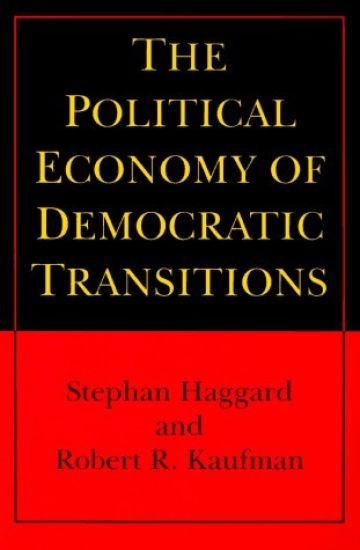
The Political Economy of Democratic Transitions

The Political Economy of Democratic Transitions

Stephan Haggard; Robert R. Kaufman

Princeton University Press
1995
pokkari
In the last two decades, there has been a widespread movement from authoritarian to democratic rule among developing countries, often occurring against a backdrop of severe economic crises and the adoption of market-oriented reforms. The coincidence of these events raises long-standing questions about the relationship between economic and political change. In this book, Stephan Haggard and Robert Kaufman explore this relationship, addressing a variety of questions: What role have economic crises played in the current wave of political liberalization and democratization? Can new democracies manage the daunting political challenges posed by economic reform? Under what economic and institutional conditions is democracy most likely to be consolidated? Drawing on contemporary political economy and the experiences of twelve Latin American and Asian countries, they develop a new approach to understanding democratic transitions. Haggard and Kaufman first analyze the relationship between economic crisis and authoritarian withdrawal and then examine how the economic and institutional legacies of authoritarian rule affect the capacity of new democratic governments to initiate and sustain economic policy reform. Finally, the authors analyze the consolidation of political and economic reform over the long run. Throughout, they emphasize the relationship between economic conditions, the interests and power of contending social groups, and the mediating role of representative institutions, particularly political parties.
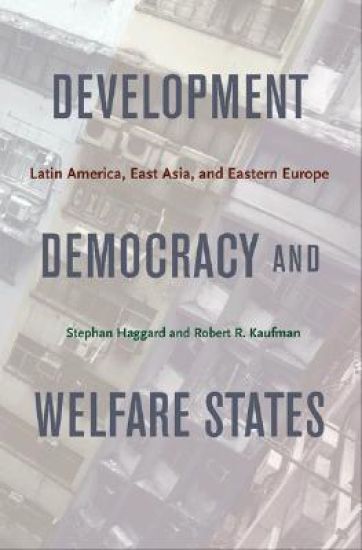
Development, Democracy, and Welfare States

Development, Democracy, and Welfare States

Stephan Haggard; Robert R. Kaufman

Princeton University Press
2008
pokkari
This is the first book to compare the distinctive welfare states of Latin America, East Asia, and Eastern Europe. Stephan Haggard and Robert Kaufman trace the historical origins of social policy in these regions to crucial political changes in the mid-twentieth century, and show how the legacies of these early choices are influencing welfare reform following democratization and globalization. After World War II, communist regimes in Eastern Europe adopted wide-ranging socialist entitlements while conservative dictatorships in East Asia sharply limited social security but invested in education. In Latin America, where welfare systems were instituted earlier, unequal social-security systems favored formal sector workers and the middle class. Haggard and Kaufman compare the different welfare paths of the countries in these regions following democratization and the move toward more open economies. Although these transformations generated pressure to reform existing welfare systems, economic performance and welfare legacies exerted a more profound influence. The authors show how exclusionary welfare systems and economic crisis in Latin America created incentives to adopt liberal social-policy reforms, while social entitlements from the communist era limited the scope of liberal reforms in the new democracies of Eastern Europe. In East Asia, high growth and permissive fiscal conditions provided opportunities to broaden social entitlements in the new democracies. This book highlights the importance of placing the contemporary effects of democratization and globalization into a broader historical context.
Dictators and Democrats

Dictators and Democrats

Stephan Haggard; Robert R. Kaufman

Princeton University Press
2016
sidottu
From the 1980s through the first decade of the twenty-first century, the spread of democracy across the developing and post-Communist worlds transformed the global political landscape. What drove these changes and what determined whether the emerging democracies would stabilize or revert to authoritarian rule? Dictators and Democrats takes a comprehensive look at the transitions to and from democracy in recent decades. Deploying both statistical and qualitative analysis, Stephen Haggard and Robert Kaufman engage with theories of democratic change and advocate approaches that emphasize political and institutional factors. While inequality has been a prominent explanation for democratic transitions, the authors argue that its role has been limited, and elites as well as masses can drive regime change. Examining seventy-eight cases of democratic transition and twenty-five reversions since 1980, Haggard and Kaufman show how differences in authoritarian regimes and organizational capabilities shape popular protest and elite initiatives in transitions to democracy, and how institutional weaknesses cause some democracies to fail. The determinants of democracy lie in the strength of existing institutions and the public's capacity to engage in collective action. There are multiple routes to democracy, but those growing out of mass mobilization may provide more checks on incumbents than those emerging from intra-elite bargains. Moving beyond well-known beliefs regarding regime changes, Dictators and Democrats explores the conditions under which transitions to democracy are likely to arise.
Dictators and Democrats

Dictators and Democrats

Stephan Haggard; Robert R. Kaufman

Princeton University Press
2016
pokkari
From the 1980s through the first decade of the twenty-first century, the spread of democracy across the developing and post-Communist worlds transformed the global political landscape. What drove these changes and what determined whether the emerging democracies would stabilize or revert to authoritarian rule? Dictators and Democrats takes a comprehensive look at the transitions to and from democracy in recent decades. Deploying both statistical and qualitative analysis, Stephen Haggard and Robert Kaufman engage with theories of democratic change and advocate approaches that emphasize political and institutional factors. While inequality has been a prominent explanation for democratic transitions, the authors argue that its role has been limited, and elites as well as masses can drive regime change. Examining seventy-eight cases of democratic transition and twenty-five reversions since 1980, Haggard and Kaufman show how differences in authoritarian regimes and organizational capabilities shape popular protest and elite initiatives in transitions to democracy, and how institutional weaknesses cause some democracies to fail. The determinants of democracy lie in the strength of existing institutions and the public's capacity to engage in collective action. There are multiple routes to democracy, but those growing out of mass mobilization may provide more checks on incumbents than those emerging from intra-elite bargains. Moving beyond well-known beliefs regarding regime changes, Dictators and Democrats explores the conditions under which transitions to democracy are likely to arise.
Backsliding

Backsliding

Stephan Haggard; Robert Kaufman

Cambridge University Press
2021
pokkari
Assaults on democracy are increasingly coming from the actions of duly elected governments, rather than coups. Backsliding examines the processes through which elected rulers weaken checks on executive power, curtail political and civil liberties, and undermine the integrity of the electoral system. Drawing on detailed case studies, including the United States and countries in Latin America, Eastern Europe, and Africa, the book focuses on three, inter-related causal mechanisms: the pernicious effects of polarization; realignments of party systems that enable elected autocrats to gain legislative power; and the incremental nature of derogations, which divides oppositions and keeps them off balance. A concluding chapter looks at the international context of backsliding and the role of new technologies in these processes. An online appendix provides detailed accounts of backsliding in 16 countries, which can be found at www.cambridge.org/backsliding.