Kirjojen hintavertailu. Mukana 12 410 556 kirjaa ja 12 kauppaa.

Kirjahaku

Etsi kirjoja tekijän nimen, kirjan nimen tai ISBN:n perusteella.

1000 tulosta hakusanalla Stephen Mark

The Market Lads and Me

The Market Lads and Me

Stephen C Hamill

Createspace Independent Publishing Platform
2014
pokkari
WELCOME TO SEVEN DAYS IN THE LIFE OF A 1980's TEENAGER. I hope you enjoy the FUC$%&G RIDE - A life of fun and fear. - And love and beer. - Joy and pain - And sunshine and rain. BUT LEARNING LIFE'S JUST LIKE THAT The Market Lads and Me is fond recollections and happy memories of a week in my life in the early 1980's working at Wigan wholesale fruit & vegetable market. The story is based on real people real lives and real events. WITH A LITTLE TOMFOOLERY THROWN IN FOR GOOD MEASURE Full of gritty and witty northern patter, thoroughly enjoyed the book. This is a shoot from the hip story about a week in the life of an eighties teenager, thoroughly enjoyed the read. Fantastic book, a must read 10/10. Good read.
Market Power Politics

Market Power Politics

Stephen E. Gent; Mark J.C. Crescenzi

Oxford University Press Inc
2021
nidottu
A new theory of market power politics that explains when and why states will delay cooperation or even fight wars in pursuit of this elusive goal. How are the Iraqi invasion of Kuwait, the Russian incursions into Ukraine and Georgia, and China's occupation of islands in the South China Sea related? All three of these important moments in modern history were driven by the motivation to capture market power. Whether it was oil for Iraq, natural gas for Russia, or rare earth elements for China, the goal isn't just the commodities themselves--it is the ability to determine their price on the global market. In Market Power Politics, Stephen Gent and Mark Crescenzi develop a new theory of market power politics that explains when and why states will delay cooperation or even fight wars in pursuit of this elusive goal. Empirically examining case studies from different regions of the world, they explore how competition between states over market power can create disruptions in the global political economy and potentially lead to territorial aggression and war. They also provide clear policy recommendations, urging international institutions to establish norms that reduce the potential for open conflict. Ultimately, Market Power Politics shows that nations' desire to increase their market power means that the push for territorial expansion will continue to shape the trajectory of world politics.
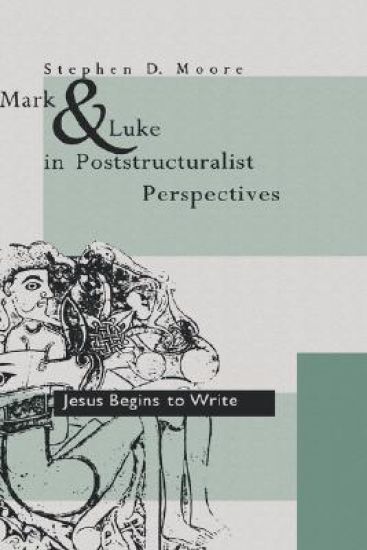
Mark and Luke in Poststructuralist Perspectives

Mark and Luke in Poststructuralist Perspectives

Stephen D. Moore

Yale University Press
1992
sidottu
"What is the lesson of that other, newly sprung tree (the cross) in whose bark Mark has carved his Gospel (for this is a book that bleeds)? Is it that Jesus's body, grafted onto the cross, became one with it, and thus became tree, branch, book, and leaf, inscribed with letters of blood, can now at last be read, no longer an indecipherable code but an open codex? And that in its (now) re(a)d(able) ink, lately invisible, the message that was scratched into the fig tree is transcribed: outside the gates, but only just, the summer Son is shining in full strength?"--Stephen D. MooreIn this book Stephen D. Moore offers a dazzling new reading of the Gospels of Mark and Luke, applying the poststructuralist techniques of Derrida, Lacan, and Foucault to illuminate these texts in a way that no one has done before. Written with wit and a sensitivity to words--and wordplay--that is reminiscent of Moore's fellow countryman James Joyce, the book is also deeply learned, impressive in its detailed knowledge of previous scholarship as well as in the challenges it presents to that scholarship.Moore argues that whereas the language of the Gospels is concrete, pictorial, and often startling, the language of modern gospel scholarship tends to be propositional and abstract. Calling himself a New Test-what-is-meant scholar, he approaches the Gospels of Mark and Luke as though they were pictograms or dreamwork to decipher and interpret, writing a response that is no less visceral and immediate than the biblical texts themselves.
Stephen Greenblatt

Stephen Greenblatt

Mark Robson

Routledge
2007
sidottu
Stephen Greenblatt is the most important exponent of 'new historicism', a dynamic critical movement which rejects the traditional reliance on individual canonical texts, exploring a multitude of other, more marginal works and voices. Questioning not just literary but social, political and cultural assumptions about knowledge and power, Greenblatt’s work has had a huge impact on contemporary theory.Mark Robson discusses ideas specific to particular works and explores the relation of Greenblatt’s thought to new historicism as well as other modes of criticism including the key topics of: contextcultural poeticspower, subversion and containmentthick descriptionanecdotes.Providing a starting point for readers new to this crucial theorist’s sometimes complex texts, or support for those deepening their understanding of his work, this guidebook is ideal for students in the fields of literary, history, social and cultural studies.
Stephen Greenblatt

Stephen Greenblatt

Mark Robson

Routledge
2007
nidottu
Stephen Greenblatt is the most important exponent of 'new historicism', a dynamic critical movement which rejects the traditional reliance on individual canonical texts, exploring a multitude of other, more marginal works and voices. Questioning not just literary but social, political and cultural assumptions about knowledge and power, Greenblatt’s work has had a huge impact on contemporary theory.Mark Robson discusses ideas specific to particular works and explores the relation of Greenblatt’s thought to new historicism as well as other modes of criticism including the key topics of: contextcultural poeticspower, subversion and containmentthick descriptionanecdotes.Providing a starting point for readers new to this crucial theorist’s sometimes complex texts, or support for those deepening their understanding of his work, this guidebook is ideal for students in the fields of literary, history, social and cultural studies.
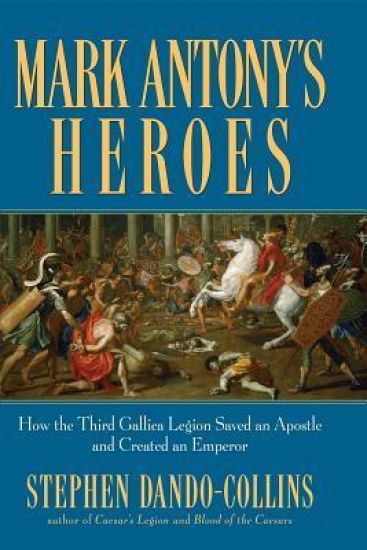
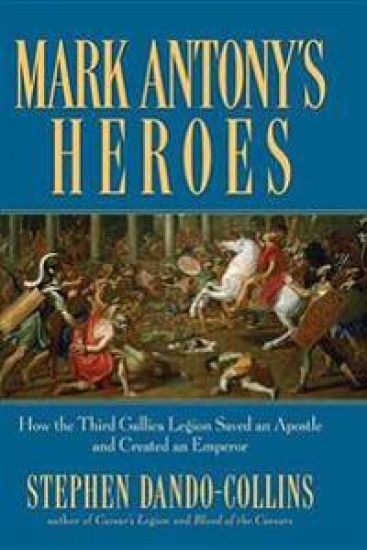
Mark Antony's Heroes

Mark Antony's Heroes

Stephen Dando-Collins

John Wiley Sons Ltd
2008
nidottu
This fourth book in Dando-Collins's definitive history of Rome's legions tells the story of Rome's 3rd Gallica Legion, which put Vespasian on the throne and saved the life of the Christian apostle Paul. Named for their leader, Mark Antony, these common Roman soldiers, through their gallantry on the battlefield, reshaped the Roman Empire and aided the spread of Christianity throughout Europe.
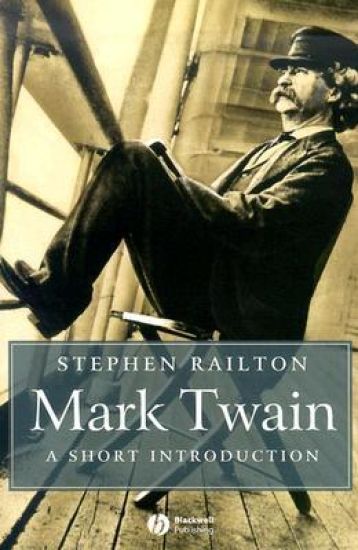
Mark Twain

Mark Twain

Stephen Railton

Blackwell Publishers
2003
nidottu
This book introduces Mark Twain through close readings of his seven major works, including Tom Sawyer, Huckleberry Finn, Connecticut Yankee and Pudd’nhead Wilson. Introduces Mark Twain through close readings of his seven major works, including Tom Sawyer, Huckleberry Finn, Connecticut Yankee and Pudd’nhead Wilson. Investigates the tension between the real-life person, Samuel Clemens, and the fictional person, Mark Twain. Provides an original reading of Twain’s obsession with performance and popularity. Analyses the significance of Twain’s books for American culture and identity. Illustrated with images from first editions of Twain’s works. A short appendix directs readers to the author’s award-winning website on ‘Mark Twain in his Times’.
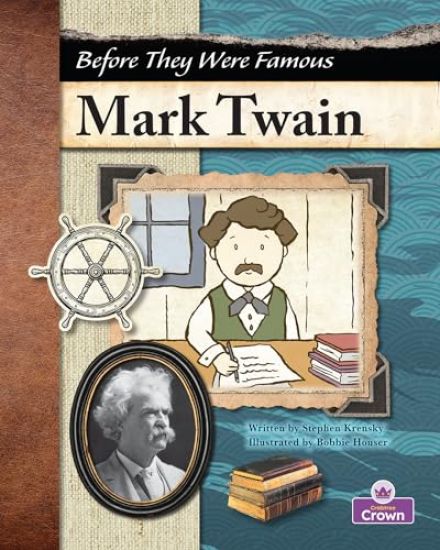
Mark Twain

Mark Twain

Stephen Krensky

Crabtree Crown
2024
sidottu
Mark Twain was known as one of the greatest writers of his time, but what about before that? What happened when Twain was younger? What did he do then that led to his being famous later on? Also includes a page for caregivers and teachers that suggests guiding questions to help aid in reading comprehension. Downloadable Teacher Notes available.
Mark Twain

Mark Twain

Stephen Krensky

Crabtree Crown
2024
nidottu
Mark Twain was known as one of the greatest writers of his time, but what about before that? What happened when Twain was younger? What did he do then that led to his being famous later on? Also includes a page for caregivers and teachers that suggests guiding questions to help aid in reading comprehension. Downloadable Teacher Notes available.
Koban: The Mark of Koban

Koban: The Mark of Koban

Stephen W. Bennett

Createspace Independent Publishing Platform
2013
nidottu
Already faster and more powerful than the last 17 species that they have destroyed or subjugated, the Krall have set their sights on humankind. After testing humans on their future home world of Koban and finding them worthy opponents, the Krall start a war of slow extermination with the rest of humanity. The war is intended to last generations as they apply their own version of "natural selection" to cull their weaker warriors in combat, purifying the Krall gene pool with finest warriors for breeding. Why? The Krall desire to rule the galaxy someday, from their future home world of Koban, where the impossibly fast and powerful animals have proven to be too fast and strong for them to match. Only through the attrition of war will the Krall perfect their bloodline to become the masters of Koban. When the Krall departed Koban to start their war with humanity, they destroyed the protections that kept their prisoners safe. They left the human test subjects to fall victim to high gravity, and the deadly predators. Big mistake. The bio scientist left behind enhance the human genome with Koban genes, forming the next generations of humans. They are becoming what the Krall sought to be. The fastest, most powerful species in the galaxy.The men and women trapped on Koban, locked in a struggle for their own survival for twenty years, return to the stars to help defend Human Space. The Krall have had their way with human worlds, killing when and where they wish.Outnumbered, the new Kobani will now take the war to the Krall.
Making Our Mark: Volume 1

Making Our Mark: Volume 1

Stephen Todd Cowden

Createspace Independent Publishing Platform
2015
nidottu
Identity. The individual characteristics by which a person or thing is recognized. From a personal standpoint, it defines who we are. For most people, their identity is created through experiences, choices and events that occur over a lifetime. But how well can you know your own identity with only a limited amount of years to pull from? Ask yourself, "Who am I?" We asked one hundred ninth graders, just entering their freshman year in high school, to take a closer look at themselves and to design a personal logo around their identity. This book presents 26 of the most unique and interesting designs. Some chose to become more aware of who they were at this moment in time. Others chose to look ahead to the future and where they saw themselves after they graduated high school. The assignment put no limits on where the students envisioned themselves. Their dreams, not yet confined by the realities of "experience", were encouraged to be as large, or as small as they wanted to be. Designing the logos took several steps. They learned to look not only at the positive, but also the negative space around their design. To be aware not only of what was there, but also what wasn't. To understand that "more" doesn't necessarily mean "better" and that sometimes it's the simplest of things can make the world of difference. From thumbnails to tight pencils; concept to completed logo, it was an iterative, evolutionary process. It took time and patience. Mistakes were made. Lessons were learned, not the least of which was that every choice should have purpose. Every line, every letter, every decision had an effect on the overall design. Yes, there were academic lessons and skills to be learned during this project. What is typography? How important are positive and negative space in a design? What is a thumbnail (other than that thing at the end of your thumb)? They learned about the Selection Tool, the Zoom Tool and the Pen Tool, but hopefully the tool they learned about the most...was themselves.
Mark of Aaron

Mark of Aaron

Stephen Cohen

iUniverse
2018
pokkari
A secular Jew spends his life as a prosecutor in Los Angeles. He goes to the California desert town of Borrego Springs and comes to believe he is a direct descendant of Aaron, Mosess older brother. He leaves his job, his family, and departs on a mystical and magical journey that brings him to a revelation. He decides he is compelled to build the Temple of Solomon in the desert town. But to get this done, he encounters drug dealers, neo-Nazis, Arab sheiks, and a few billionaires. He picks up some desert characters that will take bullets for him, and they do. The journey mixes real events, true archeology, and historical figures with the creations of the novel. The challenge for the reader is to identify fact from fiction. It is one wild, raucous ride that has most unexpected turns and stops along the way. There is nothing like thispart history, part religion, and part mysticism. And you will wonder: is this fantasy, prophesy, or reality?
Mark Antony's Heroes

Mark Antony's Heroes

Stephen Dando-Collins

Wiley
2008
sidottu
This fourth book in Dando-Collins's definitive history of Rome's legions tells the story of Rome's 3rd Gallica Legion, which put Vespasian on the throne and saved the life of the Christian apostle Paul. Named for their leader, Mark Antony, these common Roman soldiers, through their gallantry on the battlefield, reshaped the Roman Empire and aided the spread of Christianity throughout Europe.
Stephen King on the Big Screen

Stephen King on the Big Screen

Mark Browning

Intellect Books
2009
nidottu
From 1976 to the present day, there have been over 45 films adapted from the spine-tingling works of Stephen King. In Stephen King on the Big Screen, Mark Browning addresses the question of why some of the film adaptations of the world’s best-selling author are much more successful than others.By focussing on the theoretical aspect of genre, Browning brings an original approach to familiar films and suggests new ways of viewing them. Although often associated with the macabre, King’s stories form the basis for dozens of narratives, which are clearly not horror from Stand By Me to Hearts in Atlantis. How are The Green Mile and The Shawshank Redemption successful as prison movies? How do Cujo and The Shining work as family dramas? Are Dreamcatcher and Christine merely updated 1950s B-movies? The book is the first written by a film specialist to consider every Stephen King film given a theatrical release, including work by Stanley Kubrick, David Cronenberg and George A. Romero and the first to consider in detail films like Creepshow, Sleepwalkers and 1408. The style, whilst critically rigorous, is designed to be accessible to discerning readers of King and fans of films based on his work.
Stephen King on the Small Screen

Stephen King on the Small Screen

Mark Browning

Intellect Books
2011
nidottu
This book is the first written by a film specialist to consider Stephen King’s television work in its own right, and rejects previous attempts to make the films and books fit rigid thematic categories. Browning examines what makes a written or visual text successful at evoking fear on a case-by-case basis, in a highly readable and engaging way. He also considers the relationship between the big and small screen. Why, for instance, are some TV versions more effective than movie adaptations and vice versa? In the process, Stephen King on the Small Screen is able to shed new light on what it is that makes King’s novels so successful and reveal the elements of style and approach that have helped make King one of the world’s best-selling authors.
Mark Twain's Nevada: Samuel Clemens in the Silver State

Mark Twain's Nevada: Samuel Clemens in the Silver State

Stephen H. Provost

Dragon Crown Books
2022
nidottu
Follow in the footsteps of the celebrated American storyteller in Nevada, visiting the places he lived, visited, worked, and wrote about. Read about his adventures traveling the Wild West, prospecting for gold, and digging up (or making up) stories for the Territorial Enterprise in Virginia City. Illustrated with numerous vintage and modern photos and illustrations, these are the remarkable stories that transformed Samuel Clemens into Mark Twain and a territory into a state.
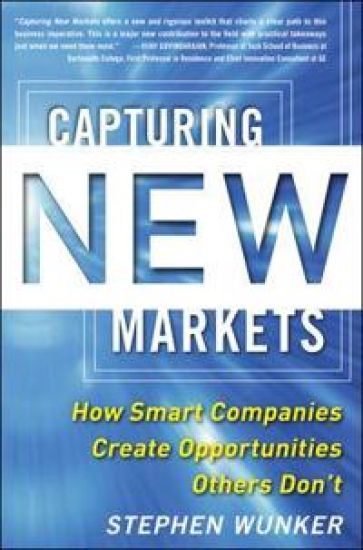
Capturing New Markets: How Smart Companies Create Opportunities Others Don’t
ARE YOU READY FOR THE FUTURE?New markets have powered the greatest business successes in history, from Standard Oil to Facebook. How can you discover and pursue new markets to make your business thrive?In Capturing New Markets, world-renowned business strategist Stephen Wunker argues that the first step is to stop applying traditional formulas of success and understand the unique dynamics in fast-changing new markets. He guides you through the process of creating counterintuitive strategies, such as treating competitors as collaborators, timing market entry, and targeting narrow niches before big customer segments.Whether you work for a huge corporation or for yourself, Capturing New Markets helps you find new sources of growth. Based on Wunker’s groundbreaking work with Clayton Christensen—the Harvard Business School legend who coinedthe term “disruptive innovation”—plus Wunker’s extensive experience in the trenches, this practical and fascinating guide shows how companies:Identify, create, and dominate new marketsAvoid the pitfalls of commodization and find new ways to growDevelop and sustain new sources of growth into the futureDrawing on dozens of case studies plus data-driven research, this revolutionary approach to business shows you how to turn new markets into the drivers of growth—propelling you and your company into a whole new world of opportunity. You’ll learn how to anticipate customer demands and meet emerging needs before anyone else does. You’ll discover how to spot ideas ready for explosive growth, and how to lead new markets while your competitors are just waking up tothe opportunity. You’ll also see how to make these strategies work in companies that are both small and very large.Capturing New Markets upends traditional thinking about business strategy, showing what will work in a new economy marked by turbulence and change. This is the resource you need to transform industries and the prospects of companies within them.Praise for Capturing New Markets:“Capturing New Markets offers a new and rigorous toolkit that charts a clear path to this business imperative. This is a major new contribution to the field with practical takeaways just when we need them most.” —Vijay Govindarajan, Professor at Tuck School of Business at Dartmouth College, and First Professor in Residence and Chief Innovation Consultant at GE“Prepare to have your existing concepts of new markets turned upside down. This is not another academic 'thought experiment,' but a practical, experience-driven manual for all who aspire to enhanced growth. New markets are all around us—not just in the developing world. Wunker provides fresh perspectives in an extremely readable how-to manual that will allow the reader to discover unmet need and enter new markets wherever they are. All in all, an essential read for every new market pioneer.” —Dr. Garry Neil, Corporate VP for Science & Technology, Johnson & Johnson“Capturing New Markets reveals critical patterns underlying why some new ventures become big businesses, and others do not. The journey to creating new markets can be full of uncertainty, and understanding these patterns provides a big advantage to informed entrepreneurs.” —Charles Warden, Managing Director, Versant Ventures“While new markets fuel business growth, traditional approaches to marketing and strategy can be poorly suited to these super-dynamic environments. Through abundant and engaging examples, Capturing New Markets shows you how to establish priorities and tap growth opportunities with lower cost, lower risk, and higher impact.”—Anish Shah, President & CEO India, GE Capital"Intensifying competitive environments require that all companies continually think about and explore new growth opportunities. Capturing New Markets provides critical guidance on how to evaluate and build new markets with a creative yet disciplined approach."—Brad Gambill, Chief Strategy Officer, Singapore Telecom“Capturing New Markets is a compass for business transformation. The book combines fascinating stories with clear takeaways that enable readers to chart their long-term courses and to begin with concrete steps tomorrow morning.”—Greta Metts, Head of Global Marketing Innovation and Business Transformation, Boehringer-Ingelheim Pharmaceuticals“Entrepreneurs are barraged with urgent issues, and it is easy to lose sight of strategy. Amidst all the pressing things you have to do in building a business, make it a priority to read Capturing New Markets. This book gives succinct and powerful advice that can save you immense amounts of time and money while substantially boosting your odds of success.”—Suneet Wadhwa, cofounder of Snapfish.com and Serial Entrepreneur“Wunker has created a valuable tool for anyone seeking to drive meaningful change in a market or an organization. Bridging theory to case studies, he creates effective, practical and actionable advice for those seeking opportunity within change.”—Meredith Baratz, Vice President, Market Solutions, UnitedHealthcare“In fast-moving markets, leaders can never rest. Capturing New Markets lays out a clear and convincing route for how big companies can act like nimble entrepreneurs in building new sources of growth.”—Ingrid Johnson, CEO Retail and Business Banking, Nedbank
The Internal Market as a Legal Concept

The Internal Market as a Legal Concept

Stephen Weatherill

Oxford University Press
2017
sidottu
What does the 'internal market' mean? The EU is committed to the construction of an internal market, and in this analysis Stephen Weatherill explains that the EU's internal market is an ambiguous legal concept. One may readily suppose that the United Kingdom possesses an internal market. So does Germany, so does France, so does Australia, and Canada, and the United States of America. The European Union aspires to an internal market, but the detailed patterns governing these several internal markets are not uniform; in fact they vary according to the extent to which the constituent units are permitted to pursue different regulatory policies. They vary according to the scope of law-making competence and powers allocated to the central authority. They vary according to the governing institutional (judicial and political) arrangements. The quality and intensity of the regulated environment varies according to the choices made. There is a broad band of possible internal markets, ranging from one that is radically decentralized as a result of a choice in favour of unrestricted inter-jurisdictional competition to, at the other extreme, one that is radically centralized in the sense that law-making competence has been completely stripped away from the constituent units in favour of the central authority. Within that spectrum there is a huge range of options. In this inquiry into the limits and ambiguities of the internal market as a legal concept, Weatherill examines and explains the choices made by the EU and demonstrates what they entail for the shape of the EU's internal market. This book is not about 'Brexit', but it shows that one of the claims commonly made by Brexiteers - that the internal market can be confined merely to a deregulatory exercise in free market economics - has no support whatsoever in either EU constitutional law or in EU legislative and judicial practice.
The Internal Market as a Legal Concept

The Internal Market as a Legal Concept

Stephen Weatherill

Oxford University Press
2017
nidottu
What does the 'internal market' mean? The EU is committed to the construction of an internal market, and in this analysis Stephen Weatherill explains that the EU's internal market is an ambiguous legal concept. One may readily suppose that the United Kingdom possesses an internal market. So does Germany, so does France, so does Australia, and Canada, and the United States of America. The European Union aspires to an internal market, but the detailed patterns governing these several internal markets are not uniform; in fact they vary according to the extent to which the constituent units are permitted to pursue different regulatory policies. They vary according to the scope of law-making competence and powers allocated to the central authority. They vary according to the governing institutional (judicial and political) arrangements. The quality and intensity of the regulated environment varies according to the choices made. There is a broad band of possible internal markets, ranging from one that is radically decentralized as a result of a choice in favour of unrestricted inter-jurisdictional competition to, at the other extreme, one that is radically centralized in the sense that law-making competence has been completely stripped away from the constituent units in favour of the central authority. Within that spectrum there is a huge range of options. In this inquiry into the limits and ambiguities of the internal market as a legal concept, Weatherill examines and explains the choices made by the EU and demonstrates what they entail for the shape of the EU's internal market. This book is not about 'Brexit', but it shows that one of the claims commonly made by Brexiteers - that the internal market can be confined merely to a deregulatory exercise in free market economics - has no support whatsoever in either EU constitutional law or in EU legislative and judicial practice.