

Kirjahaku
Etsi kirjoja tekijän nimen, kirjan nimen tai ISBN:n perusteella.
1000 tulosta hakusanalla Steve Davis
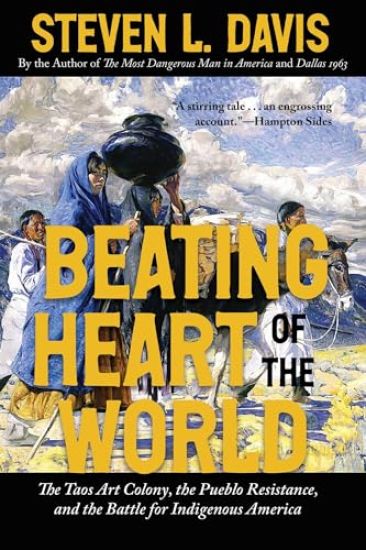
The fascinating true story of how Taos Pueblo’s Indigenous people recruited members of the famous Taos art colony to help spark a movement for Native justice that reshaped the nation. When the first white artists arrived in Taos by horse-drawn wagons, centuries of military conquest and brutal government policies had pushed Indigenous people to the brink of collapse. New Mexico’s pueblos had become some of America’s last holdouts of traditional culture, resolutely preserving their sacred lands in the face of mounting pressure. Many of the free-spirited newcomers in Taos came to admire the pueblos’ peaceful, communal societies and holy regard for the natural world. To these outsiders, pueblo civilization offered a marked contrast to America’s record of endless war, hyperindividualism, and environmental destruction. Among those attracted to Taos was the “Queen of Bohemia,” a wealthy New York heiress who dabbled in peyote and personified radical chic. Mabel Dodge Luhan fell in love with Taos Pueblo leader Tony Lujan and hoped to inspire an American spiritual renaissance based on pueblo values. She brought world-famous luminaries to Taos, including D. H. Lawrence, Georgia O’Keeffe, and Carl Jung, along with the fiery social reformer John Collier. As the art colony gained international fame, the US government targeted the pueblos for extinction, moving to seize their lands and destroy their cultures. This same grim scenario had played out countless times before in US history. It seemed that nothing could stop the brutal crush of conquest. But the puebloans, who had once unleashed a fierce revolt against Spain in 1680, found a new way to fight back in the modern era. As master diplomats, they began recruiting the prominent creatives converging on Taos, shrewdly enlisting them as political allies. And these artists and writers, at a crucial moment in history, rose to join the pueblos and challenged their own culture’s prevailing genocidal policies. Beating Heart of the World is the fascinating, fast-paced chronicle of a long-shot resistance movement that grew into a powerful national campaign for Indigenous justice. While a work of history, Beating Heart of the World speaks urgently to our own era as new resistance movements percolate—and as new generations increasingly look to ancient Indigenous wisdom to help guide sustainable pathways forward.
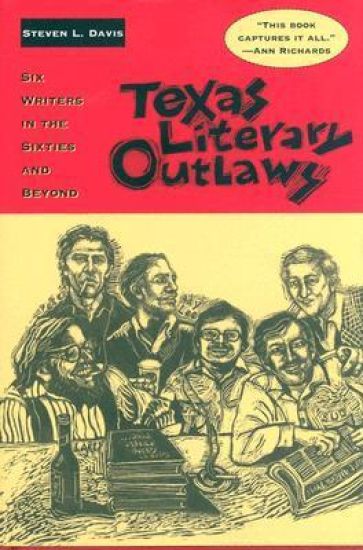
At the height of the sixties, a group of Texas writers stood apart from Texas' conservative establishment. Calling themselves the Mad Dogs, these six writers - Bud Shrake, Larry L. King, Billy Lee Brammer, Gary Cartwright, Dan Jenkins, and Peter Gent - closely observed the effects of the Vietnam War; the Kennedy assassination; the rapid population shift from rural to urban environments; Lyndon Johnson's rise to national prominence; the Civil Rights Movement; Tom Landry and the Dallas Cowboys; Willie Nelson, Jerry Jeff Walker, the new Outlaw music scene; the birth of a Texas film industry; Texas Monthly magazine; the flowering of ""Texas Chic""; and Ann Richards' election as governor. In Texas Literary Outlaws, Steven L. Davis makes extensive use of untapped literary archives to weave a fascinating portrait of writers who came of age during a period of rapid social change. With Davis's eye for vibrant detail and a broad historical perspective, Texas Literary Outlaws moves easily between H. L. Hunt's Dallas mansion and the West Texas oil patch, from the New York literary salon of Elaine's to the Armadillo World Headquarters in Austin, from Dennis Hopper on a film set in Mexico to Jerry Jeff Walker crashing a party at Princeton University, The Mad Dogs were less interested in Texas' mythic past than in the world they knew firstand - a place of fast-growing cities and hard-edged political battles. The Mad Dogs crashed headfirst into the sixties, and their legendary excesses have often overshadowed their literary production. Davis never shies away from criticism in this no-holds-barred account, yet he also shows how the Mad Dogs' rambunctious personae have deflected a true understanding of their deeper aims. Despite their popular image, the Mad Dogs were deadly serious as they turned their gaze on their home state, and they chronicled Texas culture with daring, wit, and sophistication.

At the height of the sixties, a group of Texas writers stood apart from Texas’s conservative establishment. Calling themselves the Mad Dogs, these six writers—Bud Shrake, Larry L. King, Billy Lee Brammer, Gary Cartwright, Dan Jenkins, and Peter Gent—closely observed the effects of the Vietnam War; the Kennedy assassination; the rapid population shift from rural to urban environments; Lyndon Johnson’s rise to national prominence; the Civil Rights Movement; Tom Landry and the Dallas Cowboys; Willie Nelson, Jerry Jeff Walker and the new Outlaw music scene; the birth of a Texas film industry; Texas Monthly magazine; the flowering of “Texas Chic”; and Ann Richards’s election as governor.In Texas Literary Outlaws, Steven L. Davis makes extensive use of untapped literary archives to weave a fascinating portrait of writers who came of age during a period of rapid social change. Despite their popular image, the Mad Dogs were deadly serious as they turned their gaze on their home state, and they chronicled Texas culture with daring, wit, and sophistication.

Retire Early Sleep Well: A Practical Guide to Modern Portfolio Theory, Asset Allocation and Retirement Planning in Plain English, Second Editio
Steven R. Davis
Painters Hill Press
2007
nidottu

Since this book was first published four years ago, the pace of change in the banking world has accelerated and this updated version shows how specific banks have fared, how uniform the pressures for change are and the reasons for the decline in some banks.

Although the story of the Brontë sisters Charlotte, Emily and Anne has been told many times, their birthplace and first home is less well known. This book is a photographic exploration of the house where the Brontë sisters were born and the surrounding area on the edge of Bradford where the family lived for five of their happiest years. In 1815 Patrick Brontë became vicar of St James’s Church in Thornton, in the West Riding of Yorkshire, and he and his wife moved into the parsonage in Market Street, Thornton. It was in this house that the three sisters Charlotte, Emily and Anne whose genius has left an enduring literacy legacy, were born and spent their formative years. Today the Brontë Birthplace has been preserved for the community and photographer Mark Davis created a superb photographic record of the house and the area around Thornton and Bradford. This is a record the birthplace of dreams, a literary shrine of the humble beginnings of genius, of three writers who created stories that still resonate today.


The first Texas-based writer to gain national attention, J. Frank Dobie proved that authentic writing springs easily from the native soil of Texas and the Southwest. In best-selling books such as Tales of Old-Time Texas, Coronado's Children, and The Longhorns, Dobie captured the Southwest's folk history, which was quickly disappearing as the United States became ever more urbanized and industrial. Renowned as "Mr. Texas," Dobie paradoxically has almost disappeared from view-a casualty of changing tastes in literature and shifts in social and political attitudes since the 1960s.In this lively biography, Steven L. Davis takes a fresh look at a J. Frank Dobie whose "liberated mind" set him on an intellectual journey that culminated in Dobie becoming a political liberal who fought for labor, free speech, and civil rights well before these causes became acceptable to most Anglo Texans. Tracing the full arc of Dobie's life (1888–1964), Davis shows how Dobie's insistence on "free-range thinking" led him to such radical actions as calling for the complete integration of the University of Texas during the 1940s, as well as taking on governors, senators, and the FBI (which secretly investigated him) as Texas's leading dissenter during the McCarthy era.

Airtightness Evaluation of Shelter-in-Place Spaces for Protection Against Airborne Chembio Releases
Heather Davis; Steven J. Emmerich; William S. Dols
Createspace Independent Publishing Platform
2009
nidottu

The Most Dangerous Man in America
Steven L. Davis; Bill Minutaglio
John Murray Publishers Ltd
2020
pokkari
'It's a rollicking tale that brings to life the antic atmosphere of America in the 'Me' Decade' Wall Street Journal'A madcap chase... this is a well-written chronicle of 28 months when the world went slightly mad' Sunday Times'A suitably head-spinning account of LSD High Priest Dr Timothy Leary' Mail on SundayOn the moonlit evening of September 12, 1970, an ex-Harvard professor with a genius IQ studies a twelve-foot high fence topped with barbed wire. A few months earlier, Dr. Timothy Leary, the High Priest of LSD, had been running a gleeful campaign for California governor against Ronald Reagan. Now, Leary is six months into a ten-year prison sentence for the crime of possessing two marijuana cigarettes.Aided by the radical Weather Underground, Leary's escape from prison is the counterculture's union of "dope and dynamite," aimed at sparking a revolution and overthrowing the government. Inside the Oval Office, President Richard Nixon drinks his way through sleepless nights as he expands the war in Vietnam and plots to unleash the United States government against his ever-expanding list of domestic enemies. Antiwar demonstrators are massing by the tens of thousands; homemade bombs are exploding everywhere; Black Panther leaders are threatening to burn down the White House; and all the while Nixon obsesses over tracking down Timothy Leary, whom he has branded "the most dangerous man in America."Based on freshly uncovered primary sources and new firsthand interviews, THE MOST DANGEROUS MAN IN AMERICA is an American thriller that takes readers along for the gonzo ride of a lifetime. Spanning twenty-eight months, President Nixon's careening, global manhunt for Dr. Timothy Leary winds its way among homegrown radicals, European aristocrats, a Black Panther outpost in Algeria, an international arms dealer, hash-smuggling hippies from the Brotherhood of Eternal Love, and secret agents on four continents, culminating in one of the trippiest journeys through the American counterculture.

The Most Dangerous Man in America
Steven L. Davis; Bill Minutaglio
John Murray Publishers Ltd
2021
pokkari
'It's a rollicking tale that brings to life the antic atmosphere of America in the 'Me' Decade' Wall Street Journal'A madcap chase... this is a well-written chronicle of 28 months when the world went slightly mad' Sunday Times'A suitably head-spinning account of LSD High Priest Dr Timothy Leary' Mail on SundayOn the moonlit evening of September 12, 1970, an ex-Harvard professor with a genius IQ studies a twelve-foot high fence topped with barbed wire. A few months earlier, Dr. Timothy Leary, the High Priest of LSD, had been running a gleeful campaign for California governor against Ronald Reagan. Now, Leary is six months into a ten-year prison sentence for the crime of possessing two marijuana cigarettes.Aided by the radical Weather Underground, Leary's escape from prison is the counterculture's union of "dope and dynamite," aimed at sparking a revolution and overthrowing the government. Inside the Oval Office, President Richard Nixon drinks his way through sleepless nights as he expands the war in Vietnam and plots to unleash the United States government against his ever-expanding list of domestic enemies. Antiwar demonstrators are massing by the tens of thousands; homemade bombs are exploding everywhere; Black Panther leaders are threatening to burn down the White House; and all the while Nixon obsesses over tracking down Timothy Leary, whom he has branded "the most dangerous man in America."Based on freshly uncovered primary sources and new firsthand interviews, THE MOST DANGEROUS MAN IN AMERICA is an American thriller that takes readers along for the gonzo ride of a lifetime. Spanning twenty-eight months, President Nixon's careening, global manhunt for Dr. Timothy Leary winds its way among homegrown radicals, European aristocrats, a Black Panther outpost in Algeria, an international arms dealer, hash-smuggling hippies from the Brotherhood of Eternal Love, and secret agents on four continents, culminating in one of the trippiest journeys through the American counterculture.

Chasing Blackbeard is the coming-of-age story of a cabin boy and scribe that decides to dedicate life and limb to cover the story of history's most feared name in piracy. The maniacal Edward Teach leads a life filled with self-destruction, demonic pacts, and drug abuse. Can Eli Ellis be enough to save this larger-than-life character? Chasing Blackbeard, while fiction, was written with breathtaking historical accuracy. This is a story of love, drug abuse, jealousy, and eventually an unseen betrayal that will leave you rereading to find clues you may have missed throughout the story. Anyone that has ever enjoyed reading and learning about Blackbeard, piracy or Eastern North Carolina will thoroughly enjoy this piece. Beginning in what is now The Bath Area of Eastern North Carolina, this story shows the incredible struggle and lifestyle of a cabin boy and scribe serving under Edward Teach, his perspective on his piratical career, and how his lifestyle eventually would lead to his downfall off the shores of Ocracoke. Chasing Blackbeard is part of a larger set of Historical Fiction pieces called The Carolina Series. I hope you all will follow along on all of these incredible journeys.

Effective Bank Regulation: Lessons from the Financial Crisis
Steven I. Davis
Searching Finance Ltd
2010
pokkari

Effective Bank Regulation: Lessons from the Financial Crisis
Steven I. Davis
Searching Finance Ltd
2010
sidottu

DIY Cooking: 85 Amazing Healthy Ketogenic Bombs Recipes, Delicious Air Fryer Dishes And Best Recipes With Vegetables And Fruits For
Steven Cooper; Maribeth Davis; Dora Pearson
Createspace Independent Publishing Platform
2018
nidottu
DIY Cooking: 85 Amazing Healthy Ketogenic Bombs Recipes, Delicious Air Fryer Dishes And Best Recipes With Vegetables And Fruits For Everyday Meals Book#1: Fat Bombs: 30 Amazing, Tasty, Sweet And Savory Ketogenic Bombs Recipes Getting Your FREE Bonus Download this book, read it to the end and see "BONUS CHAPTER" after the conclusion. Fat bombs were initially meant for people who were on a ketogenic diet. A ketogenic diet is a diet taken people who need to lose weight without starving themselves. Fats bombs are a good part of ketogenic diet. Fat bombs usually feature ingredients such as coconut oil, butter, seeds and nuts. Fat bombs can help you get your body into the process of ketosis, in which you will burn the body fats without starving yourself, and you will shed the extra pounds. Ketogenic fat bombs can be used as a breakfast snack or as a mid-afternoon snack. Book#2: Air Fryer Cookbook: TOP 25 Simple, Delicious And Healthy Recipes For Everyday Meals If you want to be a master chef in your kitchen and love to cook delicious & healthy recipes for your family members, have strong desire to impress your guests, friends and beloved with your cooking skills using modern technology such as Air Fryer then this Air Fryer Cookbook is the best option for you This wonderful cookbook offers you the tools you were looking for so long You will learn how to make the best dishes in the world in the coolest way likely using an Air Fryer because this book explains step by step cooking process of the Air Fried top 25 simple, delicious and healthy recipes for everyday meals along with the idea of all the necessary cooking ingredients. These juicy Air Fried dishes will help you & your family members to keep sound & athematic health. With our book you'll discover the top 25 amazing healthy & almost oil free recipes under various sections such as: Fruits & Vegetables lunch Side dishes Appetizers Entrees Desserts There are more than a few reasons you need to have this book: It covers cooking style of almost every type of food such as vegetable, fruits, fish, meat, chocolate, bread, cake or roasts Prepare time, cooking time, list of ingredients accompanies each recipe It breaks every single step down & ensures that you know accurately what you need to do to cook each recipe Your level of experience with Air Fryer does not fact at all because this cookbook applies to any level So, why are you waiting for Just get your copy now, start cooking and enjoy your Air Fried time with your Air Fryer Book#3: DIY Cooking: TOP 30 Most Delicious Step-By-Step Recipes With Vegetables And Fruits Having challenges cooking that vegetable or fruit recipe? Not aware of the benefit of certain fruits and vegetables? This book will help you step-by- step on each recipe. Enjoy reading and making it happen by following each single step.


Although media reports suggest that there always has been public concern over the health of the Chesapeake Bay, this is a fairly recent phenomenon. For centuries people saw the bay as a bottomless sink for waste products—a natural decomposer with the ability to freshen itself with ocean inflows. Not until human health and livelihood seemed threatened did people begin to think seriously about management by such methods as treating sewage and limiting seafood harvests. Chesapeake Waters chronicles four centuries of public attitudes about the bay—and legislative responses to them—from 1607, the date of the first English settlement in Jamestown, Virginia, to the close of the twentieth century. In the last few decades, wide-reaching measures by federal and local governments have influenced how people use the bay: the U.S. Environmental Protection Agency completed a massive study of bay quality; the Chesapeake Bay Program was launched; the Critical Area Protection Act went into effect. The authors make sense of these complex programs, place them in historical context, and explain how they have improved the quality of bay waters. Chesapeake Waters is as much about the power of public perception as it is about efforts to oversee bay water quality. In a work rich with anecdotes and historical art and photos, the authors relate how human attitudes and ideas have shaped four hundred years of decisions about the Chesapeake Bay.