A book of rituals for offering worship within the religion known as Asatru. This is a book of the author's efforts and is presented as such. It is nor presented as being authentic to historical practices, but authentic to modern ideas informed by ancient ones. As with any belief that deal with a Higher Power, Worship is an important part of community activity. These rituals are presented as one way in which to effect this.
Just like the Emmaus disciples walked with Jesus on Easter Sunday afternoon and were amazed at all that he shared with them from the Scriptures, so this book will help you walk with Jesus through the entire Bible. The Bible reading guide will lead you on a two year journey through every book of the Scriptures. Choose your favorite Bible translation, and use the guide questions to help you journey through each day's reading. Many people try to read the Bible from cover to cover, Genesis through Revelation, and get bogged down after about three books into the Old Testament. This Bible reading guide starts with Matthew and the life of Christ, and tries to give you a variety on your Bible journey. The general pattern for this reading guide is a rotation of the five different types of books in the Bible: 1.New Testament history 2.New Testament epistles 3.Old Testament history 4.Old Testament prophecy 5.Old Testament poetry Five units of this general pattern will take you through the entire Bible with much less chance of getting bogged down. Each day's suggested reading has at least three questions to ponder and apply God's truths to your life. There are also brief introductions to the various books and extra insights to help you understand difficult passages. Above all, the guide questions are intended to point you to Jesus, no matter what book of the Bible you are reading. When Jesus explained the Scriptures that Easter Sunday afternoon, the New Testament didn't exist yet. He showed how he was the center of the Old Testament as well: "These are the Scriptures that testify about me" he said (John 5:39). The questions and comments in this book will help you see Jesus in every part of the Bible.
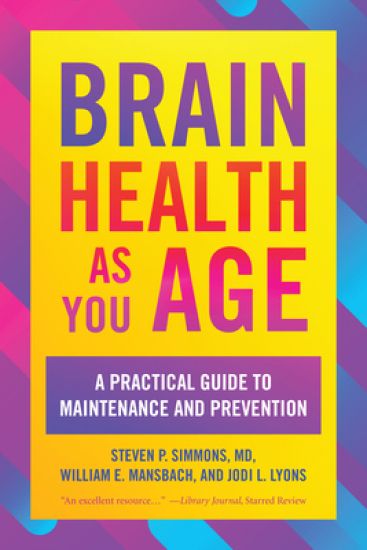
Have you ever spent 10 minutes looking for your reading glasses, and they were on the top of your head? Or, have you walked into a room and forgotten why you went there? Most people, even younger ones, have had these experiences but when should such instances be something of concern? What are the normal signs of aging? Is there anything you can do to maintain your brain health as you age? Brain Health as Your Ageprovides useful, achievable actions you can take to reduce your risk of brain function decline, accurate information about identifying problems, and real solutions. The authors offer useful anecdotes and scientifically validated information -- important tools in separating myth from reality. The authors separate fact from fiction to ensure that recommendations are evidence-based, practical, useful, achievable, and measurable. Written by a world-renowned cognitive specialist, an extraordinary house call physician, and an award-winning author on eldercare issues, this book addresses both normal and abnormal decline and best practices for addressing both. Brain health, cognitive impairment, and mood disorders are serious issues. This book is an accessible starting point for understanding healthy brain aging and when to seek help. It’s never too soon to start preventing cognitive decline, or understanding it once it’s begun, and this book offers the perfect entry point for readers young and old.
Have you ever spent 10 minutes looking for your reading glasses, and they were on the top of your head? Or, have you walked into a room and forgotten why you went there? Most people, even younger ones, have had these experiences but when should such instances be something of concern? What are the normal signs of aging? Is there anything you can do to maintain your brain health as you age?Brain Health as You Age provides useful, achievable actions you can take to reduce your risk of brain function decline, accurate information about identifying problems, and real solutions. The authors offer useful anecdotes and scientifically validated information -- important tools in separating myth from reality. The authors separate fact from fiction to ensure that recommendations are evidence-based, practical, useful, achievable, and measurable.Written by a world-renowned cognitive specialist, an extraordinary house call physician, and an award-winning author on eldercare issues, this book addresses both normal and abnormal decline and best practices for addressing both. Brain health, cognitive impairment, and mood disorders are serious issues. This book is an accessible starting point for understanding healthy brain aging and when to seek help. It’s never too soon to start preventing cognitive decline, or understanding it once it’s begun, and this book offers the perfect entry point for readers young and old.
Forest management includes a range of human interventions that affect forest ecosystems. These activities include both conservation and economic activities, such as extraction of timber, planting and replanting of various species, cutting roads and pathways through forests, and techniques for preventing or making outbreaks of fire. In developed countries, the environment has increased public awareness of natural resource policy, including forest management. As a direct result, primary concerns regarding forest management have shifted from the extraction of timber to other forest resources including wildlife, watershed management, and recreation. This shift in public values has also caused many in the public to mistrust resource management professionals. This book presents the latest research in this field.
The New Commandment calls us to love others as Jesushas loved us. Jesus loves us, just as His Father loved Him. "As the Father hasloved me, so have I loved you." Jesus loved well, because He was loved well. The more we meditate onhow God in Christ has loved us, the better equipped we are to extend thissame unconditional self-sacrificing love to our wife and children.
Lawrence Gellert has long been a mysterious figure in American folk and blues studies, gaining prominence in the left-wing folk revival of the 1930s for his fieldwork in the U.S. South. A "lean, straggly-haired New Yorker," as Time magazine called him, Gellert was an independent music collector, without formal training, credentials, or affiliation. At a time of institutionalized suppression, he worked to introduce white audiences to a tradition of black musical protest that had been denied and overlooked by prior white collectors.By the folk and blues revival of the 1960s, however, when his work would again seem apt in the context of the civil rights movement, Gellert and his collection of Negro Songs of Protest were a conspicuous absence. A few leading figures in the revival defamed Gellert as a fraud, dismissing his archive of black vernacular protest as a fabrication -- an example of left-wing propaganda and white interference. A Sound History is the story of an individual life, an excavation of African American musical resistance and dominant white historiography, and a cultural history of radical possibility and reversal in the defining middle decades of the U.S. twentieth century.
Lawrence Gellert has long been a mysterious figure in American folk and blues studies, gaining prominence in the left-wing folk revival of the 1930s for his fieldwork in the U.S. South. A "lean, straggly-haired New Yorker," as Time magazine called him, Gellert was an independent music collector, without formal training, credentials, or affiliation. At a time of institutionalized suppression, he worked to introduce white audiences to a tradition of black musical protest that had been denied and overlooked by prior white collectors.By the folk and blues revival of the 1960s, however, when his work would again seem apt in the context of the civil rights movement, Gellert and his collection of Negro Songs of Protest were a conspicuous absence. A few leading figures in the revival defamed Gellert as a fraud, dismissing his archive of black vernacular protest as a fabrication -- an example of left-wing propaganda and white interference. A Sound History is the story of an individual life, an excavation of African American musical resistance and dominant white historiography, and a cultural history of radical possibility and reversal in the defining middle decades of the U.S. twentieth century.
On November 4, 1791, a coalition of warriors determined to set the Ohio River as a permanent boundary between tribal lands and white settlements faced an army led by Arthur St. Clair – the resulting horrific struggle ended in the greatest defeat of an American army at the hands of Native Americans. The road to the battle of the Wabash began when Arthur St. Clair was appointed to lead an army into the heart of the Ohio Indian Confederacy while building a string of fortifications along the way. He would face difficulties in recruiting, training, feeding, and arming volunteer soldiers. From the moment St. Clair’s shattered force began its retreat from the Wabash the men blamed the officers, and the officers in turn blamed their men. For over two centuries most historians have blamed either the officer corps, enlisted soldiers, an entangled logistical supply line, poor communications, or equipment. The destruction of the army resulted in a stunned Congress authorising a regular army in 1792. This book, the result of 30 years’ research, puts the battle into the context of the last quarter of the 18th century, exploring how the central importance of land ownership to Europeans arriving in North America resulted in unrelenting demographic pressure on indigenous tribes, as well as the enormous obstacles standing in the way of the fledgling American Republic in paying off its enormous war debts. This is the story of how a small band of determined indigenous peoples defended their homeland, destroyed an invading American army, and forced a fundamental shift in the way in which the United States waged war.
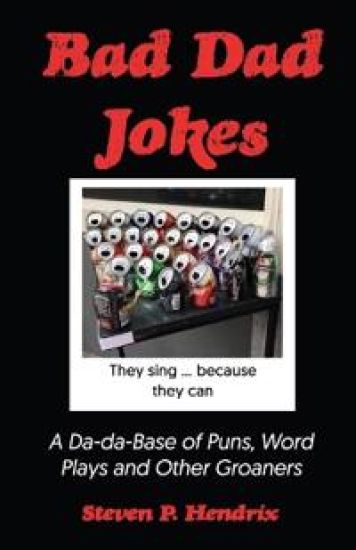
Bad dad puns - that's how eye roll. You could say that I wrote the book on bad dad jokes. It's poor form to tell dad jokes if you're not really a dad, because that would be a ... faux pa.This collection is divided by category, including: SportsComputersGeographyMathematicsNatureSchoolPoliticsScience...and many more
This book presents a vision of education for democracy built around promoting equity and social justice. In doing so, Camicia and Knowles challenge many of the common perspectives of democratic education, deliberation, and the common good. The authors have published widely on the topic of education for democracy. This book builds upon their work to assist practicing teachers, teacher educators, graduate students, and educational researchers in understanding the background of education for democracy, as well as new directions for the field.While one of the primary goals of public schools is to teach students how to build better communities, this goal is increasingly difficult given the degree of political polarization within societies. Recent events provide no shortage of challenges to democracy in the United States and beyond. Utilizing theory and research, Camicia and Knowles promote instructional methods that are responsive to changing cultural and political contexts. There is an increasing need to rethink democratic principles and how these principles might be supported in classrooms in order to teach for social justice. This requires a move away from often stated idealistic notions of deliberative democracy, toward a perspective of education for democracy that incorporates aspects of identity, interests, and inequitable power relations within society.