Kirjojen hintavertailu. Mukana 12 459 402 kirjaa ja 12 kauppaa.

Kirjahaku

Etsi kirjoja tekijän nimen, kirjan nimen tai ISBN:n perusteella.

1000 tulosta hakusanalla Steven R. Rose

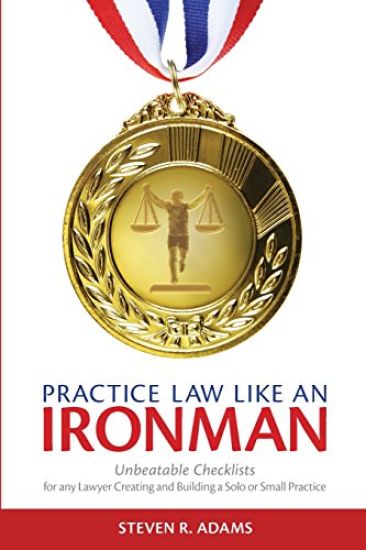
Practice Law Like an Ironman: Unbeatable Checklists for Any Lawyer Creating and Building a Solo or Small Practice
What does the practice of law have to do with the Ironman triathlon? Building a law practice is the dream of every lawyer. There is no better option to maintain control over your career: your practice area, your clients, your income. Starting a solo law practice or small law firm may be the most personally and financially rewarding endeavor you ever take on as a lawyer. It may also be the hardest. But nothing worth having or doing comes easy. The same is true for the Ironman race. Ironman is a grueling undertaking that entails over 140 miles of combined swimming, biking, and running. Only the most serious competitors successfully complete it. The exhilaration of doing so is something few get to enjoy. There is a common spirit underlying Ironman and starting a solo law practice or small law firm. Those who succeed must have the same foundational mindset in common. They are determined, dedicated, ambitious, and able to stay motivated in the face of obstacles. Whether you know it or not, these are traits you have within you, and Practice Law Like An Ironman will help you develop them and focus them toward successfully building your law practice. So if every lawyer dreams of going solo or starting a small firm, why doesn't every lawyer do it? Maybe they don't know how. Maybe they are afraid. Maybe they tried and it did not go as they hoped. Maybe they have doubts about their dedication, determination, and motivation. The good news is that every lawyer can go solo. Every lawyer can overcome whatever obstacle stands in their way. Being a successful solo or small firm practitioner is not reserved for those from the best law schools, or the highest GPAs. Successfully starting a solo law practice or small law firm is all about developing the mindset for success and maintaining the motivation to finish the race. From developing your vision of success to developing step-by-step systems that guide you in law practice management, setting up your law practice, law firm marketing, getting and benefiting from referrals, case management, hiring and managing employees, choosing law practice technology, crafting law firm strategy. Practice Law Like An Ironman is a practical and useful mix of motivational coaching and law practice how-to "checklists." Motivational techniques such as visualization, affirmations, and goal-setting are practiced universally by successful persons in all fields. Steven Adams tailors these techniques to the lawyer building a law practice. Learn how to develop a vision and maintain a positive and fearless mindset that will guide you on your quest to success as an entrepreneur in the field of law. Practice Law Like An Ironman also includes practical instructional checklists for starting a solo law practice or small law firm to help you with the nuts and bolts of building a law practice, including choosing and equipping a location, law firm marketing, law firm strategy, winning clients and referrals, law practice management, leading your employees, and developing a remarkable message to differentiate yourself from the competition. Whether you are a beginning lawyer, a big firm attorney who is ready to go solo, or you need to breathe life into your established small law firm, Practice Law Like An Ironman is an indispensable guide to ignite and jumpstart your law practice. Take action now to Practice Law Like An Ironman in a big way
Faithful Performances

Faithful Performances

Steven R. Guthrie

Taylor Francis Ltd
2021
nidottu
The metaphor of performance has been applied fruitfully by anthropologists and other social theorists to different aspects of human social existence, and furnishes a potentially helpful model in terms of which to think theologically about Christian life. After an introductory editorial chapter reflecting on the nature of artistic performance and its relationship to the notions of tradition and identity, Part One of this book attends specifically to the phenomenon of dramatic performance and possible theological applications of it. Part Two considers various aspects of the performance of Christian identity, looking at worship, the interpretation of the Bible, Christian response to elements in the contemporary media, the shape of Christian moral life, and ending with a theological reflection on the shape of personal identity, correlating it with the theatrical metaphors of 'character' and 'performing a part' in a scripted drama. Part Three demonstrates how art forms (including some technically non-performative ones - literature, poetry, painting) may constitute faithful Christian practices in which the tradition is authentically 'performed', producing works which break open its meaning in profound new ways for a constantly shifting context.
The Cauchy Transform, Potential Theory and Conformal Mapping
The Cauchy Transform, Potential Theory and Conformal Mapping explores the most central result in all of classical function theory, the Cauchy integral formula, in a new and novel way based on an advance made by Kerzman and Stein in 1976.The book provides a fast track to understanding the Riemann Mapping Theorem. The Dirichlet and Neumann problems for the Laplace operator are solved, the Poisson kernel is constructed, and the inhomogenous Cauchy-Reimann equations are solved concretely and efficiently using formulas stemming from the Kerzman-Stein result. These explicit formulas yield new numerical methods for computing the classical objects of potential theory and conformal mapping, and the book provides succinct, complete explanations of these methods. Four new chapters have been added to this second edition: two on quadrature domains and another two on complexity of the objects of complex analysis and improved Riemann mapping theorems. The book is suitable for pure and applied math students taking a beginning graduate-level topics course on aspects of complex analysis as well as physicists and engineers interested in a clear exposition on a fundamental topic of complex analysis, methods, and their application.
Chemical Oceanography

Chemical Oceanography

Steven R. Emerson; Roberta C. Hamme

Cambridge University Press
2022
sidottu
Chemical Oceanography: Element Fluxes in the Sea focuses on the use of chemical distributions to understand mechanisms of physical, chemical, biological, and geological processes in the ocean. After an introduction describing observed chemical concentrations, chapters focus on using chemical tracers to determine fluxes on a variety of time scales. Long-term chemical cycles are dominated by exchanges between seawater and land, sediments, and underwater volcanoes. Biological and ocean mixing processes dominate internal chemical cycles that respond to changes on hundred- to thousand-year time scales. Stable and radioactive isotopes trace the fluxes of nutrients and carbon to quantify the rates and mechanisms of chemical cycles. Anthropogenic influences - which have grown to be of the same magnitude as some natural cycles - are a specific focus throughout the book. Discussion boxes and quantitative problems help instructors to deepen student learning. Appendices enhance the book's utility as a reference text for students and researchers.
Communication in Mechanism Design

Communication in Mechanism Design

Steven R. Williams

Cambridge University Press
2012
pokkari
Mechanism design is the field of economics that treats institutions and procedures as variables that can be selected in order to achieve desired objectives. An important aspect of a mechanism is the communication among its participants that it requires, which complements other design features such as incentives and complexity. A calculus-based theory of communication in mechanisms is developed in this book. The value of a calculus-based approach lies in its familiarity as well as the insight into mechanisms that it provides. Results are developed concerning (i) a first order approach to the construction of mechanisms, (ii) the range of mechanisms that can be used to achieve a given objective, as well as (iii) lower bounds on the required communication.
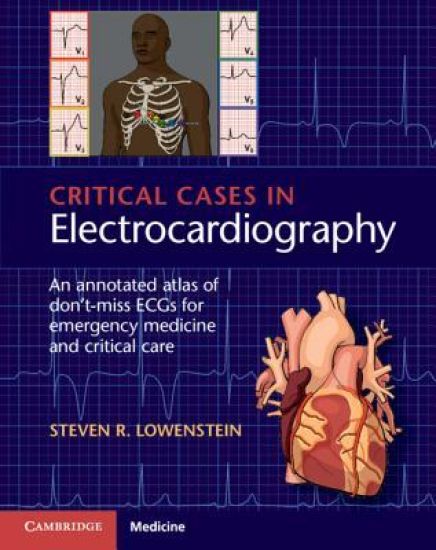
Critical Cases in Electrocardiography

Critical Cases in Electrocardiography

Steven R. Lowenstein

Cambridge University Press
2018
pokkari
Emergency and critical care providers are often challenged by patients with acute cardiorespiratory symptoms and abnormal electrocardiograms. Critical Cases in Electrocardiography emphasizes clinically-relevant topics, focusing squarely on situations where interpretation of the ECG contributes to clinical decision-making. This atlas is unique, in that it includes numerous examples of ECG 'misses' - cases where the computer algorithm or the clinicians (or both) got the diagnosis wrong. While many textbooks include only smaller, black and white ECG tracings, which do not resemble actual clinical practice, this volume is designed to encourage self-study of the ECG by including full-page tracings in their natural color. The book focuses on 'don't miss' ECG tracings in order to help readers advance beyond the stage of 'competent' electrocardiographer. Anatomic and electrophysiologic correlations are emphasized throughout the work, helping readers appreciate the anatomic and electrical origins of the ECG abnormalities, rather than relying solely on pattern memorization.
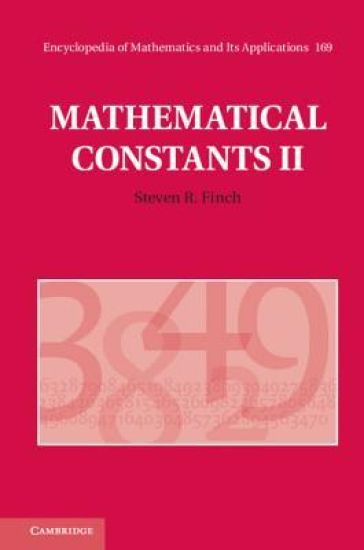
Mathematical Constants II

Mathematical Constants II

Steven R. Finch

Cambridge University Press
2018
sidottu
Famous mathematical constants include the ratio of circular circumference to diameter, p = 3.14 …, and the natural logarithm base, e = 2.718 …. Students and professionals can often name a few others, but there are many more buried in the literature and awaiting discovery. How do such constants arise, and why are they important? Here the author renews the search he began in his book Mathematical Constants, adding another 133 essays that broaden the landscape. Topics include the minimality of soap film surfaces, prime numbers, elliptic curves and modular forms, Poisson–Voronoi tessellations, random triangles, Brownian motion, uncertainty inequalities, Prandtl–Blasius flow (from fluid dynamics), Lyapunov exponents, knots and tangles, continued fractions, Galton–Watson trees, electrical capacitance (from potential theory), Zermelo's navigation problem, and the optimal control of a pendulum. Unsolved problems appear virtually everywhere as well. This volume continues an outstanding scholarly attempt to bring together all significant mathematical constants in one place.
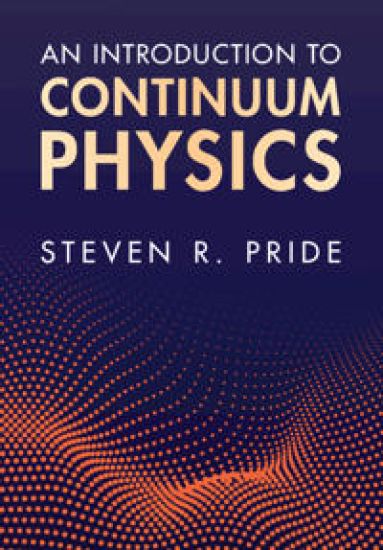
An Introduction to Continuum Physics

An Introduction to Continuum Physics

Steven R. Pride

Cambridge University Press
2025
sidottu
Adopting a unified mathematical framework, this textbook gives a comprehensive derivation of the rules of continuum physics, describing how the macroscopic response of matter emerges from the underlying discrete molecular dynamics. Covered topics include elasticity and elastodynamics, electromagnetics, fluid dynamics, diffusive transport in fluids, capillary physics and thermodynamics. By also presenting mathematical methods for solving boundary-value problems across this breadth of topics, readers develop understanding and intuition that can be applied to many important real-world problems within the physical sciences and engineering. A wide range of guided exercises are included, with accompanying answers, allowing readers to develop confidence in using the tools they have learned. This book requires an understanding of linear algebra and vector calculus and will be a valuable resource for undergraduate and graduate students in physics, chemistry, engineering and geoscience.