Kirjojen hintavertailu. Mukana 11 244 527 kirjaa ja 12 kauppaa.

Kirjahaku

Etsi kirjoja tekijän nimen, kirjan nimen tai ISBN:n perusteella.

1000 tulosta hakusanalla Stuart A Marks

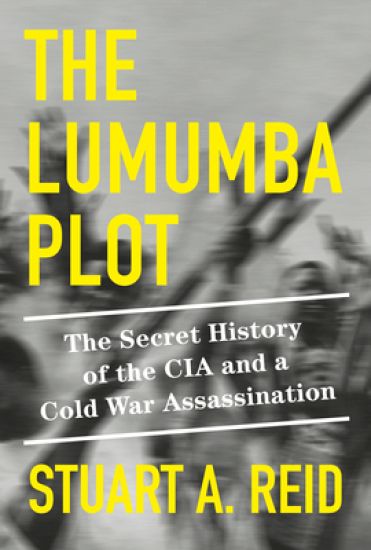
The Lumumba Plot

The Lumumba Plot

Stuart A. Reid

ALFRED A. KNOPF
2023
sidottu
A spellbinding work of history that reads like a Cold War spy thriller--about the U.S.-sanctioned plot to assassinate the democratically elected leader of the newly independent Congo It was supposed to be a moment of great optimism, a cause for jubilation. Congo was at last being set free from Belgium--one of seventeen countries to gain independence in 1960 from ruling European powers. Just days after the handover, however, Congo's new army mutinied, Belgian forces intervened, and its leader Patrice Lumumba turned to the United Nations for help in saving his newborn nation from what the press was already calling "the Congo Crisis." Dag Hammarskj ld, the tidy Swede who was serving as UN secretary-general, quickly arranged the organization's biggest peacekeeping mission to date. But chaos was still spreading. Frustrated with the fecklessness of the UN, Lumumba then approached the Soviets for help--an appeal that set off alarm bells at the CIA. To forestall the spread of communism in Africa, the U.S. sent word to the CIA station chief in Leopoldville, Larry Devlin: Lumumba had to go. Within a year, everything would unravel. The CIA plot to murder Lumumba would fizzle, but he would be deposed in a CIA-backed coup and shot dead by Congolese assassins. Hammarskj ld, too, would die, in a mysterious plane crash, en route to negotiate a ceasefire with Congo's rebellious southeast. And a young, ambitious military officer named Joseph Mobutu, who had once sworn fealty to Lumumba, would seize power in Congo with U.S. help and misrule the country for more than three decades. For the Congolese people, the events of 1960-61 represented the opening chapter of a long horror story. For the U.S. government, however, they provided a playbook for future interventions.
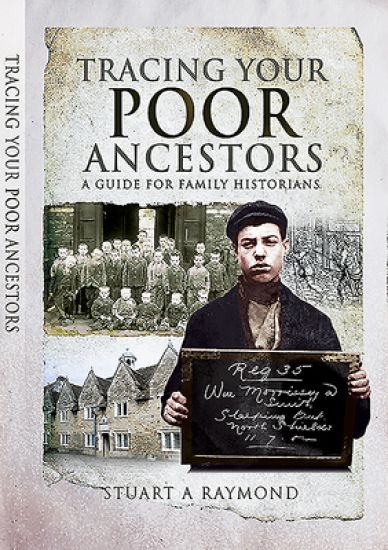
Tracing Your Poor Ancestors

Tracing Your Poor Ancestors

Stuart A Raymond

Pen Sword Family History
2020
nidottu
Many people in the past - perhaps a majority - were poor. Tracing our ancestors amongst them involves consulting a wide range of sources. Stuart Raymond's handbook is the ideal guide to them. He examines the history of the poor and how they survived. Some were supported by charity. A few were lucky enough to live in an almshouse. Many had to depend on whatever the poor law overseers gave them. Others were forced into the Union workhouse. Some turned to a life of crime. Vagrants were whipped and poor children were apprenticed by the overseers or by a charity. Paupers living in the wrong place were forcibly removed' to their parish of settlement. Many parishes and charities offered them the chance to emigrate to North America or Australia. As a result there are many places where information can be found about the poor. Stuart Raymond describes them all: the records of charities, of the poor law overseers, of poor law unions, of Quarter Sessions, of bankruptcy, and of friendly societies. He suggests many other potential sources of information in record offices, libraries, and on the internet.
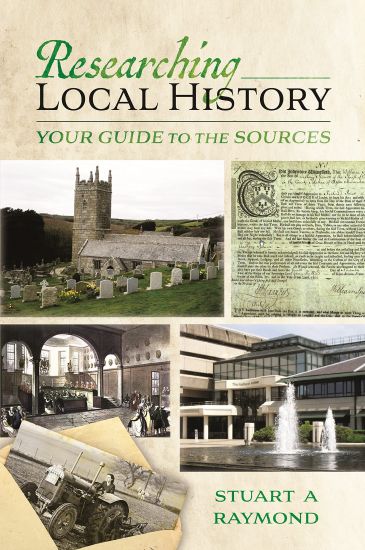
Researching Local History

Researching Local History

Stuart A Raymond

PEN SWORD BOOKS LTD
2022
nidottu
How has the place we live in changed, developed, and grown over the centuries? That is the basic question local historians seek to answer. The answer is to be found in the sources of information that previous generations have left us. The records of parish, county, and diocesan administration, of the courts, of the national government, and of private estates, all have something to tell us about the history of the locality we are interested in. So do old newspapers and other publications. All of these sources are readily available, but many have been little used. Local historians come from a wide diversity of backgrounds. But whether you are a student researching a dissertation, a family historian interested in the wider background history of your family, a teacher, a librarian, an archivist, an academic, or are merely interested in the history of your own area, this book is for you. If you want to research local history, you need a detailed account of the myriad sources readily available. This book provides a comprehensive overview of those sources, and its guidance will enable you to explore and exploit their vast range. It poses the questions which local historians ask, and identifies the specific sources likely to answer those questions.
Connectionism and Meaning

Connectionism and Meaning

Stuart A Jackson

Intellect Books
1997
nidottu
This book is a theoretical investigation into meaning - computationally driven, philosophically inspired and psychologically motivated. Concepts from formal and psychological semantics, the philosophy of mind and computational theory are examined and combined within the burgeoning new framework of connectionist cognitive science. Unashamedly connectionist in spirit, the book draws upon the novel properties of networks of simple computing elements as its usefulness of admitting representations defined over weights, in addition to representations defined over units, into the cognitive scientists theoretical armatarium. This duality of representational resource in connectionism is a theme pursued throughout the book.
Computers and Technical Communication

Computers and Technical Communication

Stuart A. Selber

Praeger Publishers Inc
1997
sidottu
The essays collected in this volume address the full range of pedagogical and programmatic issues specifically facing technical communication teachers and programme directors in the computer age. The authors locate computers and computing activities within the richly-textured cultural contexts of a technological society, focusing on the technical communication instructional issues that remain most important as old versions of hardware and software are endlessly replaced by new ones. Part One, "Broadening Notions of Computer Literacy", complicates mechanistic approaches to computer-related instruction by locating the design and use of hardware and software within social, cultural, political, ethical and legal contexts. Part Two examines how teachers and programme directors can encourage critical literacies in their classrooms and programmes. At the same time, it considers how computer technologies such as the World Wide Web, hypertext, electronic mail, Internet discussion groups and real-time conferencing environments might challenge traditional notions of technical communication pedagogical practice. Building on the first two sections, Part Three, "Examining Computer-Supported Communication Facilities from Pedagogical Perspectives", explores a wide range of instructional and political challenges in designing and supporting the robust computing needs of technical communication programmes. Part Four, "Planning for Technological Changes in Technical Communication Programmes", outlines some long-term ways of thinking about computers and technical communications that are instructionally and institutionally productive for students, teachers and programme directors.
The Law in Political Integration: The Evolution and Integrative Implications of Regional Legal Processes in the European Community
Classic political and legal study of how the early years of formation of the European Union relied on consensus and legal processes -- but not an analogy to federalization as in U.S. Constitutional law -- to evolve integration and respect for higher authority than national law. Law and lawyers were involved in these early steps, as shown by political activity and research more than by the customary analysis of doctrine. Part of the Classics of Law & Society Series of Quid Pro Books, this book is recognized as a fundamental contribution to the developing conceptualization of the E.U. through law and politics. It was originally published in the Occasional Papers Series of the Harvard University Center for International Affairs. It is introduced and explained in its 2011 edition by E.U. expert J rg Fedtke, a law professor at Tulane University. More recent studies confirm this line of inquiry, writes Fedtke, and "show just how topical the core ideas of THE LAW IN POLITICAL INTEGRATION remain today."
Development of the Hypothalamus

Development of the Hypothalamus

Stuart A. Tobet; Kristy McClellan

Morgan Claypool Publishers
2013
nidottu
The involvement of key factors operating independently or in cooperation with others contributes to physical and physiological mechanisms to help engineer a vertebrate hypothalamus. The actions of these key factors influence developmental mechanisms including neurogenesis, cell migration, cell differentiation, cell death, axon guidance, and synaptogenesis. On a molecular level, there are several ways to categorize the actions of factors that drive brain development. These range from the actions of transcription factors in cell nuclei that regulate the expression of developmental genes, to external factors in the cellular environment that mediate interactions and cell placements, and to effector molecules that contribute to signaling from one cell to another. Sexual dimorphism is a hallmark of the vertebrate hypothalamus that may arise as a direct consequence of hormone actions or gene actions. These actions may work through any of the mechanisms outlined above. Given the arrangement of cells in groups within the hypothalamus, cell migration may be one particularly important target for early molecular actions that help build the bases for appropriate functions.
'Til We Meet Again

'Til We Meet Again

Stuart A Hawes

Strategic Book Publishing Rights Agency, LLC
2012
pokkari
A loving young couple on a weekend getaway to the Smokey Mountains has a terrible accident. Samantha dies at the hospital, but Dave just can't let her go. Samantha visits him in his dreams, and they are happy in his dream world. The medic from the crash, Jeffrey, and his wife, Alicia, befriend Dave, pledging to find the broken man a new love. They want to snap him out of living alone with his strange visions and nudge him back into the real world. Just when Jeffrey is about to give up on Dave, along comes Monica, a beautiful model who shows up at a pool party Jeffrey is throwing. She is the sister of a neighbor, and is in town visiting between photo shoots. Will Monica be the one to show Dave that he can love again? Or will Dave continue to shut himself off from the world and love Samantha for the rest of his days, whispering to her every night before he goes to bed, 'Til We Meet Again. This stirring story emphasizes the powerful bonds of love, even as it prods the fear we all have of losing the one we love the most. About the Author: Stuart A. Hawes lives in Pascagoula, Mississippi, where he is contemplating his next novel, a suspense thriller, Who's There.Publisher's website: www.SBPRA.com/StuartAHawes
Do Little Babies Dream of Mu?

Do Little Babies Dream of Mu?

Stuart A. Burkhalter

Hugenslop Press
2020
sidottu
Mom is on a work trip; Dad has the two kids. Dad marvels at the insightful and quirky things the kids say as they rush about their busy day. The comments reflect the kids' prior life on the lost continent of Mu. After each new comment, the story jumps back to a vision of the whimsical world of Mu.Armed with the basic premise of a Dad's day-in-the-life-with-the-kids, coupled with dreams of Mu, the author used illustrations his children had made over the course of their toddler years. He then adapted the story to fit his children's drawings. In the end, Do Little Babies Dream of Mu? is a testament to the inspiring vision of youth and the enduring power of family.