Kirjojen hintavertailu. Mukana 11 342 296 kirjaa ja 12 kauppaa.

Kirjahaku

Etsi kirjoja tekijän nimen, kirjan nimen tai ISBN:n perusteella.

1000 tulosta hakusanalla Stuart A. Wright

Loss Models

Loss Models

Stuart A. Klugman; Harry H. Panjer; Gordon E. Willmot

John Wiley Sons Inc
2013
sidottu
An essential resource for constructing and analyzing advanced actuarial models Loss Models: Further Topics presents extended coverage of modeling through the use of tools related to risk theory, loss distributions, and survival models. The book uses these methods to construct and evaluate actuarial models in the fields of insurance and business. Providing an advanced study of actuarial methods, the book features extended discussions of risk modeling and risk measures, including Tail-Value-at-Risk. Loss Models: Further Topics contains additional material to accompany the Fourth Edition of Loss Models: From Data to Decisions, such as: Extreme value distributionsCoxian and related distributionsMixed Erlang distributionsComputational and analytical methods for aggregate claim modelsCounting processesCompound distributions with time-dependent claim amountsCopula modelsContinuous time ruin modelsInterpolation and smoothing The book is an essential reference for practicing actuaries and actuarial researchers who want to go beyond the material required for actuarial qualification. Loss Models: Further Topics is also an excellent resource for graduate students in the actuarial field.
Loss Models

Loss Models

Stuart A. Klugman; Harry H. Panjer; Gordon E. Willmot

Wiley-Blackwell
2019
sidottu
A guide that provides in-depth coverage of modeling techniques used throughout many branches of actuarial science, revised and updated Now in its fifth edition, Loss Models: From Data to Decisions puts the focus on material tested in the Society of Actuaries (SOA) newly revised Exams STAM (Short-Term Actuarial Mathematics) and LTAM (Long-Term Actuarial Mathematics). Updated to reflect these exam changes, this vital resource offers actuaries, and those aspiring to the profession, a practical approach to the concepts and techniques needed to succeed in the profession. The techniques are also valuable for anyone who uses loss data to build models for assessing risks of any kind. Loss Models contains a wealth of examples that highlight the real-world applications of the concepts presented, and puts the emphasis on calculations and spreadsheet implementation. With a focus on the loss process, the book reviews the essential quantitative techniques such as random variables, basic distributional quantities, and the recursive method, and discusses techniques for classifying and creating distributions. Parametric, non-parametric, and Bayesian estimation methods are thoroughly covered. In addition, the authors offer practical advice for choosing an appropriate model. This important text: • Presents a revised and updated edition of the classic guide for actuaries that aligns with newly introduced Exams STAM and LTAM • Contains a wealth of exercises taken from previous exams • Includes fresh and additional content related to the material required by the Society of Actuaries (SOA) and the Canadian Institute of Actuaries (CIA) • Offers a solutions manual available for further insight, and all the data sets and supplemental material are posted on a companion site Written for students and aspiring actuaries who are preparing to take the SOA examinations, Loss Models offers an essential guide to the concepts and techniques of actuarial science.
Loss Models: From Data to Decisions, 5e Student Solutions Manual

Loss Models: From Data to Decisions, 5e Student Solutions Manual

Stuart A. Klugman; Harry H. Panjer; Gordon E. Willmot

Wiley-Blackwell
2019
nidottu
Loss Models: From Data to Decisions, Fifth Edition continues to supply actuaries with a practical approach to the key concepts and techniques needed on the job. With updated material and extensive examples, the book successfully provides the essential methods for using available data to construct models for the frequency and severity of future adverse outcomes. The book continues to equip readers with the tools needed for the construction and analysis of mathematical models that describe the process by which funds flow into and out of an insurance system. Focusing on the loss process, the authors explore key quantitative techniques including random variables, basic distributional quantities, and the recursive method, and discuss techniques for classifying and creating distributions. Parametric, non-parametric, and Bayesian estimation methods are thoroughly covered along with advice for choosing an appropriate model. Throughout the book, numerous examples showcase the real-world applications of the presented concepts, with an emphasis on calculations and spreadsheet implementation. Loss Models: From Data to Decisions, Fifth Edition is an indispensable resource for students and aspiring actuaries who are preparing to take the SOA and CAS examinations. The book is also a valuable reference for professional actuaries, actuarial students, and anyone who works with loss and risk models.
Loss Models: From Data to Decisions, Book + Solutions Manual Set
A modern practical guide to building and using actuarial models.Loss Models: From Data to Decisions is organized around the principle that actuaries build models in order to analyze risks and make decisions about managing the risks based on conclusions drawn from the analysis. In practice, one begins with data and ends with a business decision. The book flows logically from this principle. It begins with a framework for model building and a description of frequency and severity loss data typically available to actuaries. Parametric models are emphasized throughout. The frequency and severity models are used in building aggregate loss models, in credibility-based pricing models, and in loss analysis over multiple time periods. Designed as both an educational text as well as a professional reference, Loss Models:Assumes little prior knowledge of insurance systemsFeatures many fascinating examples taken from insurance filesContains a major instructive case study continued through each chapterCovers the classical areas of risk theory and loss distributionsGives a practical but rigorous treatment of modern credibility theoryUses standard statistical concepts, methods, and notationProvides modern computational algorithms for implementing methodsIncludes free companion software available from an FTP siteDeals with many topics on CAS 4B and SOA 151 and 152 actuarial examsIncludes many exercises based on past CAS and SOA exams.
The European Commission and Europe's Democratic Process
This book examines the multitude of challenges which the European Commission faces: once the centre of political gravity in Europe’s integration process, the growth of Euroscepticism and the emergence of new institutional rivals threaten to undermine its status as an institution. Tracing the roots of the Commission’s decline from the early 1990s through to the Eurozone and refugee crises, Stuart A Brown draws on new evidence to illustrate why the EU’s executive now faces a battle for its future, and asks whether in the reforms of Jean-Claude Juncker the Commission may be facing its last chance. This study will appeal to students and scholars in EU institutions, politics, and public policy.
Building Bridges

Building Bridges

Stuart A. Pizer

Routledge
2014
nidottu
In Building Bridges, Stuart A. Pizer gives much-needed recognition to the central role of negotiation in the analytic relationship and in the therapeutic process. Building on a Winnicottian perspective that comprehends paradox as the condition for preserving an intrapsychic and relational "potential space," Pizer explores how the straddling of paradox requires an ongoing process of negotiation and demonstrates how such negotiation articulates the creative potential within the potential space of analysis.Following careful review of Winnicott's perspective on paradox-via the pairings of privacy and interrelatedness, isolation and interdependence, ruthlessness and concern, and the notion of transitional phenomena-Pizer locates these elemental paradoxes within the negotiations of an analytic process. Together, he observes, analyst and patient negotiate the boundaries, potentials, limits, tonalities, resistances, and meanings that determine the course of their clinical dialogue. Elaborating on the theme of a multiply constituted, "distributed" self, Pizer presents a model for the tolerance of paradox as a developmental achievement related to ways in which caretakers function as "transitional mirrors." He then explores the impact of trauma and dissociation on the child's ability to negotiate paradox and clarifies how negotiation of paradox differs from negotiation of conflict. Pizer also broadens the scope of his study by turning to negotiation theory and practices in the disciplines of law, diplomacy, and dispute resolution. Enlivened by numerous clinical vignettes and a richly detailed chronicle of an analytic case from its earliest negotiations to termination, Building Bridges adds a significant dimension to theoretical understanding and clinical practice. It is altogether a psychoanalytic work of our time.
Geocryology

Geocryology

Stuart A. Harris; Anatoli Brouchkov; Cheng Guodong

CRC Press
2017
sidottu
This book provides a general survey of Geocryology, which is the study of frozen ground called permafrost. Frozen ground is the product of cold climates as well as a variety of environmental factors. Its major characteristic is the accumulation of large quantities of ice which may exceed 90% by volume. Soil water changing to ice results in ground heaving, while thawing of this ice produces ground subsidence often accompanied by soil flowage. Permafrost is very susceptible to changes in weather and climate as well as to changes in the microenvironment. Cold weather produces contraction of the ground, resulting in cracking of the soil as well as breakup of concrete, rock, etc. Thus permafrost regions have unique landforms and processes not found in warmer lands.The book is divided into three parts. Part 1 provides an introduction to the characteristics of permafrost. Four chapters deal with its definition and characteristics, the unique processes operating there, the factors affecting it, and its general distribution. Part 2 consists of seven chapters describing the characteristic landforms unique to these areas and the processes involved in their formation. Part 3 discusses the special problems encountered by engineers in construction projects including settlements, roads and railways, the oil and gas industry, mining, and the agricultural and forest industries. The three authors represent three countries and three language groups, and together have over 120 years of experience of working in permafrost areas throughout the world. The book contains over 300 illustrations and photographs, and includes an extensive bibliography in order to introduce the interested reader to the large current literature.Finalist of the 2019 PROSE Awards.
Divine Service?

Divine Service?

Stuart A. Cohen

Routledge
2016
nidottu
Religion now plays an increasingly prominent role in the discourse on international security. Within that context, attention largely focuses on the impact exerted by teachings rooted in Christianity and Islam. By comparison, the linkages between Judaism and the resort to armed force are invariably overlooked. This book offers a corrective. Comprising a series of essays written over the past two decades by one of Israel's most distinguished military sociologists, its point of departure is that the establishment of the state of Israel in 1948, quite apart from revolutionizing Jewish political activity, also triggered a transformation in Jewish military perceptions and conduct. Soldiering, which for almost two millennia was almost entirely foreign to Jewish thought and practice, has by virtue of universal conscription (for women as well as men) become a rite of passage to citizenship in the Jewish state. For practicing orthodox Jews in Israel that change generates dilemmas that are intellectual as well as behavioural, and has necessitated both doctrinal and institutional adaptations. At the same time, the responses thus evoked are forcing Israel's decision-makers to reconsider the traditional role of the Israel Defence Force (IDF) as their country's most evocative symbol of national unity.
Divine Service?

Divine Service?

Stuart A. Cohen

Ashgate Publishing Limited
2013
sidottu
Religion now plays an increasingly prominent role in the discourse on international security. Within that context, attention largely focuses on the impact exerted by teachings rooted in Christianity and Islam. By comparison, the linkages between Judaism and the resort to armed force are invariably overlooked. This book offers a corrective. Comprising a series of essays written over the past two decades by one of Israel's most distinguished military sociologists, its point of departure is that the establishment of the state of Israel in 1948, quite apart from revolutionizing Jewish political activity, also triggered a transformation in Jewish military perceptions and conduct. Soldiering, which for almost two millennia was almost entirely foreign to Jewish thought and practice, has by virtue of universal conscription (for women as well as men) become a rite of passage to citizenship in the Jewish state. For practicing orthodox Jews in Israel that change generates dilemmas that are intellectual as well as behavioural, and has necessitated both doctrinal and institutional adaptations. At the same time, the responses thus evoked are forcing Israel's decision-makers to reconsider the traditional role of the Israel Defence Force (IDF) as their country's most evocative symbol of national unity.
Competitive Manufacturing

Competitive Manufacturing

Stuart A. Rosenfeld

AldineTransaction
2012
nidottu
Stuart A. Rosenfeld presents a timely analysis of the problems the United States and other industrialized countries face as they adjust from economies based on natural resources and goods to economies based on quality of human resources and high-performance, market-oriented organizations. Some of the questions raised include: Will American industry successfully face the competitive challenge of the global economy? Can US manufacturing raise productivity and innovate enough to remain healthy? Have the latest advances in process technology and management practice penetrated the rural industrial base? How can public policy help improve the competitiveness of the crucial manufacturing sector?This book challenges the conventional wisdom in economic development policy. Past state and local industrial policy focused on locational decisions, not on issues of competitiveness. Building the competitive advantage of industry is more important than promoting the competitive advantages of location. Incentives to modernize are more important than subsidies to locate.Competitive Manufacturing uses the rural South, the most industrialized rural region of the nation, to examine the strengths and weaknesses of manufacturing as the basis for economic growth. Using historical analysis, surveys, and intensive case studies, the author analyzes the technological capabilities of rural manufacturing, the factors that influence the decision to modernize, and the effects of technology on education and work. Comparative studies in Denmark and Italy point to new directions for US economic development policy.
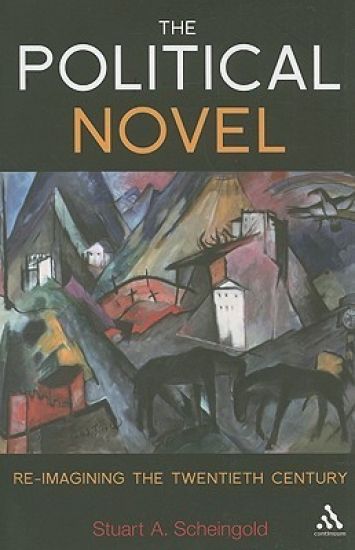
The Political Novel

The Political Novel

Stuart A. Scheingold

Continuum Publishing Corporation
2010
nidottu
This title reveals how novels of political estrangement have drawn on cultural narratives to capture the zeitgeist of the 20th Century and the disillusionment of modernism. Scholars from a variety of academic disciplines have been drawn into exhaustive analyses of what went wrong in 'the terrible 20th Century', as Winston Churchill dubbed it. In this book Scheingold adds political novels to those inquiries and argues that they make a distinctive and hitherto neglected contribution to the collective memory of the 20th Century. These fictional accounts are the work of some of the century's most celebrated novelists: Kafka, Heller, Boll, Grass, Vonnegut and others. As refracted through the literary imagination, the 'terrible' 20th Century takes on new meaning - meaning that tends to elude historians and social scientists. Novelists peer into the shattered lives, the moral dilemmas, and the emotional chaos of the century - thus viewing a collective catastrophe through the everyday lives of victims, victimizers, temporizers, opportunists, true believers, and those who simply averted their eyes. In so doing, these novelists reveal, sometimes prophetically, the etiology of catastrophe, and both deepen our memory of the past and help us think more clearly about the future.
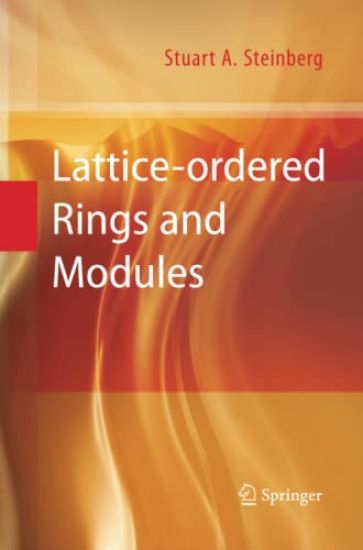
Lattice-ordered Rings and Modules

Lattice-ordered Rings and Modules

Stuart A. Steinberg

Springer-Verlag New York Inc.
2009
sidottu
From the reviews: "Lattice-ordered rings and modules are of interest both to algebraists and to functional analysts. Previous authors have presented only those results that are needed for the applications that they have in mind. Having a book like this one would be a great boon. Both the algebraists and the analysts would benefit from having the fundamental results all gathered together in one book. This book would fill in the gap admirably. Any algebraist or functional analyst whose work involves ordered structures would be interested in this book. That includes mathematicians who study: lattices, ordered semigroups, ordered groups, ordered rings, ordered fields, Riesz spaces, vector lattices, or Banach lattices. It would also be useful for mathematicians who are interested in general ring theory, general group theory, matrix algebras, or function algebras (especially Banach algebras). In short, there is a wide audience who would find the tools that this book provides very useful."
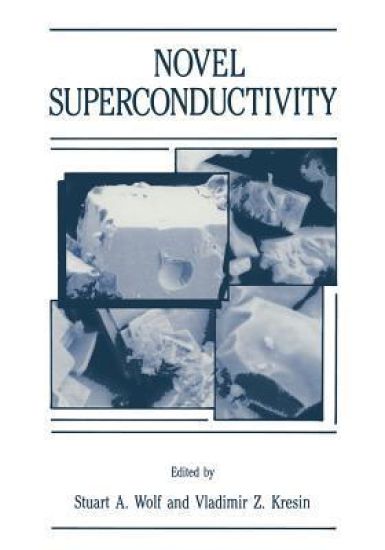
Novel Superconductivity

Novel Superconductivity

Stuart A. Wolf; Vladimir Z. Kresin

Springer-Verlag New York Inc.
2011
nidottu
The Novel Mechanisms of Superconductivity Conference was initially conceived in the early part of 1986 as a small, 2-1/2 day workshop of 40-70 scientists, both theorists and experimentalists interested in exploring the possible evidence for exotic, non phononic superconductivity. Of course, the historic discoveries of high temperature oxide superconductors by Bednorz and Mftller and the subsequent enhancements by the Houston/Alabama groups made such a small conference impractical. The conference necessarily had to expand, 2-1/2 days became 4-1/2 days and superconductivity in the high Tc oxides became the largest single topic in the workshop. In fact, this conference became the first major conference on this topic and thus, these proceedings are also the first maj or publication. However, heavy fermion, organic and low carrier concentration superconductors remained a very important part of this workshop and articles by the leaders in these fields are included in these proceedings. Ultimately the workshop hosted rearly 400 scientists, students and media including representatives from the maj or research groups in the U.S., Europe, Japan and the Soviet Union.
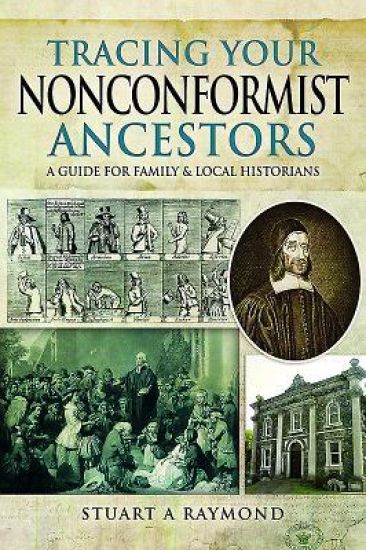
Tracing Your Nonconformist Ancestors

Tracing Your Nonconformist Ancestors

Stuart A. Raymond

Pen Sword Family History
2017
nidottu
We all have Nonconformist ancestors. In the mid-nineteenth century almost half of the English population were Nonconformists. And there were very few villages where there was not at least one Nonconformist chapel. Local and family historians need to be aware of the diversity of Nonconformity, and of the many sources which will enable them to trace the activities of Nonconformist forebears. Stuart Raymond's handbook provides an overview of those sources. He identifies the numerous websites, libraries and archives that local and family historians need to consult. These are described in detail, their strengths and weaknesses are pointed out, and the contribution currently made by the internet is highlighted. Most Nonconformist denominations are discussed not just the mainstream Presbyterians, Congregationalists, Quakers and Methodists, but also obscure sects such as the Muggletonians and Glasites, and even the two groups who regularly appear on our doorsteps today Jehovah s Witnesses and the Mormons. The religious activities of our Nonconformist ancestors tell us a great deal about them, and provide fascinating insights into their lives.
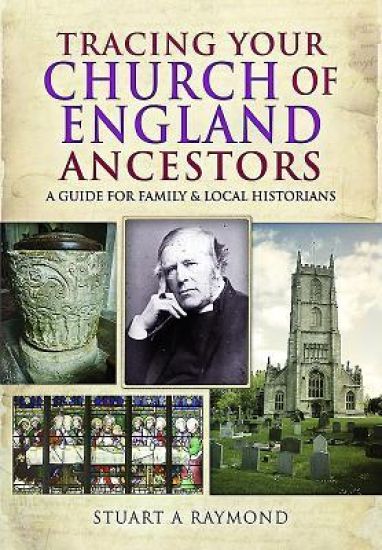
Tracing Your Church of England Ancestors

Tracing Your Church of England Ancestors

Stuart A. Raymond

Pen Sword Family History
2017
nidottu
In his latest handbook on the records of the major Christian religions, Stuart Raymond focuses on the Church of England. He identifies the available sources, comments on their strengths and weaknesses and explains how to make the best use of them. The history of the Church of England is covered, from the Reformation in the mid-sixteenth century until the present day. Anyone who has a family connection with the Church of England or a special interest in the local history of the church will find his book to be a mine of practical information and an essential aid for their research. A sequence of short, accessible chapters gives an insight into the relevant records and demonstrates how much fascinating genealogical information can be gleaned from them. After providing a brief history of the Church of England, and a description of its organization, Stuart Raymond explores the wide range of records that researchers can consult. Among them are parish registers, bishops transcripts, marriage licences, churchwardens accounts, vestry minutes, church magazines, tithe records and the records of the ecclesiastical courts and Anglican charities and missions. A wealth of research material is available and this book is the perfect introduction to it.
Lattice-ordered Rings and Modules

Lattice-ordered Rings and Modules

Stuart A. Steinberg

Springer-Verlag New York Inc.
2014
nidottu
From the reviews: "Lattice-ordered rings and modules are of interest both to algebraists and to functional analysts. Previous authors have presented only those results that are needed for the applications that they have in mind. Having a book like this one would be a great boon. Both the algebraists and the analysts would benefit from having the fundamental results all gathered together in one book. This book would fill in the gap admirably. Any algebraist or functional analyst whose work involves ordered structures would be interested in this book. That includes mathematicians who study: lattices, ordered semigroups, ordered groups, ordered rings, ordered fields, Riesz spaces, vector lattices, or Banach lattices. It would also be useful for mathematicians who are interested in general ring theory, general group theory, matrix algebras, or function algebras (especially Banach algebras). In short, there is a wide audience who would find the tools that this book provides very useful."