Kirjojen hintavertailu. Mukana 11 342 296 kirjaa ja 12 kauppaa.

Kirjahaku

Etsi kirjoja tekijän nimen, kirjan nimen tai ISBN:n perusteella.

1000 tulosta hakusanalla Stuart J. Reid

Biopsy Interpretation of the Breast

Biopsy Interpretation of the Breast

Stuart J. Schnitt; Laura C. Collins

Lippincott Williams and Wilkins
2017
sidottu
Your practical aid to confident diagnosis! Biopsy Interpretation of the Breast, 3rd Edition helps you correctly identify the full range of pathologic alterations encountered in breast tissue. The intuitive organization approaches diagnosis the way you do, grouping lesions according to their histologic patterns and then pointing out the characteristics that distinguish one type of lesion from another. The authors emphasize the role of adjunctive studies in solving diagnostic problems wherever appropriate, explain the clinical significance of the various diagnoses and their impact on patient management, highlighting key clinical and management points throughout – giving you the broad context you need to generate the most accurate pathology reports for every patient.4 stars from Doody's! " The greatest strength of this book is the ability of the authors to provide expert consultation on so many diagnostic entities due in part to their experience but also to their teaching ability. This is an excellent resource for any practicing pathologist." - Doody's Review ServiceKey FeaturesComprehensive updates reflect the most recent World Health Organization nomenclature and diagnostic criteria, the role of adjunctive studies (including the uses and limitations of newer immunohistochemical markers), evaluation of specimens from patients treated with neoadjuvant systemic therapy, new guidelines for lumpectomy margin evaluation, advances in molecular pathology and genetics, and other crucial developments in the field.Navigate controversies with discussions of unresolved issues in diagnostic interpretation, and apply pragmatic, experience-based recommendations in areas where evidence-based criteria are lacking.Make better informed decisions about core needle biopsy interpretation through expanded coverage of the role and pitfalls of this technique.Compare your cases to hundreds of carefully prepared, high-quality photomicrographs, many new to this edition.Access key diagnostic features and differential diagnostic considerations at a glance with dozens of helpful tables, and find the answers you need quickly thanks to a concise, bulleted format.Your book purchase includes a complimentary download of the enhanced eBook for iOS, Android, PC & Mac. Take advantage of these practical features that will improve your eBook experience:The ability to download the eBook on multiple devices at one time — providing a seamless reading experience online or offlinePowerful search tools and smart navigation cross-links that allow you to search within this book, or across your entire library of VitalSource eBooksMultiple viewing options that enable you to scale images and text to any size without losing page clarity as well as responsive designThe ability to highlight text and add notes with one click

Nationalist Passions

Nationalist Passions

Stuart J. Kaufman

Cornell University Press
2015
pokkari
Nationalist and ethnic conflict can take many forms, from genocidal violence and civil war to protest movements and peaceful squabbles in democracies. Nationalist Passions poses a stark challenge to extreme rationalist understandings of political conflict. Stuart J. Kaufman elaborates a compelling theory of ethnic politics to explain why ethnic violence erupts in some contexts and how peace is maintained in others. At the core of Kaufman's theory is an assertion that conflicts are initiated due to popular "symbolic predispositions"—biases of all kinds—and perceptions of threat. Kaufman puts his theory to the test in a range of conflicts. He examines some highly violent episodes, among them the Muslim rebellion in the southern Philippines beginning in the 1970s; the civil war in southern Sudan that began in the 1980s; and the Rwanda genocide of 1994. Kaufman also analyzes other situations in which leaders attempted to tame the violence that nationalist passions can generate. In India, Mahatma Gandhi mobilized an overtly nonviolent movement but failed in his efforts to prevent the rise of Muslim-Hindu communal violence. In South Africa, Nelson Mandela and F. W. de Klerk ended apartheid, but not without terrible cost—more than fifteen thousand people died while the negotiations were under way. In Tanzania, however, Julius Nyerere led one of the few ethnically diverse countries in the world with almost no ethnic violence. Nationalist Passions is essential reading for policymakers, international aid workers, and all others who seek to find the best possible outcomes for future internal and interstate clashes.
Milan Restaurant Guide 2015: Best Rated Restaurants in Milan, Italy - 500 restaurants, bars and cafés recommended for visitors, 2015.
The restaurants found in this guide are the most positively reviewed and recommended by locals and travelers. "TOP 500 RESTAURANTS" (67 Cuisine Types). Abruzzese, African, American, Apulian, Arabian, Argentine, Asian Fusion, Bakeries, Belgian, Bistros, Brasseries, Brazilian, Breakfast & Brunch, Breweries, Buffets, Caf s, Calabrian, Cantonese, Chinese, Cr peries, Cucina Campana, Dim Sum, DinerS, Emilian, Fish & Chips, French, German, Gluten-Free, Greek, Indian, Iranian, Italian, Japanese, Korean, Kosher, Ligurian, Live/Raw Food, Mediterranean, Mexican, Middle Eastern, Moroccan, Persian, Ramen, Roman, Russian, Sardinian, Scandinavian, Seafoods, Sicilian, Spanish, Steakhouses, Sushi Bars, Tea Rooms, Trattorie, Turkish, Tuscan, Vegan, Vegetarian, Vietnamese, Wine Bars and many more options to visit and enjoy your stay.
Milan Restaurant Guide 2016: Best Rated Restaurants in Milan, Italy - 500 restaurants, bars and cafés recommended for visitors, 2016
The restaurants found in this guide are the most positively reviewed and recommended by locals and travelers. "TOP 500 RESTAURANTS" (67 Cuisine Types). Abruzzese, African, American, Apulian, Arabian, Argentine, Asian Fusion, Bakeries, Belgian, Bistros, Brasseries, Brazilian, Breakfast & Brunch, Breweries, Buffets, Caf s, Calabrian, Cantonese, Chinese, Cr peries, Cucina Campana, Dim Sum, DinerS, Emilian, Fish & Chips, French, German, Gluten-Free, Greek, Indian, Iranian, Italian, Japanese, Korean, Kosher, Ligurian, Live/Raw Food, Mediterranean, Mexican, Middle Eastern, Moroccan, Persian, Ramen, Roman, Russian, Sardinian, Scandinavian, Seafoods, Sicilian, Spanish, Steakhouses, Sushi Bars, Tea Rooms, Trattorie, Turkish, Tuscan, Vegan, Vegetarian, Vietnamese, Wine Bars and many more options to visit and enjoy your stay.
Fictionalizing Anthropology

Fictionalizing Anthropology

Stuart J. McLean

University of Minnesota Press
2017
sidottu
What might become of anthropology if it were to suspend its sometime claims to be a social science? What if it were to turn instead to exploring its affinities with art and literature as a mode of engaged creative practice carried forward in a world heterogeneously composed of humans and other than humans? Stuart McLean claims that anthropology stands to learn most from art and literature not as “evidence” to support explanations based on an appeal to social context or history but as modes of engagement with the materiality of expressive media-including language-that always retain the capacity to disrupt or exceed the human projects enacted through them. At once comparative in scope and ethnographically informed, Fictionalizing Anthropology draws on an eclectic range of sources, including ancient Mesopotamian myth, Norse saga literature, Hesiod, Lucretius, Joyce, Artaud, and Lispector, as well as film, multimedia, and performance art, along with the concept of “fabulation” (the making of fictions capable of intervening in and transforming reality) developed in the writings of Bergson and Deleuze. Sharing with proponents of anthropology’s recent “ontological turn,” McLean insists that experiments with language and form are a performative means of exploring alternative possibilities of collective existence, new ways of being human and other than human, and that such experiments must therefore be indispensable to anthropology’s engagement with the contemporary world.
Fictionalizing Anthropology

Fictionalizing Anthropology

Stuart J. McLean

University of Minnesota Press
2017
nidottu
What might become of anthropology if it were to suspend its sometime claims to be a social science? What if it were to turn instead to exploring its affinities with art and literature as a mode of engaged creative practice carried forward in a world heterogeneously composed of humans and other than humans? Stuart McLean claims that anthropology stands to learn most from art and literature not as “evidence” to support explanations based on an appeal to social context or history but as modes of engagement with the materiality of expressive media-including language-that always retain the capacity to disrupt or exceed the human projects enacted through them. At once comparative in scope and ethnographically informed, Fictionalizing Anthropology draws on an eclectic range of sources, including ancient Mesopotamian myth, Norse saga literature, Hesiod, Lucretius, Joyce, Artaud, and Lispector, as well as film, multimedia, and performance art, along with the concept of “fabulation” (the making of fictions capable of intervening in and transforming reality) developed in the writings of Bergson and Deleuze. Sharing with proponents of anthropology’s recent “ontological turn,” McLean insists that experiments with language and form are a performative means of exploring alternative possibilities of collective existence, new ways of being human and other than human, and that such experiments must therefore be indispensable to anthropology’s engagement with the contemporary world.
Wolf Block

Wolf Block

Stuart J Whitmore

Createspace Independent Publishing Platform
2015
pokkari
Bunierti Kittran is a rich young woman who enlisted to serve her government and honorably complete her duty to society. She looks down on those who use the influence of their wealthy families to bypass the discomforts of being an Upholder, although she is not happy that she must tolerate people from the lower economic classes who often have little more to look forward to than a hot meal and a safe place to sleep. It is a disappointment but no surprise that her roommate does not share her wealthy background.The many rumors from prison sector W84-88D, "Wolf Block," are also no surprise, but she dismisses the notion that the prisoners there have a secret conspiracy or special powers. However, she does not expect to be wrapped up in the mystery when the enigmatic prisoners of Wolf Block take a special interest in her.This is a short story of approximately 9750 words. It was originally written for a novelette contest on Reddit. After the contest, revisions were made based on feedback from readers. The story has now been released under the Creative Commons: Attribution-ShareAlike open license. This means, among other things, that you are free to share it with others, and you may be able to get a copy for free. However, buying a copy encourages the author to continue writing, and ordering the e-book version through an online retailer will simplify loading the story into your e-reader of choice.
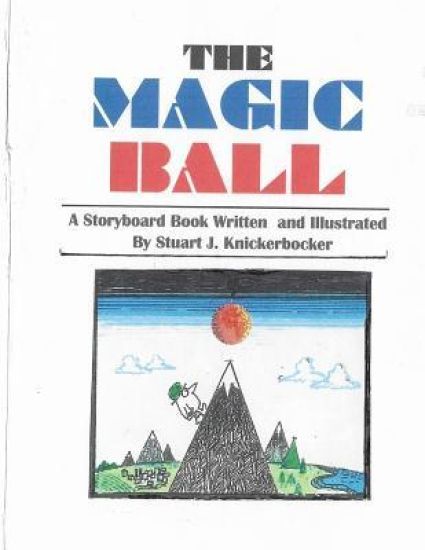
Lost Creek

Lost Creek

Stuart J. Knickerbocker

Createspace Independent Publishing Platform
2016
nidottu
The story begins with the abduction Abby Jones, a five year girl walking home from school. Her mother, Gail Jones, becomes alarmed when her daughter disappears and reports her missing to Lost Creek police. The search begins when Gail remembers seeing a blue car speeding past her house from the town intersection where Abby was last seen. The two Lost Creek deputies questioned all the residents along Main street where the blue car was speeding out of town. They ended up at a farmers home three miles out of town. The farmer, named Frank Kenworthy described a nervous man coming to his door and asking for help to pull his car out of a mud hole near a creek down the dirt road from his house. The deputies decided to search the creek where the man had been stuck and found the body of a little girl who turned out to be Abby Jones. The man driving a blue Dodge become the prime suspect and the hunt to find find took top priority. It wasn't until a man from another near by town had a dream about a deacon in his church carrying off a little girl screaming, "I want to go home," and reported the name and address of the man to the police. When they questioned the man named Max Hoffman and found out his car was black they were just about to leave when they discovered that he had just painted his blue car black. he owned a blue Dodge it turned out to be black. He was taken to Flint for questioning where he confessed to killing Abby Jones and sentence to life in prison without parole.
Milan Restaurant Guide 2017: Best Rated Restaurants in Milan, Italy - 500 restaurants, bars and cafés recommended for visitors, 2017
The restaurants found in this guide are the most positively reviewed and recommended by locals and travelers. "TOP 500 RESTAURANTS" (62 Cuisine Types). Afghan, African, American, Arabian, Argentine, Austrian, Bistros, Brasseries, Brazilian, Breakfast & Brunch, Breweries, British, Buffets, Bulgarian, Caf s, Cajun, Candy Stores, Caribbean, Chinese, Creole, Cr peries, Delicatessen, Dim Sum, Diners, Ethiopian, European, Falafel, French, Gastropubs, German, Gluten-Free, Himalayan/Nepalese, Indian, Iranian, Irish, Israeli, Italian, Japanese, Korean, Lebanese, Lounges, Malaysian, Mediterranean, Mexican, Middle Eastern, Mongolian, Pakistani, Persian, Portuguese, Pretzels, Pubs, Russian, Seafood, Serbo Croatian, Spanish, Steakhouses, Sushi Bars, Tapas Bars, Tex-Mex, Thai, Turkish, Vegan, Vegetarian, Vietnamese, Wine Bars and many more options to visit and enjoy your stay.
Freda Stops a Bully

Freda Stops a Bully

Stuart J. Murphy

Charlesbridge Publishing,U.S.
2012
pokkari
What do you do when someone hurts your feelings? This installment in the I See I Learn(R) visual learning series uses easy-to-follow diagrams, pop-out tips, and a gentle, engaging story to teach basic conflict resolution and bully aversion strategies. Freda loves her new pink shoes. But when she wears them to school, a boy teases her. What can Freda do to make the bully stop? Part of the sixteen book I SEE I LEARN(R) series for happier, healthier, more confident children
Freda Says Please

Freda Says Please

Stuart J. Murphy

CHARLESBRIDGE PUBLISHING
2013
nidottu
Remembering your manners can be tricky This I See I Learn(R) book uses pop-out tips, easy-to-follow diagrams, and a gentle but firm story to drive home the importance of being polite and equip kids with their "pleases" and "thank-yous." Freda likes to play school and pretend to be the teacher. But when Percy and Emma join in on the fun, they realize that Freda needs some help saying "please," "thank you," and "you're welcome." Part of the sixteen book I SEE I LEARN(R) series for happier, healthier, more confident children