The Hermit of Muddy Creek turns up naked and dead in the stream he saved. The beloved environmental activist cannot be replaced. Townspeople fume. The preacher's husband is accused. The mystery baffles Biddlebourne's sage sheriff and savvy pundits. Can the Glory Girls sort it out? Or will a clever killer go free?
What is the connection between a woman's sex drive as she ages and the degree of relationship intimacy and spirituality? What does spiritual connectedness and sex have in common? Could the dots be connected? Dr. Susan Hardwick-Smith thoughtfully answers these questions and more based on her own personal experiences with menopause and over 20 years of experience as an award-winning gynecologist in Houston, Texas. A woman's best life, including her sexual life, doesn't have to end at 50, 60 or 70. The truth is, it has the potential to grow richer and fuller with every moment. Sexually Woke will help women navigate this new stage of life while remaining vibrant, connected, and sexually satisfied. Part I discusses Dr. Susan's findings from her research into middle-age sexuality and includes chapters on the various impacts middle age can have on women; how they traditionally have been advised to deal with it; and presents examples of new approaches. In Part II, Dr. Susan explores difficult and topical issues such as sexual abuse, the effect of the #Metoo movement, marital rape, sex and religion, as well as thought provoking issues regarding our own individual conditioning around sex. Part III features how some women have learned to overcome the negative impacts of middle age and open themselves up to a new chapter in their life, one that promises to be more fulfilling and rewarding than their past. No longer the secret knowledge of a few outliers, this path to deep sexual connection and satisfaction is available to anyone who is ready to commit and willing to embark on the journey.
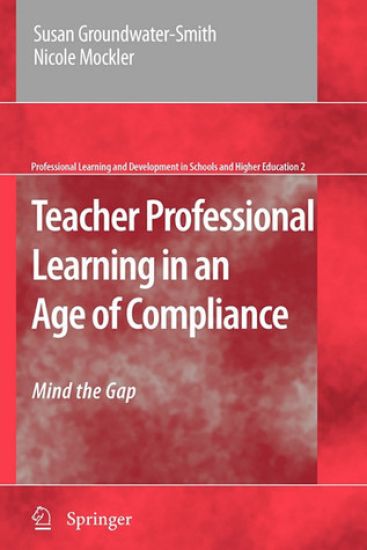
Teacher Professional Learning in an Age of Compliance: Mind the Gap examines ways in which practice-based inquiry in educational settings, in a number of different countries and contexts, can transcend current ways of working and thinking such that authentic professional learning is the result. The authors contend that education policy, under pressure from a number of quarters, is retreating into a standardized, audited, and backward-looking arena, with the advances of more progressive educational philosophy being rolled back. In an age where practitioner inquiry and action research have often been ‘hijacked’ for the purposes of broad-based policy implementation, this book offers a rationale for reclaiming the critical edge so fundamental to inquiry-based professional learning. It examines the potential of inquiry-based forms of teacher professional learning to contribute to the growth of professional knowledge for and about teachers’ work. The authors intend that the book will assist in building new forms of professional knowledge that go beyond the current compliance model – engineered from less enduring materials – to inform a new model with its foundations in a strong ethical and moral framework. They also believe that this new model, if implemented, will help to reverse today’s conservative educational trends and make teacher professional development a force for genuine progress once again. They have consciously moved away from the celebratory tone of much of the academic reporting of teacher professional learning, adopting instead a genuinely critical edge. In covering a wide range of policies and practices from across the international spectrum, they have allowed themselves the freedom to engage in serious epistemological arguments about the nature of professional knowledge, as well as how it is constructed and employed.
This 1986 book offered the first detailed analysis of relationships between crime and social trends in Britain. It is innovative in focusing on the victims of crime, fear and anxiety, as well as on individual and institutional reactions to crime - an emphasis that complements the more usual focus of British geography and criminology on offenders, offences and the built environment. Ethnographic fieldwork is combined with local and national victim surveys to highlight the human consequences of crime and fear against their social, economic and political background. Smith shows that variations in the incidence, impact and social significance of crime reflect the differential distribution of power within cities and regions. In accounting for the relationships between crime, anxiety and the quality of life in urban neighbourhoods, the book makes an interesting contribution to social theory. Amongst a variety of policy-related issues, particular attention is paid to the role of the police in a multi-agency approach to crime prevention and the management of fear.
Since publication of the first edition of "Web-Based Instruction", many significant advances in Web-based instruction have occurred. New technologies and tools have emerged, different ways of accessing the Internet are available, and virtual reference trends are redefining some library users' idea of the "library", and information literacy skills are recognized as essential to students' success. Furthermore, after writing the first edition, the author received feedback from readers on areas they'd like to see expanded. For example, public, K-12, and special libraries indicated they'd like more on Web-based instruction in their areas. Also, more discussion on pedagogy and learning styles was recommended. Expanding on the popular, practical how-to Web guide for public, academic, school and special libraries, technology expert Smith has thoroughly updated the discussion to include new tools and trends, including browsers, access methods, hardware, and software programs. She also supplies tips to secure project funding, and provides strategic information for different libraries types, including K-12, public, academic, and corporate libraries. This completely revised edition also: includes a new section on learning theory applied to Web-based instruction; translates Web-speak and defines the lingo, with expanded glossary and acronym list; illustrates new procedures with fresh screen shots and URLs from top library Web programs; addresses the limitations and benefits of Web-based instruction with clear criteria for decision-making; takes a comprehensive step-by-step approach to developing, implementing, and assessing Web-based instruction programs; and identifies the authoring tools and resources required to be effective. A proven winner, this thoroughly updated hands-on manual is a must-have for owners of the first edition. Librarians facing the challenge of creating a Web-based project will find easy-to-understand guidance to create an educational and interactive Web site - from start to finish.
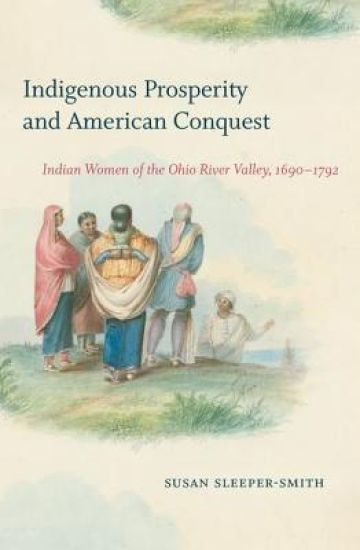
Indigenous Prosperity and American Conquest recovers the agrarian village world Indian women created in the lush lands of the Ohio Valley. Algonquian-speaking Indians living in a crescent of towns along the Wabash tributary of the Ohio were able to evade and survive the Iroquois onslaught of the seventeenth century, to absorb French traders and Indigenous refugees, to export peltry, and to harvest riparian, wetland, and terrestrial resources of every description and breathtaking richness. These prosperous Native communities frustrated French and British imperial designs, controlled the Ohio Valley, and confederated when faced with the challenge of American invasion.By the late eighteenth century, Montreal silversmiths were sending their best work to Wabash Indian villages, Ohio Indian women were setting the fashions for Indigenous clothing, and European visitors were marveling at the sturdy homes and generous hospitality of trading entrepots such as Miamitown. Confederacy, agrarian abundance, and nascent urbanity were, however, both too much and not enough. Kentucky settlers and American leaders—like George Washington and Henry Knox—coveted Indian lands and targeted the Indian women who worked them. Americans took women and children hostage to coerce male warriors to come to the treaty table to cede their homelands. Appalachian squatters, aspiring land barons, and ambitious generals invaded this settled agrarian world, burned crops, looted towns, and erased evidence of Ohio Indian achievement. This book restores the Ohio River valley as Native space.
It's hard to know what specific opportunities, technologies or challenges the future will bring. If you want to overcome the uncertainties of tomorrow, it's essential that you build a future culture. The potential for success is limitless for businesses which develop a culture designed for innovating and adapting to the future. Drawing upon decades of experience as futurists and consultants, Scott Smith and Susan Cox-Smith offer proven strategies that will allow you to fundamentally rewire your culture so that it becomes more fluent, agile and prepared to deal with whatever tomorrow will bring. From futureproofing your brand and manifesto to adapting the experience of your workforce, Future Cultures offers practical tools and techniques that will bring your focus out of the past and into the future. Through first-hand interviews and case studies from multinational companies such as IBM and the UN, this book will show how you can join the world's most innovative businesses by prioritizing tomorrow today.
It's hard to know what specific opportunities, technologies or challenges the future will bring. If you want to overcome the uncertainties of tomorrow, it's essential that you build a future culture. The potential for success is limitless for businesses which develop a culture designed for innovating and adapting to the future. Drawing upon decades of experience as futurists and consultants, Scott Smith and Susan Cox-Smith offer proven strategies that will allow you to fundamentally rewire your culture so that it becomes more fluent, agile and prepared to deal with whatever tomorrow will bring. From futureproofing your brand and manifesto to adapting the experience of your workforce, Future Cultures offers practical tools and techniques that will bring your focus out of the past and into the future. Through first-hand interviews and case studies from multinational companies such as IBM and the UN, this book will show how you can join the world's most innovative businesses by prioritizing tomorrow today.
The year was 1864. The freezing winds off Lake Michigan swept across the snow laden grounds and through the cracks of a building that held Southern prisoners in Camp Douglas, Illinois. Huddled with the other prisoners, John mulled over the reasons he had enlisted, even after his father had forbidden it. He knew the only real reason was to protect his best friend Frankie, who had enlisted first but never even bothered to show up at the station when the recruits left for war. Shivering, he wondered if he would ever see his family again or especially the girl he had loved since childhood. John realized that nothing but an act of God could deliver him from this hell on earth. Includes Readers Guide.
Questioning the Language of Improvement and Reform in Education challenges the language used in education by linking the language of both the public and professional domains with the changing intentions of the governance of education. Exploring various issues, which embody the many manifestations of the manner in which strident, conservative language has captured the public view of education, the book covers topics such as the importance of language in the context of educational practice, the media's portrayal of teachers globally, the role of students in the face of curriculum reform and the language used in educational policy worldwide.The book addresses the ways in which the words ‘improvement’ and ‘reform’ have been appropriated and hollowed-out by policymakers in order to justify globalised education policies. Using international case studies and reports, the authors argue that the employment of specific words masks the reality that new educational policies are regressive and require re-examination, while perpetuating the illusion that progressive educational practice is being brought to the fore.Questioning the Language of Improvement and Reform in Education is a fascinating and original take on this topic, which will be of great interest to educational practitioners, policymakers and linguists.
Ten-year-old Hayley launches a campaign to make grouchy Mr. Wood appreciate his dog, Booford, whom he never walks or plays with. She gets Booford what he needs; she also gets an unexpected friend -- Mr. Wood.
Questioning the Language of Improvement and Reform in Education challenges the language used in education by linking the language of both the public and professional domains with the changing intentions of the governance of education. Exploring various issues, which embody the many manifestations of the manner in which strident, conservative language has captured the public view of education, the book covers topics such as the importance of language in the context of educational practice, the media's portrayal of teachers globally, the role of students in the face of curriculum reform and the language used in educational policy worldwide.The book addresses the ways in which the words ‘improvement’ and ‘reform’ have been appropriated and hollowed-out by policymakers in order to justify globalised education policies. Using international case studies and reports, the authors argue that the employment of specific words masks the reality that new educational policies are regressive and require re-examination, while perpetuating the illusion that progressive educational practice is being brought to the fore.Questioning the Language of Improvement and Reform in Education is a fascinating and original take on this topic, which will be of great interest to educational practitioners, policymakers and linguists.
This work interrupts the current “consulting students” discourse that positions students as service clients and thus renders more problematic the concept of student voice in ways that it might be sustained as a democratic process. It looks at student voice holistically across realms of classroom practices, higher education, practitioner inquiry and policy formulation. The authors render problematic the “empowerment” rhetoric that is the dominant and insufficient narrative justifying consulting children and young people. They explore the many contradictions and ambiguities associating with recruiting and encouraging them to participate and the varying impacts of different circumstances on the ways in which student voice projects are enacted. They perceive that it is possible for student voice projects to be subverted from both above and below as varying stakeholders with varying purposes struggle to manage and control projects. Importantly, the book reports on research that identifies and highlights conditions for initiating and sustaining student voice and include “beyond school” dimensions that consider young people as “audiences” who can inform community facilities, their development and design as well as undergraduate students in universities. These cases are not reported as celebratory, but rather act as narratives that illuminate the many challenges facing those who chose to work with young people in authentic ways. It both advances methodologies for engaging young people as active agents in the design and interpretation of research that concerns them and offers a critique of those methods that see young people as the objects of research, where the data is mined for purposes that do not recognise that students are the consequential stakeholders with respect to decisions made in their interests.?
This work interrupts the current “consulting students” discourse that positions students as service clients and thus renders more problematic the concept of student voice in ways that it might be sustained as a democratic process. It looks at student voice holistically across realms of classroom practices, higher education, practitioner inquiry and policy formulation. The authors render problematic the “empowerment” rhetoric that is the dominant and insufficient narrative justifying consulting children and young people. They explore the many contradictions and ambiguities associating with recruiting and encouraging them to participate and the varying impacts of different circumstances on the ways in which student voice projects are enacted. They perceive that it is possible for student voice projects to be subverted from both above and below as varying stakeholders with varying purposes struggle to manage and control projects. Importantly, the book reports on research that identifies and highlights conditions for initiating and sustaining student voice and include “beyond school” dimensions that consider young people as “audiences” who can inform community facilities, their development and design as well as undergraduate students in universities. These cases are not reported as celebratory, but rather act as narratives that illuminate the many challenges facing those who chose to work with young people in authentic ways. It both advances methodologies for engaging young people as active agents in the design and interpretation of research that concerns them and offers a critique of those methods that see young people as the objects of research, where the data is mined for purposes that do not recognise that students are the consequential stakeholders with respect to decisions made in their interests.?
In this special issue of the Hispanic American Historical Review, the editors stepped outside the sometimes narrow confines of technical academic writing. They sought contributors who were willing to dive into an honest, open discussion of Mexico’s cultural history. The result is a vigorous, complex, innovative, and occasionally humorous discussion of the pros and cons of a new cultural historical approach to Mexican history.All the contributors to this issue agree on the importance and relevance of a historical study of culture in its most inclusive sense. But there is much less consensus about the promise and potential of a "new cultural history" of Mexico and Latin America. While some of the contributors celebrate new interpretive and methodological advances, others express concern about the dangers of overinterpretation, untoward speculation, and the imposition of postmodernist concepts.Contributors and topics covered include: Susan Deans-Smith and Gilbert M. Joseph on the Arena of Dispute Eric Van Young on the New Cultural History William E. French on Cultural History of Nineteenth-Century Mexico Mary Kay Vaughan on Cultural Approaches to Peasant Politics in the Mexican RevolutionStephen Haber on Mexico’s "New" Cultural HistoryFlorencia E. Mallon on Cycles of Revisionism Susan Migden Socolow on Putting the "Cult" in Culture Claudio Lomnitz on the Politics of the "New Cultural History of Mexico"