Kirjojen hintavertailu. Mukana 11 342 296 kirjaa ja 12 kauppaa.

Kirjahaku

Etsi kirjoja tekijän nimen, kirjan nimen tai ISBN:n perusteella.

1000 tulosta hakusanalla THOMAS LECHFORD

Thomas Hobbes: Writings on Common Law and Hereditary Right
This volume in the Clarendon Edition of the Works of Thomas Hobbes contains A dialogue between a philosopher and a student, of the common laws of England, edited by Alan Cromartie, supplemented by the important fragment on the issue of regal succession, 'Questions relative to Hereditary Right', discovered and edited by Quentin Skinner. The former work is the last of Hobbes's major political writings. As a critique of common law by a great philosopher, it should be essential reading for anybody interested in English political thought or legal theory. Although it was written when Hobbes was at least eighty, it is a lively piece of work that goes beyond a recapitulation of earlier Hobbesian doctrines, not least in applying his central ideas to the details of the English constitution. This edition supplies the extensive annotation on matters of legal and historical detail that is required by non-specialist readers; it also assists students by offering cross-references to other treatises. Cromartie's introduction is an authoritative account of seventeenth-century thinking about the common law and of Hobbes's shifting attitudes towards it. It has often been suspected that the book was motivated by fear of being burned for heresy. Cromartie disentangles the complex evidence (scattered across a number of late works) that documents this fear's development, and shows why the philosopher's acute anxieties eventually led him to write a legal treatise. In clarifying these questions, the edition casts fresh light upon his attitude to law and sovereignty. The second piece takes the form of a question put to Hobbes about the right of succession under hereditary monarchies, together with Hobbes's response. The question is in the handwriting of the fourth Earl of Devonshire, the son of the third Earl, whom Hobbes had tutored in the 1630s. He asks Hobbes whether an heir can be excluded if he is incapable of protecting his prospective subjects. The question of 'exclusion' became the most burning issue in English politics in the course of 1679, when a bill to exclude the future James II was introduced into the House of Commons. Hobbes answers with a robust defence of hereditary right, in the course of which he also makes some important general observations about the concept of a right. The manuscript is also of special interest as it constitutes Hobbes's last word on politics. It was almost certainly written in the summer of 1679, less than six months before Hobbes's death.
The Correspondence of Thomas Hobbes: The Correspondence of Thomas Hobbes
[NB in publicity materials use short description + first few review quotes if short of space] Thomas Hobbes (1588-1679) is one of the most important figures in the history of European thought. Although best known for his political theory, he also wrote about theology, metaphysics, physics, optics, mathematics, psychology, and literary criticism. All of these interests are reflected in his correspondence. Some small groups of his letters have been printed in the past (often in inaccurate transcriptions), but this edition is the first complete collection of his correspondence, nearly half of which has never been printed before. All the letters have been transcribed from the original sources, and all materials in Latin, French, and Italian are printed together with translations in clear modern English. The letters are fully annotated, and there are long biographical entries on all of his correspondents, based on extensive original research. These two volumes form one of the most significant and valuable publications of Hobbes scholarship this century, casting a new light on the whole pattern of his intellectual life and personal friendships.
The Correspondence of Thomas Hobbes: Volume II: 1660-1679
[NB in publicity materials use short description + first few review quotes if short of space] Thomas Hobbes (1588-1679) is one of the most important figures in the history of European thought. Although best known for his political theory, he also wrote about theology, metaphysics, physics, optics, mathematics, psychology, and literary criticism. All of these interests are reflected in his correspondence. Some small groups of his letters have been printed in the past (often in inaccurate transcriptions), but this edition is the first complete collection of his correspondence, nearly half of which has never been printed before. All the letters have been transcribed from the original sources, and all materials in Latin, French, and Italian are printed together with translations in clear modern English. The letters are fully annotated, and there are long biographical entries on all of his correspondents, based on extensive original research. These two volumes form one of the most significant and valuable publications of Hobbes scholarship this century, casting a new light on the whole pattern of his intellectual life and personal friendships.
The Correspondence of Thomas Hobbes: The Correspondence of Thomas Hobbes
Thomas Hobbes (1588-1679) is one of the most important figures in the history of European philosophy. Although best known for his political theory, he also wrote about theology, metaphysics, physics, optics, mathematics, psychology, and literary criticism. All of these interests are reflected in his correspondence. Some small groups of his letters have been printed in the past (often in inaccurate transcriptions), but this edition is the first complete collection of his correspondence, nearly half of which has never been printed before. All the letters have been transcribed from the original sources, and all materials in Latin, French, and Italian are printed together with translations in clear modern English. The letters are fully annotated, and there are long biographical entries on all of his correspondents, based on extensive original research. The whole pattern of Hobbes's intellectual life and personal friendships is set in a new light. This is one of the most significant and valuable scholarly publications of this century.
The Correspondence of Thomas Hobbes: Volume II: 1660-1679
Thomas Hobbes (1588-1679) is one of the most important figures in the history of European thought. Although interest in his life and work has grown enomrously in recent years, this is the first complete edition of his correspondence. The texts of the letters are richly supplemented with explanatory notes and full biographical and bibliographical information. This landmark publication sheds new light in abundance on the intellectual life of a major thinker.
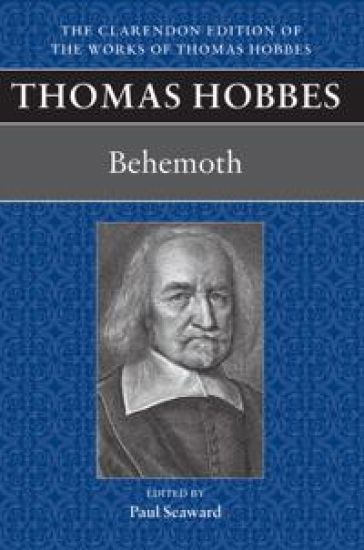
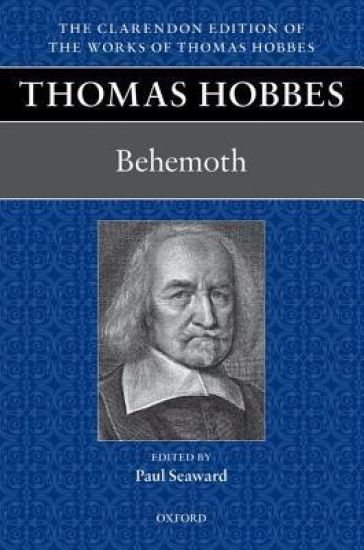
Thomas Hobbes: Behemoth

Thomas Hobbes: Behemoth

Oxford University Press
2009
sidottu
Behemoth is Thomas Hobbes's narrative of the English Civil Wars from the beginning of the Scottish revolution in 1637 to the Restoration of the Monarchy in 1660, and is his only composition to address directly the history of the events which formed the context of his writings in Leviathan and elsewhere on sovereignty and the government of the Church. Although presented as an account of past events, it conceals a vigorous attack on the values of the religious and political establishment of Restoration England. This is the first fully scholarly edition of the work, and the first new edition of the text since 1889. Based on Hobbes's own presentation manuscript, it includes for the first time an accurate transcription of the passages which Hobbes had deleted in the text, and notes made by early readers.
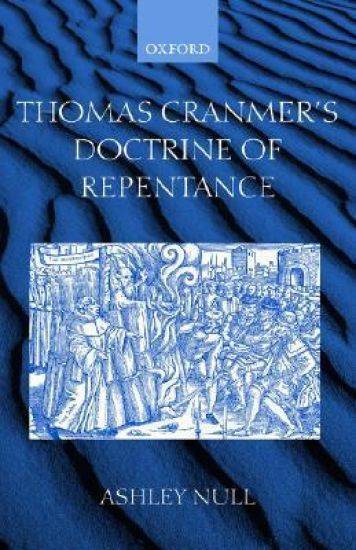
Thomas Cranmer's Doctrine of Repentance

Thomas Cranmer's Doctrine of Repentance

Ashley Null

Oxford University Press
2001
sidottu
Self-serving lacky, self-deceiving puppet, Swiss Protestant partisan, or sensible Erasmian humanist: which, if any, was Thomas Cranmer? For centuries historians have offered often bitterly contradictory answers. Although Cranmer was a key participant in the changes to English life brought about by the Reformation, his reticent nature and lack of extensive personal writings have left a vacuum that in the past has too often been filled by scholarly prejudice or presumption. For the first time, however, this book examines in-depth little used manuscript sources to reconstruct Cranmer's theological development on the crucial Protestant doctrine of justification. The author explores Cranmer's cultural heritage, why he would have been attracted to Luther's thought, and then provides convincing evidence for the Reformed Protestant Augustinianism which Cranmer enshrined in the formularies of the Church of England. For Cranmer the glory of God was his love for the unworthy; the heart of theology was proclaiming this truth through word and sacrament. Hence, the focus of both was on the life of on-going repentance, remembering God's gracious love inspired grateful human love.
Thomas Hobbes: Behemoth

Thomas Hobbes: Behemoth

Oxford University Press
2014
nidottu
Behemoth is Thomas Hobbes's narrative of the English Civil Wars from the beginning of the Scottish revolution in 1637 to the Restoration of the Monarchy in 1660, and is his only composition to address directly the history of the events which formed the context of his writings in Leviathan and elsewhere on sovereignty and the government of the Church. Although presented as an account of past events, it conceals a vigorous attack on the values of the religious and political establishment of Restoration England. This is the first fully scholarly edition of the work, and the first new edition of the text since 1889. Based on Hobbes's own presentation manuscript, it includes for the first time an accurate transcription of the passages which Hobbes had deleted in the text, and notes made by early readers.
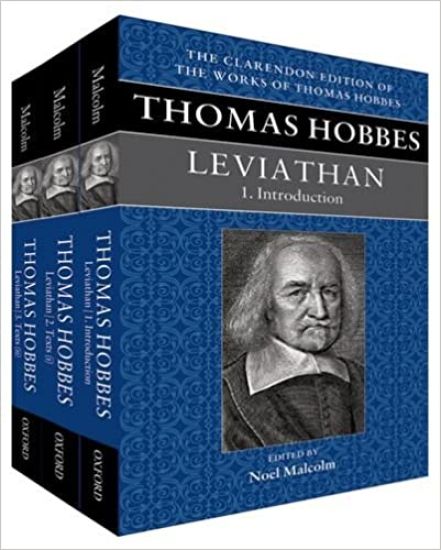
Thomas Hobbes: Leviathan

Thomas Hobbes: Leviathan

Oxford University Press
2014
muu
Thomas Hobbes's Leviathan is one of the most important philosophical texts in the English language, and one of the most influential works of political philosophy ever written. This is the first critical edition based on a full study of the manuscript and printing history. It is also the first edition to place the English text side by side with Hobbes's later Latin version of it, complete with a set of notes in which the many passages that differ in the Latin are translated into English. So, for the first time, readers of Leviathan will be able to see clearly every stage of the development of the text. Both texts are fully annotated with explanatory notes. The editor's Introduction, which takes up the whole of the first volume, gives a path-breaking account of the work's context, sources, and textual history. This definitive edition will set the study of Hobbes's masterwork on a new basis. This three volume paperback set is also available in component parts: The Editorial Introduction (Volume 1), ISBN 978-0-19-870909-1, and The English and Latin Texts (Volumes 2 and 3), ISBN 978-0-19-872396-7. The hardback three-volume set is also available, ISBN 978-0-19-960262-9
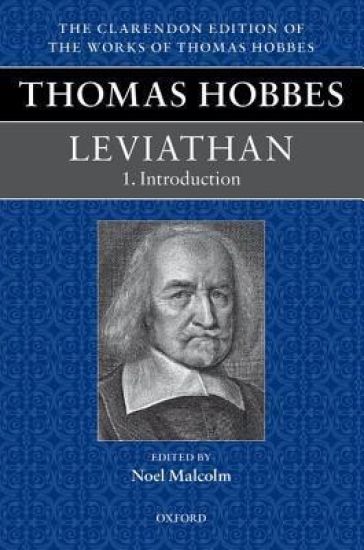
Thomas Hobbes: Leviathan

Thomas Hobbes: Leviathan

Oxford University Press
2014
nidottu
Thomas Hobbes's Leviathan is one of the most important philosophical texts in the English language, and one of the most influential works of political philosophy ever written. This Introduction accompanies the first critical edition based on a full study of the manuscript and printing history, and the first edition to place the English text side by side with Hobbes's later Latin version of it. The volume provides a path-breaking account of the work's context, sources, and textual history. Noel Malcolm's definitive work will set the study of Hobbes's masterwork on a new basis. The English and Latin Texts (Volumes 2 and 3) are available together in paperback as a two-volume pack: ISBN 978-0-19-872396-7. This Editorial Introduction (Volume 1) is also available in a three-volume paperback pack, alongside the English and Latin Texts (Volumes 2 and 3), ISBN: 978-0-19-870908-4. The hardback three-volume set can also be purchased: ISBN 978-0-19-960262-9
Thomas Hardy

Thomas Hardy

Oxford University Press
2021
sidottu
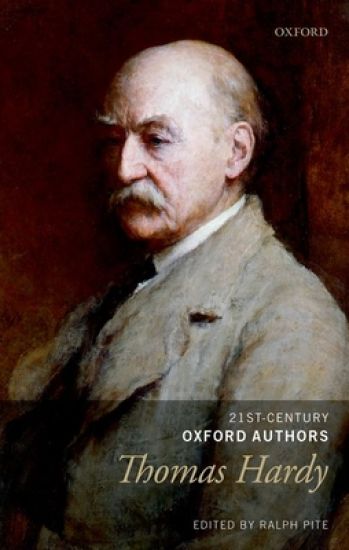
This volume in the 21st Century Oxford Authors series offers students an authoritative, comprehensive selection of the work of Thomas Hardy--the first for nearly thirty years. The edition presents the poetry in a new way by giving the texts of Hardy's original volumes, as they first appeared, instead of the revised text he later produced for his Collected Poems. It reveals the range and variety of his output--qualities he later tended to disguise. His most famous sequence, the 'Poems of 1912-13' appears in a radically different form. Selections from his epic drama, The Dynasts, are given within the chronological sequence of his poetry, illustrating the power of this neglected work. Notebook and journal entries, where Hardy puts forward his understanding of poetry and the role of the poet, are also included. Uniquely generous in the number of poems it contains, this edition also provides extensive annotation, locating Hardy's work in its cultural context and reading it in the light of the critical reception. The notes direct attention towards Hardy's regional heritage, and they show his response to the issues and debates of his day--to discussions surrounding war, patriotism, the treatment of animals, marriage, and religion, among others. The annotation locates, in addition, how Hardy's work has continued to speak to present-day readers, by addressing present-day concerns--in particular, gender, including the gender(s) of the poetic voice, the global and (or versus) the local, and, thirdly, humanity's place within the natural world. The edition also includes an Introduction to the life and works of Hardy, and a Chronology.
Thomas of Edessa's Explanations of the Nativity and Epiphany
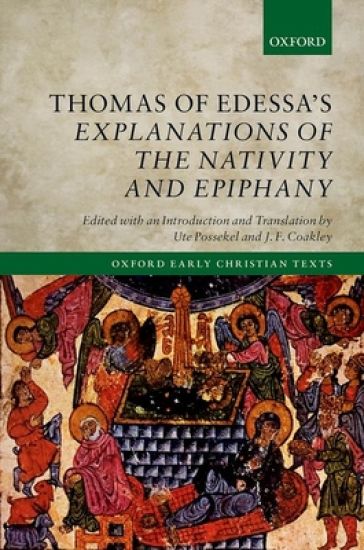
Thomas of Edessa flourished as a teacher at the School of Nisibis, an important Christian intellectual centre in sixth-century Persia. He accompanied the later patriarch Mar Aba on his travels around the Mediterranean and followed him to Nisibis. Thomas's only surviving writings are two lectures in Syriac ('Explanations') on the feasts of the Nativity and Epiphany. These discourses were later incorporated into a collection of Explanations of the Feasts covering the whole ecclesiastical year. This volume presents an edition of Thomas of Edessa's Syriac text of Nativity and Epiphany, accompanied by a facing-page English translation. These discourses, with the editors' introduction and notes, elucidate Thomas's place in the theological development of the Church of the East. He is the earliest author after Narsai to draw extensively upon the theology of Theodore of Mopsuestia, but earlier Syriac traditions are also reflected in his work, and his Christology is not yet the doctrine characteristic of Babai and later East Syriac authors.
Thomas Reid on Mind, Knowledge, and Value
This volume offers a fresh view of the work of Thomas Reid, a leading figure in the history of eighteenth-century philosophy. A team of leading experts in the field explore the significance of Reid's thought in his time and ours, focusing in particular on three broad themes: mind, knowledge, and value. Together, they argue that Reid's philosophy is about developing agents in a rich world of objects and values, agents with intellectual and active powers whose regularity is productive. Though such agents are equipped at first with rudimentary abilities, those abilities are responsive. Our powers consist in a fundamental and on-going engagement with the world, a world that calls on us to be flexible, sensitive, astute, and ultimately, practical. Thomas Reid on Mind, Knowledge, and Value represents both the vitality of Reid's work, and the ways in which current philosophers are engaging with his ideas.
Thomas Aquinas on Bodily Identity

Thomas Aquinas on Bodily Identity

Antonia Fitzpatrick

Oxford University Press
2017
sidottu
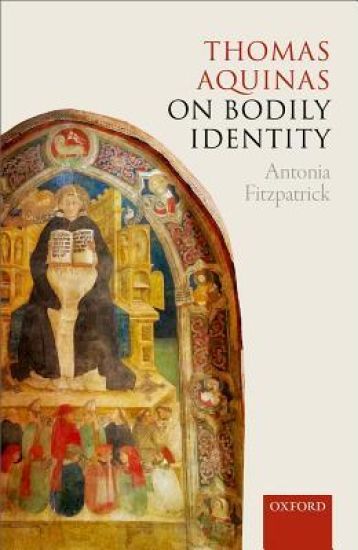
This is a study of the union of matter and the soul in the human being in the thought of the Dominican Thomas Aquinas. At first glance this issue might appear arcane, but it was at the centre of polemic with heresy in the thirteenth century and at the centre of the development of medieval thought more broadly. The book argues that theological issues, especially the need for an identical body to be resurrected at the end of time, but also considerations about Christ's crucifixion and saints' relics, were central to Aquinas's account of how human beings are constituted. The book explores in particular how theological questions and concerns shaped Aquinas's thought on individuality and personal and bodily identity over time, his embryology and understanding of heredity, his work on nutrition and bodily growth, and his fundamental conception of matter itself. It demonstrates, up-close, how Aquinas used his peripatetic sources, Aristotle and (especially) Averroes, to frame and further his own thinking in these areas. The book also indicates how Aquinas's thought on bodily identity became pivotal to university debates and relations between the rival mendicant orders in the late thirteenth and early fourteenth centuries, and that quarrels surrounding these issues persisted into the fifteenth century. Not only is this a study of the interface between theology, biology, and physics in Aquinas's mind; it also fundamentally revises the view of Aquinas that is generally accepted. Aquinas is famous for holding that the one and only substantial (or nature-determining) form in a human being is the soul, and most scholars have therefore thought that he located the identity of the individual in their soul. This book restores the body through a thorough and critical examination of the range of Aquinas's works.
Thomas Fuller

Thomas Fuller

W. B. Patterson

Oxford University Press
2018
sidottu
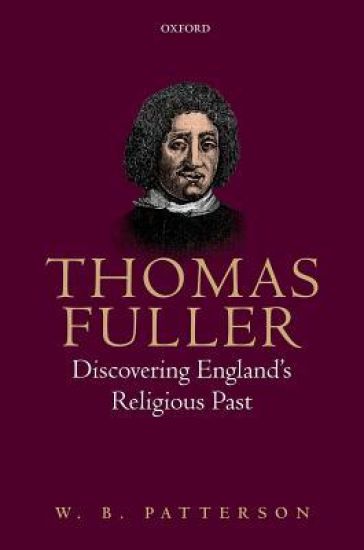
Long considered a highly distinctive English writer, Thomas Fuller (1608-1661) has not been treated as the significant historian he was. Fuller's The Church-History of Britain (1655) was the first comprehensive history of Christianity from antiquity to the upheavals of the Protestant and Catholic Reformations and the tumultuous events of the English civil wars. His numerous publications outside the genre of history--sermons, meditations, pamphlets on current thought and events--reflected and helped to shape public opinion during the revolutionary era in which he lived. Thomas Fuller: Discovering England's Religious Past highlights the fact that Fuller was a major contributor to the flowering of historical writing in early modern England. W. B. Patterson provides both a biography of Thomas Fuller's life and career in the midst of the most wrenching changes his country had ever experienced and a critical account of the origins, growth, and achievements of a new kind of history in England, a process to which he made a significant and original contribution. The volume begins with a substantial introduction dealing with memory, uses of the past, and the new history of England in the late sixteenth and early seventeenth centuries. Fuller was moved by the changes in Church and state that came during the civil wars that led to the trial and execution of King Charles I and to the Interregnum that followed. He sought to revive the memory of the English past, recalling the successes and failures of both distant and recent events. The book illuminates Fuller's focus on history as a means of understanding the present as well as the past, and on religion and its important place in English culture and society.
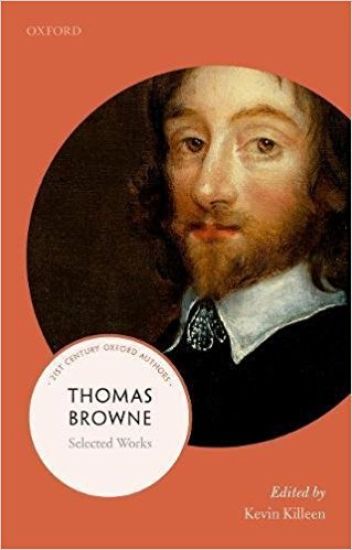
Thomas Browne

Thomas Browne

Oxford University Press
2018
nidottu
This volume in the 21st Century Oxford Authors series offers students and readers an authoritative, comprehensive selection of the work of Sir Thomas Browne (1605-1682). Accompanied by full scholarly apparatus, the edition demonstrates the breadth of the author of some of the most brilliant and delirious prose in English Literature. Lauded by writers ranging from Coleridge to Virginia Woolf, from Borges to W.G. Sebald, Browne's distinct style and the musicality of his phrasing have long been seen as a pinnacle of early modern prose. However, it is Browne's range of subject matter that makes him truly distinct. His writings include the hauntingly meditative Urn-Burial, and the elaborate The Garden of Cyrus, a work that borders on a madness of infinite pattern. Religio Medici, probably Browne's most famous work, is at once autobiography, intricate religious-scientific paradox, and a monument of tolerance in the era of the English civil war. This volume also includes his Pseudodoxia Epidemica, an encyclopaedia of error which contains within its vast remit the entire intellectual landscape of the seventeenth century-its science, its natural history, its painting, its history, its geography and its biblical oddities. The volume enables students to experience the ways in which Browne brings his lucid, baroque and stylish prose to bear across this range of diverse material, together with a carefully poised wit. This volume contains almost all of the author's work that was published in his lifetime, as well as a selection of writings published after his death. Explanatory notes and commentary are included, to enhance the study, understanding, and enjoyment of these works, and the edition includes an Introduction to the life and works of Browne.
Thomas Carlyle: The French Revolution
This is the first time that Thomas Carlyle's remarkable The French Revolution: A History has been published in a comprehensive scholarly form. The edition features an abundance of new critical features, including a critical text that presents the edition much as it appeared in the first edition of 1837, but with a detailed record of the emendations that Carlyle made in subsequent versions during his lifetime. These volumes also contain a variety of scholarly aids--literary, textual, historical, and photographic--to render The French Revolution more approachable and readable to twenty-first century readers. The edition takes seriously Carlyle's claim to have produced a history of the Revolution that is rooted in his primary French sources. The extensive annotations vividly testify to his deep engagement in a wide array of histories, pamphlets, memoirs, and biographies. The notes not only demonstrate his complex method of history, but they also shed fresh light on his artistry and his rich use of language. For the first time, readers will be provided with numerous samples of engravings that Carlyle used from Chamfort's Tableaux historiques and other sources to visualize the 'Flame Drama,' as it was conceived by revolutionary artists and printers. The appendices will also include an annotated version of Carlyle's essay, 'On the Sinking of the Vengeur' (1839), in which he offers a detailed response to controversy surrounding the events that occurred during the naval battle between France and Britain on 'the Glorious First of June,' 1794; an image and transcription of an unpublished MS holograph excerpt from The French Revolution located in the Harry Ransom Center, Texas; and a copy of a corrected proof of 'The Feast of Pikes' held in the Forster Collection of the National Art Library, Victoria and Albert Museum.