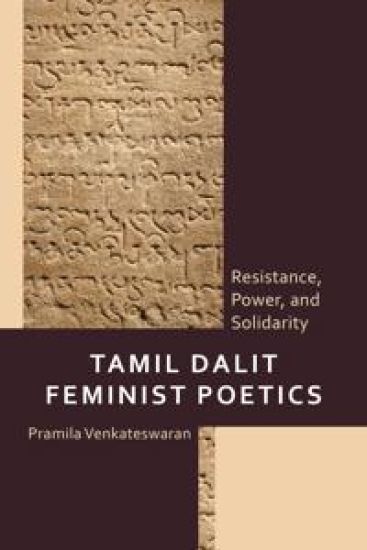
Tamil Dalit feminist poetry occurs in the nexus of caste demands and literary expectations based on Tamil “high culture,” as set in the literary conventions of both classical and contemporary aesthetics. Tamil Dalit feminist poets and their allies challenge literary expectations set for women poets as well as caste stigma. In Tamil Dalit Feminist Poetics: Resistance, Power, and Solidarity, Pramila Venkateswaran argues that Dalit poets Sukirtharani, Arangamallika, Umadevi, Meena Kandasamy, and Tamil feminist allies, such as Malathi Maitri and Kutty Revathi, challenge the literary tradition of Tamil poetry by presenting their radical poems on themes based on their experience and witnessing the trauma of violence on Dalit women’s bodies, thus placing caste and gender at the center of their work. They assert their subjectivity, offering us a feminist poetics that is rich with insights on the Dalit body, spirituality, music, culture, Dalit connection to land, and democracy. Their poems theorize women’s experiences, using metaphor, symbol, folk idioms, as well as satire and irony to express feminist connectedness to all spheres of life. Replete with anti-caste resistance of language, form, and content, Tamil Dalit feminist poets reframe both feminism and contemporary Tamil poetry. Thus, Dalit feminist poetry and other cultural productions are vehicles for solidarity and democracy.