Kirjahaku
Etsi kirjoja tekijän nimen, kirjan nimen tai ISBN:n perusteella.
1000 tulosta hakusanalla Theodore Dreiser

Dreiser's careful preservation of his papers bears new fruit with the publication of his personal diaries for the years 1902-26. This volume presents all seven of Dreiser's hitherto unpublished American diaries, the intermittent journals he kept during the most productive years of his literary career. Together they constitute a revealing self-portrait as well as a valuable commentary on the American scene during the first quarter of the twentieth century. They offer reflections on turn-of-the-century Philadelphia, the American South and Mid-West, Greenwich Village of the nineteen-teens, and Hollywood of the twenties. The diaries begin in 1902, when Dreiser was at a low point after the "suppression" of Sister Carrie, and continue until 1926, when he was enjoying the greatest success of his career with An American Tragedy. This publication constitutes in its entirety a new source for biographical and critical study. This is particularly true of the diaries covering Dreiser's experience in Philadelphia, Greenwich Village, and with Helen Richardson-all of which were not available to previous biographers. The present Introduction by Professor Riggio is the first biographical narrative to make use of these materials. Future biographers will now be able to speak with more assurance of Dreiser's whereabouts, the people he knew, what he was reading, which writings were in progress, and of his fascinating private affairs in general. In addition, these diaries will be of interest to students of Dreiser's literary art, as they reveal subtle aspects of how Dreiser viewed the external world and transmuted it in his daily creative efforts.
The Sister Carrie edition that was published in 1900, long regarded as a watershed work in American fiction, was actually a censored misrepresentation of Drieser's original story. When, 80 years later, the Pennsylvania Edition first appeared, replete with scholarly apparatus, it was hailed from coast to coast as a literary event of major importance. The Pennsylvania Edition restored the 36,000 words that had been excised at the insistence of the author's wife, his publisher, and a friend. This edition contains the complete, unexpurgated text, without the scholarly apparatus, plus a new introductory essay by Thomas P. Riggio.
Regarded as one of Dreiser's best novels, Jennie Gerhardt is here recaptured as it was originally written, restoring it to its complete, unexpurgated form.

In Newspaper Days, first published in 1922 under the title A Book about Myself, Theodore Dreiser explored his personal life during the time he spent as a reporter for newspapers in Chicago, St. Louis, Pittsburgh, and New York in the 1890s.

Although world-famous for his novels Sister Carrie and Jennie Gerhardt, Theodore Dreiser was also highly accomplished in journalism, autobiography, and travel writing. In 1919, having recently accepted the publishing contract of a new publisher, Boni and Liveright, Dreiser proposed to publish a "book of characters" that would collect twelve biographical sketches of individuals who were major influences on Dreiser, both as a man and as a writer. The resulting narratives combine the best attributes of the character sketch, the autobiography, and the short story into miniature masterpieces of prose. The men profiled in Twelve Men are a diverse and colorful group: from Dreiser's equally famous brother, the songwriter Paul Dresser ("My Brother Paul"), to the entirely obscure railroad foreman Michael Burke ("The Mighty Rourke"), on whose work crew Dreiser had labored in 1903. The twelve narratives are compelling portraits of the men portrayed, but they also reveal many insights into Dreiser's own life and work. These factors elevate the significance of Twelve Men to a level consistent with other major works in the Dreiser canon.


In stories such as ""Six O'Clock"", ""The City Awakes"" and ""The Waterfront"", the author returns the reader to turn-of-the-century New York with his early memories of the city.

'It has long been known that Dreiser devoted much effort during the final two decades of his lfe to the preparation of a major philosophical work which remained unfinished at his death....The best evidence of Dreiser's later thought would appear to be [t]his treatise, and it is appropriate that Marguerite Tjader and John J. McAleer--the two Dreiserians most sympathetic to the mystical religiosity of the later Dreiser--should make it available in published form.' --American Literary Realism
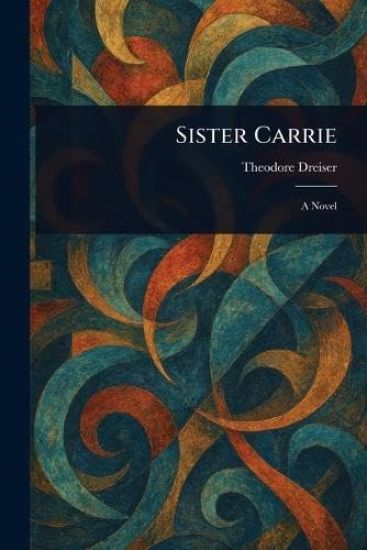

Theodore Dreiser's "Sister Carrie" paints a vivid portrait of ambition and social mobility in turn-of-the-century America. Set against the bustling backdrops of Chicago and New York City, this work of American realism explores themes of aspiration and the complexities of navigating a rapidly changing society. A timeless classic of literary fiction, the novel delves into the experiences of individuals striving for a better life. Often studied for its frank portrayal of social issues, "Sister Carrie" offers a compelling look at city life and the pursuit of dreams. This meticulously prepared edition preserves the integrity of Dreiser's original work, allowing readers to experience the story as it was first intended. A significant work of literature that continues to resonate with its powerful exploration of human desire and the allure of success. Explores themes related to mistresses.This work has been selected by scholars as being culturally important, and is part of the knowledge base of civilization as we know it.This work is in the public domain in the United States of America, and possibly other nations. Within the United States, you may freely copy and distribute this work, as no entity (individual or corporate) has a copyright on the body of the work.Scholars believe, and we concur, that this work is important enough to be preserved, reproduced, and made generally available to the public. We appreciate your support of the preservation process, and thank you for being an important part of keeping this knowledge alive and relevant.