Kirjojen hintavertailu. Mukana 11 699 587 kirjaa ja 12 kauppaa.

Kirjahaku

Etsi kirjoja tekijän nimen, kirjan nimen tai ISBN:n perusteella.

1000 tulosta hakusanalla Thomas Barber

Die Darstellung Friedrich Barbarossas in den "Gesta Friderici"
Studienarbeit aus dem Jahr 2008 im Fachbereich Geschichte Europa - and. L nder - Mittelalter, Fr he Neuzeit, Note: 2,0, Eberhard-Karls-Universit t T bingen (Historisches Seminar), Veranstaltung: Otto von Freising. Geschichtsschreibung in der Mitte des 12. Jahrhunderts, 16 Quellen im Literaturverzeichnis, Sprache: Deutsch, Abstract: Diese Hausarbeit untersucht die Darstellung von Kaiser Friedrich I. - genannt 'Barbarossa' - in Otto von Freisings und Rahewins Gesta Friderici. Im Folgenden wird anhand der K nigserhebung Friedrichs gezeigt werden, dass die Gesta Friderici f r den Historiker nicht ausnahmslos als zuverl ssige Quelle ber Friedrich I. gelten kann. Ziel ist jedoch keineswegs, die Gesta hinsichtlich aller m glichen Ungereimtheiten oder Abweichungen anderer zeitgen ssischen Autoren zu untersuchen, dies w rde den Rahmen dieser Arbeit schlicht sprengen. Als Hauptquelle dient die Gesta Friderici, herangezogen werden auch Ottos vorheriges Werk die Chronica sive Historia de duabus civitatibus sowie Giselbert von Mons' Gisleberti Chronicon Hanoniense. Des Weiteren werden Ver ffentlichungen aus dem Bereich der Sekund rliteratur herangezogen. Eine zentrale Bedeutung nehmen hierbei die Werke von Stefanie Dick1, Roman Deutinger2 und Franz-Josef Schmale3 Die heutige Forschung hat zwar auf die prostaufische Tendenz in Ottos und Rahewins Werk verwiesen, jedoch wurde die Erkenntnis, die aus dieser Tendenz gewonnen wurde, bislang nicht ausgiebig untersucht. ltere Forschungen, beispielsweise von Robert Holtzmann ein. ...]

Die ehrenwerten Betrüger von Bamberg

Die ehrenwerten Betrüger von Bamberg

Thomas Gronewaldt; Dörte Hansen-Gronewaldt

Bigruen Verlag
2025
pokkari
Wer glaubt, Bestechlichkeit, Unterschlagung und Schlampigkeit in den Verwaltungs- und F hrungsetagen gro er Stiftungen und mter sei ein Ph nomen unserer Tage, wird durch einen Blick in die Gerichtsakten des 19. Jahrhunderts vom Gegenteil berzeugt. Das Oberfr nkische Schwurgericht musste sich in den 1860er Jahre gleich mit einer ganzen Reihe solcher F lle besch ftigen: Zum Beispiel mit Paul Heinlein, der als Verwalter verm gender Bamberger Armenanstalten jahrelang tief in die Kassen griff oder dem betr gerischen Bernecker Wegemacher Jakob Nicklas. Der vorbildliche Gerichtsschreiber von Ebermannstadt t uschte gar einen Einbruch vor, um seinen gro en Coup zu vertuschen, nur bersah er dabei ein wichtiges Detail, und am Beispiel des Bayreuther Oberaufschlagsbeamten Anton von Schab best tigt sich wieder einmal das alte Sprichwort: "Der Fisch f ngt vom Kopf zu stinken an "Spannend und unterhaltsam erz hlt die Autorin die Geschichten dieser und vieler anderer M nner und Frauen, die in den 1860er Jahren auf der Anklagebank des Oberfr nkischen Schwurgerichts landeten - Geschichten von M rdern und R ubern, Raufbolden und Dieben, von cleveren Betr gern, gro spurigen Lebem nnern und von den schweren Strafen des Meineids. Und brigens: Wussten Sie, dass, wenn zwei Personen das Gegenteil behaupten, nicht zwangsl ufig eine von ihnen l gen muss? ber die Autorin: D rte Hansen-Gronewaldt ist Historikerin aus Leidenschaft. In Archiven und alten Zeitungen findet sie den Stoff f r kriminalistische Spurensuche.InhaltsverzeichnisDer Dieb von SchneyDer Oberschreiber von ThurnauDer Bamberger Armenhausverwalter greift in die KasseMargaretha St rmer, die Betr gerin von BambergDer strohdumme Bauer und der H ndler mit dem weiten Gewissen"Die schweren Folgen des Meineids"Georg Spangel, Dieb und VergewaltigerDie r uberischen Br der von KleinwendernDer meineidige Sattler von HilpoltsteinZivilcourage mit t dlichen Folgen: Ein Fall aus HofDas Gesch ft mit der Hoffnung: Der Scharlatan von BuchDer Jung-Betr ger von BambergDer B ckergeselle von AdelsdorfTotschlag in ThiersheimDer Brandstifter von LichtenbergDer rachs chtige Weber von PoppenreuthDer smarte Betr ger von BambergDer diebische Schlossergeselle von HofWalter, der Schl ger, oder: Eine Tat - zwei UrteileDer Dieb von Gr nlas oder: Eine ganz besondere MascheEin ganz normaler Dieb aus ObernseesDer Dieb von Gro wendernIm Sog des MeineidigenDer Bienendieb von BirnbaumIn gutem Glauben: Meineid wider WillenDer Doppelr uber von FrauendorfDer betr gerische Baubeamte von (Bad) Berneck und die Schlampigkeit der Beh rdenDer Brandstifter von BayreuthH rter als der Staatsanwalt: Der Fall des Jakob P. von WeippelsdorfDer Schl ger von Muggendorf und ein medizinisches WunderEin Beinbruch und die seltsame Logik der GeschworenenEin ganz normaler Kulmbacher HehlerDer Betr ger von Zell: Eine Tragikom die in vier AktenBrandstiftung mit Ansage - ein Fall aus OberwimmelbachUnd f hre uns nicht in Versuchung: Ein Betrugsfall aus BambergEine Neujahrsnacht in BambergBamberg 1864: Ein Bankrotteur geht stiftenEin verwirrter Meineidiger: Der Fall des Peter A. aus RattelsdorfAngriff oder Notwehr? Ein Fall aus ThiersheimDie schuldlose Kindsm rderin von SchwarzenbachVon falschen Meineiden und echten L gnern: Ein kurioser Fall aus Rossbach"Der Fisch f ngt vom Kopf an zu stinken." - Der Fall des Bayreuther Oberaufschlagsbeamten Anton von SchabMordversuch, Raub und Betrug - der Bader von UnterspiesheimDer eifers chtige Schuhmacher von Wei dorfDer kriminelle Gerichtsschreiber von Ebermannstadt
Homo Erectus: Incluye "El Barbero de Hitler"

Homo Erectus: Incluye "El Barbero de Hitler"

Tomas Delfin Hernandez Diaz

Createspace Independent Publishing Platform
2018
nidottu
"Homo Erectus" es una noveleta que narra la historia de un joven en la Cuba de finales del siglo pasado; un joven que es obligado a incorporarse al Servicio Militar para cumplir con el "sagrado deber" de la Patria? A partir de aqu acontecen una serie de conflictos que a muchos les estremecer la memoria, y el protagonista ir cambiando, despertando a golpes ante circunstancias adversas y personajes absurdos que tambi n cargan sobre s dudas y culpas. Relacionado con esto hay un cap tulo referido a la UMAP (unidades militares de ayuda a la producci n), campos de concentraci n a quienes se les forz a "corregir" su desviaci n ideol gica. Este detalle, junto a la menci n del general Ochoa, fueron motivos suficientes para que el jurado de un premio provincial (el Carlos Jes s Cabrera, in memorian) le comunicase al escritor: "Te conferimos el premio... que lo publiques es otra cosa.""El barbero de Hitler" es un cuento en donde el autor al tiempo que le rinde tributo a su padre, una de las personas que m s han influido en su manera de pensar, resulta adem s una met fora de esa b squeda que debe hacer el pueblo cubano para buscar la paz y el perd n. Es la b squeda de un remanso, quiz s la propia familia, en el cual gente de diferentes formas de ver la vida, y nuestro futuro, comiencen a darle cr dito a conceptos como tolerancia, respeto y humildad.
Barbara Ann Teer and the National Black Theatre

Barbara Ann Teer and the National Black Theatre

Lundeana Marie Thomas

CRC Press Inc
1997
sidottu
While chronicling the development of Teer's National Black Theatre of Harlem, this study explores the National Black Theatre's quest to develop a new black theory of acting. Teer's theory of performance was realized in a theater that combined elements of Pentacostal worship and African ritual, melding spontaneity from the performers, percussive music, singing, dancing, emotional expression from both actors and audience, and spectacle. The National Black Theatre's major achievement is the creation of an original art form that helps African Americans identify with their roots and invites spontaneous audience interaction. The study offers the National Black Theatre as a model African American community theater with valuable lessons for other theaters. The innovative methods of the National Black Theatre provide a model for enlightening and sensitizing audiences to cultural diversity. A pioneering institution, the National Black Theatre has proven itself over its 25 year history to be a cultural treasure and the quintessential theater in Harlem. Also includes maps.(Bibliography, and index; foreword by Dr. Winona Fletcher, Professor Emeritus of Theater and Drama and Afro-American Studies; Founder of the National Black Theatre)
Barbara Ann Teer and the National Black Theatre
While chronicling the development of Teer's National Black Theatre of Harlem, this study explores the National Black Theatre's quest to develop a new black theory of acting. Teer's theory of performance was realized in a theater that combined elements of Pentacostal worship and African ritual, melding spontaneity from the performers, percussive music, singing, dancing, emotional expression from both actors and audience, and spectacle. The National Black Theatre's major achievement is the creation of an original art form that helps African Americans identify with their roots and invites spontaneous audience interaction. The study offers the National Black Theatre as a model African American community theater with valuable lessons for other theaters. The innovative methods of the National Black Theatre provide a model for enlightening and sensitizing audiences to cultural diversity. A pioneering institution, the National Black Theatre has proven itself over its 25 year history to be a cultural treasure and the quintessential theater in Harlem. Also includes maps.(Bibliography, and index; foreword by Dr. Winona Fletcher, Professor Emeritus of Theater and Drama and Afro-American Studies; Founder of the National Black Theatre)
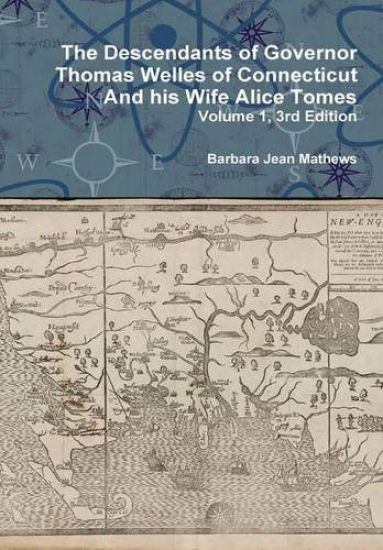
The Descendants of Governor Thomas Welles of Connecticut and His Wife Alice Tomes, Volume 1, 3rd Edition
Gov. Thomas Welles came to New England in 1635, settling in Hartford in 1636 and moving to Wethersfield in 1646. An entailed property case involving the sale of land in Old England connects both Gov. Thomas Welles and his wife Alice (Tomes) Welles unequivocally to their origins and families in England. Volume 1 covers the Welles and Tomes ancestries in England and the first four generations to live in New England. The third edition shares newly discovered information on the couple's marriage in England. Welles and his descendants played parts in two wars with Native American tribes, received a new colonial charter in 1662 from King Charles II and then protected it from an English governor in 1682, engaged in lively trade with England and the Caribbean, and fought in the French and Indian War. A few participated in the Revolutionary War. Among the surnames included here are Wells, Welles, Clark, Thompson, Hawkins, Chester, Botsford, Gridley, Hart, Hawley, Tomlinson, Nichols, Judson, Shelton and Curtiss.
The Descendants of Governor Thomas Welles of Connecticut and His Wife Alice Tomes, Volume 2, Part A
Gov. Thomas Welles came to New England in 1635, settling in Hartford in 1636 and moving to Wethersfield in 1646. The Welles Family Association presents in Volume 2 the fifth-generation descendants of Gov. Thomas Welles and his first wife, Alice Tomes. The genealogy includes descendants in both the male and female lines. Part A covers those descended from Mary (Welles) Baldwin, Ann (Welles) (Thompson) Hawkins, and John Welles. The fifth generation fought in the French & Indian and Revolutionary Wars. It included farmers, generals, judges, government leaders, college presidents, silversmiths, housewives, poets, ministers, deacons, and medical doctors. Family names include Baldwin, Bostwick, Chester, Curtis(s), Clarke, Hawkins, Judson, Lewis, Nichols, Shelton, Walker, Welles, and Wells. From Hartford, Wethersfield, Milford, Farmington, and Stratford, families spread to new towns in the Connecticut Hills, and to Massachusetts and upstate New York.
The Descendants of Governor Thomas Welles of Connecticut and His Wife Alice Tomes, Volume 2, Part B
Gov. Thomas Welles came to New England in 1635, settling in Hartford in 1636 and moving to Wethersfield in 1646. The Welles Family Association presents in Volume 2 the fifth-generation descendants of Gov. Thomas Welles and his first wife, Alice Tomes. The genealogy includes descendants in both the male and female lines. Part B covers those descended from Thomas Welles, Samuel Welles, and Sarah (Welles) Chester. This generation fought in the French & Indian and Revolutionary Wars. It included farmers, generals, judges, government leaders, college presidents, silversmiths, housewives, poets, ministers, deacons, and medical doctors. Family names include Baldwin, Bostwick, Chester, Curtis(s), Clarke, Hawley, Judson, Lewis, Nichols, Shelton, Walker, Welles, and Wells. From Hartford, Wethersfield, Milford, Farmington, and Stratford, families spread to new towns in the Connecticut Hills, and to Massachusetts and upstate New York.
The Descendants of Governor Thomas Welles of Connecticut and His Wife Alice Tomes, Volume 3, Part C
Gov. Thomas Welles came to New England in 1635, settling in Hartford in 1636 and moving to Wethersfield in 1646. Volume 3, Part C, for the first time publishes the sixth-generation descendants of Gov. Welles through his daughter Sarah2 (Welles) Chester. Her descendants populated the towns of Northern Connecticut and Western Massachusetts and provided leadership during the Revolutionary War. The farmers, generals, judges, ministers, sheriff, Loyalists and Patriots, legislators and sea captains had surnames including Burnham, Chester, Eliot, Kellogg, Loomis, Williams and Wolcott.
Dying for Oil in Bakersfield: A Jeffery Thomas Mystery
He was literally floating in crude, repeatedly plummeted by the hell of the oil pump. The unrecognizable body of a man led Jeffrey Thomas, writer of mysteries and all things unusual, on a murder chase from Bakersfield, California to the shale rich Rockies of Wyoming. More than once, Jeffrey was nearly silence. The unknown, unseen killer seemed to be just steps away, silently watching from the shadows. Barbara K. Krueger began her writing career in the world of advertising. She also taught and practice evangelism in several churches, and later, when she became a women and children's advocate, she used her writing skills to script her puppets. Later, she home schooled Jr. High girls for 3 years, who w3ere regularly targeted in school. Barbara never stopped writing. Her love of a good mystery prompted her to write who-don-it's and presently she has a new inspirations series, Escape from Sodom. Just released, the larger than life prophet, Elijah.
Der Biograph Des Komponisten: Unzuverlassiges Erzahlen in Thomas Manns Roman 'Doktor Faustus' (1947)
Thomas Manns Roman 'Doktor Faustus' schildert 'Das Leben des deutschen Tonsetzers Adrian Leverkuhn, erzahlt von einem Freunde'. Dieser Freund ist der Latein- und Geschichtslehrer Serenus Zeitblom, der sich in vielerlei Hinsicht als ein unzuverlassiger Erzahler entpuppt. Vorliegende narratologische Studie untersucht die unterschiedlichen Facetten dieses unzuverlassigen Erzahlens, beleuchtet Zeitbloms politische Haltung und problematisiert den Realitatsstatus des Teuflischen in der erzahlten Welt. Es wird diskutiert, ob Zeitblom eine Biographie oder einen Roman uber Leverkuhn schreibt, und gefragt, in welchem Verhaltnis die literarische Leitmotivik zum unzuverlassigen Erzahlen steht. Dabei interessiert sich die Studie dafur, was Zeitblom missversteht und was er bewusst verfalschend darstellt. Um was fur einen Text es sich bei dem von Leverkuhn verfassten Teufelsgesprach eigentlich handelt, wird ebenso analysiert wie die Verfahren, mit denen Zeitblom Leverkuhns Musik erzahlend politisiert.
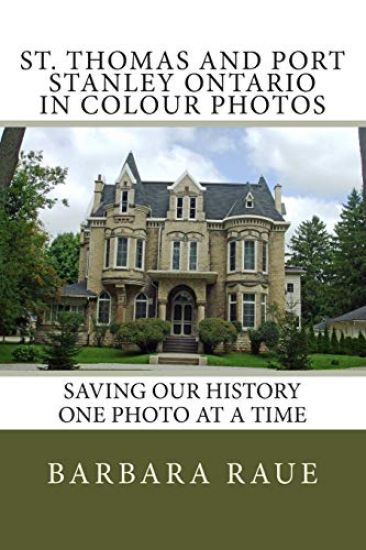
St. Thomas and Port Stanley Ontario in Colour Photos: Saving Our History One Photo at a Time
St. ThomasColonel The Honourable Thomas Talbot (1771-1853), the founder of the "Talbot Settlement", was born at Castle Malahide, Ireland. In 1803, after serving in the British Army, he was granted 5,000 acres and settled in Dunwich Township. He promoted colonization by building mills, supervising the construction of a three hundred mile long road paralleling Lake Erie, and helping establish thousands of settlers in the area. In 1817 St. Thomas, located south of London and north of Port Stanley, was named for him. St. Thomas, located in Southwestern Ontario at the intersection of two historical roads, was first settled in 1810. It was named the seat of the new Elgin County in 1844 and became a city in 1881.The founder of the settlement that became St. Thomas was Captain Daniel Rapelje. In 1820, Rapelje divided his land into town lots for a village. He donated two acres of land for the building of Old St. Thomas Church.In 1871, the developing village of Millersburg, which included lands east of the London and Port Stanley Railway, amalgamated with St. Thomas.In the late nineteenth century and early twentieth century several railways were constructed through the city and St. Thomas became an important railway junction. A total of twenty-six railways have passed through the city since the first railway was completed in 1856. In the 1950s and 1960s, with the decline of the railway as a mode of transportation, other industry began to locate in the city, mainly primary and secondary automotive manufacturing.In 1824, Charles Duncombe and John Rolph established the first medical school in Upper Canada, in St. Thomas, under the patronage of Colonel Thomas Talbot. Duncombe's house now forms part of The Elgin Military Museum complex. Between 1881 and 1988 the city had a private woman's school operating called Alma College which was destroyed by fire in 2008.Port StanleyLieutenant-Colonel John Bostwick - 1780-1849 - Born in Massachusetts, Bostwick came as a child to Norfolk County. He was appointed high constable of the London District in 1800 and sheriff in 1805. A deputy-surveyor, he laid out some of the earliest roads in the Talbot Settlement and in 1804 was granted 600 acres at the mouth of Kettle Creek. After serving as a militia officer throughout the War of 1812, he settled on the site of Port Stanley and founded this community. Bostwick represented Middlesex in the legislative assembly 1821-24. He donated the land for this church, which was completed in 1845, and he is buried in its churchyard.Port Stanley is located on the north shore of Lake Erie at the mouth of Kettle Creek. It was part of an important early route from Lake Erie to other inland waterways for a succession of explorers and travellers of the seventeenth and eighteenth centuries, serving as an important landing point and camping spot. Adrien Jolliet, brother of Louis Jolliet, landed here in 1669 during the first descent of the Great Lakes by Europeans. A settlement named Kettle Creek was founded here in 1812 by Lieutenant-Colonel John Bostwick. Around 1824, it was renamed Port Stanley after Edward Smith-Stanley, 14th Earl of Derby, who had visited nearby Port Talbot. Lord Stanley later became Prime Minister of the United Kingdom and the father of Frederick Stanley, 16th Earl of Derby, Governor General of Canada, and an ice hockey enthusiast and donor of the first Stanley Cup in 1893.