Kirjojen hintavertailu. Mukana 11 627 425 kirjaa ja 12 kauppaa.

Kirjahaku

Etsi kirjoja tekijän nimen, kirjan nimen tai ISBN:n perusteella.

1000 tulosta hakusanalla Thomas M Asshole

Developing and Validating Test Items

Developing and Validating Test Items

Thomas M. Haladyna; Michael C. Rodriguez

Routledge
2013
nidottu
Since test items are the building blocks of any test, learning how to develop and validate test items has always been critical to the teaching-learning process. As they grow in importance and use, testing programs increasingly supplement the use of selected-response (multiple-choice) items with constructed-response formats. This trend is expected to continue. As a result, a new item writing book is needed, one that provides comprehensive coverage of both types of items and of the validity theory underlying them. This book is an outgrowth of the author’s previous book, Developing and Validating Multiple-Choice Test Items, 3e (Haladyna, 2004). That book achieved distinction as the leading source of guidance on creating and validating selected-response test items. Like its predecessor, the content of this new book is based on both an extensive review of the literature and on its author’s long experience in the testing field. It is very timely in this era of burgeoning testing programs, especially when these items are delivered in a computer-based environment. Key features include …Comprehensive and Flexible – No other book so thoroughly covers the field of test item development and its various applications. Focus on Validity – Validity, the most important consideration in testing, is stressed throughout and is based on the Standards for Educational and Psychological Testing, currently under revision by AERA, APA, and NCMEIllustrative Examples – The book presents various selected and constructed response formats and uses many examples to illustrate correct and incorrect ways of writing items. Strategies for training item writers and developing large numbers of items using algorithms and other item-generating methods are also presented. Based on Theory and Research – A comprehensive review and synthesis of existing research runs throughout the book and complements the expertise of its authors.
Ray Davies

Ray Davies

Thomas M. Kitts

Routledge
2007
sidottu
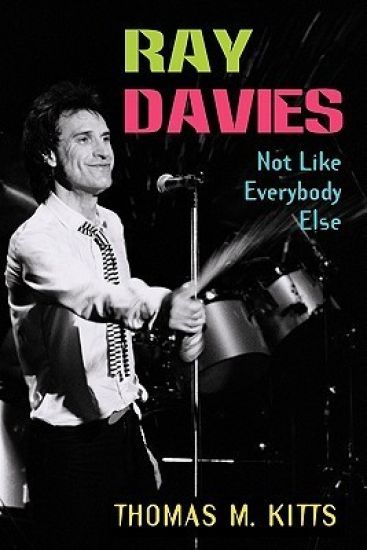
Ray Davies: Not Like Everybody Else is a critical biography of Ray Davies, with a focus on his music and his times. The book studies Davies’ work from the Kinks’ first singles through his 2006 solo album, from his rock musicals in the early 1970s to his one-man stage show in the 1990s, and from his films to his autobiography. Based on interviews with his closest associates, as well as studies of the recordings themselves, this book creates the most thorough picture of Davies’ work to date. Kitts situates Davies’ work in the context of the British Invasion and the growth of rock in the '60s and '70s, and in the larger context of English cultural history. For fans of rock music and the music of the Kinks, this book is a must have. It will finally place this legendary innovator in the pantheon of the great rock artists of the past half-century.Thomas M. Kitts, Professor of English and Chair of the Division of English/Speech at St. John’s University, NY, is the co-editor of Living on a Thin Line: Crossing Aesthetic Borders with The Kinks, the author of The Theatrical Life of George Henry Boker, articles on American literature and popular culture, reviews of books, CDs, and performances, and a play Gypsies. He is the book review editor of Popular Music and Society and the editor of The Mid-Atlantic Almanack.
Ray Davies

Ray Davies

Thomas M. Kitts

Routledge
2007
nidottu
Ray Davies: Not Like Everybody Else is a critical biography of Ray Davies, with a focus on his music and his times. The book studies Davies’ work from the Kinks’ first singles through his 2006 solo album, from his rock musicals in the early 1970s to his one-man stage show in the 1990s, and from his films to his autobiography. Based on interviews with his closest associates, as well as studies of the recordings themselves, this book creates the most thorough picture of Davies’ work to date. Kitts situates Davies’ work in the context of the British Invasion and the growth of rock in the '60s and '70s, and in the larger context of English cultural history. For fans of rock music and the music of the Kinks, this book is a must have. It will finally place this legendary innovator in the pantheon of the great rock artists of the past half-century.Thomas M. Kitts, Professor of English and Chair of the Division of English/Speech at St. John’s University, NY, is the co-editor of Living on a Thin Line: Crossing Aesthetic Borders with The Kinks, the author of The Theatrical Life of George Henry Boker, articles on American literature and popular culture, reviews of books, CDs, and performances, and a play Gypsies. He is the book review editor of Popular Music and Society and the editor of The Mid-Atlantic Almanack.
Computing

Computing

Thomas M. Coffman

Elsevier Science Ltd
1992
sidottu
The chapters in this volume can be grouped into three parts. Part I provides an introductory course in the design and operation of computers and computer systems. It conveys a knowledge of the basic principles of computer systems along with perspectives on the history and future of computers. The study of algorithmics is contained in Part II including matrix computations, fundamental algorithms and data structures, design and analysis of efficient algorithms, and computational complexity. Part III brings out the relation between computer systems and operations research applications. This volume was designed and written for use in the operations research and management science community. Apart from the background provided by the first five chapters, the emphasis is on the computational tools, algorithms, languages, and systems that assist the problem solver.
Toxic Inequality

Toxic Inequality

Thomas M. Shapiro

Basic Books
2017
sidottu
Since the Great Recession, most Americans' standard of living has stagnated or declined. Economic inequality is at historic highs. But inequality's impact differs by race; African Americans' net wealth is just a tenth that of white Americans, and over recent decades, white families have accumulated wealth at three times the rate of black families. In our increasingly diverse nation, sociologist Thomas M. Shapiro argues, wealth disparities must be understood in tandem with racial inequities-a dangerous combination he terms "toxic inequality." In Toxic Inequality, Shapiro reveals how these forces combine to trap families in place. Following nearly two hundred families of different races and income levels over a period of twelve years, Shapiro's research vividly documents the recession's toll on parents and children, the ways families use assets to manage crises and create opportunities, and the real reasons some families build wealth while others struggle in poverty. The structure of our neighborhoods, workplaces, and tax code-much more than individual choices-push some forward and hold others back. A lack of assets, far more common in families of color, can often ruin parents' careful plans for themselves and their children.Toxic inequality may seem inexorable, but it is not inevitable. America's growing wealth gap and its yawning racial divide have been forged by history and preserved by policy, and only bold, race-conscious reforms can move us toward a more just society.
Stand for the Best

Stand for the Best

Thomas M. Bloch

John Wiley Sons Inc
2008
sidottu
Thirteen years ago, Tom Bloch was CEO of H&R Block, the groundbreaking tax organization. The son of the company’s founder, he was a happily married 41-year-old executive, but something was missing from his life. After a nineteen-year career at the company, Bloch resigned his position to become a math teacher in an impoverished inner-city section of Kansas City. Stand for the Best reveals Bloch’s struggles to make a difference for his marginalized students and how he eventually co-founded a successful charter school, University Academy.
Becoming a Therapist

Becoming a Therapist

Thomas M. Skovholt

John Wiley Sons Inc
2012
nidottu
Praise for Becoming a Therapist "This resource is filled with practical and personal advice, relevant stories, and examples, and reads more like help from a friend than a typical textbook." ?Roberta L. Nutt, PhD, ABPP, Visiting Professor and Training Director, Counseling Psychology Program, University of Houston "Ah, now this is the book I wish had been available when I entered the field. Tom Skovholt has defined the initial experiences and followed the process through to the culmination of the therapeutic experience in a truly great book. Becoming a Therapist is a major contribution to our field." ?Arthur (Andy) M. Horne, Dean and Distinguished Research Professor, College of Education, The University of Georgia; President-Elect, Society of Counseling Psychology "Becoming a Therapist's informal style is accessible and engaging and yet soundly grounded in evidence and in the wisdom Skovholt has developed through his career-long research on psychotherapists and their development." ?Rodney K. Goodyear, PhD, Professor, School of Education, University of Redlands; Emeritus Professor of Education (Counseling Psychology), University of Southern California Essential guidance for mental health professionals navigating the start of their helping careers Written for those entering a career in the helping professions, Becoming a Therapist: On the Path to Mastery explores the therapeutic career path for new practitioners, painting a vivid portrait of the novice therapist's journey. This practical book guides you in using the helping relationship to improve the lives of others, whether your chosen profession is in counseling, clinical psychology, social work, school counseling, addictions counseling, family therapy, medicine, community counseling, pastoral counseling, or academic advising. Destined to become the resource every new practitioner turns to again and again, Becoming a Therapist prepares you for the reality of what it means to be a beginning therapist, with relevant discussion of: The fifteen indispensable qualities of every mental health professionalThe unfolding practitioner selfSelf-care for burnout prevention and resiliency developmentThe importance of culturally competent practice to practitioner expertisePractice, research/theory, and personal life: the practitioner's learning triangleThe significance of peer relationships in the novice experience Steeped in author Thomas Skovholt's years of experience, Becoming a Therapist thoroughly and clearly illustrates the excitement, intensity, anxiety?and, ultimately, the satisfaction?you can expect as a helping professional.
Agricultural Experimentation

Agricultural Experimentation

Thomas M. Little; F. Jackson Hills

John Wiley Sons Inc
1978
nidottu
A simple, straightforward presentation of basic statistical methods and experimental designs with emphasis on how to compute essential statistics. Introduces principles of experimentation and explains common experimental designs; detailed, step-by-step procedures show the logic and reasoning behind each analysis. Includes sections on correlation and regression, analysis of counts, and mean separation, with especially thorough coverage of transformations and the analysis of variance.
America's Ancient Forests

America's Ancient Forests

Thomas M. Bonnicksen

John Wiley Sons Inc
2000
sidottu
At the time of European discovery, the ancient North American forests stretched across nearly half the continent. And while today little remains of this past glory, efforts are underway to bring back some of the diverse ecosystems of that era. America's Ancient Forests: From the Ice Age to the Age of Discovery provides scientists and professionals with essential information for forest restoration and conservation projects, while presenting a compelling and far-reaching account of how the North American landscape has evolved over the past 18,000 years. The book weaves historical accounts and scientific knowledge into a dynamic narrative about the ancient forests and the events that shaped them. Divided into two major parts, it covers first the glaciers and forests of the Ice Age and the influences of native peoples, and then provides an in-depth look at these majestic forests through the eyes of the first European explorers. Changes in climate and elevation, the movement of trees northward, the assembly of modern forests, and qualities that all ancient forests shared are also thoroughly examined. A special feature of this book is its self-contained introduction to the early history of Native American peoples and their environment. The author draws on his roots in the Osage nation as well as painstaking research through the historical record, offering a complete discussion of how the cultural practices of hunting, agriculture, and fire helped form the ancient forests.
Elements of Information Theory

Elements of Information Theory

Thomas M. Cover; Joy A. Thomas

John Wiley Sons Inc
2006
sidottu
The latest edition of this classic is updated with new problem sets and material The Second Edition of this fundamental textbook maintains the book's tradition of clear, thought-provoking instruction. Readers are provided once again with an instructive mix of mathematics, physics, statistics, and information theory. All the essential topics in information theory are covered in detail, including entropy, data compression, channel capacity, rate distortion, network information theory, and hypothesis testing. The authors provide readers with a solid understanding of the underlying theory and applications. Problem sets and a telegraphic summary at the end of each chapter further assist readers. The historical notes that follow each chapter recap the main points. The Second Edition features: * Chapters reorganized to improve teaching * 200 new problems * New material on source coding, portfolio theory, and feedback capacity * Updated references Now current and enhanced, the Second Edition of Elements of Information Theory remains the ideal textbook for upper-level undergraduate and graduate courses in electrical engineering, statistics, and telecommunications.
Fatal Exit

Fatal Exit

Thomas M. Kowalick

John Wiley Sons Inc
2004
sidottu
FATAL EXIT is the first and only book documenting the decades-long debate among the automotive industry, government regualtors, and safety and privacy advocates over what the public terms "automobile black boxes". The book briefly traces the history of the debate from 1974 to 2004, and then clearly presents opposing viewpoints for and against the widespread use of emerging Motor Vehicle Event Data Recorder (MVEDR) technology. The arguments are followed by proposals to proceed with developing and utilizing the technology in ways that are both effective and respectful of individual privacy. The reader of this book will be able to develop an informed opinion as to the usefulness of MVEDRs and thus contribute intelligently to the debate as the United States Congress considers legislation that mandates this technology. In the United States 220,935,000 registered owners of motor vehicles are becoming aware of black box technology through newspaper and magazine articles, and television news stories. Many understand that these boxes already exist in 40 million cars. Yet motorists still have many questions and concerns about widespread use of the technology. As the only book of its kind, written by an insider and expert on the subject, FATAL EXIT provides an invaluable resource for anyone interested in why these devices have caused such international controversy.
Quantum Chemical Methods in Main-Group Chemistry

Quantum Chemical Methods in Main-Group Chemistry

Thomas M. Klap¿tke; Axel Schulz

John Wiley Sons Inc
1998
sidottu
Computational quantum chemistry has emerged in recent years as a key tool for the elucidation of molecular structure and molecular properties. However, it is still sometimes regarded as a highly theoretical subject of limited practical value. In this book the authors emphasize the strong link between quantum chemical calculations and experiment. The book is a fascinating blend of theory and experiment, and deals with topical and interesting molecules, using state-of-the-art techniques and accompanied by full explanations. In Part 1 of Quantum Chemical Methods in Main-Group Chemistry, modern quantum mechanical procedures are described in a concise and systematic manner. Sufficient theory is provided to enable the reader to come to terms with the primary features of the methodology. In Part II, numerous applications of these procedures are described. These applications provide extensive consideration of highly topical and interesting modern chemistry, and also illustrate aspects of the methodology. Part III, which is new in the English edition, is written by Professor Richard D. Harcourt. To provide a fully balanced approach to the subject, this part provides valence bond descriptions, and considerable attention is given to the use of Pauling three-electron bonds and increased valence structures. Relevant valence-bond concepts are reviewed briefly in the first chapters of Part III. Quantum Mechanical Methods in Main-Group Chemistry provides an invaluable link between computational quantum chemical techniques and practical, modern chemistry. As such, it is an important resource for both the advanced undergraduate and postgraduate student, and also for the more experienced researcher.
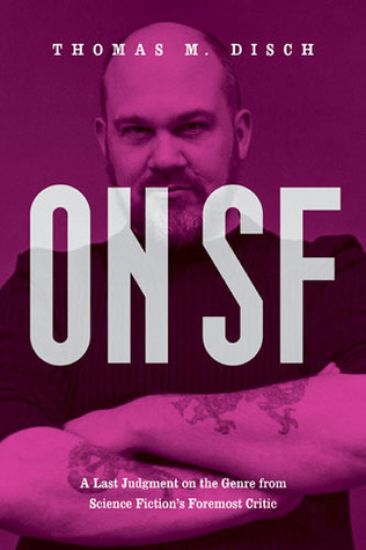
On SF

On SF

Thomas M. Disch

The University of Michigan Press
2005
nidottu
Praise for Thomas Disch:"One of the most remarkably talented writers around."---Washington Post Book World"[Disch] is without doubt one of the really bright lights on the American SF scene."---Fantasy and Science FictionThis collection by the much-loved and lauded science-fiction writer Thomas Disch spans twenty-five years of his career, during which he has supplemented his creative output with reviews and critical essays in publications as diverse as the Nation, the New York Times Book Review, the Atlantic Monthly, and Twilight Zone.Disch's perspectives on his genre are skeptical, novel, and often incendiary. The volume's opening essay, for example, characterizes writers of science fiction as "the provincials of literature." Other essays explore science fiction's roots-Poe, Bradbury, Clarke, Asimov, Vonnegut-as well as modern practitioners such as Stephen King, Philip Dick, Robert Heinlein, L. Ron Hubbard, and William Gibson. Disch entertains and provokes with essays on UFOs, Science Fiction as a Church, and Newt Gingrich's Futurist Brain Trust. Close Encounters of the Third Kind and Madame Blavatsky also get the Disch treatment. Throughout, the writing is lively, agile, and irreverent, exhibiting an incisive honesty that is undiluted by Disch's own attachments as a sci-fi practitioner. On SF will appeal equally to lovers of science fiction and connoisseurs of the finest critical prose.
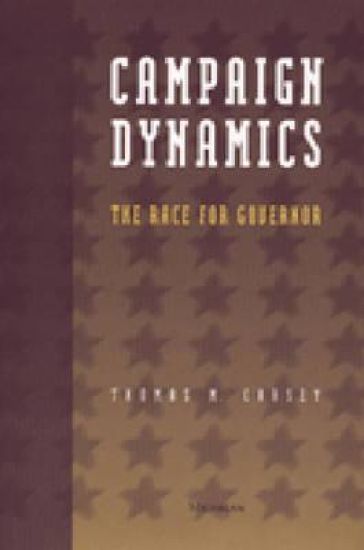
Campaign Dynamics

Campaign Dynamics

Thomas M. Carsey

The University of Michigan Press
2001
nidottu
Campaign Dynamics: The Race for Governor explores the dynamic interaction between candidates and voters that takes place during campaigns. It finds that voters respond in a meaningful way to what candidates say and do during their campaigns.Candidates for state-wide and national offices spend millions of dollars and thousands of hours trying to convey their messages to voters. Do voters hear them and respond? More specifically, do the issues candidates stress on the campaign trail influence the choices voters make when casting their ballots? The evidence presented in this book suggests that the answer is a resounding yes.Campaign Dynamics examines more than one hundred gubernatorial elections from 1982 through 1994, beginning with case studies of the gubernatorial races in Virginia and New Jersey in 1993. Combining interviews and observations with empirical analysis of public opinion polls, the case studies develop the basic understanding of how campaigns define the set of important issues in an election. Then the analysis is expanded to consider the abortion issue in thirty-four gubernatorial elections in 1990. Later chapters test these ideas in over one hundred gubernatorial elections, combining exit poll data on upwards of 100,000 voters from dozens of races with measures of campaign themes developed out of a content analysis of newspaper coverage.This book employs multiple methods and sources of data and represents one of the most comprehensive theoretical and empirical efforts to understand the role of campaigns in voting behavior ever undertaken.Campaign Dynamics will be of interest to those who study state politics, voting behavior and campaigns, and democratic theory. It should also guide students and scholars interested in performing empirical tests of formal models and those wishing to combine multiple methods in their research.Thomas M. Carsey is Assistant Professor of Political Science, University of Illinois at Chicago.
The Castle of Perseverance

The Castle of Perseverance

Thomas M. Disch

The University of Michigan Press
2002
sidottu
This collection by poet and novelist Thomas M. Disch offers a generous assortment of his writing on various literary topics, his reviews of plays and opera, and some of his poetry. The first essay, "The Future of the Book," prophesies the decline of print media and the increasing prominence of the internet and hypertext as a means of disseminating authors' work. Unlike Sven Birkerts, Disch does not mourn nostalgically the loss of Gutenberg's printing press. Rather, he speaks with playful aptness of books saturating our landfills.Next, Disch offers an essay on epic verse that juxtaposes such canonical giants as Homer and Virgil with the likes of Michael Lind and some war-inspired American novelists, including John Dos Passos, Ernest Hemingway, and Norman Mailer. He uses Harold Bloom's concept of "the anxiety of influence" as well as the ideas of the poetical voice to segue into a discussion on twentieth-century poet John Ciardi's progression from the "Capitalist of the Po-Biz" in his early career to "the Polonius of American poetry."The essay "Job Opportunities in Contemporary Poetry" is a scathing and witty critique of the poet as professional. Disch argues that the notion that one can subsist on one's poetry alone while escaping to the Caribbean for vacations and retreats is "grasshopperism at its most presumptuous." All in all, Disch dishes out a sumptuous platter of poems and prose that are certain to satisfy.Thomas Disch is a popular and prolific poet, playwright, essayist, and novelist. He is the author of many works of science fiction and the poetry collections Dark Verses and Light and Yes, Let's: New and Selected Poems.
On SF

On SF

Thomas M. Disch

The University of Michigan Press
2005
sidottu
Praise for Thomas Disch:"One of the most remarkably talented writers around."---Washington Post Book World"[Disch] is without doubt one of the really bright lights on the American SF scene."---Fantasy and Science FictionThis collection by the much-loved and lauded science-fiction writer Thomas Disch spans twenty-five years of his career, during which he has supplemented his creative output with reviews and critical essays in publications as diverse as the Nation, the New York Times Book Review, the Atlantic Monthly, and Twilight Zone.Disch's perspectives on his genre are skeptical, novel, and often incendiary. The volume's opening essay, for example, characterizes writers of science fiction as "the provincials of literature." Other essays explore science fiction's roots-Poe, Bradbury, Clarke, Asimov, Vonnegut-as well as modern practitioners such as Stephen King, Philip Dick, Robert Heinlein, L. Ron Hubbard, and William Gibson. Disch entertains and provokes with essays on UFOs, Science Fiction as a Church, and Newt Gingrich's Futurist Brain Trust. Close Encounters of the Third Kind and Madame Blavatsky also get the Disch treatment. Throughout, the writing is lively, agile, and irreverent, exhibiting an incisive honesty that is undiluted by Disch's own attachments as a sci-fi practitioner. On SF will appeal equally to lovers of science fiction and connoisseurs of the finest critical prose.
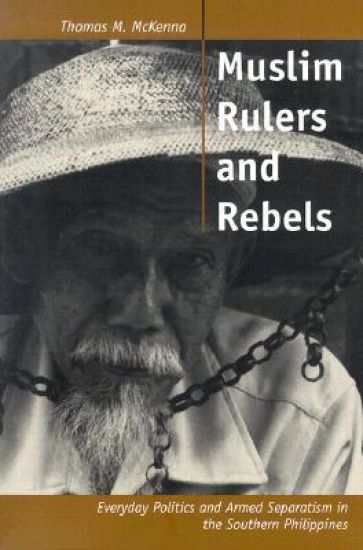
Muslim Rulers and Rebels

Muslim Rulers and Rebels

Thomas M. McKenna

University of California Press
1998
pokkari
In this first ground-level account of the Muslim separatist rebellion in the Philippines, Thomas McKenna challenges prevailing anthropological analyses of nationalism as well as their underlying assumptions about the interplay of culture and power. He examines Muslim separatism against a background of more than four hundred years of political relations among indigenous Muslim rulers, their subjects, and external powers seeking the subjugation of Philippine Muslims. He also explores the motivations of the ordinary men and women who fight in armed separatist struggles and investigates the formation of nationalist identities. A skillful meld of historical detail and ethnographic research, Muslim Rulers and Rebels makes a compelling contribution to the study of protest, rebellion, and revolution worldwide.
Manslaughter, Markets, and Moral Economy

Manslaughter, Markets, and Moral Economy

Thomas M. Buoye

Cambridge University Press
2006
pokkari
In this book, Thomas Buoye examines the impact of large-scale economic change on social conflict in eighteenth-century China. He draws upon a large body of actual, documented homicide cases originating in property disputes to recreate the social tensions of rural China during the Qianlong reign (1736–95). The development of property rights, a process that had begun in the Ming dynasty, was accompanied by other changes that fostered disruption and conflict, including an explosion in the population growth and the increasing strain on land and resources, and increasing commercialization in agriculture. Buoye challenges the 'markets' and 'moral economy' theories of economic behaviour. Applying the theories of Douglass North for the first time to this subject, he uses an institutional framework to explain seemingly irrational economic choices. Buoye examines demographic and technological factors, ideology, and political and economic institutions in rural China to understand the link between economic and social change.
Recourse to Force

Recourse to Force

Thomas M. Franck

Cambridge University Press
2009
pokkari
The nations that drafted the UN Charter in 1945 clearly were more concerned about peace than about justice. As a result, the Charter prohibits all use of force by states except in the event of an armed attack or when authorised by the Security Council. This arrangement has only very imperfectly withstood the test of time and changing world conditions. In requiring states not to use force in self-defence until after they had become the object of an actual armed attack, the Charter failed to address a growing phenomenon of clandestine subversion and of instantaneous nuclear threats. Fortunately although the Charter is very hard to amend, the drafters did agree that it should be interpreted flexibly by the United Nations' principal political institutions. In this way the norms governing use of force in international affairs have been adapted to meet changing circumstances and new challenges. The book also relates these changes in law and practice to changing public values pertaining to the balance between maintaining peace and promoting justice.
Plato’s Charmides

Plato’s Charmides

Thomas M. Tuozzo

Cambridge University Press
2011
sidottu
This book argues that Plato's Charmides presents a unitary but incomplete argument intended to lead its readers to substantive philosophical insights. Through careful, contextually sensitive analysis of Plato's arguments concerning the virtue of sophrosyne, Thomas M. Tuozzo brings the dialogue's lines of inquiry together, carrying Plato's argument forward to a substantive conclusion. This innovative reading of Charmides reverses misconceptions about the dialogue that stemmed from an impoverished conception of Socratic elenchus and unquestioned acceptance of ancient historiography's demonization of Critias. It views Socratic argument as a tool intended to move its addressee to substantive philosophical insights. It also argues, on the basis of recent historical research, a review of the fragments of Critias' oeuvre and Plato's use of Critias in other dialogues, that Plato had a nuanced, generally positive view of Critias. Throughout, readers are alerted to textual difficulties whose proper resolution is crucial to understanding Plato's often abstract arguments.