Kirjojen hintavertailu. Mukana 12 459 402 kirjaa ja 12 kauppaa.

Kirjahaku

Etsi kirjoja tekijän nimen, kirjan nimen tai ISBN:n perusteella.

1000 tulosta hakusanalla Thomas R. Dunlap

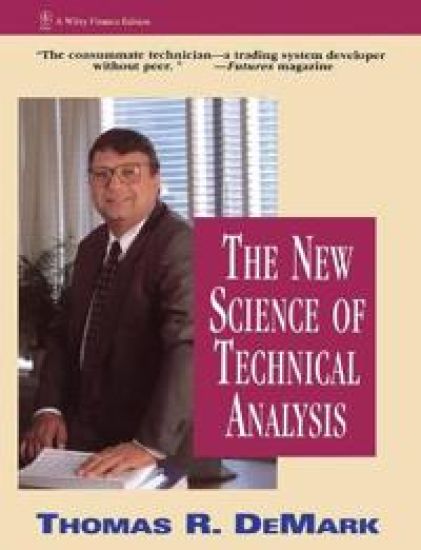
The New Science of Technical Analysis

The New Science of Technical Analysis

Thomas R. DeMark

John Wiley Sons Inc
1994
nidottu
From the Foreword by John J. Murphy "DeMark’s work as a consultant has been restricted to large institutions and many of the legendary traders in the world today. By sharing his creative ideas with us, as well as his passion for precision and improvement, Tom DeMark’s emphasis on the ‘new science’ of technical analysis helps push the technical frontier another step forward. With the unprecedented attention now being paid to technical analysis, this new book couldn’t have come at a better time." —John J. Murphy, bestselling author of Technical Analysis of the Futures Markets and Intermarket Technical Analysis, and technical analyst for CNBC "This book is filled with innovative, creative, and clever new ideas on technical analysis. Tom DeMark has done a wonderful job of turning subjective techniques into objective strategies and tactics." —Courtney Smith President and CIO Pinnacle Capital Management, Inc. "Those who know him and his work call him the consummate technician—a trading system developer without peer." —Futures magazine "DeMark is the ultimate indicator and systems guy. No one touches him. I know the Holy Grail of trading systems doesn’t exist because if it did, Tom would have found it by now." —James Bianco Director of Arbor Trading "Tom DeMark is a genuine leader who has been behind-the-scenes until now. Publishing DeMark is a coup." —Ralph Vince author of The Mathematics of Money Management
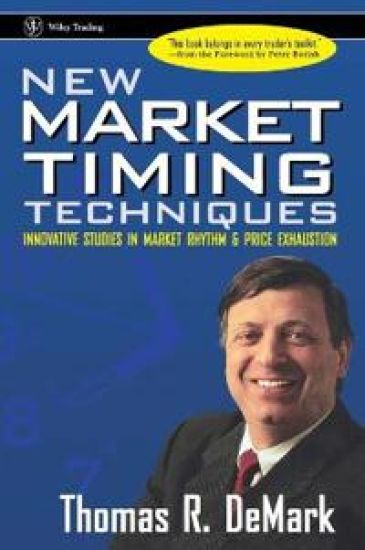
New Market Timing Techniques

New Market Timing Techniques

Thomas R. DeMark

John Wiley Sons Inc
1997
sidottu
Widely regarded as the world's foremost authority on chart analysis, Tom DeMark has developed technical systems and indicators for many of the most successful trading operations in the world. Now, in a sequel to his bestselling book, The New Science of Technical Analysis, he stakes out new territory while refining the most popular and precise of his indicators with exacting attention to real-time trading applications. In addition, he shares—for the first time anywhere—the complete details of a new indicator: TD Combo. Used in conjunction with his popular TD Sequential, TD Combo equips traders with a powerful new tool for understanding market rhythms and calculating buy and sell opportunities. DeMark draws on a lifetime of research and gives the reader the benefit of his legendary expertise as a market timing analyst. He offers detailed material on indicator construction, application, and interpretation, and makes it much easier for traders to implement his revolutionary concepts in real-time situations. Among the indicators presented in this invaluable book are: *Oscillators—Five of DeMark's key indicators for identifying both price tops and bottoms as well as the overall trend of markets. *TD Sequential—An indicator unequaled in its ability to evaluate the condition of a market at any point in time based on price patterns, price relationships, and price movement. *TD Combo—The result of an exhaustive research process, this new powerful indicator is used with TD Sequential and is revealed here for the first time in its entirety. *TD Lines—DeMark's trendline analysis technique that provides an accurate, practical methodology for identifying price breakouts. *TD Retracements—Consistent, objective, and scientific methods for calculating price retracement projections. *Breakouts—DeMark's unique trading rules for detecting pending or potential price breakouts that would establish or accelerate a trend. *TD Moving Averages—Used in combination with price breakout techniques, these methods avoid the shortcomings of similar, less successful approaches. *Market Timing Techniques—An array of trading models for capturing short-term opportunities, participating in breakouts, and capitalizing on price patterns and price relationships, originally developed for Tudor Systems. *TD Triangulation and TD Propulsion—DeMark's market timing approaches that depend on momentum and pattern recognition (TD Triangulation) and on the direction of an overall price trend (TD Propulsion). Along with other thoroughly tested techniques, DeMark offers authoritative insights on a range of essential topics, from common misconceptions about the market, to the skills needed for successful trading, and the extreme importance of careful money management. With its combination of techniques, in-depth analysis, and sound, practical advice, New Market Timing Techniques is a rich resource that every trader will want to navigate the markets. DECODING THE DYNAMICS OF THE MARKET "Market timing has moved from the realm of voodoo to mainstream doctrine. New Market Timing Techniques provides cutting-edge techniques for using oscillators, moving averages, breakouts, and other basics of technical analysis, backed by 25 years of research."—Michael R. Bloomberg, Founder and CEO, Bloomberg L.P. "After reading The New Science of Technical Analysis, I didn't think Tom DeMark could have very much more to say. I was wrong! New Market Timing Techniques not only refines the concepts of his earlier book, but adds subtleties and breaks new ground. Tom DeMark is not just at the cutting edge of technical analysis, he is the cutting edge."—Alfred H. Kingon, Kingon International Former Assistant Secretary of the Treasury. "Tom DeMark is a technician's technician who has shared with all of us his insights, systems, and exceptional stock market timing techniques developed over 27 years of detailed analysis."—Leon G. Cooperman, Chairman, Omega Advisors, Inc. "The stock market is a perilous journey at best. Anything that can reduce the risk and make the trip more enjoyable is most desirable. Tom DeMark's book does this. Here is a cornucopia of new ideas, new dimensions, and concepts that challenge the most discerning minds. This is a technical waker-upper."—Joseph Granville, The Granville Market Letter. "Tom has done it again! Here he reveals even more of his fascinating trading tactics, techniques, and tools. His ideas are totally original and backed by proven research. If you trade without these tricks of the trade, you are not playing with a full deck."—Larry Williams, Trader and Author How I Made a Million Dollars Last Year Trading Commodities.
Employee-Driven Systems for Safe Behavior

Employee-Driven Systems for Safe Behavior

Thomas R. Krause

John Wiley Sons Inc
1995
sidottu
Employee-Driven Systems for Safe Behavior Throughout the reign of Total Quality Management (TQM), the author and his associates pioneered and field-tested a behavior-based approach to continuous safety improvement. Strong on fundamentals, Employee-Driven Systems for Safe Behavior shows how leading companies have applied TQM in safety since the mid-1980s. This book was written for all safety professionals dedicated to accident prevention and presents the methods used by more than 130 companies to achieve continuous improvement in their safety performance. Part One The Safety/Quality Connection provides an overview of the behavioral theory at the foundation of this approach. Part Two Methods for Continuous Improvement in Safety introduces key procedures and instruments of the behavior- based approach to safety, such as the inventory of critical safety-related behaviors, peer-to-peer observation and feedback, and statistical analysis of behavioral data. Part Three Current Issues in Behavior-Based Safety presents issues in behavioral management including ergonomics, employee selection, and incident investigation. Part Four Results and Case Histories profiles case histories of implementations at companies such as Monsanto, Chevron, and PPG Industries, Inc. The material presented in Employee-Driven Systems for Safe Behavior was developed by the author and his colleagues in hundreds of conference and training sessions with safety professionals, managers, and wage-roll personnel from companies across all industries and regions of the U.S. and Canada, and in Australia, Jamaica, and Britain.
The Behavior-Based Safety Process

The Behavior-Based Safety Process

Thomas R. Krause

John Wiley Sons Inc
1996
sidottu
The Behavior-Based Safety Process Since the behavior-based approach to accident prevention was launched in 1980 by the author and his associates, safety performance is increasingly prominent on the agendas of many companies. Several powerful factors contribute to this trend. The widespread reorganization of personnel into work-groups that are leaner and more self-directed, the increasing importance of international competition, the growing awareness of critical environmental issues these and related factors highlight the value of any mechanism that promotes continuous improvement in safety performance. Detailing a step-by-step approach to just such a mechanism for continuous improvement, The Behavior-Based Safety Process is a path-breaking guide that represents an important resource for anyone concerned with performance related issues in the workplace. As the title indicates, the focus is on process versus programs. The reason is simple: off-the-shelf safety imposed from the top down does not meet the safety needs of most organizations. This fact has been abundantly demonstrated in facility after facility throughout the 1970s and 1980s. In genuinely meeting the need for continuous improvement in safety performance, the behavior-based approach presents many parallels with the quality improvement process. Both of these approaches use scientific methods to identify, measure, and provide feedback on upstream factors of excellence. In the case of the behavior-based approach to safety, these upstream factors are critical behaviors that are the leading indicators of safety performance in the organization, targeting areas of concern in advance of even first-aid incidents. For an in-depth treatment of how to integrate behavioral and statistical methodologies, see the author s companion volume from Van Nostrand Reinhold: Employee-Driven Systems for Safe Behavior. In addition to presenting these parallels with quality. The Behavior-Based Safety Process also provides powerful techniques aimed at implementation issues: organizational development, trainer-training, and employee involvement. The author and his associates developed these techniques over a decade of consultation with a variety of industries, working closely in that time with such safety leaders as Monsanto, Shell Chemical Company, ARCO Chemical, ALCOA, Rohm and Haas, Scott Paper Company, Georgia Gulf Corporation, The Pillsbury Company, and Chevron U.S.A.
Leading with Safety

Leading with Safety

Thomas R. Krause; John L. Henshaw

John Wiley Sons Inc
2005
sidottu
Building on years of research and experience in the field, Leading with Safety redefines organizational safety as an activity that both leads other performance areas and in turn must be led. Thomas Krause poses the question, "What does it take to be a great safety leader?" — and answers with a comprehensive new model for understanding safety leadership as it affects organizational culture and safety climate. Leading with Safety defines the practices, tools, and systems essential to creating an injury-free workplace, including the role of employees at each level, special considerations for coaching the senior executive leader, and the two crucial aspects of human performance that every leader needs to know. Ending with inspiring real-world examples or organizations that have put these tools into practice, Leading with Safety is written for any leader who wants to lead with safety toward a more robust, productive and effective organization.
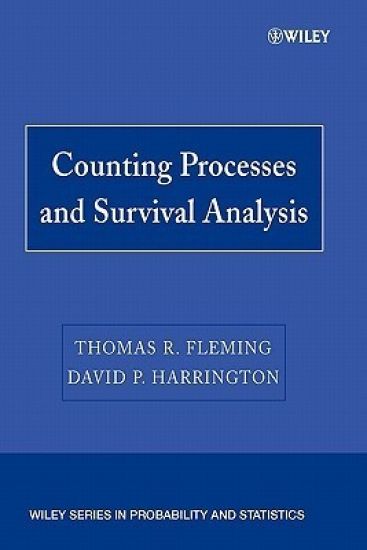
Counting Processes and Survival Analysis

Counting Processes and Survival Analysis

Thomas R. Fleming; David P. Harrington

John Wiley Sons Inc
2005
nidottu
The Wiley-Interscience Paperback Series consists of selected books that have been made more accessible to consumers in an effort to increase global appeal and general circulation. With these new unabridged softcover volumes, Wiley hopes to extend the lives of these works by making them available to future generations of statisticians, mathematicians, and scientists. "The book is a valuable completion of the literature in this field. It is written in an ambitious mathematical style and can be recommended to statisticians as well as biostatisticians." -Biometrische Zeitschrift "Not many books manage to combine convincingly topics from probability theory over mathematical statistics to applied statistics. This is one of them. The book has other strong points to recommend it: it is written with meticulous care, in a lucid style, general results being illustrated by examples from statistical theory and practice, and a bunch of exercises serve to further elucidate and elaborate on the text." -Mathematical Reviews "This book gives a thorough introduction to martingale and counting process methods in survival analysis thereby filling a gap in the literature." -Zentralblatt für Mathematik und ihre Grenzgebiete/Mathematics Abstracts "The authors have performed a valuable service to researchers in providing this material in [a] self-contained and accessible form. . . This text [is] essential reading for the probabilist or mathematical statistician working in the area of survival analysis." -Short Book Reviews, International Statistical Institute Counting Processes and Survival Analysis explores the martingale approach to the statistical analysis of counting processes, with an emphasis on the application of those methods to censored failure time data. This approach has proven remarkably successful in yielding results about statistical methods for many problems arising in censored data. A thorough treatment of the calculus of martingales as well as the most important applications of these methods to censored data is offered. Additionally, the book examines classical problems in asymptotic distribution theory for counting process methods and newer methods for graphical analysis and diagnostics of censored data. Exercises are included to provide practice in applying martingale methods and insight into the calculus itself.
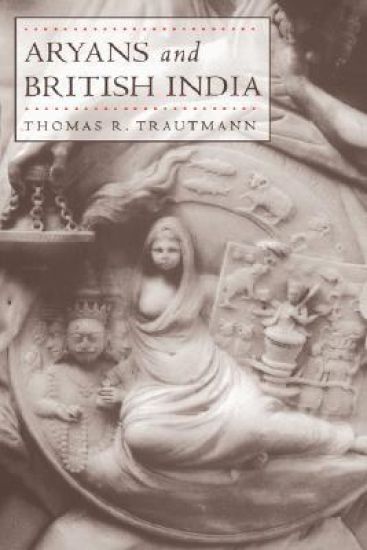
Aryans and British India

Aryans and British India

Thomas R. Trautmann

University of California Press
1997
sidottu
'Aryan,' a word that today evokes images of racial hatred and atrocity, was first used by Europeans to suggest bonds of kinship, as Thomas Trautmann shows in his far-reaching history of British Orientalism and the ethnology of India. When the historical relationship uniting Sanskrit with the languages of Europe was discovered, it seemed clear that Indians and Britons belonged to the same family. Thus the Indo-European or Aryan idea, based on the principle of linguistic kinship, dominated British ethnological inquiry. In the nineteenth century, however, an emergent biological 'race science' attacked the authority of the Orientalists. The spectacle of a dark-skinned people who were evidently civilized challenged Victorian ideas, and race science responded to the enigma of India by redefining the Aryan concept in narrowly 'white' racial terms. By the end of the nineteenth century, race science and Orientalism reached a deep and lasting consensus in regard to India, which Trautmann calls 'the racial theory of Indian civilization,' and which he undermines with his powerful analysis of colonial ethnology in India. His work of reassessing British Orientalism and the Aryan idea will be of great interest to historians, anthropologists, and cultural critics.
Languages and Nations

Languages and Nations

Thomas R. Trautmann

University of California Press
2006
sidottu
British rule of India brought together two very different traditions of scholarship about language, whose conjuncture led to several intellectual breakthroughs of lasting value. Two of these were especially important: the conceptualization of the Indo-European language family by Sir William Jones at Calcutta in 1786 - proposing that Sanskrit is related to Persian and languages of Europe - and the conceptualization of the Dravidian language family of South India by F.W. Ellis at Madras in 1816 - the 'Dravidian proof', showing that the languages of South India are related to one another but are not derived from Sanskrit. These concepts are valid still today, centuries later. This book continues the examination Thomas R. Trautmann began in "Aryans and British India" (1997). While the previous book focused on Calcutta and Jones, the current volume examines these developments from the vantage of Madras, focusing on Ellis, Collector of Madras, and the Indian scholars with whom he worked at the College of Fort St. George, making use of the rich colonial record. Trautmann concludes by showing how elements of the Indian analysis of language have been folded into historical linguistics and continue in the present as unseen but nevertheless living elements of the modern.
Imperial Connections

Imperial Connections

Thomas R. Metcalf

University of California Press
2008
pokkari
An innovative remapping of empire, "Imperial Connections" offers a broad-ranging view of the workings of the British Empire in the period when the India of the Raj stood at the center of a newly globalized system of trade, investment, and migration. Thomas R. Metcalf argues that India itself became a nexus of imperial power that made possible British conquest, control, and governance across a wide arc of territory stretching from Africa to eastern Asia. His book, offering a new perspective on how imperialism operates, emphasizes transcolonial interactions and webs of influence that advanced the interests of colonial India and Britain alike.Metcalf examines such topics as law codes and administrative forms as they were shaped by Indian precedents; the Indian Army's role in securing Malaya, Africa, and Mesopotamia for the empire; the employment of Indians, especially Sikhs, in colonial policing; and the transformation of East Africa into what was almost a province of India through the construction of the Uganda railway. He concludes with a look at the decline of this Indian Ocean system after 1920 and considers how far India's participation in it opened opportunities for Indians to be a colonizing, as well as a colonized people.
Safe Enough?

Safe Enough?

Thomas R. Wellock

University of California Press
2021
sidottu
Since the dawn of the Atomic Age, nuclear experts have labored to imagine the unimaginable and prevent it. They confronted a deceptively simple question: When is a reactor “safe enough” to adequately protect the public from catastrophe? Some experts sought a deceptively simple answer: an estimate that the odds of a major accident were, literally, a million to one. Far from simple, this search to quantify accident risk proved to be a tremendously complex and controversial endeavor, one that altered the very notion of safety in nuclear power and beyond. Safe Enough? is the first history to trace these contentious efforts, following the Atomic Energy Commission and the Nuclear Regulatory Commission as their experts experimented with tools to quantify accident risk for use in regulation and to persuade the public of nuclear power’s safety. The intense conflict over the value of risk assessment offers a window on the history of the nuclear safety debate and the beliefs of its advocates and opponents. Across seven decades and the accidents at Three Mile Island, Chernobyl, and Fukushima, the quantification of risk has transformed both society’s understanding of the hazards posed by complex technologies and what it takes to make them safe enough.
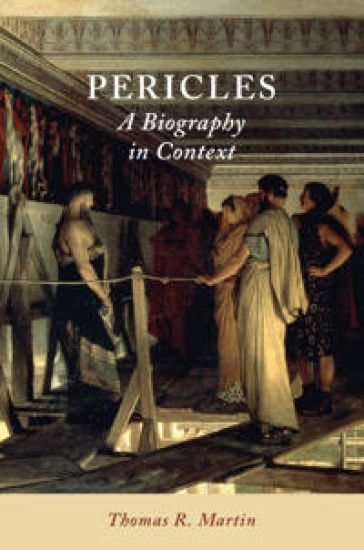
Pericles

Pericles

Thomas R. Martin

Cambridge University Press
2016
sidottu
Pericles was the most famous leader of the most famous ancient Greek democracy - and also the most controversial in his own time and ever since. Was he a brutal imperialist ready to oppress other Greeks, or a clear-eyed defender of Athens' need for power to survive in a relentlessly hostile world? How did his intellectual training in ideas that many Athenians regarded as dangerous make him the most persuasive leader Athenian democracy ever knew? Why was his personal lifestyle so idiosyncratic? How should we evaluate his responsibility for the suffering and loss of the Peloponnesian War? Thomas R. Martin's unique emphasis on the effect on Pericles of his family's notorious history, his youthful experiences as a wartime refugee, and his unusual education reveals a brilliant politician whose hyper-rationality could not, in the end, protect him or his community from tragedy.
Pericles

Pericles

Thomas R. Martin

Cambridge University Press
2016
pokkari
Pericles was the most famous leader of the most famous ancient Greek democracy - and also the most controversial in his own time and ever since. Was he a brutal imperialist ready to oppress other Greeks, or a clear-eyed defender of Athens' need for power to survive in a relentlessly hostile world? How did his intellectual training in ideas that many Athenians regarded as dangerous make him the most persuasive leader Athenian democracy ever knew? Why was his personal lifestyle so idiosyncratic? How should we evaluate his responsibility for the suffering and loss of the Peloponnesian War? Thomas R. Martin's unique emphasis on the effect on Pericles of his family's notorious history, his youthful experiences as a wartime refugee, and his unusual education reveals a brilliant politician whose hyper-rationality could not, in the end, protect him or his community from tragedy.
Alexander the Great

Alexander the Great

Thomas R. Martin; Christopher W. Blackwell

Cambridge University Press
2012
pokkari
Everything we know about Alexander comes from ancient sources, which agree unanimously that he was extraordinary and greater than everyday mortals. From his birth into a hypercompetitive world of royal women through his training under the eyes and fists of stern soldiers and the piercing intellect of Aristotle; through friendships, rivalries, conquests and negotiations; through acts of generosity and acts of murder, this book explains who Alexander was, what motivated him, where he succeeded (in his own eyes) and where he failed, and how he believed that he earned a new 'mixed' nature combining the human and the divine. This book explains what made Alexander 'Great' according to the people and expectations of his time and place and rejects modern judgments asserted on the basis of an implicit moral superiority to antiquity.
Ideologies of the Raj

Ideologies of the Raj

Thomas R. Metcalf

Cambridge University Press
1995
sidottu
Ideologies of the Raj examines how the British sought to justify their rule over India. The author argues that two divergent strategies were devised to legitimate their authority: the one defined characteristics which the Indians shared with the British themselves, while the other emphasised qualities of enduring ‘difference’. In the end, however, the differences predominated in the colonial view of India. Since the British constructed few explicit ideologies of empire, the author explores the workings of the Raj through the study of its underlying assumptions as revealed in policies and writings. Students of modern India and the British Empire will find Thomas Metcalf’s book relevant and accessible.
The Journey of Life

The Journey of Life

Thomas R. Cole

Cambridge University Press
1992
pokkari
The Journey of Life is both a cultural history of aging and a contribution to public dialogue about the meaning and significance of later life. The core of the book shows how central texts and images of Northern middle-class culture, first in Europe and then in America, created and sustained specifically modern images of the life course between the Reformation and World War I. During this long period, secular, scientific and individualist tendencies steadily eroded ancient and medieval understandings of aging as a mysterious part of the eternal order of things. In the last quarter of the twentieth century, however, postmodern images of life's journey offer a renewed awareness of the spiritual dimensions of later life and new opportunities for growth in an aging society.
Advancing Variable Star Astronomy

Advancing Variable Star Astronomy

Thomas R. Williams; Michael Saladyga

Cambridge University Press
2011
sidottu
Founded in 1911, the AAVSO boasts over 1200 members and observers and is the world's largest non-profit organization dedicated to variable star observation. This timely book marks the AAVSO's centennial year, presenting an authoritative and accurate history of this important association. Writing in an engaging and accessible style, the authors move chronologically through five eras of the AAVSO, discussing the evolution of its structure and purpose. Throughout the text, the main focus is on the thousands of individuals whose contributions have made the AAVSO's progress possible. Describing a century of interaction between amateur and professional astronomers, the authors celebrate the collaborative relationships that have existed over the years. As the definitive history of the first hundred years of the AAVSO, this text has broad appeal and will be of interest to amateur and professional astronomers, as well as historians and sociologists of science in general.
Alexander the Great

Alexander the Great

Thomas R. Martin; Christopher W. Blackwell

Cambridge University Press
2012
sidottu
Everything we know about Alexander comes from ancient sources, which agree unanimously that he was extraordinary and greater than everyday mortals. From his birth into a hypercompetitive world of royal women through his training under the eyes and fists of stern soldiers and the piercing intellect of Aristotle; through friendships, rivalries, conquests and negotiations; through acts of generosity and acts of murder, this book explains who Alexander was, what motivated him, where he succeeded (in his own eyes) and where he failed, and how he believed that he earned a new 'mixed' nature combining the human and the divine. This book explains what made Alexander 'Great' according to the people and expectations of his time and place and rejects modern judgments asserted on the basis of an implicit moral superiority to antiquity.
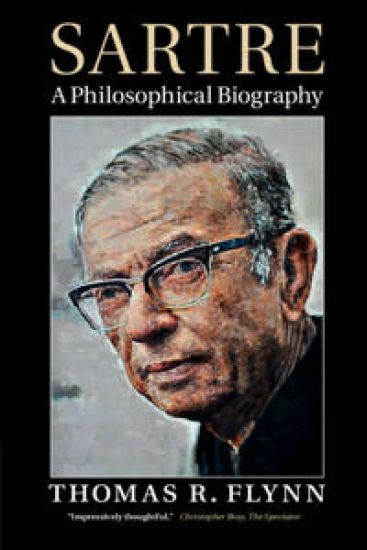
Sartre

Sartre

Thomas R. Flynn

Cambridge University Press
2014
sidottu
Jean-Paul Sartre (1905–1980) was one of the most influential thinkers of the twentieth century. Regarded as the father of existentialist philosophy, he was also a political critic, moralist, playwright, novelist, and author of biographies and short stories. Thomas R. Flynn provides the first book-length account of Sartre as a philosopher of the imaginary, mapping the intellectual development of his ideas throughout his life, and building a narrative that is not only philosophical but also attentive to the political and literary dimensions of his work. Exploring Sartre's existentialism, politics, ethics, and ontology, this book illuminates the defining ideas of Sartre's oeuvre: the literary and the philosophical, the imaginary and the conceptual, his descriptive phenomenology and his phenomenological concept of intentionality, and his conjunction of ethics and politics with an 'egoless' consciousness. It will appeal to all who are interested in Sartre's philosophy and its relation to his life.