Kirjojen hintavertailu. Mukana 11 244 527 kirjaa ja 12 kauppaa.

Kirjahaku

Etsi kirjoja tekijän nimen, kirjan nimen tai ISBN:n perusteella.

1000 tulosta hakusanalla Thomas Satchell

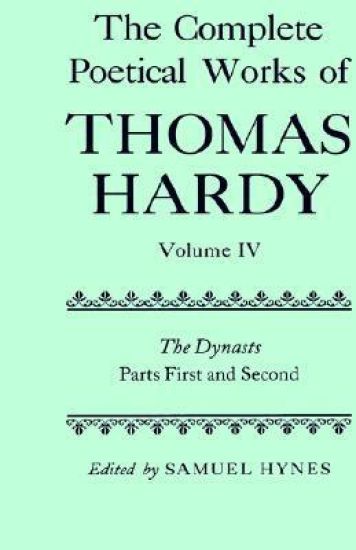
The Complete Poetical Works of Thomas Hardy: Volume IV: The Dynasts, Parts First and Second
Volumes IV and V of the Complete Poetical Works of Thomas Hardy, which complete the edition, contain all of his dramatic writing in verse. Hardy was interested in dramatic verse all his adult life; before he wrote his first novel he considered writing plays in blank verse, and during the thirty years of his novel-writing career he entered in his notebooks many schemes for a vast poetic drama of England's wars with Napoleon. But is was not until after he had turned from fiction to poetry, in the 1890s, that he actually began to work on a poetic drama. The Dynasts was written between 1902 and 1907; The Famous Tragedy of the Queen of Cornwall was begun in 1916 and completed in 1923. In addition to the two major dramas this volume includes Hardy's versions of two folk-pieces: the Mummers' Play of 'Saint George' and the rustic operetta O'Jan, O'Jan, O'Jan' (here published for the first time). Textual annotations, together with a full account of the rough draft of Part third of The Dynasts, make it possible for the reader to follow the history of the composition of Hardy's epic drama in unusual detail. Explanatory notes to each of the dramatic works describe its composition and publication, and provide supporting material from Hardy's letters and notebooks. Appendices add further information on the production and performance of these works.
The Complete Poetical Works of Thomas Hardy: Volume V: The Dynasts, Part Third; The Famous Tragedy of the Queen of Cornwall; The Play of 'Saint George'; 'O Jan, O Jan, O Jan'
Volumes IV and V of the Complete Poetical Works of Thomas Hardy, which complete the edition, contain all of his dramatic writing in verse. Hardy was Hardy was interested in dramatic verse all his adult life; before he wrote his first novel he considered writing plays in blank verse, and during the thirty years of his novel-writing career he entered in his notebooks many schemes for a vast poetic drama of England's wars with Napoleon. But it was not until after he had turned from fiction to poetry, in the 1890s, that he actually began to work on a poetic drama. The Dynasts was written between 1902 and 1907; the Famous Tragedy of the Queen of Cornwall was began in 1916 and completed in 1923. In addition to the two major dramas this volume includes Hardy's versions of two folk-pieces: the Mummers'Play of 'Saint George'and the rustic operetta O'Jan. O'Jan, O'Jan'(here published for the first time). Textual annotations, together with a full account of the rough draft of Part Third of The Dynasts, make it possible for the reader to follow the history of the composition of Hardy's epic drama in unusual detail. Explantory notes to each of the dramatic works describe its composition and publication, and provide supporting material from Hardy's letters and notebooks. Appendices add further information on the production and performance of these works.
The Works of Thomas Southerne: Volume II

The Works of Thomas Southerne: Volume II

Thomas Southerne

Clarendon Press
1988
sidottu
Southerne is one of the most important dramatists of the Restoration theatre, but until now there has been no modern edition of his works. The text is based on an exhaustive study of the earliest editions, and the introduction contains the first biography of Southerne to be based on the surviving documentary records.
Thomas Nashe in Context

Thomas Nashe in Context

Lorna Hutson

Clarendon Press
1989
sidottu
Challenging the tendency to disparage Nashe's writing as the product of an eccentric sensibility and to explain his texts in journalistic terms more appropriate to modern commercial publishing, this work provides an entirely new interpretation of the economic context of sixteenth-century literature. Lorna Hutson reveals hitherto overlooked links between humanist approaches to the literary text and the transformation of the English economy through humanist-inspired policies of ethical and social reform; from this context, Nashe's textual prodigality emerges as an assault upon the contemporary impoverishment of literary activity caused by the political over-valuing of the printed word. Generic precedents turn out to be festive; each of Nashe's apparently unstructured pamphlets derives shaping energy from traditions of popular-festive mockery. The pamphlets bring an older conception of seasonal prosperity into subversive dialogue with the newer discourse of provident individualism. For Nashe, stylistic experiment is shown to mean more than a choice of style; it is, rather, the expression of an intricate, socially engaged imagination.
Thomas Mann

Thomas Mann

T. J. Reed

Clarendon Press
1996
nidottu
T.J. Reed's study has long established itself as the standard work in English on Thomas mann, and offers as comprehensive a view of Mann's fiction and thought as is available in any language. It is based on a coherent close reading of Mann's oeuvre, literary and political, and also on manuscripts and sources, and was part of the first phase of literary scholarship that opened up the resources of the Zurich Thomas Mann Archive. Further documents that have appeared since then - Mann's diaries, notebooks, and other correspondences - have not fundamentally altered the individual interpretations or the overall picture the study offers, and in some respects have emphatically confirmed them. A further chapter added to this edition covers the new documentation, gives a vigorous account of the main curents in Mann scholarship and criticism over the last two decades suggesting how we should now see the writer, the man, and the political figure, and above all the complex relationship between the three.
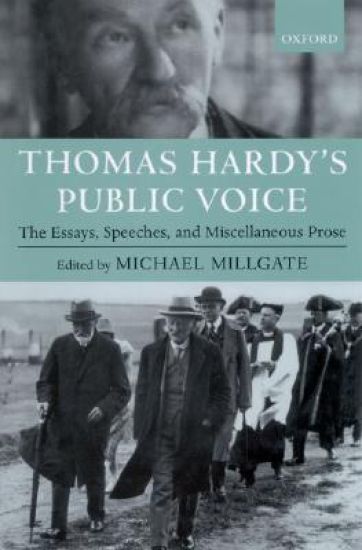
Thomas Hardy's Public Voice

Thomas Hardy's Public Voice

Thomas Hardy

Clarendon Press
2001
sidottu
Thomas Hardy has generally been viewed as an intensely private figure, shy of publicity and even of people, self-isolated in his Dorsetshire home, and much more cautious and conservative in his personal outlook than might be expected of the author of Tess of the D'Ubervilles and Jude the Obscure. What the present volume reveals is that Hardy's public utterances, addressed to a wide range of literary, social, and political issues, were far more numerous and various than has previously been imagined. His essays, speeches, and other acknowledged pieces, both formal and informal, are here fully described, edited, and annotated, together with the letters he wrote to newspapers and the many unsigned items, from obituaries to clandestine contributions to literary gossip-columns, that have now been securely or tentatively identified. Also described, although not necessarily reproduced, are his designs for tombstones and memorials, and some of the more striking instances of his lending his (immensely famous) name to causes and organizations of which he approved and to public letters initiated by others. The edition as a whole is thus a major work of textual scholarship and a rich source of fresh and often surprising information about a little understood aspect of Hardy's life and work.
The Letters of Thomas Love Peacock: Volume 2

The Letters of Thomas Love Peacock: Volume 2

Thomas Love Peacock

Clarendon Press
2001
sidottu
Thomas Love Peacock (1785-1866) was a lifelong and assiduous letter-writer at a time when the familiar letter was often virtually an art-form in itself. He had a wide circle of correspondents, and was a close friend of Shelley, whom he assisted over both personal and business affairs after Shelley's abandonment of his wife Harriet and departure to Italy. Friend also of many Radicals of the early nineteenth century, his letters often display the satiric wit of his published prose works such as Headlong Hall and Crotchet Castle. In the later part of his life he rose to high position in the East India Company's service, succeeding James Mill, under whom he had worked, as Examiner. This is the first time his extensive correspondence has been gathered together and given scholarly annotation: the two-volume edition will be invaluable both to students of Romantic literature and to historians of the period.
Thomas of Marlborough: History of the Abbey of Evesham
The Evesham History is one of the last important thirteenth-century texts to be translated. This is also the first completely new edition of the Latin since that of 1863. The author, Thomas of Marlborough, was an educated and much travelled man and his work was written not so much in terms of a chronicle but as a history of the lawsuit between the monastery at Evesham and the Bishop of Worcester over the Bishop's right to visit or inspect the community. The case began in England, but was finally taken to Rome and battled out with much legal argument before Pope Innocent III's curia. Much of the History is an eye-witness account. It shows the development of canon law at this period and illustrates aspects of England's relationship with the papacy during King John's reign, including the period of the Interdict. It is valuable too for the light it sheds into the mind of its author, a Benedictine monk, who had pursued a career at Oxford before entering the community. It tells us much about institutional pride and of the use of earlier archives to help the case. In telling the story of the community of Evesham from its foundation by St Ecgwine in the eighth century, Thomas incorporated the work of earlier Evesham historians including the twelfth-century Prior Dominic who was responsible for the Life and Miracles of St Ecgwine. Marlborough also produced a most vivid and personal account of the tyranny of the scandalous Abbot Norreis and of the sufferings of the convent. He went on to recount the return of law and order to the community at Evesham, and the election of a new abbot with whom he attended the Fourth Lateran Council. The edition concludes with the death of Thomas as abbot in 1236. The History provides a very pertinent example of the importance of the past in the interpretation of the present. Building on the past, Thomas exploited the evidence at his disposal in order to maintain and improve the rights that were won in the lawsuit. Few other chronicles or histories provide such an intense, inside view of a community, and are so frank.
Thomas Hobbes: Writings on Common Law and Hereditary Right
This volume in the Clarendon Edition of the Works of Thomas Hobbes contains A dialogue between a philosopher and a student, of the common laws of England, edited by Alan Cromartie, supplemented by the important fragment on the issue of regal succession, 'Questions relative to Hereditary Right', discovered and edited by Quentin Skinner. The former work is the last of Hobbes's major political writings. As a critique of common law by a great philosopher, it should be essential reading for anybody interested in English political thought or legal theory. Although it was written when Hobbes was at least eighty, it is a lively piece of work that goes beyond a recapitulation of earlier Hobbesian doctrines, not least in applying his central ideas to the details of the English constitution. This edition supplies the extensive annotation on matters of legal and historical detail that is required by non-specialist readers; it also assists students by offering cross-references to other treatises. Cromartie's introduction is an authoritative account of seventeenth-century thinking about the common law and of Hobbes's shifting attitudes towards it. It has often been suspected that the book was motivated by fear of being burned for heresy. Cromartie disentangles the complex evidence (scattered across a number of late works) that documents this fear's development, and shows why the philosopher's acute anxieties eventually led him to write a legal treatise. In clarifying these questions, the edition casts fresh light upon his attitude to law and sovereignty. The second piece takes the form of a question put to Hobbes about the right of succession under hereditary monarchies, together with Hobbes's response. The question is in the handwriting of the fourth Earl of Devonshire, the son of the third Earl, whom Hobbes had tutored in the 1630s. He asks Hobbes whether an heir can be excluded if he is incapable of protecting his prospective subjects. The question of 'exclusion' became the most burning issue in English politics in the course of 1679, when a bill to exclude the future James II was introduced into the House of Commons. Hobbes answers with a robust defence of hereditary right, in the course of which he also makes some important general observations about the concept of a right. The manuscript is also of special interest as it constitutes Hobbes's last word on politics. It was almost certainly written in the summer of 1679, less than six months before Hobbes's death.
The Correspondence of Thomas Hobbes: The Correspondence of Thomas Hobbes
[NB in publicity materials use short description + first few review quotes if short of space] Thomas Hobbes (1588-1679) is one of the most important figures in the history of European thought. Although best known for his political theory, he also wrote about theology, metaphysics, physics, optics, mathematics, psychology, and literary criticism. All of these interests are reflected in his correspondence. Some small groups of his letters have been printed in the past (often in inaccurate transcriptions), but this edition is the first complete collection of his correspondence, nearly half of which has never been printed before. All the letters have been transcribed from the original sources, and all materials in Latin, French, and Italian are printed together with translations in clear modern English. The letters are fully annotated, and there are long biographical entries on all of his correspondents, based on extensive original research. These two volumes form one of the most significant and valuable publications of Hobbes scholarship this century, casting a new light on the whole pattern of his intellectual life and personal friendships.
The Correspondence of Thomas Hobbes: Volume II: 1660-1679
[NB in publicity materials use short description + first few review quotes if short of space] Thomas Hobbes (1588-1679) is one of the most important figures in the history of European thought. Although best known for his political theory, he also wrote about theology, metaphysics, physics, optics, mathematics, psychology, and literary criticism. All of these interests are reflected in his correspondence. Some small groups of his letters have been printed in the past (often in inaccurate transcriptions), but this edition is the first complete collection of his correspondence, nearly half of which has never been printed before. All the letters have been transcribed from the original sources, and all materials in Latin, French, and Italian are printed together with translations in clear modern English. The letters are fully annotated, and there are long biographical entries on all of his correspondents, based on extensive original research. These two volumes form one of the most significant and valuable publications of Hobbes scholarship this century, casting a new light on the whole pattern of his intellectual life and personal friendships.
The Correspondence of Thomas Hobbes: The Correspondence of Thomas Hobbes
Thomas Hobbes (1588-1679) is one of the most important figures in the history of European philosophy. Although best known for his political theory, he also wrote about theology, metaphysics, physics, optics, mathematics, psychology, and literary criticism. All of these interests are reflected in his correspondence. Some small groups of his letters have been printed in the past (often in inaccurate transcriptions), but this edition is the first complete collection of his correspondence, nearly half of which has never been printed before. All the letters have been transcribed from the original sources, and all materials in Latin, French, and Italian are printed together with translations in clear modern English. The letters are fully annotated, and there are long biographical entries on all of his correspondents, based on extensive original research. The whole pattern of Hobbes's intellectual life and personal friendships is set in a new light. This is one of the most significant and valuable scholarly publications of this century.
The Correspondence of Thomas Hobbes: Volume II: 1660-1679
Thomas Hobbes (1588-1679) is one of the most important figures in the history of European thought. Although interest in his life and work has grown enomrously in recent years, this is the first complete edition of his correspondence. The texts of the letters are richly supplemented with explanatory notes and full biographical and bibliographical information. This landmark publication sheds new light in abundance on the intellectual life of a major thinker.
Thomas Hobbes: Behemoth

Thomas Hobbes: Behemoth

Oxford University Press
2009
sidottu
Behemoth is Thomas Hobbes's narrative of the English Civil Wars from the beginning of the Scottish revolution in 1637 to the Restoration of the Monarchy in 1660, and is his only composition to address directly the history of the events which formed the context of his writings in Leviathan and elsewhere on sovereignty and the government of the Church. Although presented as an account of past events, it conceals a vigorous attack on the values of the religious and political establishment of Restoration England. This is the first fully scholarly edition of the work, and the first new edition of the text since 1889. Based on Hobbes's own presentation manuscript, it includes for the first time an accurate transcription of the passages which Hobbes had deleted in the text, and notes made by early readers.
Thomas Cranmer's Doctrine of Repentance

Thomas Cranmer's Doctrine of Repentance

Ashley Null

Oxford University Press
2001
sidottu
Self-serving lacky, self-deceiving puppet, Swiss Protestant partisan, or sensible Erasmian humanist: which, if any, was Thomas Cranmer? For centuries historians have offered often bitterly contradictory answers. Although Cranmer was a key participant in the changes to English life brought about by the Reformation, his reticent nature and lack of extensive personal writings have left a vacuum that in the past has too often been filled by scholarly prejudice or presumption. For the first time, however, this book examines in-depth little used manuscript sources to reconstruct Cranmer's theological development on the crucial Protestant doctrine of justification. The author explores Cranmer's cultural heritage, why he would have been attracted to Luther's thought, and then provides convincing evidence for the Reformed Protestant Augustinianism which Cranmer enshrined in the formularies of the Church of England. For Cranmer the glory of God was his love for the unworthy; the heart of theology was proclaiming this truth through word and sacrament. Hence, the focus of both was on the life of on-going repentance, remembering God's gracious love inspired grateful human love.
Thomas Hobbes: Behemoth

Thomas Hobbes: Behemoth

Oxford University Press
2014
nidottu
Behemoth is Thomas Hobbes's narrative of the English Civil Wars from the beginning of the Scottish revolution in 1637 to the Restoration of the Monarchy in 1660, and is his only composition to address directly the history of the events which formed the context of his writings in Leviathan and elsewhere on sovereignty and the government of the Church. Although presented as an account of past events, it conceals a vigorous attack on the values of the religious and political establishment of Restoration England. This is the first fully scholarly edition of the work, and the first new edition of the text since 1889. Based on Hobbes's own presentation manuscript, it includes for the first time an accurate transcription of the passages which Hobbes had deleted in the text, and notes made by early readers.
Thomas Hobbes: Leviathan

Thomas Hobbes: Leviathan

Oxford University Press
2014
muu
Thomas Hobbes's Leviathan is one of the most important philosophical texts in the English language, and one of the most influential works of political philosophy ever written. This is the first critical edition based on a full study of the manuscript and printing history. It is also the first edition to place the English text side by side with Hobbes's later Latin version of it, complete with a set of notes in which the many passages that differ in the Latin are translated into English. So, for the first time, readers of Leviathan will be able to see clearly every stage of the development of the text. Both texts are fully annotated with explanatory notes. The editor's Introduction, which takes up the whole of the first volume, gives a path-breaking account of the work's context, sources, and textual history. This definitive edition will set the study of Hobbes's masterwork on a new basis. This three volume paperback set is also available in component parts: The Editorial Introduction (Volume 1), ISBN 978-0-19-870909-1, and The English and Latin Texts (Volumes 2 and 3), ISBN 978-0-19-872396-7. The hardback three-volume set is also available, ISBN 978-0-19-960262-9
Thomas Hobbes: Leviathan

Thomas Hobbes: Leviathan

Oxford University Press
2014
nidottu
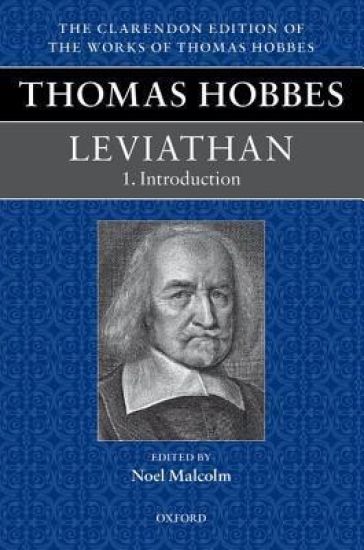
Thomas Hobbes's Leviathan is one of the most important philosophical texts in the English language, and one of the most influential works of political philosophy ever written. This Introduction accompanies the first critical edition based on a full study of the manuscript and printing history, and the first edition to place the English text side by side with Hobbes's later Latin version of it. The volume provides a path-breaking account of the work's context, sources, and textual history. Noel Malcolm's definitive work will set the study of Hobbes's masterwork on a new basis. The English and Latin Texts (Volumes 2 and 3) are available together in paperback as a two-volume pack: ISBN 978-0-19-872396-7. This Editorial Introduction (Volume 1) is also available in a three-volume paperback pack, alongside the English and Latin Texts (Volumes 2 and 3), ISBN: 978-0-19-870908-4. The hardback three-volume set can also be purchased: ISBN 978-0-19-960262-9
Thomas Hardy

Thomas Hardy

Oxford University Press
2021
sidottu
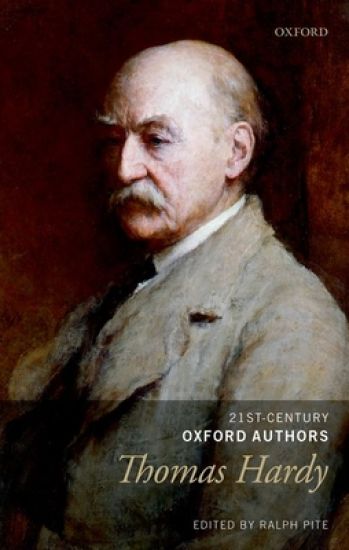
This volume in the 21st Century Oxford Authors series offers students an authoritative, comprehensive selection of the work of Thomas Hardy--the first for nearly thirty years. The edition presents the poetry in a new way by giving the texts of Hardy's original volumes, as they first appeared, instead of the revised text he later produced for his Collected Poems. It reveals the range and variety of his output--qualities he later tended to disguise. His most famous sequence, the 'Poems of 1912-13' appears in a radically different form. Selections from his epic drama, The Dynasts, are given within the chronological sequence of his poetry, illustrating the power of this neglected work. Notebook and journal entries, where Hardy puts forward his understanding of poetry and the role of the poet, are also included. Uniquely generous in the number of poems it contains, this edition also provides extensive annotation, locating Hardy's work in its cultural context and reading it in the light of the critical reception. The notes direct attention towards Hardy's regional heritage, and they show his response to the issues and debates of his day--to discussions surrounding war, patriotism, the treatment of animals, marriage, and religion, among others. The annotation locates, in addition, how Hardy's work has continued to speak to present-day readers, by addressing present-day concerns--in particular, gender, including the gender(s) of the poetic voice, the global and (or versus) the local, and, thirdly, humanity's place within the natural world. The edition also includes an Introduction to the life and works of Hardy, and a Chronology.