Introduction to International Environmental Law provides a concise overview of international environmental law and the relations and agreements among nations to facilitate environmental protection. Beginning by exploring the history nature and sources of international environmental law, Professor Koivurova moves on to consider the key principles as well as examining the implementation and effectiveness of international environmental law in practice. It considers how international environmental law has developed away from other branches of international law which are heavily based on state sovereignty, in order to more effectively facilitate environmental protection and concludes by posing questions about the future of the field.Taking a concise, accessible approach throughout and employing case studies drawn from a global range of examples, this book is the ideal first point of entry to the context, principles and issues of this important subject.
Building Information Modeling or BIM has been widely applied to new construction projects, but is less used to used to support renovation activities. Building Information Modeling for Renovation and Refurbishment: A Practical Guide addresses that issue and provides a practical guide centered around well-defined use cases of applying BIM to demonstration projects. The authors have worked on the European Union’s Horizon 2020 funded BIM-Speed project where they developed more than 20 such use cases with demonstrative implementations on real-world renovation projects. The use cases were also formalized as standard BuildingSmart International use cases. The book provides a more accessible and general description of a selected number of the most important of these use cases for renovation practitioners. Additionally, the book will discuss requirements for information management and BIM implementation planning for renovation projects to allow for the seamless implementation of use cases on projects.
Bayesian Networks: An Introduction provides a self-contained introduction to the theory and applications of Bayesian networks, a topic of interest and importance for statisticians, computer scientists and those involved in modelling complex data sets. The material has been extensively tested in classroom teaching and assumes a basic knowledge of probability, statistics and mathematics. All notions are carefully explained and feature exercises throughout. Features include: An introduction to Dirichlet Distribution, Exponential Families and their applications.A detailed description of learning algorithms and Conditional Gaussian Distributions using Junction Tree methods.A discussion of Pearl's intervention calculus, with an introduction to the notion of see and do conditioning.All concepts are clearly defined and illustrated with examples and exercises. Solutions are provided online. This book will prove a valuable resource for postgraduate students of statistics, computer engineering, mathematics, data mining, artificial intelligence, and biology. Researchers and users of comparable modelling or statistical techniques such as neural networks will also find this book of interest.
A complete introduction tocar-to-X communications networking Automotive Inter-networking will introduce a range of new network and system technologies for vehicle safety, entertainment and comfort systems currently being researched and developed. C2X networking is not only a matter of technology, but is also very closely related to policy-making about deployment. This book will provide the background on technical developments but will also discuss the potential benefits, costs and risks. Also discussed will be concepts related to application of vehicle-to-vehicle and vehicle-to-infrastructure communication technologies for various purposes such as automobile safety enhancement, vehicle user applications for comfort and convenience and efficiency along with other potential commercial applications. Application domains will build the starting point for an analysis of the requirements on suitable mobile network technology and the book will look at how well existing and new systems match these requirements. New automotive-specific technologies are presented in detail, explaining millimeter wave short range systems and special automotive network protocols. Specially designed system services and security mechanisms are introduced and system architecture, radio spectrum use, medium access control, network protocols and security concepts and considered. Finally, the book will present the current world-wide standardization activities, deployment strategies and an outlook about the evolvement of inter-vehicle communications in the next decades. Presents a comprehensive top-down approach to the newly evolving car-to-X communications networkingProvides a broad overview of all relevant C2X communication topicsWritten by well known experts in the fieldPredicts the outlook of the evolvement of inter-vehicle communications in the next decadesIncludes illustrations and high-level technical sketches of application domains and photographs, 3D renderings and professional graphical sketches of current prototypes
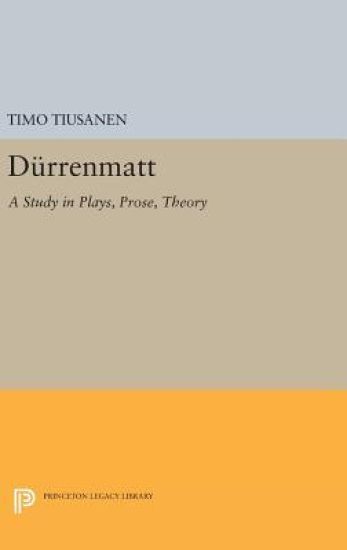
Durrenmatt's apparently conflicting statements about his central concerns have baffled scholars attempting to interpret his works. In his critical approach to Durrenmatt, Timo Tiusanen emphasizes the author's relation to the theater, and analyzes the thirteen original stage plays, eight radio plays, and five adaptations, using the special concept of "scenic image" developed in an earlier study of O'Neill. Four books by Durrenmatt on the theater and politics are related to the dramatist's creative practice, and his six books of prose are also carefully considered. Exploring the writer's career to reconcile conflicting attitudes that have been taken toward his work, Timo Tiusanen sees Durrenmatt's writings as representing a persistent effort to express artistically a paradoxical view of the world. Originally published in 1978. The Princeton Legacy Library uses the latest print-on-demand technology to again make available previously out-of-print books from the distinguished backlist of Princeton University Press. These editions preserve the original texts of these important books while presenting them in durable paperback and hardcover editions. The goal of the Princeton Legacy Library is to vastly increase access to the rich scholarly heritage found in the thousands of books published by Princeton University Press since its founding in 1905.
Although the popular literature concerned with Billy Graham as an evangelical icon is vast, there have been few serious academic considerations of his religious views. In America's Preacher and His Message, Timo Pokki provides the most extensive systematic analysis to date on Graham's theology, paying particular attention to views surrounding conversion and sanctification. The study not only provides a detailed analysis of Graham's thoughts on these topics, but also investigates the impact of Calvinism and Arminianism on revivalism and evangelicalism in general.
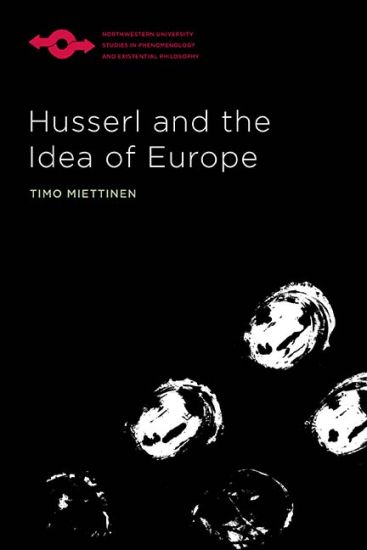
Husserl and the Idea of Europe argues that Edmund Husserl’s late reflections on Europe should not be read either as departures from his early transcendental phenomenology or as simple exercises of cultural criticism but rather as systematic phenomenological reflections on generativity and historicity. Timo Miettinen shows that Husserl’s reflections on Europe contain his most compelling and radical interpretation on the intersubjective, communal, and historical dimensions of phenomenology.Husserl and his generation worked in the aftermath of World War I, as Europe struggled to redefine itself, and he penned his late writings as the clouds of World War II gathered. Decades later, the fall of the Soviet Union again altered the continent’s identity and its political and economic divisions. Miettinen writes as a European involved in the question of Europe, and many of the recent authors and critics he addresses in this work—such as Michel Foucault, Jacques Derrida, and Giorgio Agamben—likewise deeply engaged with this new problem of European identity.Husserl and the Idea of Europe interprets key concepts of Husserl’s late philosophy in new, compelling ways. The book illuminates the multifaceted problem of the idea of European rationality, and it defends novel conceptions of universalism and teleology as necessary components of radical philosophical reflection.
Loisaida as Urban Laboratory is the first in-depth analysis of the network of Puerto Rican community activism in New York City’s Lower East Side from 1964 to 2001. Combining social history, cultural history, Latino studies, ethnic studies, studies of social movements, and urban studies, Timo Schrader uncovers the radical history of the Lower East Side. As little scholarship exists on the roles of institutions and groups in twentieth and twenty-first-century Puerto Rican community activism, Schrader enriches a growing discussion around alternative urbanisms. Loisaida was among a growing number of neighborhoods that pioneered a new form of urban living. The term Loisaida was coined, and then widely adopted, by the activist and poet Bittman “Bimbo” Rivas in an unpublished 1974 poem called “Loisaida” to refer to a part of the Lower East Side. Using this Spanglish version instead of other common labels honors the name that the residents chose themselves to counter real estate developers who called the area East Village or Alphabet City in an attempt to attract more artists and ultimately gentrify the neighborhood.Since the 1980s, urban planners and scholars have discussed strategies of urban development that revisit the pre–World War II idea of neighborhoods as community-driven and ecologically conscious entities. These “new urbanist” ideals are reflected in Schrader’s rich historical and ethnographic study of activism in Loisaida, telling a vivid story of the Puerto Rican community’s struggles for the right to stay and live with dignity in its home neighborhood.
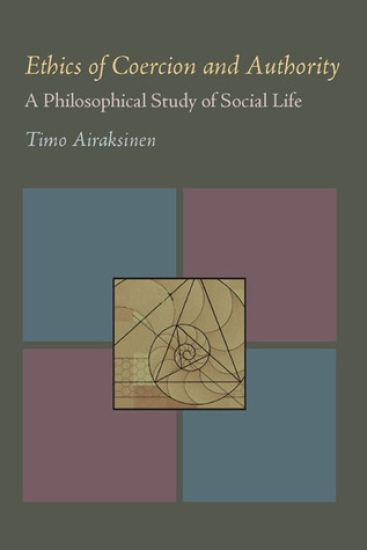
“The work would be of great value to philosophers engaged in the conceptual analysis of coercion, to political scientists studying the state or other coercive institutions, and to advanced readers interested in the field of peace research.”—Choice
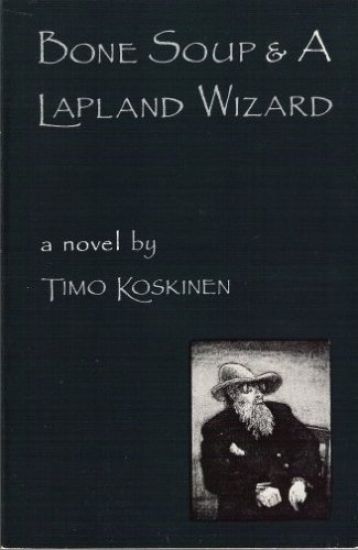
Set against the cold natural beauty of Michigan's Upper Penninsula, Bone Soup & A Lapland Wizard is the tale of two retired loggers: Rakko, the irascible bachelor - part wizard, it seems, and part madman - and his friend Paavo, old before his years and struggling with his love for his wife and adopted son. To save his friend, Rakko devises a plan to return to Finland, and the pair set sail across Lake Superior in a makeshift Viking whaler.Told in the terse, lyric style of the Scandanavian masters, Bone Soup & A Lapland Wizard is the story of conflict between the Old World and the New, the mythic and the modern.
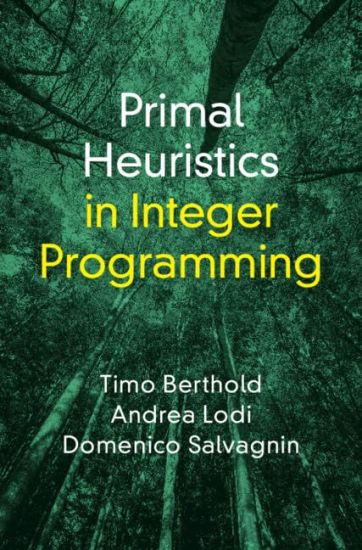
Primal heuristics guarantee that feasible, high-quality solutions are provided at an early stage of the solving process, and thus are essential to the success of mixed-integer programming (MIP). By helping prove optimality faster, they allow MIP technology to extend to a wide variety of applications in discrete optimization. This first comprehensive guide to the development and use of primal heuristics within MIP technology and solvers is ideal for computational mathematics graduate students and industry practitioners. Through a unified viewpoint, it gives a unique perspective on how state-of-the-art results are integrated within the branch-and-bound approach at the core of the MIP technology. It accomplishes this by highlighting all the required knowledge needed to push the heuristic side of MIP solvers to their limit and pointing out what is left to do to improve them, thus presenting heuristic approaches for MIP as part of the MIP solving process.