Kirjojen hintavertailu. Mukana 11 241 044 kirjaa ja 12 kauppaa.

Kirjahaku

Etsi kirjoja tekijän nimen, kirjan nimen tai ISBN:n perusteella.

1000 tulosta hakusanalla Timothy J. Stapleton

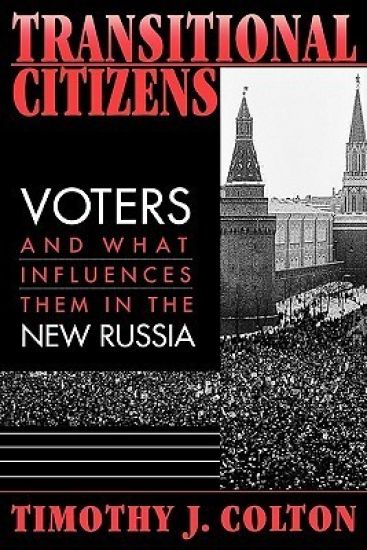
Transitional Citizens

Transitional Citizens

Timothy J. Colton

Harvard University Press
2000
nidottu
Subjects obey. Citizens choose. Transitional Citizens looks at the newly empowered citizens of Russia's protodemocracy facing choices at the ballot box that just a few years ago, under dictatorial rule, they could not have dreamt of.The stakes in post-Soviet elections are extraordinary. While in the West politicians argue over refinements to social systems in basically good working order, in the Russian Federation they address graver concerns--dysfunctional institutions, individual freedom, nationhood, property rights, provision of the basic necessities of life in an unparalleled economic downswing. The idiom of Russian campaigns is that of apocalypse and mutual demonization. This might give an impression of political chaos. However, as Timothy Colton finds, voting in transitional Russia is highly patterned. Despite their unfamiliarity with democracy, subjects-turned-citizens learn about their electoral options from peers and the mass media and make choices that manifest a purposiveness that will surprise many readers.Colton reveals that post-Communist voting is not driven by a single explanatory factor such as ethnicity, charismatic leadership, or financial concerns, but rather by multiple causes interacting in complex ways. He gives us the most sophisticated and insightful account yet of the citizens of the new Russia.
The Uses of Memory

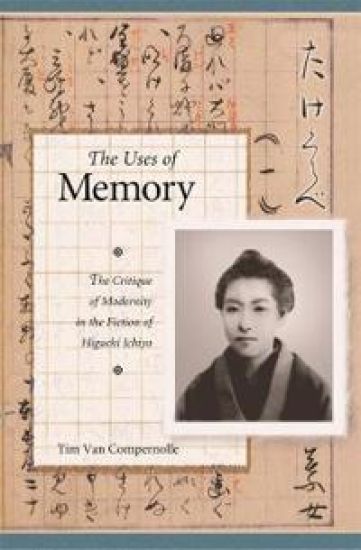
The Uses of Memory

Timothy J. Van Compernolle

Harvard University Press
2006
sidottu
The pioneering writer Higuchi Ichiyo (1872–1896) has been described as “the last woman of old Japan,” a consummate stylist of classical prose, whose command of the linguistic and rhetorical riches of the premodern tradition might suggest that her writings are relics of the past with no concern for the problems of modern life.Timothy Van Compernolle investigates the social dimensions of Ichiyo’s artistic imagination and argues that she creatively reworked the Japanese literary tradition in order to understand, confront, and critique the emerging modernity of the Meiji period. For Ichiyo, the classical canon was a reservoir of tropes and paradigms that could be reshaped and renewed as a way to explore the sociopolitical transformations of the 1890s and cast light upon the human costs of modernization.Drawing critical momentum from the dialogical theory of Mikhail Bakhtin, the author explores in five of Ichiyo’s best known stories how traditional rhetoric and literary devices are dialogically engaged with discourses associated with modernity within the pages of Ichiyo’s narratives. In its close, sensitive readings of Ichiyo’s oeuvre, The Uses of Memory not only complicates the scholarly discussion of her position in the Japanese literary canon, but also broaches larger theoretical issues.
Moscow

Moscow

Timothy J Colton

Harvard University Press
1995
sidottu
Once the hub of the tsarist state, later Brezhnev's "model Communist city"--home of the Kremlin, Red Square, and St. Basil's Cathedral--Moscow is for many the quintessence of everything Russian. Timothy Colton's sweeping biography of this city at the center of Soviet life reveals what such a position has meant to Moscow and ultimately to Russia itself. Linchpin of the Soviet system and exemplar of its ideology, Moscow was nonetheless instrumental in the Soviet Union's demise. It was in this metropolis of nine million people that Boris Yeltsin, during two frustrating years as the city's party boss, began his move away from Communist orthodoxy. Colton charts the general course of events that led to this move, tracing the political and social developments that have given the city its modern character. He shows how the monolith of Soviet power broke down in the process of metropolitan governance, where the constraints of censorship and party oversight could not keep up with proliferating points of view, haphazard integration, and recurrent deviation from approved rules and goals. Everything that goes into making a city--from town planning, housing, and retail services to environmental and architectural concerns--figures in Colton's account of what makes Moscow unique. He shows us how these aspects of the city's organization, and the actions of leaders and elite groups within them, coordinated or conflicted with the overall power structure and policy imperatives of the Soviet Union. Against this background, Colton explores the growth of the anti-Communist revolution in Moscow politics, as well as fledgling attempts to establish democratic institutions and a market economy. As it answers persistent questions about Soviet political history, this lavishly illustrated volume may also point the way to understanding Russia's future.
Commissars, Commanders, and Civilian Authority

Commissars, Commanders, and Civilian Authority

Timothy J Colton

Harvard University Press
1979
sidottu
For six decade the Soviet system has been immune to military rebellion and takeover, which often characterizes modernizing countries. How can we explain the stability of Soviet military politics, asks Timothy Colton in his compelling interpretation of civil-military relations in the Soviet Union. Hitherto most western scholars have posited a basic dichotomy of interests between the Soviet army and the Communist party. They view the two institutions as conflictprone, with civilian supremacy depending primarily upon the party's control of officers through its organs within the military establishment. Colton challenges this thesis and argues that the military party organs have come to possess few of the attributes of an effective controlling device, and that the commissars and their heirs have operated as allies rather than adversaries of the military commanders. In explaining the extraordinary stability in army-party relations in terms of overlapping interests rather than controlling mechanisms, Colton offers a major case study and a new model to students of comparative military politics.
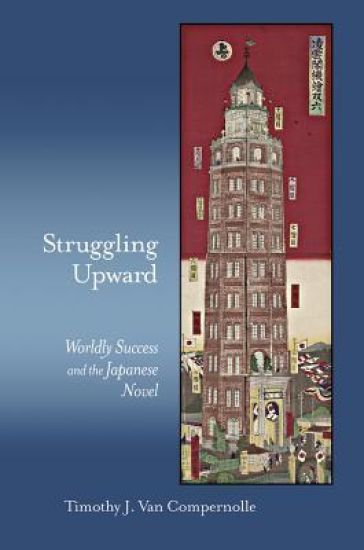
Struggling Upward

Struggling Upward

Timothy J. Van Compernolle

Harvard University, Asia Center
2016
sidottu
Struggling Upward reconsiders the rise and maturation of the modern novel in Japan by connecting the genre to new discourses on ambition and social mobility. Collectively called risshin shusse, these discourses accompanied the spread of industrial capitalism and the emergence of a new nation-state in the archipelago. Drawing primarily on historicist strategies of literary criticism, the book situates the Meiji novel in relation to a range of texts from different culturally demarcated zones: the visual arts, scandal journalism, self-help books, and materials on immigration to the colonies, among others. Timothy J. Van Compernolle connects these Japanese materials to topics of broad theoretical interest within literary and cultural studies, including imperialism, gender, modernity, novel studies, print media, and the public sphere. As the first monograph to link the novel to risshin shusse, Struggling Upward argues that social mobility is the privileged lens through which Meiji novelists explored abstract concepts of national belonging, social hierarchy, and the new space of an industrializing nation.
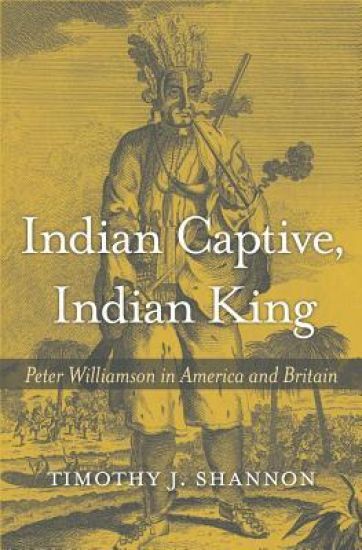
Indian Captive, Indian King

Indian Captive, Indian King

Timothy J. Shannon

Harvard University Press
2021
sidottu
In 1758 Peter Williamson appeared on the streets of Aberdeen, Scotland, dressed as a Native American and telling a remarkable tale. He claimed that as a young boy he had been kidnapped from the city and sold into slavery in America. In performances and in a printed narrative he peddled to his audiences, Williamson described his tribulations as an indentured servant, Indian captive, soldier, and prisoner of war. Aberdeen’s magistrates called him a liar and banished him from the city, but Williamson defended his story.Separating fact from fiction, Timothy J. Shannon explains what Williamson’s tale says about how working people of eighteenth-century Britain, so often depicted as victims of empire, found ways to create lives and exploit opportunities within it. Exiled from Aberdeen, Williamson settled in Edinburgh, where he cultivated enduring celebrity as the self-proclaimed “king of the Indians.” His performances and publications capitalized on the curiosity the Seven Years’ War had ignited among the public for news and information about America and its native inhabitants. As a coffeehouse proprietor and printer, he gave audiences a plebeian perspective on Britain’s rise to imperial power in North America.Indian Captive, Indian King is a history of empire from the bottom up, showing how Williamson’s American odyssey illuminates the real-life experiences of everyday people on the margins of the British Empire and how those experiences, when repackaged in travel narratives and captivity tales, shaped popular perceptions about the empire’s racial and cultural geography.
Strange Glow

Strange Glow

Timothy J. Jorgensen

Princeton University Press
2016
sidottu
More than ever before, radiation is a part of our modern daily lives. We own radiation-emitting phones, regularly get diagnostic x-rays, such as mammograms, and submit to full-body security scans at airports. We worry and debate about the proliferation of nuclear weapons and the safety of nuclear power plants. But how much do we really know about radiation? And what are its actual dangers? An accessible blend of narrative history and science, Strange Glow describes mankind's extraordinary, thorny relationship with radiation, including the hard-won lessons of how radiation helps and harms our health. Timothy Jorgensen explores how our knowledge of and experiences with radiation in the last century can lead us to smarter personal decisions about radiation exposures today. Jorgensen introduces key figures in the story of radiation--from Wilhelm Roentgen, the discoverer of x-rays, and pioneering radioactivity researchers Marie and Pierre Curie, to Thomas Edison and the victims of the recent Fukushima Daiichi nuclear power plant accident. Tracing the most important events in the evolution of radiation, Jorgensen explains exactly what radiation is, how it produces certain health consequences, and how we can protect ourselves from harm. He also considers a range of practical scenarios such as the risks of radon in our basements, radiation levels in the fish we eat, questions about cell-phone use, and radiation's link to cancer. Jorgensen empowers us to make informed choices while offering a clearer understanding of broader societal issues. Investigating radiation's benefits and risks, Strange Glow takes a remarkable look at how, for better or worse, radiation has transformed our society.
Strange Glow

Strange Glow

Timothy J. Jorgensen

Princeton University Press
2017
pokkari
More than ever before, radiation is a part of our modern daily lives. We own radiation-emitting phones, regularly get diagnostic x-rays, such as mammograms, and submit to full-body security scans at airports. We worry and debate about the proliferation of nuclear weapons and the safety of nuclear power plants. But how much do we really know about radiation? And what are its actual dangers? An accessible blend of narrative history and science, Strange Glow describes mankind's extraordinary, thorny relationship with radiation, including the hard-won lessons of how radiation helps and harms our health. Timothy Jorgensen explores how our knowledge of and experiences with radiation in the last century can lead us to smarter personal decisions about radiation exposures today. Jorgensen introduces key figures in the story of radiation--from Wilhelm Roentgen, the discoverer of x-rays, and pioneering radioactivity researchers Marie and Pierre Curie, to Thomas Edison and the victims of the recent Fukushima Daiichi nuclear power plant accident. Tracing the most important events in the evolution of radiation, Jorgensen explains exactly what radiation is, how it produces certain health consequences, and how we can protect ourselves from harm. He also considers a range of practical scenarios such as the risks of radon in our basements, radiation levels in the fish we eat, questions about cell-phone use, and radiation's link to cancer. Jorgensen empowers us to make informed choices while offering a clearer understanding of broader societal issues. Investigating radiation's benefits and risks, Strange Glow takes a remarkable look at how, for better or worse, radiation has transformed our society.
Spark

Spark

Timothy J. Jorgensen

PRINCETON UNIVERSITY PRESS
2021
sidottu
A fresh look at electricity and its powerful role in life on EarthWhen we think of electricity, we likely imagine the energy humming inside our home appliances or lighting up our electronic devices—or perhaps we envision the lightning-streaked clouds of a stormy sky. But electricity is more than an external source of power, heat, or illumination. Life at its essence is nothing if not electrical.The story of how we came to understand electricity’s essential role in all life is rooted in our observations of its influences on the body—influences governed by the body’s central nervous system. Spark explains the science of electricity from this fresh, biological perspective. Through vivid tales of scientists and individuals—from Benjamin Franklin to Elon Musk—Timothy Jorgensen shows how our views of electricity and the nervous system evolved in tandem, and how progress in one area enabled advancements in the other. He explains how these developments have allowed us to understand—and replicate—the ways electricity enables the body’s essential functions of sight, hearing, touch, and movement itself.Throughout, Jorgensen examines our fascination with electricity and how it can help or harm us. He explores a broad range of topics and events, including the Nobel Prize–winning discoveries of the electron and neuron, the history of experimentation involving electricity’s effects on the body, and recent breakthroughs in the use of electricity to treat disease.Filled with gripping adventures in scientific exploration, Spark offers an indispensable look at electricity, how it works, and how it animates our lives from within and without.
Spark

Spark

Timothy J. Jorgensen

PRINCETON UNIVERSITY PRESS
2023
pokkari
A fresh look at electricity and its powerful role in life on EarthWhen we think of electricity, we likely imagine the energy humming inside our home appliances or lighting up our electronic devices—or perhaps we envision the lightning-streaked clouds of a stormy sky. But electricity is more than an external source of power, heat, or illumination. Life at its essence is nothing if not electrical.The story of how we came to understand electricity’s essential role in all life is rooted in our observations of its influences on the body—influences governed by the body’s central nervous system. Spark explains the science of electricity from this fresh, biological perspective. Through vivid tales of scientists and individuals—from Benjamin Franklin to Elon Musk—Timothy Jorgensen shows how our views of electricity and the nervous system evolved in tandem, and how progress in one area enabled advancements in the other. He explains how these developments have allowed us to understand—and replicate—the ways electricity enables the body’s essential functions of sight, hearing, touch, and movement itself.Throughout, Jorgensen examines our fascination with electricity and how it can help or harm us. He explores a broad range of topics and events, including the Nobel Prize–winning discoveries of the electron and neuron, the history of experimentation involving electricity’s effects on the body, and recent breakthroughs in the use of electricity to treat disease.Filled with gripping adventures in scientific exploration, Spark offers an indispensable look at electricity, how it works, and how it animates our lives from within and without.
Strange Glow

Strange Glow

Timothy J. Jorgensen

PRINCETON UNIVERSITY PRESS
2026
pokkari
The fascinating science and history of radiation More than ever before, radiation is a part of our modern daily lives. We own radiation-emitting phones, regularly get diagnostic x-rays, such as mammograms, and submit to full-body security scans at airports. We worry and debate about the proliferation of nuclear weapons and the safety of nuclear power plants. But how much do we really know about radiation? And what are its actual dangers? An accessible blend of narrative history and science, Strange Glow describes mankind's extraordinary, thorny relationship with radiation, including the hard-won lessons of how radiation helps and harms our health. Timothy Jorgensen explores how our knowledge of and experiences with radiation in the last century can lead us to smarter personal decisions about radiation exposures today. Jorgensen introduces key figures in the story of radiation—from Wilhelm Roentgen, the discoverer of x-rays, and pioneering radioactivity researchers Marie and Pierre Curie, to Thomas Edison and the victims of the recent Fukushima Daiichi nuclear power plant accident. Tracing the most important events in the evolution of radiation, Jorgensen explains exactly what radiation is, how it produces certain health consequences, and how we can protect ourselves from harm. He also considers a range of practical scenarios such as the risks of radon in our basements, radiation levels in the fish we eat, questions about cell-phone use, and radiation's link to cancer. Jorgensen empowers us to make informed choices while offering a clearer understanding of broader societal issues. Investigating radiation's benefits and risks, Strange Glow takes a remarkable look at how, for better or worse, radiation has transformed our society.
Beyond WiFi: Find your Deeper Connection: 8 ways to be Refreshed Now
Did you know its possible to refresh yourself anytime and any situation by finding your deeper connection to your peace, joy, and well being? In this book you'll find several simple and easy exercises to restore mind, body and soul so you can live your life from the most healthy and whole place as possible.Tim Malone has been a Spiritual Director and Mindfulness / creativity coach for over 20 years individually and on retreats. This book is an invitation into your deep connection to Joy. The self-care strategies can be used in as little as one minute to get refreshed now in our busy, often stressful lives. Stories from facing burnout in the helping profession lead into guided meditations that take you beyond Wifi to truly restore you. By foregoing the screen as the main tool to relax you will find your deeper connection to your life and be more present and mindful in relationships with those around you.
Degrees Book 1: Saving The Earth

Degrees Book 1: Saving The Earth

Timothy J. Imholt; Devon G. Crowe

Zwicky Press
2015
nidottu
In 2030, human civilization is faced with almost certain extermination. Weather patterns have become more extreme. Super storm after super storm pops up without warning. Some cities and even some smaller nations have become uninhabitable. Some say it is a man-made issue, others claim it is natural. To those losing family members, to those whose lives are destroyed, it doesn't matter what caused it, they only care about how to make it stop. The public is demanding action. In the U.S., politicians are under pressure to act swiftly. Conservationist groups lobby for ending the use of fossil fuels, while Corporate interests lobby for retaining full exploitation of fossil resources. A scientist named Emma Hallbar offers a solution to climate change that offers humanity a lifeline. She dedicates her life to finding a way to control the environment so that all humans can live a life free of these unpredictable climactic temper tantrums. The result is the largest space program as well as the most unified global effort in history. Human nature creates unforeseen conflicts on a scale that have globally tragic effects. Just when she thinks that she has the whole thing under control, a terrorist strike threatens to take it all away. Can Doctor Hallbar save humanity from Mother Nature as well as human kind's interpersonal struggles? Can a chaotic system as complex as the climate of an entire planet be influenced by man at all? Can she find a way to make that influence positive? Can she control the weather well enough to stop the tragedies that are destroying the lives of millions of people? Degrees Book 1 is the first in a series by Optical Society of America Fellow Devon G. Crowe and #1 Bestselling author Timothy Imholt. It is a highly entertaining, fast moving first step into a series of novels that contain events that threaten the future existence of humans as the dominant species on Earth.
The Vietnam War from the Rear Echelon

The Vietnam War from the Rear Echelon

Timothy J. Lomperis

UNIVERSITY PRESS OF KANSAS
2023
nidottu
Timothy Lomperis knows the Vietnam War, both as a soldier and as a scholar. In the latter role he has published extensively, including The War Everyone Lost—and Won, hailed as one of the best books ever written on that conflict. Even though he served two tours “in country” during the war’s most frustrating period—from the infamous Easter Invasion through the Paris Peace negotiations—this is the first time he has written about the war from such a personal perspective. An intelligence officer at the Military Assistance Command, Vietnam (MACV), Lomperis and his comrades were tasked with translating Washington war policy into action. Lomperis provides a rare view of the war from the perspective of a rear echelon officer. He and other so-called REMFs were deeply involved in trying to devise and implement strategies that would the win the war. This largely neglected perspective takes center stage in Lomperis’s memoir, presenting a seldom-seen midlevel perspective that provides the missing links between the Washington-Hanoi peace negotiations and the deadly battles between troops in the field. In exposing the inner workings of a military headquarters during wartime, Lomperis recounts the tensions of a command caught between the political imperatives of Washington and the deteriorating military situation on the ground. Involved in the planning and execution of Nixon's 1972 Christmas Bombing Campaign, designed to push the North Vietnamese into peace negotiations, Lomperis sheds new light on Nixon’s “secret plan to end the war” while offering rare glimpses of military operations and decision making on the ground in Saigon. Giving color to the REMF story, he also offers a portrait of life in wartime Saigon, writing with genuine respect for and curiosity about Vietnamese culture. And ultimately, he describes his own moral conundrum as the son of missionaries and an initial Cold Warrior who undergoes a gradual disillusionment that resolves into peaceful reconciliation. This incisive memoir is essential for better comprehending what the Vietnam experience was like for the large contingent of Americans who served there. It suggests the need for some fundamental rethinking about Vietnam—not only for the war’s veterans but also for those concerned with the lessons it carries for U.S. involvement in current insurgencies.
Resuscitation Rules

Resuscitation Rules

Timothy J. Hodgetts; Nicholas Castle

BMJ Books
1999
nidottu
This pocket guide supplies key resuscitation facts in an easily read format to serve as an aide-memoire to anyone working in emergency situations. Each key statement is presented as an easy to remember rule. Each rule is explained and supported by relevant current references and any exceptions are identified. Line drawings are used to illustrate key educational points. This book proves that learning can be fun!
Trauma Rules 2

Trauma Rules 2

Timothy J. Hodgetts; Lee Turner

BMJ Books
2006
nidottu
Trauma Rules 2 retains its lively and fun presentation to help you remember the essential principles of trauma care and feel confident about handling and treating patients appropriately in the first hours of injury. Thoroughly expanded and updated, and now including military trauma rules, the second edition of this popular pocket book now offers: 70 easy-to-memorize rules covering the important aspects of trauma careclear, authoritative explanations and instructive illustrationsthe three principal stages of trauma management: approach to the patient, initial assessment and resuscitation, and investigation and definitive care Trauma Rules 2 is compiled especially for those dealing with the immediate and early management of the severely injured patient.
The Politics of the Spirit

The Politics of the Spirit

Timothy J. Steigenga

Lexington Books
2001
sidottu
The Politics of the Spirit is a masterful study of the political effects of evangelical Protestantism in Central America. Timothy Steigenga's thoughtfully crafted work questions whether the spread of Protestantism in Latin America has reinforced authoritarian elements in political culture or deepened nascent democracy. Steigenga provides a thorough review of the literature on religion and politics in Latin America, putting many of the hypotheses generated in this literature to the test through an analysis of comparative survey data and qualitative interviews. Steigenga investigates the impact religious affiliation has on political activity and belief, and the influence of cross-denominational religious beliefs and practices on Latin American life. His comparative work explores how different political systems—the established democracy of Costa Rica and the transitional system of Guatemala—impact the politics of religion. This enlightening interdisciplinary book will appeal to scholars seeking to understand the relationships between religious and political change in Latin America.
The Politics of the Spirit

The Politics of the Spirit

Timothy J. Steigenga

Lexington Books
2002
nidottu
The Politics of the Spirit is a masterful study of the political effects of evangelical Protestantism in Central America. Timothy Steigenga's thoughtfully crafted work questions whether the spread of Protestantism in Latin America has reinforced authoritarian elements in political culture or deepened nascent democracy. Steigenga provides a thorough review of the literature on religion and politics in Latin America, putting many of the hypotheses generated in this literature to the test through an analysis of comparative survey data and qualitative interviews. Steigenga investigates the impact religious affiliation has on political activity and belief, and the influence of cross-denominational religious beliefs and practices on Latin American life. His comparative work explores how different political systems—the established democracy of Costa Rica and the transitional system of Guatemala—impact the politics of religion. This enlightening interdisciplinary book will appeal to scholars seeking to understand the relationships between religious and political change in Latin America.