Kirjojen hintavertailu. Mukana 12 045 296 kirjaa ja 12 kauppaa.

Kirjahaku

Etsi kirjoja tekijän nimen, kirjan nimen tai ISBN:n perusteella.

654 tulosta hakusanalla Tito Perdue

Marshal Tito and His Gallant Bands

Marshal Tito and His Gallant Bands

Winston S. Churchill; Walter Bernstein; Frank Gervasi

Literary Licensing, LLC
2011
sidottu
""Marshal Tito And His Gallant Bands"" is a book written by Winston Churchill, which provides a detailed account of the Yugoslav Partisans and their leader, Josip Broz Tito, during World War II. Churchill, who was the Prime Minister of Great Britain during the war, was a strong supporter of the Partisans and saw them as a key ally in the fight against Nazi Germany.The book begins with a brief overview of the situation in Yugoslavia at the start of the war, and then focuses on the formation of the Partisan movement and Tito's rise to leadership. Churchill describes the challenges that the Partisans faced, including their lack of resources and the constant threat of attack from German and Italian forces.Despite these challenges, Tito and his followers were able to mount a successful resistance campaign, which eventually helped to drive the Axis powers out of Yugoslavia. Churchill details some of the key battles and operations that the Partisans undertook, including their successful attack on the German-held city of Banja Luka.Throughout the book, Churchill praises the courage and determination of the Partisans, and emphasizes the importance of their contribution to the war effort. He also provides some insight into Tito's personality and leadership style, painting him as a charismatic and effective commander who was able to inspire his followers to great feats of bravery.Overall, ""Marshal Tito And His Gallant Bands"" is a fascinating account of a little-known aspect of World War II, and provides valuable insight into the role of guerrilla warfare in the fight against fascism.Additional Authors Include Stoyan Pribichevich And Louis Adamic.This scarce antiquarian book is a facsimile reprint of the old original and may contain some imperfections such as library marks and notations. Because we believe this work is culturally important, we have made it available as part of our commitment for protecting, preserving, and promoting the world's literature in affordable, high quality, modern editions, that are true to their original work.
Di Tito Lucrezio Caro della natura delle cose, libri VI. Tradotti da Alessandro Marchetti ... of 2; Volume 2
The 18th century was a wealth of knowledge, exploration and rapidly growing technology and expanding record-keeping made possible by advances in the printing press. In its determination to preserve the century of revolution, Gale initiated a revolution of its own: digitization of epic proportions to preserve these invaluable works in the largest archive of its kind. Now for the first time these high-quality digital copies of original 18th century manuscripts are available in print, making them highly accessible to libraries, undergraduate students, and independent scholars.Western literary study flows out of eighteenth-century works by Alexander Pope, Daniel Defoe, Henry Fielding, Frances Burney, Denis Diderot, Johann Gottfried Herder, Johann Wolfgang von Goethe, and others. Experience the birth of the modern novel, or compare the development of language using dictionaries and grammar discourses. ++++The below data was compiled from various identification fields in the bibliographic record of this title. This data is provided as an additional tool in helping to insure edition identification: ++++British LibraryT031772The imprint is false; possibly printed in Venice. Titlepages are engraved.Londra i.e. Venice?], 1761. 2v., plate: port.; 12
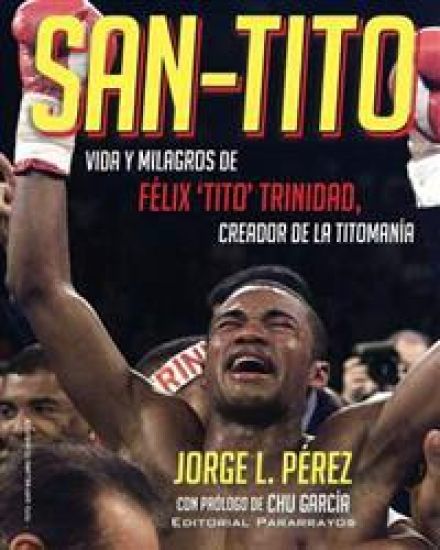
San-Tito: Vida y Milagros de Tito Trinidad

San-Tito: Vida y Milagros de Tito Trinidad

Jorge L. Perez

Createspace Independent Publishing Platform
2013
nidottu
"Me gusta ganar por nocaut. Voy round por round, pero si lo puedo lastimar y acabar la pelea temprano, lo voy a hacer." -TITO TRINIDAD- QUIZ S ALG N D A el diccionario de la Real Academia Espa ola acepte la palabra Titoman a, definida de la siguiente manera: "Estallido de emotividad y celebraci n espont nea, parecido al que suele surgir el Fin de A o, instantes despu s de una victoria deportiva importante". Su origen, naturalmente, est en las celebraciones provocadas por las grandes victorias box sticas del puertorrique o F lix 'Tito' Trinidad, desembocando en un coro sostenido de ' Tito Tito Tito " Este libro es una exploraci n detallada tanto de su carrera como boxeador, como de la Titoman a.
The Tito–Stalin Split and Yugoslavia's Military Opening toward the West, 1950–1954
Yugoslav military cooperation with West emerged after the country’s split with the U.S.S.R. and its allies in 1948. It came as a surprise for many, since Yugoslavia used to be one of the staunchest followers of Soviet politics. However, faced with possible military escalation of the ideological, political, and economic worsening of relations with the East, the Yugoslav leadership quickly turned to their former “class enemies.” For the United States, it presented an opportunity to acquire many unexpected political benefits. Yugoslav alienation from the Kremlin provided territorial consolidation of the southern flank of NATO, denial of direct approach to the Adriatic Sea and Northern Italy to Soviet troops, and dealt a strong political blow to the homogeneity of the Eastern bloc. While not insisting on changing the ideological nature of Yugoslav state, the United States provided much needed material and financial aid, developing the base for entering into sphere of military cooperation. It had two main categories—direct support for Yugoslav forces through shipments of military equipment, as well as Yugoslavia entering into defensive, military alliance (the Balkan Pact) with Greece and Turkey, already full members of NATO. Such trends, aiming towards closer Yugoslav bonding with Western military and political structures, ended in the mid-1950s with Stalin’s death, the outbreak of the Trieste crisis, and Tito’s reconciliation with Soviet leadership. Developing the new policy of non-alignment with either of the confronting blocs, Yugoslavia stepped out from the program of Western military aid, while the Balkan Pact slowly faded in growing animosity between Greece and Turkey.
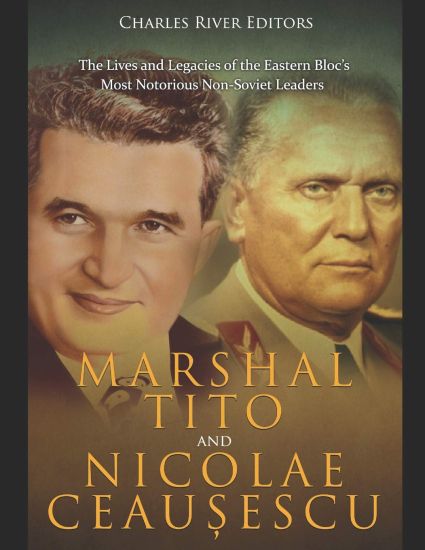
Marshal Tito and Nicolae Ceaușescu: The Lives and Legacies of the Eastern Bloc's Most Notorious Non-Soviet Leaders
*Includes pictures*Includes quotes*Includes online resources and a bibliography for further readingThe World War II era produced many leaders of titanic determination, men whose strengths and weaknesses left an extraordinary imprint on historical affairs. The struggle between massively divergent ideologies, exacerbated by huge social changes affected by the world's technological metamorphosis into the machine age, catapulted some individuals unexpectedly onto the world stage. Josip Broz Tito, better known to history as Marshal Tito, was undoubtedly one of these figures. Originally a machinist, Tito leveraged his success in the Communist Party of Yugoslavia (CPY) and a number of extraordinary strokes of luck into dictatorial rule over Yugoslavia for a span of 35 years. World War II proved the watershed that enabled him to secure control of the country, leading an ever more powerful army of communist partisans against both the Germans and other Yugoslav factions. During the war, SS leader Heinrich Himmler himself begrudgingly stated, "He has really earned his title of Marshal. When we catch him we shall kill him at once... but I wish we had a dozen Titos in Germany, men who were leaders and had such resolution and good nerves, that, even though they were forever encircled, they would never give in." During his reign, Tito managed to quash the intense national feelings of the diverse groups making up the Yugoslavian population, and he did so through several methods. He managed to successfully play the two superpower rivals, the United States and Soviet Union, off against each other during the Cold War, and in doing so, he maintained a considerable amount of independence from both, even as he additionally received foreign aid to keep his regime afloat. All the while he remained defiant, once penning a legendary letter to Joseph Stalin warning the Soviet dictator, "To Joseph Stalin: Stop sending people to kill me We've already captured five of them, one of them with a bomb and another with a rifle... If you don't stop sending killers, I'll send a very fast working one to Moscow and I certainly won't have to send another."Nicolae Ceaușescu, one of the 20th century's most notorious dictators, was both typical and unusual. Outwardly he resembled a standard leader of a communist country in Eastern Europe during the Cold War, yet he was even more repressive and opulent than his contemporaries. In Romania itself, Ceaușescu led a life as an isolated outsider, notably less urbane than the Bucharest elite, and given that he was born in rural poverty to peasant parents, his rise was perhaps the unlikeliest of any of the communists of that generation. As it turned out, circumstances presented themselves in a manner that led to his elevation, including the acquaintances he made whilst serving time in prison in the 1930s and 1940s, the rise of communism after World War II, and the Soviet occupation of a country that had previously banned the ideology. Ceaușescu was a compromise candidate when Romanian leader Gheorghe Gheorghiu-Dej died in 1965, and he initially appeared to be a liberal-minded, nationalist-orientated reformer. Ceaușescu did fit very easily into one stereotype, however, by proving that absolute power corrupts absolutely. From the early 1970s, he and his wife Elena constructed the most grotesquely personalized cult of dictatorship in the region, and while operating at the pinnacle of a highly corrupt pyramid, the couple bled their country dry with a succession of incompetent and warped policies. Ceaușescu's own father would say of him, "He tells nothing but lies." His son wasn't much more charitable, saying, "The new kind of politicians lie all the time. But my father was one of the old kind, more of a fanatic. He was driven by some kind of fanaticism. This belief that you can do good. It's a sort of madness."
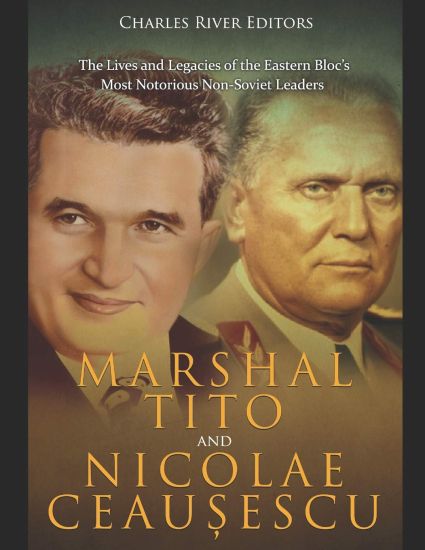
Marshal Tito and Nicolae Ceaușescu: The Lives and Legacies of the Eastern Bloc's Most Notorious Non-Soviet Leaders
*Includes pictures*Includes quotes*Includes online resources and a bibliography for further readingThe World War II era produced many leaders of titanic determination, men whose strengths and weaknesses left an extraordinary imprint on historical affairs. The struggle between massively divergent ideologies, exacerbated by huge social changes affected by the world's technological metamorphosis into the machine age, catapulted some individuals unexpectedly onto the world stage. Josip Broz Tito, better known to history as Marshal Tito, was undoubtedly one of these figures. Originally a machinist, Tito leveraged his success in the Communist Party of Yugoslavia (CPY) and a number of extraordinary strokes of luck into dictatorial rule over Yugoslavia for a span of 35 years. World War II proved the watershed that enabled him to secure control of the country, leading an ever more powerful army of communist partisans against both the Germans and other Yugoslav factions. During the war, SS leader Heinrich Himmler himself begrudgingly stated, "He has really earned his title of Marshal. When we catch him we shall kill him at once... but I wish we had a dozen Titos in Germany, men who were leaders and had such resolution and good nerves, that, even though they were forever encircled, they would never give in." During his reign, Tito managed to quash the intense national feelings of the diverse groups making up the Yugoslavian population, and he did so through several methods. He managed to successfully play the two superpower rivals, the United States and Soviet Union, off against each other during the Cold War, and in doing so, he maintained a considerable amount of independence from both, even as he additionally received foreign aid to keep his regime afloat. All the while he remained defiant, once penning a legendary letter to Joseph Stalin warning the Soviet dictator, "To Joseph Stalin: Stop sending people to kill me We've already captured five of them, one of them with a bomb and another with a rifle... If you don't stop sending killers, I'll send a very fast working one to Moscow and I certainly won't have to send another."Nicolae Ceaușescu, one of the 20th century's most notorious dictators, was both typical and unusual. Outwardly he resembled a standard leader of a communist country in Eastern Europe during the Cold War, yet he was even more repressive and opulent than his contemporaries. In Romania itself, Ceaușescu led a life as an isolated outsider, notably less urbane than the Bucharest elite, and given that he was born in rural poverty to peasant parents, his rise was perhaps the unlikeliest of any of the communists of that generation. As it turned out, circumstances presented themselves in a manner that led to his elevation, including the acquaintances he made whilst serving time in prison in the 1930s and 1940s, the rise of communism after World War II, and the Soviet occupation of a country that had previously banned the ideology. Ceaușescu was a compromise candidate when Romanian leader Gheorghe Gheorghiu-Dej died in 1965, and he initially appeared to be a liberal-minded, nationalist-orientated reformer. Ceaușescu did fit very easily into one stereotype, however, by proving that absolute power corrupts absolutely. From the early 1970s, he and his wife Elena constructed the most grotesquely personalized cult of dictatorship in the region, and while operating at the pinnacle of a highly corrupt pyramid, the couple bled their country dry with a succession of incompetent and warped policies. Ceaușescu's own father would say of him, "He tells nothing but lies." His son wasn't much more charitable, saying, "The new kind of politicians lie all the time. But my father was one of the old kind, more of a fanatic. He was driven by some kind of fanaticism. This belief that you can do good. It's a sort of madness."
Goodbye Tito: Mémoires d'une jeune provinciale aux idées arriérées et à rééduquer de manière douce dans la Yougoslavie de Josip Broz
Cinq ans apr s l'adh sion de la Croatie la communaut europ enne l'auteur fran aise d'origine croate Ivanka Paul publie son nouvel ouvrage Goodbye Tito . Malicieusement sous-titr M moire d'une jeune provinciale aux id es arri r es et r duquer de mani re douce sous la Yougoslavie de Josip Broz, Goodbye Tito fait aussi un clin d'oeil au film Goodbye Lenine et la ex RDA. A 79 ans l' crivaine change de registre et propose un t moignage unique, dr le et touchant des ann es de sa jeunesse dans la Yougoslavie de Tito. N e en 1939 en ex-Yougoslavie, Ivanka Paul (n e Orsulic) a connu la duret de l'apr s guerre et l'av nement du r gime communiste de Tito, avec tout ce qu'il comprend d'absurde, de ridicule et de cruel. Cependant le r gime n'a pas r ussi teindre les traditions et les coutumes, elles aussi parfois tout aussi ridicules ou cruelles. Malgr tout, Tito tait populaire: Les ouvriers partaient le matin au travail en chantant: ce r gime me convient, le salaire tombe et je ne fais rien raconte Ivanka Paul, qui d nonce aussi la condition de la femme, soumise avant Tito un autre r gime impitoyable: le r gime patriarcal qui n'offrait aux femmes que deux issues, le mariage ou le couvent. Comme son habitude, Ivanka Paul dresse un portrait fin, vivant et faussement na f d'une poque yougoslave dont il existe peu de t moignage. Mais elle n'oublie pas ce que Tito et son r gime lui ont apport elle a fait partie de la premi re promotion de bacheliers de l'histoire du pays, elle a pu aller l'Universit , faire du th tre, crire... acc der l' mancipation. Le choc des cultures Goodbye Tito... t moigne aussi de l'engagement des femmes: pendant la Seconde Guerre Mondiale, dans la r sistance. Mais aussi des enseignantes fran aises, parmi lesquelles Mauricette B gic, son professeur de fran ais Sarajevo. Au-del du r cit historique, bien loin des clich s, Goodbye Tito est un t moignage poignant et passionnant qui raconte le choc des cultures: celui des anciennes traditions scl ros es avec le r formisme titiste brutal;entre le communisme totalitaire et la soci t fran aise des ann es 60... Personnage haut en couleurs Ivanka Paul raconte avec amusement la mani re dont son p re faisait sa propre r sistance au communisme coup de bras d'honneur. Tout le monde en prend pour son grade.. des h ros du travail aux espions du village en passant par les bonnes soeurs et Tito lui-m me. Mais avec distance, humour et tendresse. C'est tout cela qui fait de Goodbye Tito une oeuvre majeure et le t moignage qui manquait poque. Ivanka Paul: biographie Ivanka Paul est crivaine po tesse et conf renci re fran aise d'origine croate. N e en Croatie l' poque de la Yougoslavie en 1939 dans le village de Komin (Neretva) elle fait ses tudes Sarajevo avant de les poursuivre la Sorbonne Paris. Elle a sorti en 2000 son premier ouvrage, un recueil de po mes et r cits intitul Vos Yeux Madame, prim au festival de la Seyne-sur-Mer, ainsi que par la Soci t des po tes fran ais, et qu'elle a t invit e pr senter dans les salons de l'Assembl e nationale dans le cadre du prix France Euro M diterran e. Son deuxi me livre de r cits et po mes Rien n'est perdu quand on a aim relate son parcours Versailles, sa ville d'adoption. Elle a t invit e le pr senter lors du Salon du livre de Radio France. Goodbye Tito... lui offre pour la premi re fois l'occasion de revenir sur son pays d'origine, et est son ouvrage le plus personnel. Le livre a re u la M daille d'Argent de l'Acad mie Internationale de Lut ce en 2018.
Hvordan Tito mistede sin næse

Hvordan Tito mistede sin næse

Guido van Genechten

Turbine
2023
pokkari
Klovnen Tito er stjernen i Cirkus Rondo. Hver dag optræder han. Han løber, danser, hopper, og publikum elsker ham. Men en dag sker der noget mærkeligt. Tito mister sin næse! Han leder og leder efter en ny, men der er ikke rigtigt nogen, der passer. Hvem er han nu uden sin karakteristiske røde næse?En sjov billedbog om at føle sig usikker på sig selv og gerne ville være elsket. Til børn fra 3 år og op.
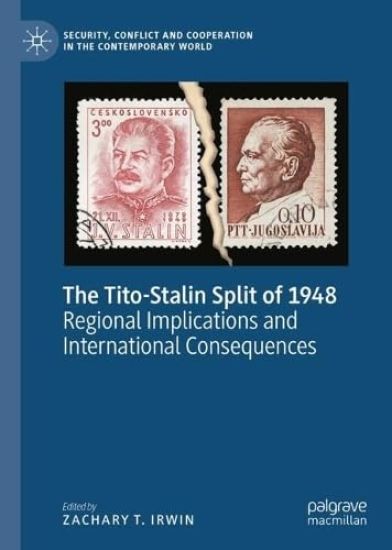
The Tito-Stalin Split of 1948

The Tito-Stalin Split of 1948

Springer Nature Switzerland AG
2026
sidottu
This book explores Yugoslavia's expulsion from the Soviet Cominform and its broader impact on international politics. Although being acknowledged as a crucial turning point during the Cold War, the split between Josip Broz Tito and Joseph Stalin in 1948 has not been widely investigated in historical research. Drawing on archival sources, the authors demonstrate the continuing historical relevance of this event to Europe's contemporary diplomatic landscape. Providing different lenses through which to understand the impact of the Split on international affairs, the significance of Tito and Stalin's conflict in the post-war years is emphasised. The collection is divided into two parts, the first covering the regional dynamics of the Split in the Balkans and Eastern Europe, and the second discussing the consequences for international relations. Bringing together recognised experts from around the world, this book offers an international perspective on the events and aftermath of the 1948 split. A fresh account of a renowned event in history, this book is a welcome contribution to Cold War studies and will be of particular interest to those researching European diplomatic history, post-war politics and the history of Communism.
Dennis Tito

Dennis Tito

VDM Publishing House
2010
nidottu
Observera att förlaget som ger ut denna produkt baserar innehållet i sina produkter på fria källor som Wikipedia. Boken är med stor sannolikhet endast ett utdrag ur dessa informationskällor, alltså inte en vanlig bok i den bemärkelsen.
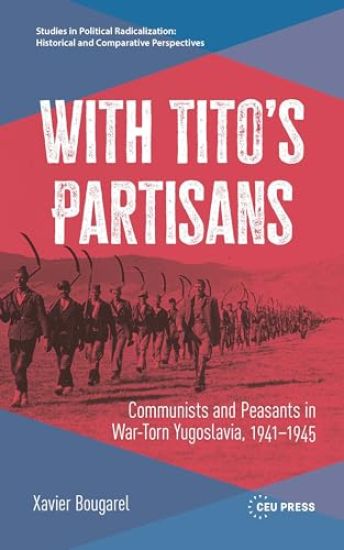
With Tito’s Partisans

With Tito’s Partisans

Xavier Bougarel

Pallas Publications
2026
sidottu
Who still remembers Tito’s Yugoslav Partisans? Once worshipped by some, now disparaged by others (or even by the very same), they remain largely unknown to the English-speaking public. This book enables readers to discover them through a meticulous reconstruction of their everyday life in the liberated territories. How did the Partisans stop interethnic violence? How did they foster the political participation of young people and women? What was the role of the Communist Party? What were the principles of the economy in the liberated territories? What were the Partisans’ views on justice, revenge and forgiveness? These are just some of the questions the author seeks to answer. The book also goes further, however, showing what makes up a resistance or revolutionary movement in the extreme conditions of war—where everyone must prove themselves, or perish.
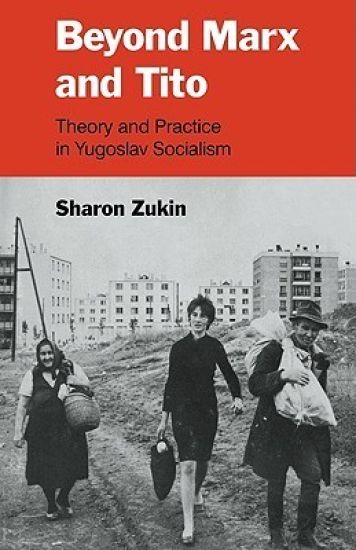
Beyond Marx and Tito

Beyond Marx and Tito

Zukin Sharon

Cambridge University Press
2008
pokkari
In this study Dr Zukin combines the approaches of a political scientist and a sociologist to examine the distance between theory and practice in the lives of ordinary Yugoslavs living under socialist self-management. Going beyond previous work on socialist societies, she asks how Yugoslavs - as workers, as citizens and as a society - have benefited from the form of socialism that they have pioneered. She also considers the relevance of the official ideology of self-management, institutions like workers' councils and communes, and political and economic controls to post-industrial as well as industrializing societies. The book includes long passages from intensive, in-depth interviews with members of ten Belgrade families. The families, which are described in terms of their place in the Yugoslav social structure, indicate their political and socialist ideology through telling their life stories, interpreting their own place in social changes, and reacting to these changes and pressures. Participant-observation of local voters meetings provides an examination of give-and-take in Yugoslav grass-roots politics.