Kirjahaku
Etsi kirjoja tekijän nimen, kirjan nimen tai ISBN:n perusteella.
1000 tulosta hakusanalla Tone Finnanger

This work has been selected by scholars as being culturally important and is part of the knowledge base of civilization as we know it.This work is in the public domain in the United States of America, and possibly other nations. Within the United States, you may freely copy and distribute this work, as no entity (individual or corporate) has a copyright on the body of the work.Scholars believe, and we concur, that this work is important enough to be preserved, reproduced, and made generally available to the public. To ensure a quality reading experience, this work has been proofread and republished using a format that seamlessly blends the original graphical elements with text in an easy-to-read typeface.We appreciate your support of the preservation process, and thank you for being an important part of keeping this knowledge alive and relevant.

This work has been selected by scholars as being culturally important and is part of the knowledge base of civilization as we know it.This work is in the public domain in the United States of America, and possibly other nations. Within the United States, you may freely copy and distribute this work, as no entity (individual or corporate) has a copyright on the body of the work.Scholars believe, and we concur, that this work is important enough to be preserved, reproduced, and made generally available to the public. To ensure a quality reading experience, this work has been proofread and republished using a format that seamlessly blends the original graphical elements with text in an easy-to-read typeface.We appreciate your support of the preservation process, and thank you for being an important part of keeping this knowledge alive and relevant.

From the physiology and acoustics to their patterning across human languages, tone is one of the fundamental constructs in human languages that is also among the hardest to apprehend. Drawing upon a large number of languages around the world, this volume explores the concept of tone starting from its physical properties of articulation and acoustics to its manifestation in phonology. Designed as a comprehensive study accessible to the novice and useful for the expert, each chapter covers a particular aspect of tone in increasing depth and complexity, weaving together key concepts and theories that provide complementing or competing accounts of tone's phonological intricacies. In the process, one uncovers the underlying laws and principles that inform today's understanding of the subject to form a more synthesized view that also allows us to explore the relation of tone to other important areas of humanity such as literature, history, music and cognition.

From the physiology and acoustics to their patterning across human languages, tone is one of the fundamental constructs in human languages that is also among the hardest to apprehend. Drawing upon a large number of languages around the world, this volume explores the concept of tone starting from its physical properties of articulation and acoustics to its manifestation in phonology. Designed as a comprehensive study accessible to the novice and useful for the expert, each chapter covers a particular aspect of tone in increasing depth and complexity, weaving together key concepts and theories that provide complementing or competing accounts of tone's phonological intricacies. In the process, one uncovers the underlying laws and principles that inform today's understanding of the subject to form a more synthesized view that also allows us to explore the relation of tone to other important areas of humanity such as literature, history, music and cognition.

Most histories of American music have ignored the presence of twelve-tone music before and during the Second World War, and virtually all have ignored its presence after 1970, even though so many major composers continued (and continue) to compose serially. This book provides a comprehensive history of twelve-tone music in America, and compels a revised picture of American music since 1925 as a dynamic steady-state within which twelve-tone serialism has long been, and still remains, a persistent presence: a vigorous and unbroken tradition for more than eighty years. Straus outlines how, instead of a rigid orthodoxy, American twelve-tone music is actually a flexible, loosely-knit cultural practice. The book provides close readings of thirty-seven American twelve-tone works by composers including Copland, Babbitt, Stravinsky and Carter, among many others, who represent a typically American diversity of background and life circumstances, and strips away the many myths surrounding twelve-tone music in America.



In the revised and updated second edition of The Tone of Teaching, bestselling author Max van Manen defines sound pedagogy as the ability to distinguish effectively between what is appropriate, and what is less appropriate in our communications and dealings with children and young people as parents and educators. The author: -Shows how tactful educators develop a caring attentiveness to the unique; to the uniqueness of children, and to the uniqueness of their individual lives-Describes how this "tone" of teaching can be sustained by the cultivation of a certain kind of seeing, listening, and responding to each child in each particular situation-Offers practical insights for both educators and parents


The intimate and long-awaited memoir of guitar legend Carlos Santana.


Edvard Hagerup Grieg (1843 - 1907) was a Norwegian pianist and composer. Today, he is generally considered to be one of the leading composers of the Romantic era, his music constituting part of the classical canon worldwide. He famously incorporated and developed Norwegian folk music in his compositions, which brought the music of Norway to the international stage. To this day, he is the most celebrated person in the city of Bergen. This volume contains the complete score for his "Poetic Tone-Pictures Op.3", a solo piano concerto. Highly recommended for inclusion in collections of classical music and related literature. Classic Music Collection constitutes an extensive library of the most well-known and universally-enjoyed works of classical music ever composed, reproduced from authoritative editions for the enjoyment of musicians and music students the world over.


Many companies have been criticised for weak business ethics, including in some cases breaking the law. Numerous scandals have rocked industries as diverse as banking, insurance, oil, supermarkets, consumer goods, pharmaceuticals and the media. But ethical lapses are not confined to business; few sectors of society can claim the moral high ground. This year, like every other year, new scandals and ethical breaches have hit the news. The Tone from the Top: How Behaviour Trumps Strategy will convince readers that leaders’ behaviour and the signals they send are more important than strategy. In an increasingly transparent world, employee engagement is founded on trust - of their boss, their department, of their whole enterprise. Ian sets the scene via ’something’s not right’ then provides first hand evidence from interviews with the chairmen of a quarter of a trillion pounds of market capitalisation (FTSE200 companies). In offering a model for a much more systematic approach, Ian shows that behaviour and signalling have a much greater influence on business performance and ethics than simply communicating a strategy. This book helps readers understand how boards provide ethical leadership; how boards monitor the tone they are setting; and how non-executive directors can check that their company has a good ethical compass.
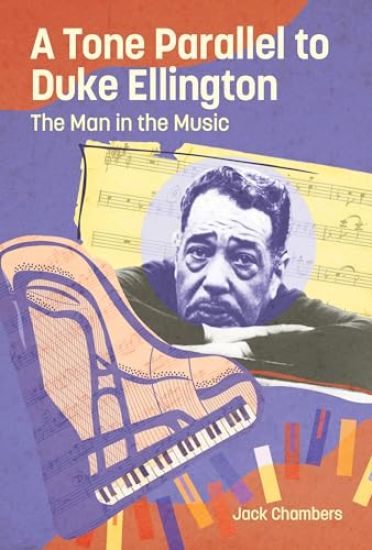
In this insightful new volume, Jack Chambers explores Edward Kennedy "Duke" Ellington’s music thematically, collating motifs, memes, and predilections that caught Ellington's attention and inspired his restless muse. In presenting Ellington’s work in this manner, Chambers situates the music in the context in which it was created—historical, political, musical, biographic, and personal. Chambers offers a novel kind of access to the man and the music. Ellington’s music presents a daunting task for listeners because of its sheer volume. The numbers defy credulity. Ellington wrote more than two thousand compositions in numerous genres, including pop songs, big band swing, revues, hymns, tone poems, soundtracks, suites, ballets, concertos, and symphonies. Where to start? The themes in this book offer natural entry points. They provide the context in which the music came into being, with enough biography to satisfy music lovers, even those who come to the book knowing very little about Ellington’s life. Each chapter features its own playlist as a guide to the music discussed, and, in some cases, fuller listings in case readers might want to pursue a topic further. In the early chapters, Chambers covers topics that occupied Ellington through much of his career, and in later chapters he covers more specific themes, some of them from Ellington's last decades, which are less well studied. The music, Ellington said, is his "continuing autobiography," and it reveals the man behind it.
In this insightful new volume, Jack Chambers explores Edward Kennedy "Duke" Ellington’s music thematically, collating motifs, memes, and predilections that caught Ellington's attention and inspired his restless muse. In presenting Ellington’s work in this manner, Chambers situates the music in the context in which it was created—historical, political, musical, biographic, and personal. Chambers offers a novel kind of access to the man and the music. Ellington’s music presents a daunting task for listeners because of its sheer volume. The numbers defy credulity. Ellington wrote more than two thousand compositions in numerous genres, including pop songs, big band swing, revues, hymns, tone poems, soundtracks, suites, ballets, concertos, and symphonies. Where to start? The themes in this book offer natural entry points. They provide the context in which the music came into being, with enough biography to satisfy music lovers, even those who come to the book knowing very little about Ellington’s life. Each chapter features its own playlist as a guide to the music discussed, and, in some cases, fuller listings in case readers might want to pursue a topic further. In the early chapters, Chambers covers topics that occupied Ellington through much of his career, and in later chapters he covers more specific themes, some of them from Ellington's last decades, which are less well studied. The music, Ellington said, is his "continuing autobiography," and it reveals the man behind it.

The Tone Masters: A Musical Series for Young People
Charles P. Barnard
Literary Licensing, LLC
2014
nidottu

Prince, Pink Floyd, Metallica, Toto, James Taylor, Keith Richards—these stars and thousands of others all owe a debt of gratitude to Rob Turner who revolutionized the electric guitar and bass.Chasing Tone tells Rob Turner’s story from humble beginnings rewiring his father’s transistor radio components to founding EMG and, finally, to the world’s largest concert stages. Jim Reilly provides a wealth of fascinating insights by weaving together many exclusive interviews with top artists and colleagues, including James Hetfield, Kirk Hammett, and Robert Trujillo of Metallica; legendary session musician Leland Sklar; Vernon Reid of Living Colour; Victor Wooten; Béla Fleck; Nili Brosh; Jim Root of Slipknot; and guitar builders Mike McGuire and John Carruthers. Along the way, Reilly not only sheds light on the history of the electric guitar and bass and how EMG pickups forever altered their course but also explores the elusive relationship between builder and creator, showing how these artists found their sound.This book takes a deep dive into the creative process while providing a history of popular music told from a side of the stage previously underexplored.