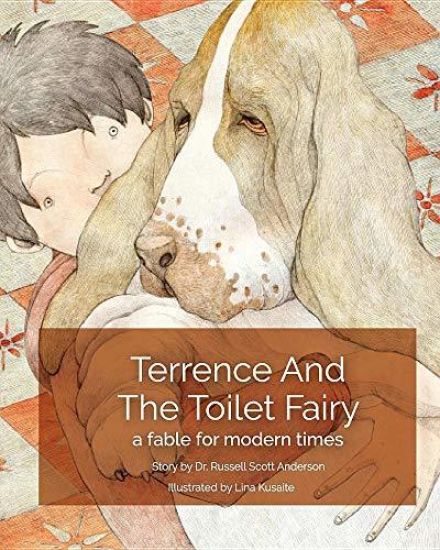
America is more politically divided than it has been at any time since the civil war, and each side is, by any standard of behavior which we teach our children, behaving badly. The problem is, our children are watching. This book is written as a fable for modern America to offer some explanation to our children, and possibly a lesson to our parents, media, and politicians on what's wrong with how we're all behaving. We're sending our children mixed messages about what constitutes appropriate social behavior. Is bullying permissible? Is it admirable? Is it okay to misrepresent the facts if it suits our own political objectives? Unfortunately, the answer to all of these questions is no. And that is what our children have been taught their whole lives, but it is not what they are seeing on their televisions or on the streets of our country today. This results in stress, distrust, and confusion on their parts. That's what Terrence and the Toilet Fairy tries to address. Terrence is an unfortunate third grader whose mother has died and is facing his first summer without her, he is also being tormented by a bellicose neighborhood bully, C.B. who aims to make his life miserable. Terrence asks his father (a plumber) to tell him a story before bed one night and his father relays to him the story of the Toilet Fairies and how they came to be. Terrence becomes obsessed with capturing a toilet fairy, and does, he captures Veb, a not very brave, not very magical fairy who has a bad tendency to make matters worse, but who is also a pacifist at heart. Terrence (with the help of Veb) and C. B. swap offensives each getting progressively more dangerous and violent, until in the final conflict Veb refuses to participate and Terrence carries out his ultimate plan for revenge that ends up with both himself and C.B. in a dangerous and individually inescapable trap. They are forced to cooperate to survive. Terrence and the Toilet Fairy was originally a screenplay written by Jackson Anderson, Kevin Ivey, and Russell Scott Anderson, it was written several years ago and envisioned Jack Black in the role of the Toilet Fairy, It made it to Black's Black & White Productions, but was unable to meet the funding level that they required for participation as the banking crisis intervened and the hedge funds that had committed to the project disappeared. So it sat. In the wake of our country's most recent election cycle Anderson saw it as a story that applied to America now more than ever. He set about converting the screenplay into a novella, and in the process created a new American folklore.
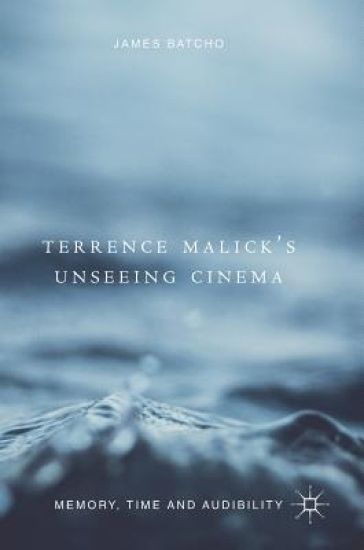
This unique study opens up a new dimension of Terrence Malick’s cinema – its expressions of unseeing and hearing. ‘Unseeing’ is Malick’s means of transcending the moment in order to enter the life that unfolds; to treat cinema as a real experience for those who live its reality. In this way, Terrence Malick’s Unseeing Cinema moves beyond film theory to advance a work of original philosophy, bringing together two thinkers not normally associated with one another: Gilles Deleuze and Søren Kierkegaard. It investigates how Malick’s gatherings of time allow one to explore new philosophical questions about immanence and transcendence, ethics and faith, time and infinity, and the foldings of subjectivity that are central to both philosophers. Beyond cinema, it offers a way to think about our everyday repetitions and recollections and our ephemeral points of connection with those we love.
This unique study opens up a new dimension of Terrence Malick’s cinema – its expressions of unseeing and hearing. ‘Unseeing’ is Malick’s means of transcending the moment in order to enter the life that unfolds; to treat cinema as a real experience for those who live its reality. In this way, Terrence Malick’s Unseeing Cinema moves beyond film theory to advance a work of original philosophy, bringing together two thinkers not normally associated with one another: Gilles Deleuze and Søren Kierkegaard. It investigates how Malick’s gatherings of time allow one to explore new philosophical questions about immanence and transcendence, ethics and faith, time and infinity, and the foldings of subjectivity that are central to both philosophers. Beyond cinema, it offers a way to think about our everyday repetitions and recollections and our ephemeral points of connection with those we love.
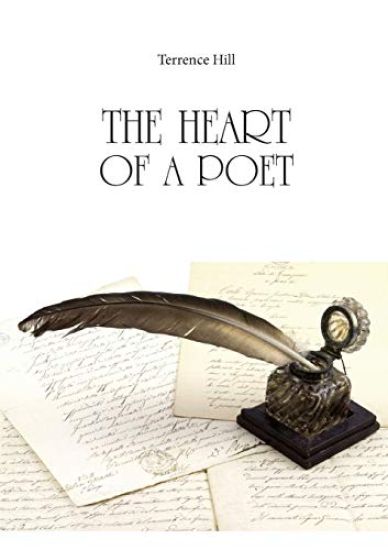
""THE HEART OF A POET"" un libro letterario di novelle, commedie teatrali, poesie e poemi. Queste storie letterarie sono il pianto di San Paolo sentito attraverso i secoli, da ogni popolo e civilt della terra, per un senso di giustizia e compassione nelle nostre vite quotidiane. ""THE HEART OF A POET"" anche un vecchio uomo che implora la pace con la speranza che la buona volont del genere umano ascolti questo pianto per la pace.
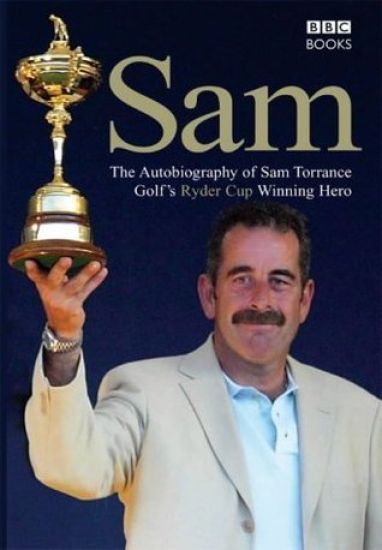
As a player, he is famous for his winning putt for Europe on the 18th green at the Belfry in 1985, which secured Europes first Ryder Cup victory for 28 years.
Could a work of revelation be justified as a viable theological project today, especially in light of some modern sceptics questioning its validity as a doctrinal discipline? Engaging with the work of theologians such as Karl Barth, Paul Tillich and Colin Gunton, Chung explores and justifies revelation and mediation in the theology of T.F.Torrance and argues that Torrance’s distinctiveness is able to contribute significantly to current debate and bring a fresh perspective to the theological landscape.
Could a work of revelation be justified as a viable theological project today, especially in light of some modern sceptics questioning its validity as a doctrinal discipline? Engaging with the work of theologians such as Karl Barth, Paul Tillich and Colin Gunton, Chung explores and justifies revelation and mediation in the theology of T.F.Torrance and argues that Torrance’s distinctiveness is able to contribute significantly to current debate and bring a fresh perspective to the theological landscape.
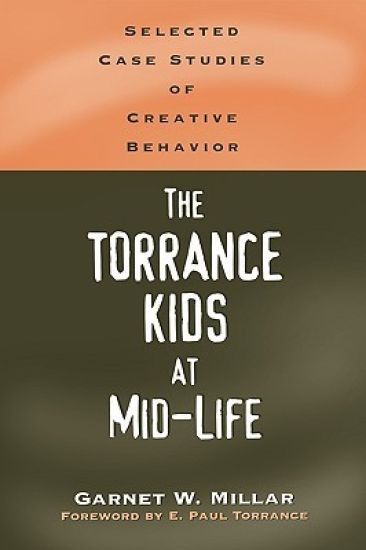
Never has there been a longitudinal study of creativity of this magnitude. This book describes the original sample of students from two Minneapolis schools in 1958 and the longitudinal study envisioned by Dr. E. Paul Torrance, then director of the Bureau of Educational Research at the University of Minnesota. It explains two follow-up periods with the students in 1980 and 1998, with the view of measuring their adult creative achievements. The author in collaboration with Dr. Torrance has selected a sample of ten individuals, for case studies who serve to illustrate the predictive validity of the Torrance Tests of Creative Thinking and the factors that support and sustain creativity as individuals mature. The case studies describe the individuals' school years, the first and second follow-up periods and an in-depth interview covering topics such as early influences on creativity, career paths and transitions, creative accomplishments, validation of the Manifesto for Children, and reflections on creativity. The study will be of great interest to psychologists, college and university teachers, counselors, educators and parents. Themes are derived from an examination of the case studies, and key messages for creative living are proposed.
Despite overwhelming acclaim for his work, director Terrence Malick remains an under-examined figure of an era of filmmaking that also produced such notables as Robert Altman, Francis Ford Coppola, and Martin Scorsese. His films Badlands and Days of Heaven remain benchmarks of American cinema, while his recent The Thin Red Line returned him to the pantheon of American directors. In this new study, authors James Morrison and Thomas Schur examine each of his films in detail, drawing on extensive archival research to construct a portrait of his working methods as a director as well as the thematic, aesthetic, and cultural components of his work. Moreover, aside from tracing the development of Malick's filmmaking from its beginnings to the present, the book compares his finished pictures to their original shooting scripts, and so provides a unique means of exploring the nature of his working methods and the ways in which they influence the final products. Revealing the ways in which these films connect to and depart from evolving traditions of the last 30 years, The Films of Terrence Malick provides a comprehensive and penetrating study as well as an informative and adventurous work of film criticism.