Kirjojen hintavertailu. Mukana 11 627 220 kirjaa ja 12 kauppaa.

Kirjahaku

Etsi kirjoja tekijän nimen, kirjan nimen tai ISBN:n perusteella.

1000 tulosta hakusanalla Trista Laborn

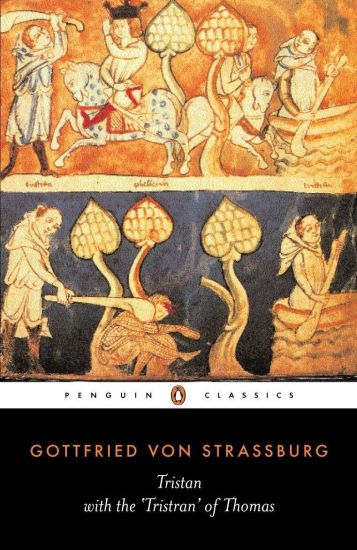
Tristan with the 'Tristran' of Thomas

Tristan with the 'Tristran' of Thomas

Gottfried von Strassburg

Penguin Classics
1974
pokkari
One of the great romances of the Middle Ages, Tristan, written in the early thirteenth century, is based on a medieval love story of grand passion and deceit. By slaying a dragon, the young prince Tristan wins the beautiful Isolde's hand in marriage for his uncle, King Mark. On their journey back to Mark's court, however, the pair mistakenly drink a love-potion intended for the king and his young bride, and are instantly possessed with an all-consuming love for each another - a love they are compelled to conceal by a series of subterfuges that culminates in tragedy. Von Strassburg's work is acknowledged as the greatest rendering of this legend of medieval lovers, and went on to influence generations of writers and artists and inspire Richard Wagner's Tristan and Isolde.
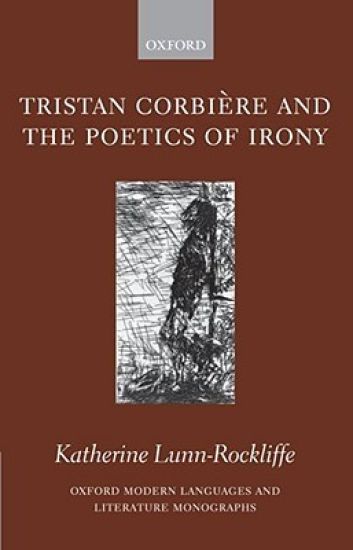
Tristan Corbière and the Poetics of Irony

Tristan Corbière and the Poetics of Irony

Katherine Lunn-Rockliffe

Oxford University Press
2006
sidottu
Tristan Corbière is often viewed as the archetypal poète maudit, a misunderstood rebel and bohemian prankster. This is a study of the poet's innovative use of language. It uses the critical tool of irony to analyse his idiosyncratic verse, showing how he contributed to the general revolution in poetic language that marked the 1870s in France. Corbière's poetry pushed the ironic element in Baudelaire to its limit and exerted an important influence on Laforgue, Pound, and Eliot. It played a key role in the ironic tradition of Symbolism which is often overshadowed by the 'pure' poetry of contemporaries like Mallarmé. Using close textual readings of poems from Les Amours jaunes (1873), the only collection published in Corbière's lifetime, this book outlines a method of reading his self-contradictory verse. It tackles the difficulty of interpreting ironic discourse and demonstrates how irony operates in Les Amours jaunes at all levels from verbal device to world-view, showing how the doubts of modern man and the spiritual void of commodity culture shape the very language of his poetry. Synthesizing critical approaches from continental and Anglo-American traditions, it analyses his use of puns, oral diction, dialogue, quotation, and intertextuality. It shows how he systematically undercuts habitual strategies of reading, by importing novelistic techniques into verse to deride it from within, and by ironizing irony itself. This is an introduction to the work of a challenging poet and a study of the practice of reading French verse.
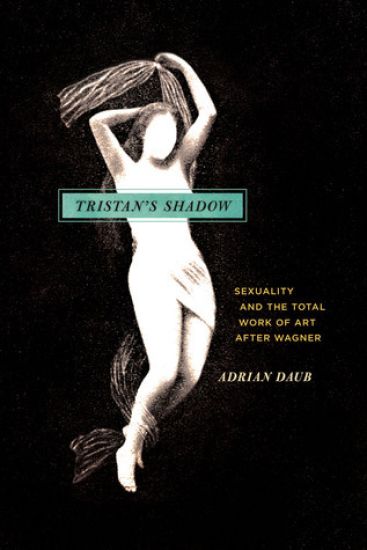
Tristan`s Shadow – Sexuality and the Total Work of Art after Wagner
Das Rheingold, Die Walkure, and Siegfried. Parsifal. Tristan und Isolde. Both revered and reviled, Richard Wagner conceived some of the nineteenth century's most important operatic productions - and created some of the most indelible characters ever to grace the stage. But over the course of his polarizing career, Wagner also composed nearly twenty volumes of writing on opera. His influential concept of Gesamtkunstwerk - the "total work of art" - famously and controversially offered a way to unify the different media of an opera into a coherent whole. Less well-known, however, are Wagner's strange theories on sexuality - like his ideas about erotic acoustics and the metaphysics of sexual difference. Drawing on the discourses of psychoanalysis, evolutionary biology, and other developing fields of study that informed Wagner's world, Adrian Daub traces the influence of Gesamtkunstwerk and eroticism from their classic expressions in Tristan und Isolde into the work of the generation of composers that followed, including Zemlinsky, d'Albert, Schreker, and Strauss. For decades after Wagner's death, Daub writes, these composers continued to grapple with his ideas and with his overwhelming legacy, trying in vain to write their way out from Tristan's shadow.
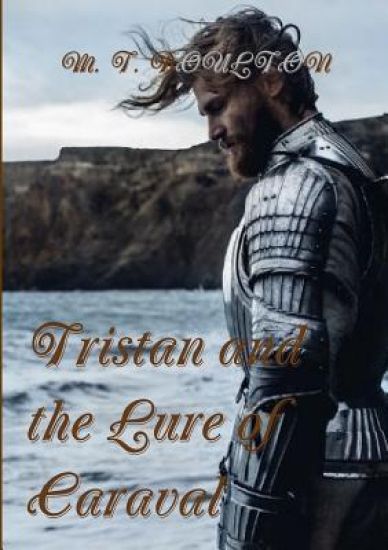
Tristan and the Lure of Caraval
Part of The Round Table Chronicles 'So, you are the one we call the Caraval. The Beautiful, ' an older, hoarse voice rang out in the Pict language, and even though she had never met him, Bedwyr knew immediately who it was. 'A woman warrior that drinks ale with kings and battles the fates.' There was a rustle and a shift, as more Woads appeared out of the brush, stepping closer to her, their dark eyes never wavering from their trapped prey. 'I however will call you little Morr gan. The Raven that follows Death.' Their bond was legendary, passed down from generation to generation until fact became fiction and the scholars failed to remember - failed to record - that long ago, Isolde went by a very different name to follow her king - and her hawk. Tristan and the Lure of Caraval
Tristan und Isolde on Record

Tristan und Isolde on Record

Jonathan Brown

Greenwood Press
2000
sidottu
This critical discography of Wagner's Tristan und Isolde opens with an introduction that illustrates the challenges the opera poses to performers. The discography lists all complete recordings, all major selections, and hundreds of individually recorded vocal and instrumental excerpts from 1901 to 1999. Information was researched in major public collections and libraries in France, the United Kingdom, and the United States. Pirate recordings and fictitious conductors are identified, and an extensive list of arrangements from the opera, ranging from piano to jazz ensemble, and a list of performances on video are included.This unique discography will appeal to Wagnerian scholars, opera fans, and record collectors. Of special interest is a listing of the timings of complete performances, including some early Bayreuth performances not on disc and more than 200 recordings of the Prelude and arrangements of the Liebestod.
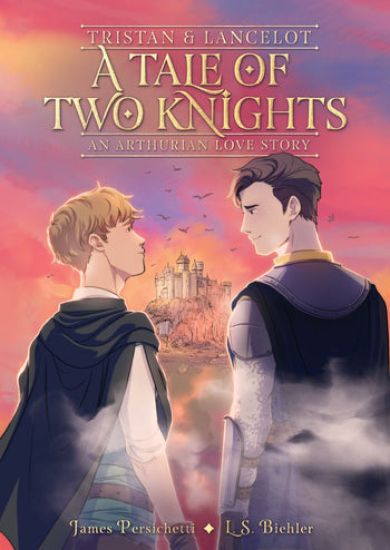
Tristan and Lancelot: A Tale of Two Knights

Tristan and Lancelot: A Tale of Two Knights

James Persichetti; L.S. Biehler

HARPERCOLLINS PUBLISHERS INC
2024
nidottu
In this queer reimagining of an Arthurian legend, Knights of the Round Table Lancelot and Tristan set out on a quest to find the missing magician Merlin but instead discover an unexpected romance perfect for fans of The Prince and the Dressmaker and Squire.When Merlin goes missing and Camelot falls under attack, King Arthur sends his estranged half-sister, Morgan le Fay, and esteemed Knights of the Round Table, Tristan and Lancelot, to find him. As the reluctant trio travels through Albion saving towns from treacherous foes and battling fae, their bonds deepen, and sparks fly between the two knights. Before they can sort through their complicated feelings, an unexpected dark force appears, bringing what just might be the end of Camelot. From debut author James Persichetti and new talent L.S. Biehler, Tristan and Lancelot: A Tale of Two Knights will sweep readers away with an epic quest and a love story for the ages.
Tristan and Lancelot: A Tale of Two Knights: A Graphic Novel

Tristan and Lancelot: A Tale of Two Knights: A Graphic Novel

James Persichetti; L. S. Biehler

Harperalley
2024
sidottu
In this queer reimagining of an Arthurian legend, Knights of the Round Table Lancelot and Tristan set out on a quest to find the missing magician Merlin but instead discover an unexpected romance perfect for fans of The Prince and the Dressmaker and Squire.When Merlin goes missing and Camelot falls under attack, King Arthur sends his estranged half-sister, Morgan le Fay, and esteemed Knights of the Round Table, Tristan and Lancelot, to find him. As the reluctant trio travels through Albion saving towns from treacherous foes and battling fae, their bonds deepen, and sparks fly between the two knights. Before they can sort through their complicated feelings, an unexpected dark force appears, bringing what just might be the end of Camelot. From debut author James Persichetti and new talent L.S. Biehler, Tristan and Lancelot: A Tale of Two Knights will sweep readers away with an epic quest and a love story for the ages.
Trisha's Kitchen

Trisha's Kitchen

Trisha Yearwood; Beth Yearwood Bernard; Garth Brooks

Houghton Mifflin Harcourt Publishing Company
2021
sidottu
125 comfort food recipes and family favorites that are simple to prepare and will bring loved ones together, plus fun family stories and photos, from country music star, Food Network star, and #1 best-selling author Trisha Yearwood Trisha Yearwood’s fans know that she can cook up a comforting, delicious meal that will feed a family! Like her earlier bestsellers, Trisha’s Kitchen will include new family favorites and easy-to-make comfort foods, with stories about her family and what’s really important in life. The 125 recipes include dishes her beloved mother used to make, plus new recipes like Pasta Pizza Snack Mix and Garth's Teriyaki Bowl. Every recipe tells a story, whether it's her grandma's Million Dollar Cupcakes, or her Camo Cake that she made for her nephew's birthday. As Trisha says: "I love to cook now more than I ever have, because for me, cooking is about love. It's sharing a meal with family and friends and talking about our lives. It's working out thoughts in my head about what I need to conquer or accomplish while I'm working on a homemade pastry crust. Sometimes the feel of cold butter in my hands working through the flour just makes me see things more clearly."
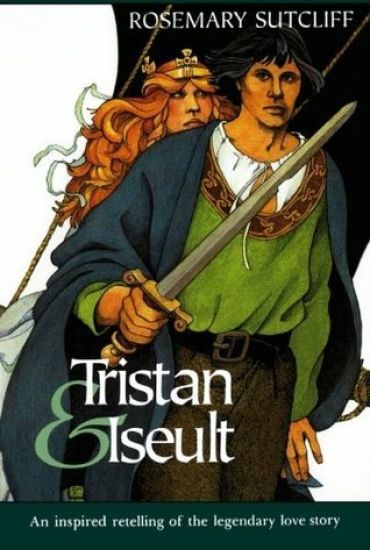
Tristan and Iseult

Tristan and Iseult

Rosemary Sutcliff

Farrar, Straus and Giroux (Byr)
1991
nidottu
Tristan defeats Ireland's greatest warrior and gains the friendship of his uncle, the King of Cornwall, who entrusts him with a very special mission: to sail the seas in search of a queen.
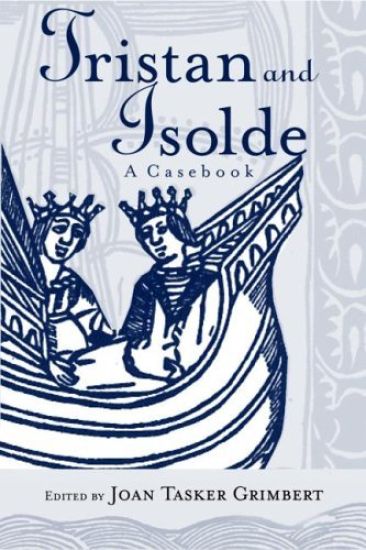
Tristan and Isolde
A substantial introduction traces the Tristan and Isolde legend from the twelfth century to the present, emphasizing literary versions, but also surveying the legend's sources and its appearance in the visual arts, music and film. The nineteen essays are a mix of new, new English, revised, and 'classic'. It contains an extensive bibliography.
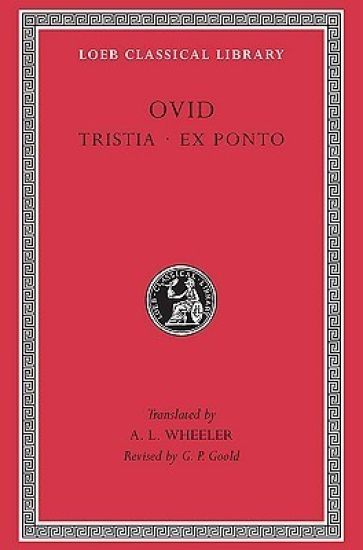
Tristia. Ex Ponto
The poet in exile.Ovid (Publius Ovidius Naso, 43 BC–AD 17), born at Sulmo, studied rhetoric and law at Rome. Later he did considerable public service there, and otherwise devoted himself to poetry and to society. Famous at first, he offended the emperor Augustus by his Ars amatoria, and was banished because of this work and some other reason unknown to us, and dwelt in the cold and primitive town of Tomis on the Black Sea. He continued writing poetry, a kindly man, leading a temperate life. He died in exile. Ovid’s main surviving works are the Metamorphoses, a source of inspiration to artists and poets including Chaucer and Shakespeare; the Fasti, a poetic treatment of the Roman year of which Ovid finished only half; the Amores, love poems; the Ars amatoria, not moral but clever and in parts beautiful; Heroides, fictitious love letters by legendary women to absent husbands; and the dismal works written in exile: the Tristia, appeals to persons including his wife and also the emperor; and similar Epistulae ex Ponto. Poetry came naturally to Ovid, who at his best is lively, graphic and lucid. The Loeb Classical Library edition of Ovid is in six volumes.