
Kirjahaku
Etsi kirjoja tekijän nimen, kirjan nimen tai ISBN:n perusteella.
1000 tulosta hakusanalla Vivek Sachdeva
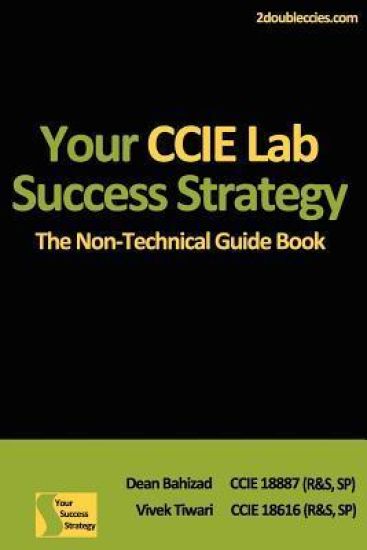
Your CCIE Lab Success Strategy: The Non-Technical Guidebook
Vivek Tiwari; Dean Bahizad
Createspace Independent Publishing Platform
2012
nidottu
Your CCIE lab Success strategy (preview at www.2doubleccies.com) is a unique guidebook which has been written by two double CCIEs, and deals with the non-technical aspects of CCIE Lab exam. In addition it answers the following questions: - Where and how do I start preparing for my CCIE Lab? - How much time do I need to prepare for CCIE Lab exam? - What are the dos and don'ts for the CCIE Lab? - When do I know I am ready to take my CCIE lab? - How do I study efficiently for the CCIE lab exam? - How much time should I devote daily and on weekends for studying? - What do I need to do Three months, Three weeks and the day before the lab? - What do I need to do the day after the lab (in case I don't pass)? This first of its kind guidebook is a result of filtering and crystallizing all of the ideas and strategies that we collected from talking with a large number of CCIEs. In this guidebook we: - Share our stories and stories of many successful CCIEs with you. - Offer the knowledge that we have gained throughout our CCIE journey two times. - Cover over 30 topics and issues that we have faced and that you will likely be facing. - Will walk you through every step of the journey. - Give you multiple timelines for engineers with different skill sets. - Tell you the right frame of mind that you will need to pass your CCIE lab. This book is written in a very relaxing casual conversational format in which, we present to you the strategies that we used and then give our own personal example as "what we did." Each chapter is about 3 to 4 short pages right to the point with clear and precise answers to your questions. Please visit our website www.2doubleccies.com for Videos and more.
Microsoft Windows 7: A Complete How-To Guide
Vivek Nayyar
Createspace Independent Publishing Platform
2012
nidottu
Microsoft Windows 7: A Complete How-To Guide (Color Edition)
Vivek Nayyar
Createspace Independent Publishing Platform
2012
nidottu
The Verilog hardware description language (HDL) provides the ability to describe digital and analog systems. This ability spans the range from descriptions that express conceptual and architectural design to detailed descriptions of implementations in gates and transistors. Verilog was developed originally at Gateway Design Automation Corporation during the mid-eighties. Tools to verify designs expressed in Verilog were implemented at the same time and marketed. Now Verilog is an open standard of IEEE with the number 1364. Verilog HDL is now used universally for digital designs in ASIC, FPGA, microprocessor, DSP and many other kinds of design-centers and is supported by most of the EDA companies. The research and education that is conducted in many universities is also using Verilog. This book introduces the Verilog hardware description language and describes it in a comprehensive manner. Verilog HDL was originally developed and specified with the intent of use with a simulator. Semantics of the language had not been fully described until now. In this book, each feature of the language is described using semantic introduction, syntax and examples. Chapter 4 leads to the full semantics of the language by providing definitions of terms, and explaining data structures and algorithms. The book is written with the approach that Verilog is not only a simulation or synthesis language, or a formal method of describing design, but a complete language addressing all of these aspects. This book covers many aspects of Verilog HDL that are essential parts of any design process.
Managing Microsoft Windows 7 through Group Policies: A Pocket Guide for Administrators
Vivek Nayyar
Createspace Independent Publishing Platform
2012
nidottu
Managing Microsoft Windows 7 through Group Policies: A Pocket Guide for Administrators (Color Edition)
Vivek Nayyar
Createspace Independent Publishing Platform
2012
nidottu
Write Better Stories and Essays: Topics and Techniques to Improve Writing Skills for Students in Grades 6 - 8: Common Core State Standards Aligned
Vivek M. Krishnaswamy; George Smith
Createspace Independent Publishing Platform
2012
nidottu
Mr. George Smith, a children's book author, has been conductingwriting workshops at schools since 2004.Write Better Stories and Essays is his writing workshop published in the form of a workbook. It is designed to help students in middle school improve their writing skills. Key Benefits Explore different writing techniques Recognize common mistakes in writing Master creative techniques to improve writing Expand ideas into full length stories or essaysKey Topics CoveredFour Ways to Expand a Story Idea into a Story Creative Techniques for Using Words and Paragraphs Identifying Illogical or Incomplete Content, Inconsistent Voice (active or passive), Inconsistent Verb Tense (present and past) and Incorrect grammar Expressing the Emotions of a Character: Show, Don't Tell Using the Personification Technique Using the Flashback and Story Within a Story Techniques Using the Circular d104 Technique Using the Five Senses Using the Persuasion Technique The Role of the Setting in a Story Presenting and Supporting Theories Techniques in Action: Stories and Essays Written by Middle School Students Detailed Answers Common Core State Standards Correlation Grading Rubrics Online Resources (QuillPad.org)ObjectivesThe workbook has three objectives: The first objective of these workbook exercises is to give student authors practice in writing techniques that meet the standards for writing and language included in the Common Core State Standards Initiative (CCSSI). The second objective of these workbook exercises is to provide tools in the form of techniques that middle school student authors in grades 6 through 8 can use to improve the content of their narrative, persuasive, expository and descriptive writing. The third objective of this program is to create a platform for students to easily publish their writing online and get feedback from peers and educators. Writing is a skill that requires practice and mentoring. Children can become good writers through guided practice and constructive feedback. Please visit QuillPad.org to create an account and start publishing your stories and essays More than 11,000+ Schools, 21,000+ Teachers, and 160,000+ Students use Lumos Learning Study Programs to improve student achievement.
MathAIM Problem-Solving Workbook Grades 4-6 (Logic) Volume 1
Vivek Menon; Rohit Pasumarthi; Harin Avvari
Createspace Independent Publishing Platform
2012
nidottu
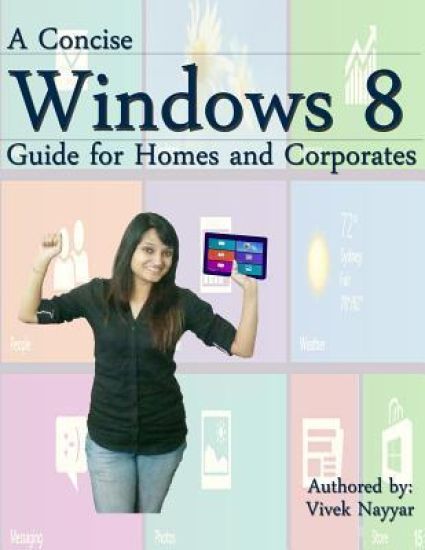
A Concise Windows 8 Guide: For Homes and Corporates
Vivek Nayyar
Createspace Independent Publishing Platform
2012
nidottu
'A Concise Windows 8 Guide for Homes and Corporates' is a screenshots enriched 'Must-Have' guide book especially written for Home Users. This book makes Windows 8 quite easy to use and operate even for entirely new users. Each topic in the book contains a detailed corresponding screenshot, and description in simple language that would help readers understand the new Windows 8 both practically and conceptually, hence making it easier for them to troubleshoot errors, not only of Windows 8 but also of Windows Vista and Windows 7. Moreover, this book can also play a role of beginners guide for novice Desktop Engineers, new Systems Administrators, IT Scholars, and all others who are currently using or are planning to use Windows 8 operating system on any Windows 8 supported device.

Computational Modeling of Pulverized Coal Fired Boilers
Vivek V. Ranade; Devkumar F. Gupta
Apple Academic Press Inc.
2014
sidottu
Harness State-of-the-Art Computational Modeling Tools Computational Modeling of Pulverized Coal Fired Boilers successfully establishes the use of computational modeling as an effective means to simulate and enhance boiler performance. This text factors in how computational flow models can provide a framework for developing a greater understanding of the underlying processes in PC boilers. It also provides a detailed account of the methodology of computational modeling of pulverized coal boilers, as well as an apt approach to modeling complex processes occurring in PC boilers in a manageable way.Connects Modeling with Real-Life ApplicationsRestricted to the combustion side of the boiler (the authors assume some prior background of reaction engineering and numerical techniques), the book describes the individual aspects of combustion and heat recovery sections of PC boilers that can be used to further improve the design methodologies, optimize boiler performance, and solve practical boiler-related problems. The book provides guidelines on implementing the material in commercial CFD solvers, summarizes key points, and presents relevant case studies. It can also be used to model larger boilers based on conventional, super-critical, or ultra-super critical technologies as well as based on oxy-fuel technologies.Consisting of six chapters, this functional text:Provides a general introductionExplains the overall approach and methodologyExplores kinetics of coal pyrolysis (devolatilization) and combustion and methods of its evaluationPresents computational flow modeling approach to simulate pulverized coal fired boiler Covers modeling aspects from formulation of model equations to simulation methodologyDetermines typical results obtained with computational flow modelsDiscusses the phenomenological models or reactor network modelsIncludes practical applications of computational modelingComputational Modeling of Pulverized Coal Fired Boilers explores the potential of computational models for better engineering of pulverized coal boilers, providing an ideal resource for practicing engineers working in utility industries. It also benefits boiler design companies, industrial consultants, R & D laboratories, and engineering scientists/research students.
Guide to Cloud Computing for Business and Technology Managers
Vivek Kale
Apple Academic Press Inc.
2014
sidottu
Guide to Cloud Computing for Business and Technology Managers: From Distributed Computing to Cloudware Applications unravels the mystery of cloud computing and explains how it can transform the operating contexts of business enterprises. It provides a clear understanding of what cloud computing really means, what it can do, and when it is practical to use. Addressing the primary management and operation concerns of cloudware, including performance, measurement, monitoring, and security, this pragmatic book:Introduces the enterprise applications integration (EAI) solutions that were a first step toward enabling an integrated enterpriseDetails service-oriented architecture (SOA) and related technologies that paved the road for cloudware applicationsCovers delivery models like IaaS, PaaS, and SaaS, and deployment models like public, private, and hybrid cloudsDescribes Amazon, Google, and Microsoft cloudware solutions and services, as well as those of several other playersDemonstrates how cloud computing can reduce costs, achieve business flexibility, and sharpen strategic focusUnlike customary discussions of cloud computing, Guide to Cloud Computing for Business and Technology Managers: From Distributed Computing to Cloudware Applications emphasizes the key differentiator—that cloud computing is able to treat enterprise-level services not merely as discrete stand-alone services, but as Internet-locatable, composable, and repackageable building blocks for generating dynamic real-world enterprise business processes.
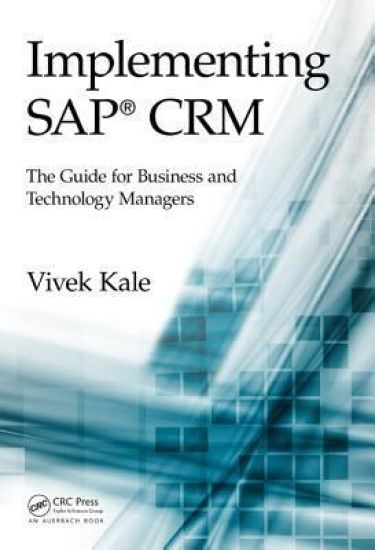
In today's competitive business environment, most companies realize that the better they can manage their customer relationships, the more successful they will become. Customer Relationship Management (CRM) software systems are key tools for companies to manage the customer-facing processes of their businesses. However, many companies have resisted implementing this most critical customer-oriented application due in large part to the lack of a single-point resource on implementing a CRM system. This book attempts to fill that gap.Implementing SAP® CRM will help technologists and managers come to grips with the vision, concept, and technology of CRM. It begins by laying out the groundwork for understanding CRM. It explains the concept and context of CRM and the tangible business benefits of CRM adoption. Demonstrating a professional approach to the evaluation and selection of SAP, it details the critical success factors (CSFs), patterns, and anti-patterns of a successful SAP CRM implementation.CRM implementations can add significant benefit to the company’s bottom line only if the company first transforms itself into a customer-centric and customer-responsive enterprise. This book explains what it means to be a customer-centric and responsive enterprise, and provides a framework for business operations based on customer relationships, rather than the traditional four Ps (product, positioning, price, promotion). It further spells out business process reengineering (BPR) strategies to configure internal business processes and operations with SAP CRM to improve customer-facing strategies, services, and relationships.



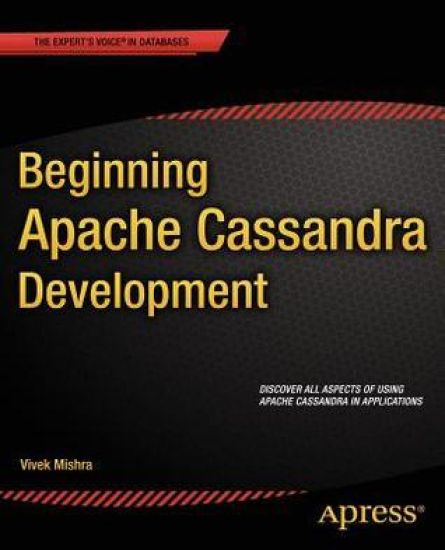
Beginning Apache Cassandra Development introduces you to one of the most robust and best-performing NoSQL database platforms on the planet. Apache Cassandra is a document database following the JSON document model. It is specifically designed to manage large amounts of data across many commodity servers without there being any single point of failure. This design approach makes Apache Cassandra a robust and easy-to-implement platform when high availability is needed.Apache Cassandra can be used by developers in Java, PHP, Python, and JavaScript—the primary and most commonly used languages. In Beginning Apache Cassandra Development, author and Cassandra expert Vivek Mishra takes you through using Apache Cassandra from each of these primary languages. Mishra also covers the Cassandra Query Language (CQL), the Apache Cassandra analog to SQL. You'll learn to develop applications sourcing data from Cassandra, query that data, and deliver it at speed to your application's users.Cassandra is one of the leading NoSQL databases, meaning you get unparalleled throughput and performance without the sort of processing overhead that comes with traditional proprietary databases. Beginning Apache Cassandra Development will therefore help you create applications that generate search results quickly, stand up to high levels of demand, scale as your user base grows, ensure operational simplicity, and—not least—provide delightful user experiences.
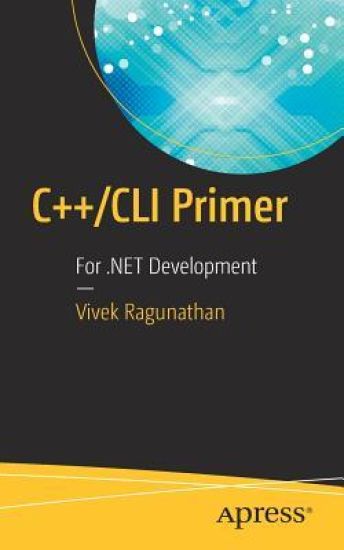
Enter a world of hardcore back-end, server-side enterprise programming on the .NET platform. This book presents some of the important aspects of the C++/CLI language that often become a barrier preventing programmers from exploring further. The C++/CLI Primer is a powerful but compact book that will guide you through that barrier. Many of today's complex transactions and enterprise applications count on C++/CLI. Visual Studio 2015 and earlier versions support C++/CLI if you program using an IDE. C++/CLI is unattractive, clumsy, and hard when compared to other modern languages that run on the .NET platform. That's because it is powerful. Like light that can be viewed as a wave or particle, C++/CLI can be exercised as an unmanaged or managed or actually as the sandwich language to do mixed mode programming, which is its real power. That's also why it is unique.What You'll LearnDiscover C++/CLIand why is it used in .NET programmingWork with types, primitive types, object creation, and managed and abstract classesUse abstract classes in C++/CLIHarness the power of nullptreImplement code that uses boxing/unboxingUse equality/identity, properties, enums, strings, arrays, and moreWho This Book Is ForExperienced Microsoft .NET application developers, familiar with .NET framework and C++.