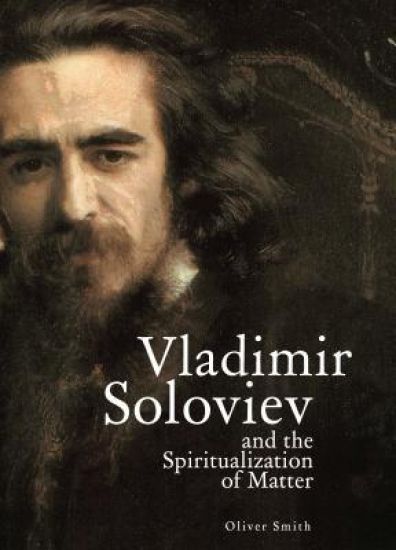
Widely acknowledged as the most important Russian thinker of the nineteenth century, Vladimir Soloviev's place in the landscape of world philosophy nevertheless remains uncertain. Approaching him through a single synoptic lens, this book foregrounds his unique envisioning of the interaction between humanity and the material world. By investigating the development of a single theme in his work - his idea of the 'spiritualisation of matter', the 'task' of humanity - Smith constructs a rounded picture of Soloviev's overall importance to an understanding of nineteenth-century thought, as well as to modern theology and philosophy. The picture that emerges is of a writer whose contribution to a Christian philosophy of matter resonates with many of the religious debates of modernity.
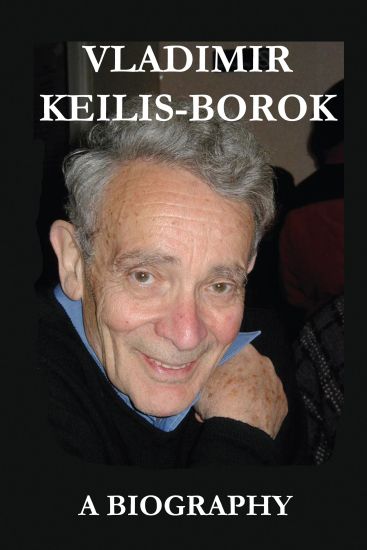
V. I. Keilis-Borok (1921-2013) is the founder of computational seismology and the pioneer of advance predictions of critical events in complex systems, including earthquakes, presidential elections, economic recessions, surges of unemployment, and crime waves. Among his successful advance earthquake predictions are Irpinia earthquake in Italy (1980), Loma Prieta earthquake in California (1989), Chile earthquake of 2010, Japan earthquake of 2011, and many others. V. I. Keilis-Borok developed new paradigms in the study of structure and dynamics of solid Earth. His trademark style involved exceptional organizational talent and insight that enabled him to make seemingly impossible connections between different fields of research and different groups of experts, often breaking the barriers between high theory, numerical modeling, and data analysis. His outstanding achievements are recognized by memberships in many academies and international scientific organizations, including National Academy of Sciences of the USA, Pontifical Academy of Sciences, Academia Europea, Royal Astronomical Society, and others, as well as through awards and honors, and by the respect and devotion he inspired in his friends and colleagues. This book contains his brief biography and reflections by his family, friends, and colleagues-a tribute to this truly remarkable man. Proceeds from this book will support the effort in promoting and publicizing V.I. Keilis-Borok's work.
One beautiful fall morning, a little kitty was loaded up into a car without any explanation whatsoever. He has always been well behaved and he was a good kitty. The owner drove for a little while and then the car stopped and the little kitty was set outside onto a sidewalk onto a deserted street. What happens to the little kitty? Who does he meet? Does he get any new friends? Read on and find out for yourself
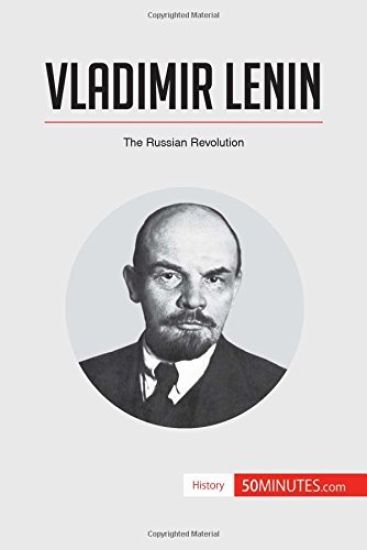
*Includes pictures of Lenin, Stalin, Trotsky and important people, places, and events in their lives. *Explains each man's role in the Revolution and its aftermath. *Discusses the conspiracy theories surrounding Stalin's death and how Stalin came to power against Lenin's wishes. *Includes a bibliography for further reading. Among the leaders of the 20th century, arguably none shaped the course of history as much as Vladimir Lenin (1870-1942), the Communist revolutionary and political theorist who led the Bolshevik Revolution that established the Soviet Union. In addition to shaping the Marxist-Leninist political thought that steered Soviet ideology, he was the first Soviet premier until his death and set the Soviet Union on its way to becoming one of the world's two superpowers for most of the century, in addition to being the West's Cold War adversary. As it turned out, the creation of the Soviet Union came near the end of Lenin's life, as he worked so hard that he had burned himself out by his 50s, dying in 1924 after a series of strokes had completely debilitated him. Near the end of his life, he expressly stated that the regime's power should not be put in the hands of the current General Secretary of the Communist Party, Joseph Stalin. Of course, Stalin managed to do just that, modernizing the Soviet Union at a breakneck pace on the backs of millions of poor laborers and prisoners. If Adolf Hitler had not inflicted the devastation of World War II upon Europe, it's quite likely that the West would consider Joseph Stalin (1878-1953) the 20th century's greatest tyrant. Before World War II, Stalin consolidated his position by frequently purging party leaders (most famously Leon Trotsky) and Red Army leaders, executing hundreds of thousands of people at the least. In one of history's greatest textbook examples of the idea that the enemy of my enemy is my friend, Stalin's Soviet Union allied with Britain and the United States to defeat Hitler in Europe, with the worst of the war's carnage coming on the eastern front during Germany's invasion of Russia. Nevertheless, the victory in World War II established the Soviet Union as of the world's two superpowers for nearly 50 years, in addition to being the West's Cold War adversary. Along with Vladimir Lenin, Trotsky led the October Bolshevik Revolution of 1917 and held crucial posts in the early Soviet governments, but after Lenin's death Trotsky was exiled, persecuted and finally murdered at the behest of his arch-rival, Joseph Stalin. For the final decade of his life, Trotsky was a man trapped in between two worlds. A communist seeking refuge in the capitalist West, Trotsky was deemed a secret agent of the capitalist powers by Stalin's propaganda, but the Soviet Union's enemies also viewed him with suspicion. In the initial aftermath of Lenin's death, Trotsky had been his ally's heir apparent, and for those inclined to believe the Soviet experiment had started promisingly but gone astray, Trotsky became the embodiment of the betrayed promise of the early Bolshevik revolution. There were certain ironies in this widespread sympathetic interpretation of Trotsky's legacy. For the Marxists and Marxist sympathizers appalled by Stalin's paranoid police state, Gulag concentration camps, and strict suppression of dissent, Trotsky was viewed as a humane and cosmopolitan opposite to Stalin. But Trotsky himself had overseen and spearheaded campaigns of persecution against Russians suspected of "counterrevolutionary" leanings, and he had written a long tract defending these "terroristic" measures as necessary safeguards of the revolution. The Soviet Union's Big Three explores the lives and legacies of Lenin, Trotsky and Stalin before the Bolshevik Revolution, as well as the crucial roles they played in establishing the Soviet Union and turning it into a modern superpower.
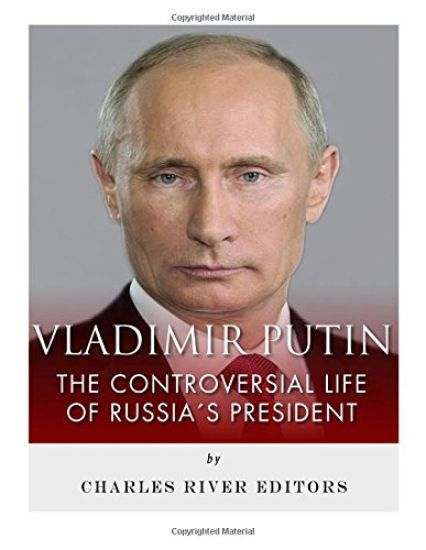
*Includes pictures. *Includes footnotes and a bibliography for further reading. "There is no such thing as a former KGB man." - Vladimir Putin Despite serving as the President of Russia from 2000 to 2008 following Boris Yeltsin's regime, and again since the spring of 2012, remarkably little is known of enigmatic former KGB spy Vladimir Putin, other than the most mainstream life statistics and some minimally revealing fragments of memoirs and anecdotal observations. Putin has served as Russia's Prime Minister as well, in a calculated political tango with Dmitri Medvedev for the purpose of overcoming term limits for the Russian presidency, thereby allowing him to remain a dominant politician well into the 21st century. Putin rose to power in 1999, when Boris Yeltsin dismissed his entire cabinet and fourth Prime Minister in seventeen months, Sergy Stapashin. Fearing that he might be prosecuted once out of office, the exhausted outgoing president drew upon the most loyal resource he had by bringing Lieutenant-Colonel Putin, a former Soviet intelligence agent, out of the remnants of the KGB and into the new intelligence network, the Federal Security Service, before offering him leadership of the Kremlin. When Yeltsin needed it most, "Putin pulled out all the stops...bullying the parliament with a threatening speech, and using an embarrassing video tape to discredit the Russian Prosecutor-General." Thus, at 47 years of age, Putin became the youngest head-of-state in Russia during modern times, even though he had never held public office in his life. On the face of his administrations, Russia has enjoyed both an economic resurgence and the return of a confident national identity following the break-up of the Soviet Union. Others cite his "systematic efforts to dismantle the country's democracy and independent media." Masha Gessen, an author, historian and journalist living in Russia, speaks openly of Vladimir Gushinsky's arrest, a removal of the most powerful figure in the country's private media. She speaks as well of suspicious murders, such as that of Anna Politkovskaya, who wrote significant pieces on the crisis in Chechnya, a sensitive subject to Putin's Kremlin. With many years spent as a covert figure in the KGB, Putin, to this day, remains a silent tactician who represents the perfect poker face to the outside world, or as one historian put it, "a professional non-descript." It is unknown to what degree he grieves for the dismantled Soviet system, but he has been described as "a clever and ruthless political operator with a hunger for Russian power, and not much concern for the niceties of democracy or diplomacy." In recent years, Putin has startled those from within and without through carefully prepared actions. In the first administration, he reformed the regional system, making it possible for governors to be fired by the president. Those he dismissed were replaced with officers from the old KGB. In a real sense, Russia is still guided by the former agency, at the top and mid-level. During Putin's early presidency, the KGB led an "aggressive redistribution of assets...re-nationalization of Yukos, once the world's largest private oil company," control of railroads, and state corporations (Rosneft, the state oil company, and Rosoboronexport, state defense technology exporter). In daily life, it is said that the simplest transactions have become problematic in present-day Russia - "from getting a driver's license to getting a license for importing anything...is unpredictable and humiliating. You're taken for bribes, contracts are broken, there is violence and] businesses are taken away." Whatever the realities of Vladimir Vladimriovich Putin's inner mind, foreign journalists who have covered him for years agree that he can be analyzed by "deduction, more than first-hand observation."
This volume 6 of the Collected Works comprises 27 papers by V.I.Arnold, one of the most outstanding mathematicians of all times, written in 1991 to 1995. During this period Arnold's interests covered Vassiliev’s theory of invariants and knots, invariants and bifurcations of plane curves, combinatorics of Bernoulli, Euler and Springer numbers, geometry of wave fronts, the Berry phase and quantum Hall effect. The articles include a list of problems in dynamical systems, a discussion of the problem of (in)solvability of equations, papers on symplectic geometry of caustics and contact geometry of wave fronts, comments on problems of A.D.Sakharov, as well as a rather unusual paper on projective topology. The interested reader will certainly enjoy Arnold’s 1994 paper on mathematical problems in physics with the opening by-now famous phrase “Mathematics is the name for those domains of theoretical physics that are temporarily unfashionable.” The book will be of interest to the wide audience from college students to professionals in mathematics or physics and in the history of science. The volume also includes translations of two interviews given by Arnold to the French and Spanish media. One can see how worried he was about the fate of Russian and world mathematics and science in general.
This volume 6 of the Collected Works comprises 27 papers by V.I.Arnold, one of the most outstanding mathematicians of all times, written in 1991 to 1995. During this period Arnold's interests covered Vassiliev’s theory of invariants and knots, invariants and bifurcations of plane curves, combinatorics of Bernoulli, Euler and Springer numbers, geometry of wave fronts, the Berry phase and quantum Hall effect. The articles include a list of problems in dynamical systems, a discussion of the problem of (in)solvability of equations, papers on symplectic geometry of caustics and contact geometry of wave fronts, comments on problems of A.D.Sakharov, as well as a rather unusual paper on projective topology. The interested reader will certainly enjoy Arnold’s 1994 paper on mathematical problems in physics with the opening by-now famous phrase “Mathematics is the name for those domains of theoretical physics that are temporarily unfashionable.” The book will be of interest to the wide audience from college students to professionals in mathematics or physics and in the history of science. The volume also includes translations of two interviews given by Arnold to the French and Spanish media. One can see how worried he was about the fate of Russian and world mathematics and science in general.
This volume 7 of the “Collected Works" includes papers written by V.I. Arnold, one of the most outstanding mathematicians of all times, during the period from 1996 to 1999. At that time Arnold was focusing on the description of various spaces of curves, higher-dimensional continued fractions, pseudoperiodic topology, and unifying ideas related to symplectization, complexification and mathematical trinities in topology and mathematics in general. The “Arnoldfest" conference celebrating 60th anniversary of V.Arnold took place at the Fields Institute and University of Toronto, Canada, in 1997, and Arnold's lectures at that conference are included in this volume. In the 1990s Arnold got increasingly concerned with the decay of science and math education in many Western countries, and his publications fighting “the victorious march of the antiscientific revolution" (as he phrased it in one of his papers) are collected in this volume as well. Some of Arnold's writings stimulated others to write supplements with more detail, and the volume also includes the notes of A.M.Vershik, J.K.Moser, and B.A.Khesin. Finally, a glimpse of Arnold's personality can also be appreciated in a little gem, his short article devoted to resolving the mystery of the origin of the epigraph to “Eugene Onegin" by A.S. Pushkin, a famous XIXth century Russian poet. The book will be of interest to the wide audience from college students to professionals in mathematics or physics and in the history of science. This volume completes the seven-volume project of “Collected Works of Vladimir Arnold", the first volume of which was published in 2009. Arnold's publications in the 2000s were also abundant, he turned to new topics, wrote several books, he gave numerous lectures, both research and educational. But what has already been published in these seven volumes is a treasure trove, an ocean of ideas, methods, and results, and this is now before the reader to explore. Happy voyage!
The work of Vladimír Dedecek (born 1929) is considered as a prime example of an independent socialist version of the Modern style. His main commissions were prestigious buildings designed and built between the 1960s and 1980s. The most important of these are still being used as originally intended. The monograph consists of three parts – it explains the method of research and the concept of the book; it analyzes and interprets four buildings as examples: the Boarding School in Modra (1972–1978), the Slovak National Archive (1972–1983), the Supreme Court (1977–1990), and the Slovak National Gallery (1967–1979) and informs about another thirteen key buildings forming the basis of possible interpretations and is followed by the list of works, the bibliography, and the biographical details.
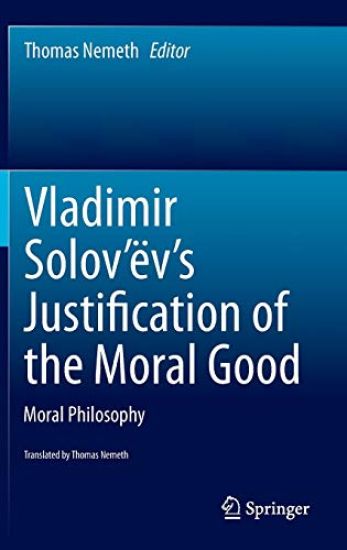
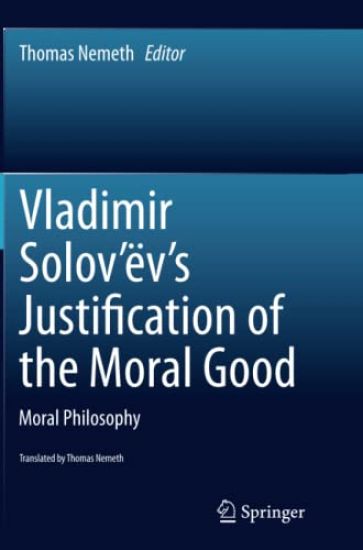
This new English translation of Solov’ëv’s principal ethical treatise, written in his later years, presents Solov’ëv’s mature views on a host of topics ranging from a critique of individualistic ethical systems to the death penalty, the meaning of war, animal rights, and environmentalism. Written for the educated public rather than for a narrow circle of specialists, Solov’ëv’s work largely avoids technical vocabulary while illustrating his points with references to classical literature from the ancient Greeks to Goethe. Although written from a deeply held Christian viewpoint, Solov’ëv emphasizes the turn from his earlier position, now allegedly developing the independence of moral philosophy from metaphysics and revealed religion. Solov’ëv sees the formal universality of the idea of the moral good in all human beings, albeit that this idea is bereft of material content. This first new English-language translation in a century makes a unique contribution to the study of Solov’ëv’s thought. It uses the text of the second edition published in 1899 as its main text, but provides the variations and additions from the earlier versions of each chapter in running notes. Other unique features of this translation are that the pagination of the widely available 1914 edition is provided in the text, and the sources of Solov’ëv’s numerous Biblical quotations and references as well as literary and historical allusions.
This new English translation of Solov’ëv’s principal ethical treatise, written in his later years, presents Solov’ëv’s mature views on a host of topics ranging from a critique of individualistic ethical systems to the death penalty, the meaning of war, animal rights, and environmentalism. Written for the educated public rather than for a narrow circle of specialists, Solov’ëv’s work largely avoids technical vocabulary while illustrating his points with references to classical literature from the ancient Greeks to Goethe. Although written from a deeply held Christian viewpoint, Solov’ëv emphasizes the turn from his earlier position, now allegedly developing the independence of moral philosophy from metaphysics and revealed religion. Solov’ëv sees the formal universality of the idea of the moral good in all human beings, albeit that this idea is bereft of material content. This first new English-language translation in a century makes a unique contribution to the study of Solov’ëv’s thought. It uses the text of the second edition published in 1899 as its main text, but provides the variations and additions from the earlier versions of each chapter in running notes. Other unique features of this translation are that the pagination of the widely available 1914 edition is provided in the text, and the sources of Solov’ëv’s numerous Biblical quotations and references as well as literary and historical allusions.
Vladimir, the Nihilist, or, the Czar's Spy - A story of Russia today is an unchanged, high-quality reprint of the original edition of 1881. Hansebooks is editor of the literature on different topic areas such as research and science, travel and expeditions, cooking and nutrition, medicine, and other genres. As a publisher we focus on the preservation of historical literature. Many works of historical writers and scientists are available today as antiques only. Hansebooks newly publishes these books and contributes to the preservation of literature which has become rare and historical knowledge for the future.