Kirjojen hintavertailu. Mukana 11 393 029 kirjaa ja 12 kauppaa.

Kirjahaku

Etsi kirjoja tekijän nimen, kirjan nimen tai ISBN:n perusteella.

1000 tulosta hakusanalla W. B. Patterson

W.E.B. Du Bois and the Problems of the Twenty-First Century
W. E. B. Du Bois and the Problems of the Twenty-First Century utilizes Du Bois's thought and texts to develop an informed critical theory of contemporary society. This book broadens the base of critical theory, making it more multicultural, transethnic, transgender, and non-Western European philosophy focused by placing it in dialogue with theory and phenomena that had been heretofore woefully neglected. Taking the preeminent black intellectual of the twentieth century as his primary point of departure, Reiland Rabaka identifies and analyzes several key contributions that Du Bois and the black racial tradition offer to those interested in redeveloping and racially revising contemporary critical social theory. With chapters on critical race theory, postcolonial theory, feminism, and Marxism, this volume builds bridges from Africana Studies to disparate discursive communities, accessibly demonstrating Du Bois's, and the black radical tradition's, contributions to, and the potential impact on, a wide-range of new social scientific research and radical political struggles.
W.E.B. Du Bois and the Problems of the Twenty-First Century
W. E. B. Du Bois and the Problems of the Twenty-First Century utilizes Du Bois's thought and texts to develop an informed critical theory of contemporary society. This book broadens the base of critical theory, making it more multicultural, transethnic, transgender, and non-Western European philosophy focused by placing it in dialogue with theory and phenomena that had been heretofore woefully neglected. Taking the preeminent black intellectual of the twentieth century as his primary point of departure, Reiland Rabaka identifies and analyzes several key contributions that Du Bois and the black racial tradition offer to those interested in redeveloping and racially revising contemporary critical social theory. With chapters on critical race theory, postcolonial theory, feminism, and Marxism, this volume builds bridges from Africana Studies to disparate discursive communities, accessibly demonstrating Du Bois's, and the black radical tradition's, contributions to, and the potential impact on, a wide-range of new social scientific research and radical political struggles.
W.E.B. Du Bois

W.E.B. Du Bois

Brian L. Johnson

Rowman Littlefield Publishers
2008
sidottu
Brian L. Johnson's remarkable biography of W.E.B. Du Bois describes the evolution of religious views from Du Bois's birth until his resignation as editor of Crisis magazine in 1934. W.E.B. Du Bois: Toward Agnosticism, 1868-1934 traces Du Bois's mounting skepticism through his earliest church experiences to his sociological training in Berlin culminating with his writings in Crisis magazine. Johnson argues that despite Du Bois's frequent use of Protestant religious rhetoric, the mature Du Bois was a critic of African American religious organizations and their leaders, and a scientifically oriented agnostic who did not adhere to any religious orthodoxy.
W.E.B. Du Bois

W.E.B. Du Bois

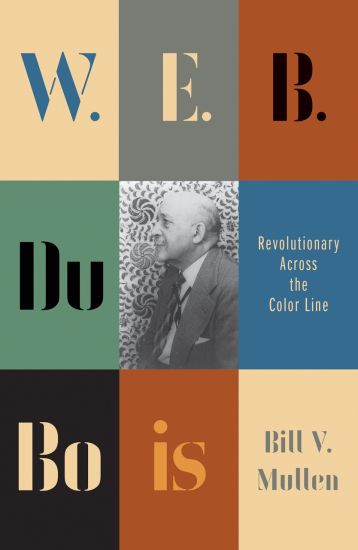
Bill V. Mullen

Pluto Press
2016
pokkari
On the 27th August, 1963, the day before Martin Luther King electrified the world from the steps of the Lincoln Memorial with the immortal words, 'I Have a Dream', the life of another giant of the Civil Rights movement quietly drew to a close in Accra, Ghana: W.E.B. DuBois. In this new biography, Bill V. Mullen interprets the seismic political developments of the Twentieth Century through Du Bois’s revolutionary life. Du Bois was born in Massachusetts in 1868, just three years after formal emancipation of America’s slaves. In his extraordinarily long and active political life, he would emerge as the first black man to earn a PhD from Harvard; surpass Booker T. Washington as the leading advocate for African American rights; co-found the NAACP, and involve himself in anti-imperialist and anti-colonial struggles across Asia and Africa. Beyond his Civil Rights work, Mullen also examines Du Bois's attitudes towards socialism, the USSR, China’s Communist Revolution, and the intersectional relationship between capitalism, poverty and racism. An accessible introduction to a towering figure of American Civil Rights, perfect for anyone wanting to engage with Du Bois’s life and work.
W.E.B. Du Bois

W.E.B. Du Bois

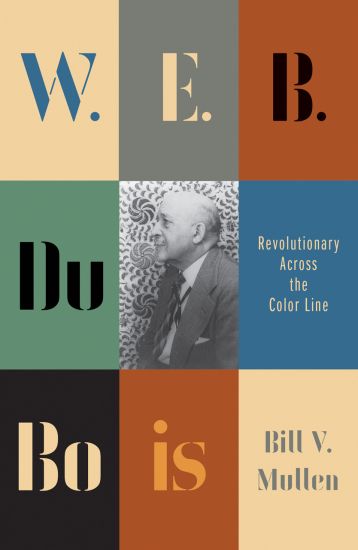
Bill V. Mullen

Pluto Press
2016
sidottu
On the 27th August, 1963, the day before Martin Luther King electrified the world from the steps of the Lincoln Memorial with the immortal words, 'I Have a Dream', the life of another giant of the Civil Rights movement quietly drew to a close in Accra, Ghana: W.E.B. DuBois. In this new biography, Bill V. Mullen interprets the seismic political developments of the Twentieth Century through Du Bois’s revolutionary life. Du Bois was born in Massachusetts in 1868, just three years after formal emancipation of America’s slaves. In his extraordinarily long and active political life, he would emerge as the first black man to earn a PhD from Harvard; surpass Booker T. Washington as the leading advocate for African American rights; co-found the NAACP, and involve himself in anti-imperialist and anti-colonial struggles across Asia and Africa. Beyond his Civil Rights work, Mullen also examines Du Bois's attitudes towards socialism, the USSR, China’s Communist Revolution, and the intersectional relationship between capitalism, poverty and racism. An accessible introduction to a towering figure of American Civil Rights, perfect for anyone wanting to engage with Du Bois’s life and work.
W.E.B. Du Bois on Crime and Justice

W.E.B. Du Bois on Crime and Justice

Shaun L. Gabbidon

Ashgate Publishing Limited
2007
sidottu
This is the first book to discern the contribution of Du Bois' work to criminology and criminal justice through a comprehensive review of his papers, articles and books. Beginning with reflections from his childhood, the author traces Du Bois' ideas on crime and justice throughout his life. This includes a unique analysis of Du Bois' experience as an object of the criminal justice system, a review of his FBI file, his 1951 trial and his pioneering social scientific research program at Atlanta University. The book illustrates the depth of Du Bois' interest in the field and reveals how he was a pioneer in key areas of criminology and criminal justice. The book contains five appendices which include four original papers written by Du Bois as well as maps from The Philadelphia Negro.
W.E.B. Du Bois

W.E.B. Du Bois

Ashgate Publishing Limited
2010
sidottu
Housed in one handy volume for the first time are several of the seminal essays on W.E.B. Du Bois's contributions to sociology and critical social theory: from Du Bois as inventor of sociology of race, to Du Bois as the first sociologist of American religion; from Du Bois as a pioneer of urban and rural sociology, to Du Bois as innovator of sociology of gender and culture; and, finally, from Du Bois as groundbreaking sociologist of education and critical criminologist, to Du Bois as dialectical critic of the disciplinary decadence of sociology and the American academy. What this volume offers that is wholly innovative and distinctive is that it brings together the watershed work of classical and contemporary, male and female, black and white, national and international sociologists and social theorists with the express intent of creating critical inventories and thoroughly interrogating what has been included, and what has been excluded, when we come to W.E.B. Du Bois's contributions to the discipline of sociology. Unlike any other anthologies on Du Bois, this volume offers an excellent overview of the critical commentary on arguably one of the most imaginative and innovative, perceptive and prolific founders of the discipline of sociology. It will therefore be of interest to scholars and students not just in sociology, but also Africana studies, American studies, cultural studies, ethnic studies, gender studies and postcolonial studies, as well as "traditional" disciplines, such as, history, philosophy, political science, economics, education, and religion.
W.B. Yeats

W.B. Yeats

A. Norman Jeffares

Continuum International Publishing Group Ltd.
2001
nidottu
This volume, a reissue of the 1990 edition of Jeffares's biography of Yeats, with a new introduction and bibliography, is an account of Yeats's life and work. It features a collection of previously unpublished letters, photographs and poetry.
W.E.B. Du Bois and Race

W.E.B. Du Bois and Race

Sarah Gardner; Chester J. Fontenot; Mary Alice Morgan

Mercer University Press
2001
sidottu
This collection of essays emerged from a symposium held at Mercer University which examined the ways in which W. E. B. DuBois's theories of race have shaped racial discussion and public policy in the twentieth-century. The essays also examine the application of Du Bois's theories to the new millennium, as well as his contributions to the study of the humanities.
W.B. Yeats

W.B. Yeats

Martin Heather C.

WILFRID LAURIER UNIVERSITY PRESS
1986
sidottu
W. B. Yeats spent a great deal of his life immersing himself in magical, mystical, and philosophic studies in order, as he claimed, to devise a personal system of thought "that would leave [his] ... imagination free to create as it chose and yet make all that it created, or could create, part of the one history, and that the soul's." He succeeded in developing a cohesive metaphysics, and one which is surprisingly original. While he set it down in a series of philosophical treatises culminating in A Vision, it is most clearly elaborated in his plays, which breathe life and meaning into the rather obscure statements of the treatises. In this book, the author traces "the history of the soul" as it is developed in Yeats's plays. She elucidates the underlying system of thought in the drama and establishes its importance to the aim and execution of the plays by drawing attention to a few of the central themes, metaphors, and symbols through which it is developed. The manuscript and the earliest published versions of the plays are indispensable to this study as they retain much of the abstract thought which Yeats eliminated from the later versions. Martin traces the development of the metaphors and images which gradually replaced Yeats's abstractions. In the process, she is able to uncover new meaning in the plays, as many subtle and obscure passages become clearly understandable.
W.E.B. Du Bois: Writings (LOA #34)

W.E.B. Du Bois: Writings (LOA #34)

Du Bois W. E. B.

The Library of America
1987
sidottu
Historian, sociologist, novelist, editor, and political activist, William Edward Burghardt Du Bois was the most gifted and influential black intellectual of his time. This Library of America volume presents his essential writings, covering the full span of a restless life dedicated to the struggle for racial justice.The Suppression of the African Slave-Trade to the United States 1638–1870 (1896), his first book, renders a dispassionate account of how, despite ethical and political opposition, Americans tolerated the traffic in human beings until a bloody civil war taught them the disastrous consequences of moral cowardice.The Souls of Black Folk (1903), a collection of beautifully written essays, narrates the cruelties of racism and celebrates the strength and pride of black America. By turns lyrical, historical, and autobiographical, Du Bois pays tribute to black music and religion, explores the remarkable history of the Reconstruction Freedman’s Bureau, assesses the career of Booker T. Washington, and remembers the death of his infant son.Dusk of Dawn (1940) was described by Du Bois as an attempt to elucidate the “race problem” in terms of his own experience. It describes his boyhood in western Massachusetts, his years at Fisk and Harvard universities, his study and travel abroad, his role in founding the NAACP and his long association with it, and his emerging Pan-African consciousness. He called this autobiography his response to an “environing world” that “guided, embittered, illuminated and enshrouded my life.”Du Bois’s influential essays and speeches span the period from 1890 to 1958. They record his evolving positions on the issues that dominated his long, active life: education in a segregated society; black history, art, literature, and culture; the controversial career of Marcus Garvey; the fate of black soldiers in the First World War; the appeal of communism to frustrated black Americans; his trial and acquittal during the McCarthy era; and the elusive promise of an African homeland.The editorials and articles from The Crisis (1910–1934) belong to the period of Du Bois’s greatest influence. During his editorship of the NAACP magazine that he founded, Du Bois wrote pieces on virtually every aspect of American political, cultural, and economic life. Witty and sardonic, angry and satiric, proud and mournful, these writings show Du Bois at his freshest and most trenchant.LIBRARY OF AMERICA is an independent nonprofit cultural organization founded in 1979 to preserve our nation’s literary heritage by publishing, and keeping permanently in print, America’s best and most significant writing. The Library of America series includes more than 300 volumes to date, authoritative editions that average 1,000 pages in length, feature cloth covers, sewn bindings, and ribbon markers, and are printed on premium acid-free paper that will last for centuries.
W.B. Yeats: His Poetry and Thought

W.B. Yeats: His Poetry and Thought

A. G. (Amy Geraldine) 1902-1988 Stock

Hassell Street Press
2021
sidottu
This work has been selected by scholars as being culturally important and is part of the knowledge base of civilization as we know it.This work is in the public domain in the United States of America, and possibly other nations. Within the United States, you may freely copy and distribute this work, as no entity (individual or corporate) has a copyright on the body of the work.Scholars believe, and we concur, that this work is important enough to be preserved, reproduced, and made generally available to the public. To ensure a quality reading experience, this work has been proofread and republished using a format that seamlessly blends the original graphical elements with text in an easy-to-read typeface.We appreciate your support of the preservation process, and thank you for being an important part of keeping this knowledge alive and relevant.
W.E.B. Du Bois on Crime and Justice

W.E.B. Du Bois on Crime and Justice

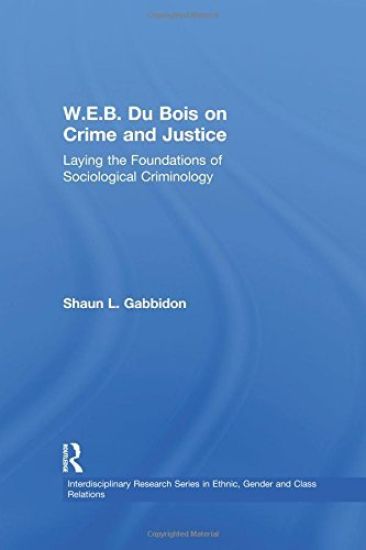
Shaun L. Gabbidon

Routledge
2017
nidottu
This is the first book to discern the contribution of Du Bois' work to criminology and criminal justice through a comprehensive review of his papers, articles and books. Beginning with reflections from his childhood, the author traces Du Bois' ideas on crime and justice throughout his life. This includes a unique analysis of Du Bois' experience as an object of the criminal justice system, a review of his FBI file, his 1951 trial and his pioneering social scientific research program at Atlanta University. The book illustrates the depth of Du Bois' interest in the field and reveals how he was a pioneer in key areas of criminology and criminal justice. The book contains five appendices which include four original papers written by Du Bois as well as maps from The Philadelphia Negro.
W.B. Yeats, Ezra Pound, and the Poetry of Paradise
Emphasizing the interplay of aesthetic forms and religious modes, Sean Pryor's ambitious study takes up the endlessly reiterated longing for paradise that features throughout the works of W. B. Yeats and Ezra Pound. Yeats and Pound define poetry in terms of paradise and paradise in terms of poetry, Pryor suggests, and these complex interconnections fundamentally shape the development of their art. Even as he maps the shared influences and intellectual interests of Yeats and Pound, and highlights those moments when their poetic theories converge, Pryor's discussion of their poems' profound formal and conceptual differences uncovers the distinctive ways each writer imagines the divine, the good, the beautiful, or the satisfaction of desire. Throughout his study, Pryor argues that Yeats and Pound reconceive the quest for paradise as a quest for a new kind of poetry, a journey that Pryor traces by analysing unpublished manuscript drafts and newly published drafts that have received little attention. For Yeats and Pound, the journey towards a paradisal poetic becomes a never-ending quest, at once self-defeating and self-fulfilling - a formulation that has implications not only for the work of these two poets but for the study of modernist literature.