

Kirjahaku
Etsi kirjoja tekijän nimen, kirjan nimen tai ISBN:n perusteella.
1000 tulosta hakusanalla W. Hall-patch
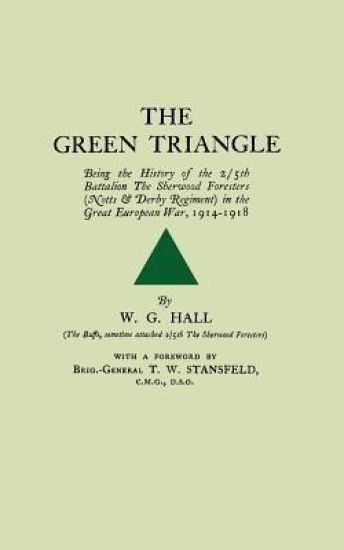
Battalion history of the 2/5 Territorial Sherwood Foresters in the Great War. Includes the Easter Rising in Dublin, 1916 the Somme, Passchendaele, Bullecourti and Mt Kemmel.

The Boundary Element Method is a simple, efficient and cost effective computational technique which provides numerical solutions - for objects of any shap- for a wide range of scientific and engineering problems. In dealing with the development of the mathematics of the Boundary Element Method the aim has been at every stage, only to present new material when sufficient experience and practice of simpler material has been gained. Since the usual background of many readers will be of differential equations, the connection of differential equations with integral equations is explained in Chapter 1, together with analytical and numerical methods of solution. This information on integral equations provides a base for the work of subsequent chapters. The mathematical formulation of boundary integral equations for potential problems - derived from the more familiar Laplace partial differential equation which governs many important physical problems - is set out in Chapter 2. It should be noted here that this initial formulation of the boundary integral equations reduces the dimensionality of the problem. In the key Chapter 3, the essentials of the Boundary Element Method are presented. This first presentation of the Boundary Element Method is in its simplest and most approachable form - two dimensional, with the shape of the boundary approximated by straight lines and the functions approximated by constants over each of the straight lines.
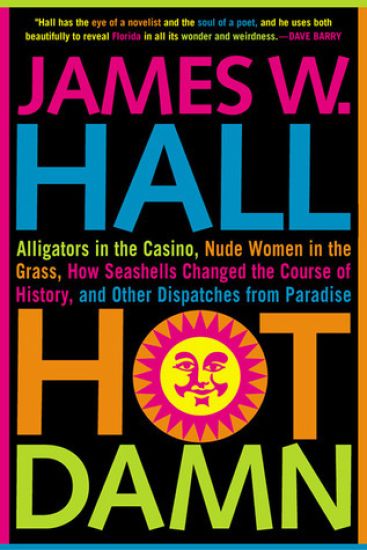
Hot Damn!: Alligators in the Casino, Nude Women in the Grass, How Seashells Changed the Course of History, and Other Dispatches from Paradise
James W. Hall
St. Martin's Griffin
2003
nidottu
James W. Hall is the critically acclaimed author of eleven crime novels, including Body Language and Blackwater Sound. He's also published four books of poetry. And several of his short stories have appeared in magazines like the Georgia Review and Kenyon Review. Now, writing in the spirit of Dave Barry and Garrison Keillor, Hall wins a new kind of reader with this collection of essays that run from insightful to opinionated, funny to wise. Hall ponders subjects as diverse as his own love affair with Florida which began on a trip after college from which he never returned, to his equally passionate romance with books. He ponders the nature of summer heat, the writing of Hemingway and James Dickey, television, teaching, politics, fatherhood and much more. In the vibrant and elegant prose which characterize his fiction and poetry, Hall now proves himself a master of the essay as well.
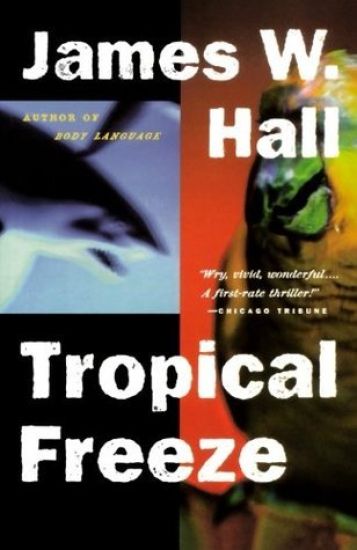
In an exotic blue-water locale where greed and criminality thrive, the mysterious disappearance of Thorn's boyhood friend Gaeton Richards, an FBI agent, entangles Thorn in a web of violence and intrigue that takes him from seamy local bars to glittering ocean villas. Then, when Gaeton's beautiful sister becomes Thorn's lover, he finds himself facing a jealous lunatic stalking her, a rogue government agent involved in a murderous scam, and an unforgettable underworld of petty crooks, amoral hired guns, and dangerous losers. "A terrific read with a gritty and tangible sense of place, a hero who's a cross between Davy Crockett and Philip Marlowe, and a lyrical, almost poetic touch in scenes both sexual and violent." — Orlando Sentinel "Provocative and suspenseful . . . a worthy and brilliant successor to Under Cover of Daylight." — Jackson, Mississippi, Clarion-Ledger "James Hall's writing is astringent, penetrating, and unfailingly gripping." — Dean Koontz "Menacing . . . brilliantly written!" — USA Today "James W. Hall's lyrical passion for the Florida keys, his spare language and unusual images haunt us long after the story has faded." — New York Times Book Review "Explosive . . . suspenseful . . . action galore." — Worcester Telegram & Gazette A selection of the Book-of-the-Month Club.
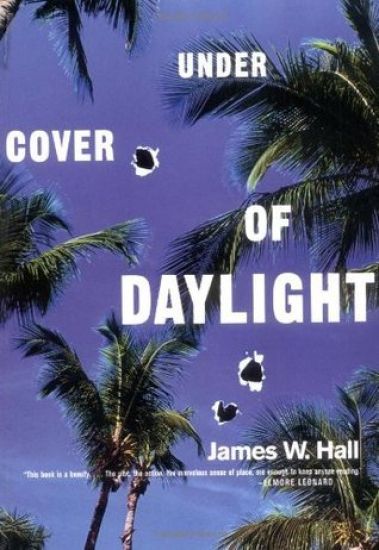
James W. Hall s haunting debut novel first introduced the rugged character Thorn and the breathtaking South Florida landscape where he lives. Thorn s past includes a savage act of revenge on the drunken hit-and-run killer of his parents. Now, fifteen years later, Thorn still cannot escape that moment, or the darkness he took into his soul that night. Not even his best friend, Sugarman, knows the truth. Not even Sarah Ryan knows the depths of her lover s pain. Then suddenly, the nightmare begins again as Thorn s foster mother is found slaughtered. Thorn can almost taste the rage as he stalks her killer and waits. "An exciting, well-crafted first novel that smoothly places complex, believable characters into an action-filled plot." Washington Post "It starts good and stays good, right to the end." Chicago Tribune"
First published in 2000. This is Volume IV of six in the Nineteenth and Twentieth Century Anglo-American Philosophy series and focuses on value with an essay in Philosophical Analysis.

First published in 2000. This is Volume IV of six in the Nineteenth and Twentieth Century Anglo-American Philosophy series and focuses on value with an essay in Philosophical Analysis.

FORENSIC BOTANY A PRACTICAL GUIDE Forensic Botany: A Practical Guide is an accessible introduction to the way in which botanical evidence is identified, collected and analysed in criminal cases. This form of evidence is becoming increasingly important in forensic investigation. This book is intended to show how useful simple collection methods and standard plant analysis can be in the course of such investigations. It is written in a clear and accessible manner to enhance the understanding of the subject for the non-specialist. Clearly structured throughout, this book combines well known collection techniques in a field oriented format that can be used for casework. Various methods that allow easy collection, transportation, and preservation of evidence are detailed throughout the book. This book is written for those who have no formal background working with plants. It can be used as a practical guide for students taking forensic science courses, law enforcement training, legal courses, and as a template for plant collection at any scene where plants occur and where rules or laws are involved. Veterinarians, various environmental agencies and anthropologists are examples of disciplines that are more recently in need of plant evidence. The format of the book is designed to present the reader with all the information needed to conduct a botanical analysis of a crime scene; to highlight the forensic significance of the botanical evidence that may be present; how to collect that evidence in the correct manner and preserve and store that evidence appropriately- also shows how to conduct a laboratory analysis of the plants. An accessible practical guide to the collection, analysis and presentation of botanical evidence within forensic investigation.Aimed at the non-specialist looking for an introduction to the field.Written in a clear and logical manner; what is it? Where can you find help? How can you use plant evidence? Why is this kind of plant important? Where to look for evidence; evidence collection made easy; evidence preservation; evidence transportation; chain of custody.Includes evidence collection data sheet and a laboratory analysis data sheet for use in the field.Includes key chapters on microscopy analysis of plant evidence and on DNA collection, use and relative costs.Numerous relevant case studies included to show forensic botany in practice and how to present botanical evidence in court.

FORENSIC BOTANY A PRACTICAL GUIDE Forensic Botany: A Practical Guide is an accessible introduction to the way in which botanical evidence is identified, collected and analysed in criminal cases. This form of evidence is becoming increasingly important in forensic investigation. This book is intended to show how useful simple collection methods and standard plant analysis can be in the course of such investigations. It is written in a clear and accessible manner to enhance the understanding of the subject for the non-specialist. Clearly structured throughout, this book combines well known collection techniques in a field oriented format that can be used for casework. Various methods that allow easy collection, transportation, and preservation of evidence are detailed throughout the book. This book is written for those who have no formal background working with plants. It can be used as a practical guide for students taking forensic science courses, law enforcement training, legal courses, and as a template for plant collection at any scene where plants occur and where rules or laws are involved. Veterinarians, various environmental agencies and anthropologists are examples of disciplines that are more recently in need of plant evidence. The format of the book is designed to present the reader with all the information needed to conduct a botanical analysis of a crime scene; to highlight the forensic significance of the botanical evidence that may be present; how to collect that evidence in the correct manner and preserve and store that evidence appropriately- also shows how to conduct a laboratory analysis of the plants. An accessible practical guide to the collection, analysis and presentation of botanical evidence within forensic investigation.Aimed at the non-specialist looking for an introduction to the field.Written in a clear and logical manner; what is it? Where can you find help? How can you use plant evidence? Why is this kind of plant important? Where to look for evidence; evidence collection made easy; evidence preservation; evidence transportation; chain of custody.Includes evidence collection data sheet and a laboratory analysis data sheet for use in the field.Includes key chapters on microscopy analysis of plant evidence and on DNA collection, use and relative costs.Numerous relevant case studies included to show forensic botany in practice and how to present botanical evidence in court.



Wildflowers of Florida and the Southeast
David W. Hall; William J. Weber
Tendai Educational Foundation, Incorporated, dba Hawaii Nikkei History Editorial Board
2011
sidottu
Wildflowers of Florida and the Southeast provides photographs and concise descriptions for many of the plants that occur in Florida and throughout the Gulf and Eastern Coastal Plains, particularly from North Carolina west into eastern Texas. This treatment contains descriptions and photographs of 768 plants. As an identification aid, the plants are arranged by flower color. The written description provides geographic ranges and habitats, season of flowering, type and shape of leaves, and many more details about each featured plant. Scientific names are listed along with the most frequently used common names known to the authors.
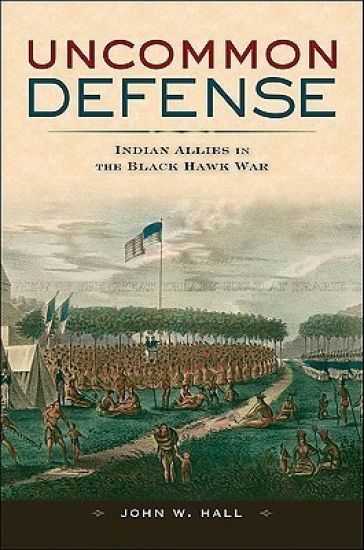
In the spring of 1832, when the Indian warrior Black Hawk and a thousand followers marched into Illinois to reoccupy lands earlier ceded to American settlers, the U.S. Army turned to rival tribes for military support. Elements of the Menominee, Dakota, Potawatomi, and Ho Chunk tribes willingly allied themselves with the United States government against their fellow Native Americans in an uncommon defense of their diverse interests. As the Black Hawk War came only two years after the passage of the Indian Removal Act and is widely viewed as a land grab by ravenous settlers, the military participation of these tribes seems bizarre. What explains this alliance?In order to grasp Indian motives, John Hall explores their alliances in earlier wars with colonial powers as well as in intertribal antagonisms and conflicts. In the crisis of 1832, Indians acted as they had traditionally, leveraging their relationship with a powerful ally to strike tribal enemies, fulfill important male warrior expectations, and pursue political advantage and material gain. However, times had changed and, although the Indians achieved short-term objectives, they helped create conditions that permanently changed their world.Providing a rare view of Indian attitudes and strategies in war and peace, Hall deepens our understanding of Native Americans and the complex roles they played in the nation’s history. More broadly, he demonstrates the risks and lessons of small wars that entail an “uncommon defense” by unlikely allies in pursuit of diverse, even conflicting, goals.

In this provocative study, David W. Hall argues that Calvinism had a greater influence on America's founders than contemporary scholars, and perhaps even the founders themselves, have understood. Calvinism's insistence that human rulers tend to err played a significant role in the founders' prescription of limited government and fed the distinctly American philosophy in which political freedom for citizens is held as the highest value. Hall's timely work countervails many scholars' doubt in the intellectual efficacy of religion by showing that religious teachings have led to such progressive ideals as American democracy and freedom.

In this provocative study, David W. Hall argues that Calvinism had a greater influence on America's founders than contemporary scholars, and perhaps even the founders themselves, have understood. Calvinism's insistence that human rulers tend to err played a significant role in the founders' prescription of limited government and fed the distinctly American philosophy in which political freedom for citizens is held as the highest value. Hall's timely work countervails many scholars' doubt in the intellectual efficacy of religion by showing that religious teachings have led to such progressive ideals as American democracy and freedom.
The first indepth examination of the architect of the Missouri CompromiseIn 1820 the Missouri controversy erupted over the issue of slavery in the newly acquired lands of the Louisiana Purchase. It fell to Jesse Burgess Thomas (1777–1853), a junior U.S. senator from the new state of Illinois, to handle the delicate negotiations that led to the Missouri Compromise. Thomas’s maturity, good judgment, and restraint helped pull the country back from the brink of disunion and created a compromise that held for thirtyfour years. In Dividing the Union, Matthew W. Hall examines the legal issues underlying the controversy and the legislative history of the Missouri Compromise while focusing on Thomas’s life and influence. As Hall demonstrates, Thomas was perfectly situated geographically, politically, and ideologically to deal with the Missouri controversy. The first speaker of the Indiana Territorial General Assembly and one of the first territorial judges in Illinois Territory, Thomas served in 1818 as the president of the Illinois State Constitutional Convention. That he was never required to clearly articulate his own views on slavery allowed Thomas to maintain a degree of neutrality, and, as Hall shows, his varied political career gave him the experience necessary to craft a compromise. Thomas’s final version of the Compromise included shrewdly worded ambiguities that supported opposing interests in the matter of slavery. By weaving Thomas’s life story into the history of the Missouri Compromise, Hall offers new insight into both a pivotal piece of legislation and an overlooked but important figure in nineteenthcentury American politics.