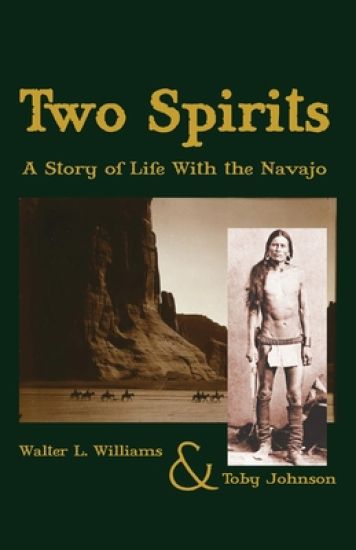
Set in the Civil War era of the 1860s, this novel tells the story of an innocent young Virginian who comes West by railroad to escape his domineering preacher-father and find adventure and a new life. He is duped into accepting the feckless job of Indian Agent at Fort Sumner in the New Mexico desert. There the Navajo were being imprisoned in an "experiment in Indian management" known as the Bosque Redondo Reservation. But the young hero is hardly the pawn his commanders intended him to be after he finds himself captivated by a crossdressing Two-Spirit male shaman, highly respected as spiritual leader and healer among the Din , as The People call themselves. Together the pair expose the real motives behind this "experiment" and help the Din escape imprisonment and return to their sacred homelands in the mountains. Anthropologist Walter L. Williams has teamed up with award-winning novelist and spiritual writer Toby Johnson to produce a work of historical fiction that presents the Native American philosophies, spiritualities, and gender wisdom which Williams documented in his groundbreaking The Spirit and The Flesh: Sexual Diversity in American Indian Culture. It was that book in 1986 that helped introduce the Two-Spirit tradition to modern readers. Williams' and Johnson's novel Two Spirits was winner of a prize for Historical Fiction from the Arch & Bruce Brown Foundation. This is a story, based on the real history of the Bosque Redondo, of tragedy, oppression, and discrimination, but it is also an enlightening tale of love, personal discovery, and natural beauty. Full of suspense, plot twists, and endearing romance, Two Spirits will captivate readers with its positive approach to life and love and its wonderful happy and satisfying ending. The novel is, at once, educational, entertaining, sexy, romantic, mystical, enlightened. Walter L Williams is author of the award-winning The Spirit and the Flesh and more than a dozen other books and novels. He has been professor of anthropology, history and gender studies at the University of Southern California, where he taught gay, lesbian, bisexual and transgender studies, and also American Indian Studies. He is past president of ONE Institute International Gay and Lesbian Archives.Toby Johnson is author of four non-fiction books that apply the wisdom of Joseph Campbell, his teacher and personal "wise old man," to modern-day social and religious problems, three gay genre novels that dramatize spiritual issues at the heart of gay consciousness, and two books on gay men's spiritualities, gay spirit, and the mystical experience of homosexuality.
A Magazine of Science Fiction and Fantasy ISSUE 50: May 2021 Lezli Robyn, Editor Martin Shoemaker, Assistant EditorTaylor Morris, CopyeditorShahid Mahmud, Publisher Stories by Mike Resnick, The Winner Twins, Todd McCaffrey, Laurie Tom, David Farland, Ian Cai Mercer, C. Stuart Hardwick, Jack McDevitt, Walter Jon Williams, Cheng Jingbo Serialization: Over the Wine Dark Sea by Harry Turtledove Columns by: Gregory Benford, L. Penelope Recommended Books: Richard Chwedyk Galaxy's Edge is a bi-monthly magazine published by Phoenix Pick, the science fiction and fantasy imprint of Arc Manor, an award winning independent press based in Maryland. Each issue of the magazine has a mix of new and old stories, a serialization of a novel, columns by L. Penelope and Gregory Benford, and book recommendations by Richard Chwydyk.
"Veterinary Obstetrics, Including the Diseases of Breeding Animals and of the New-born", by Walter Long Williams, is a comprehensive guide to the reproductive health and management of animals. Originally published in 1909, this classic text offers detailed insights into the obstetrical practices of the time, covering topics such as animal breeding, pregnancy, parturition, and the diseases affecting both breeding animals and their newborn offspring. This book provides invaluable information for veterinary students, practitioners, and animal husbandry enthusiasts seeking to understand the historical context of veterinary obstetrics and the enduring principles that continue to inform modern practices. Despite its age, the book offers a wealth of practical knowledge and detailed observations on the care and management of livestock during the critical periods of reproduction and early life. It remains a valuable resource for those interested in the history of veterinary medicine and the evolution of animal care practices. This work has been selected by scholars as being culturally important, and is part of the knowledge base of civilization as we know it. This work was reproduced from the original artifact, and remains as true to the original work as possible. Therefore, you will see the original copyright references, library stamps (as most of these works have been housed in our most important libraries around the world), and other notations in the work. This work is in the public domain in the United States of America, and possibly other nations. Within the United States, you may freely copy and distribute this work, as no entity (individual or corporate) has a copyright on the body of the work. As a reproduction of a historical artifact, this work may contain missing or blurred pages, poor pictures, errant marks, etc. Scholars believe, and we concur, that this work is important enough to be preserved, reproduced, and made generally available to the public. We appreciate your support of the preservation process, and thank you for being an important part of keeping this knowledge alive and relevant.
New biography of one of the key figures in British history focusing on both his writing and legacy. Sir Walter Raleigh is a figure writ large in popular imagination. Yet how can we understand this man who was soldier, voyager, visionary, courtier, politician, poet, historian, patriot and 'traitor'? We know some facts, and much can be learned from Raleigh's prose and poetry about his ideas, personality, feelings and values. Important new texts of his works have recently been published: we now possess reliable versions of his poems, his letters and his travel narratives. No biography of Raleigh, however, can be complete without an assessment of his posthumous reputation. Myths that accumulated around him tell us something about the man himself, but far more about the perceptions of his own and subsequent generations. Raleigh's talents as a writer ensured his positive legacy, but the appropriation of his legend for so many differing political uses has left us with a complex picture. In this original and important new biography Williams and Nicholls set this right.
Williams examines the efforts of public agencies to better incorporate citizen participation in the administrative process. He focuses on the effort of the Department of Energy to use citizen advisory boards composed of stakeholders—persons who stand to gain or lose from policy implementation—in its economic transition, waste management, and environmental restoration programs.The Department's efforts to deal with hazardous and toxic wastes stemming from uranium fuel for the U.S. nuclear weapons program are examined in detail. The case study shows that the stakeholder model was effective: the advisory board was expeditiously organized, reached consensus on critical issues, and accomplished its primary mission. The board's performance was such that the Clinton administration considered it a major example of how federal agencies could be reinvented to produce a government that works better and costs less. Of particular interest to policy makers and researchers involved with US environmental issues and public policy.
Java is the most populous island of Indonesia, the fifth largest nation in the world. Yet despite its importance, outsiders know little about the country or its people. With the help of Indonesian students and scholars, Walter L. Williams has collected and translated the life histories of twenty-seven Javanese women and men. The people interviewed tell how they have coped with rapid social and economic change, and the transformation of their traditions. Williams has carefully selected the individuals he includes to represent a wide diversity of Java's people. We hear from fascinating men and women of various religions, from the rich and the poor, and from different ethnic backgrounds. Diversity is a constant theme, as evidenced by a poor pedicab driver who can barely scrape along, by a rich businesswoman who explains how she balances her professional and domestic roles, by an educated and respected homosexual school principal, and by an illiterate mother of fourteen children. All of them present in their lives a unique Javanese approach to living. These oral histories were derived from elderly people, who have a larger perspective on the changes they have seen in their lifetimes. The focus of the first section of the book is the way people have adapted in their daily lives to massive social and economic changes. In the middle section, we hear from the Javanese who represent traditional values in the midst of change. Finally, we hear from educators and parents who tell us of their concerns for Indonesian youth and the future of Indonesia.
Walter E. Williams applies an economic analysis to the problems black Americans have faced in the past and still face in the present to show that that free-market resource allocation, as opposed to political allocation, is in the best interests of minorities. He debunks many common labor market myths and reveals how excessive government regulation and the minimum-wage law have imposed incalculable harm on the most disadvantaged members of our society.
Nationally syndicated columnist and prolific author Walter E. Williams recalls some of the highlights and turning points of his life. From his lower middle class beginnings in a mixed but predominantly black neighborhood in West Philadelphia to his department chair at George Mason University, Williams tells an “only in America” story of a life of achievement.
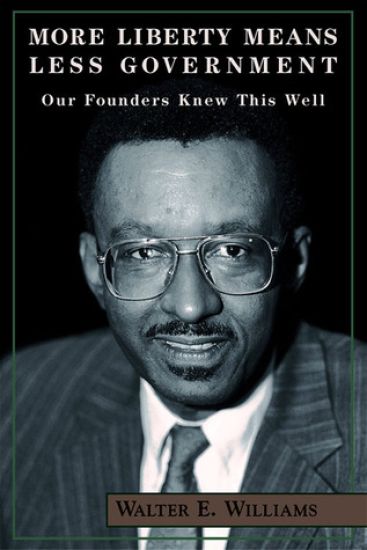
Throughout history, personal liberty, free markets, and peaceable, voluntary exchanges have been roundly denounced by tyrants and often greeted with suspicion by the general public. Unfortunately, Americans have increasingly accepted the tyrannical ideas of reduced private property rights and reduced rights to profits, and have become enamored with restrictions on personal liberty and control by government. In this latest collection of essays selected from his syndicated newspaper columns, Walter E. Williams takes on a range of controversial issues surrounding race, education, the environment, the Constitution, health care, foreign policy, and more. Skewering the self-righteous and self-important forces throughout society, he makes the case for what he calls the "the moral superiority of personal liberty and its main ingredient - limited government." With his usual straightforward insights and honesty, Williams reveals the loss of liberty in nearly every important aspect of our lives, the massive decline in our values, and the moral tragedy that has befallen Americans today: our belief that it is acceptable for the government to forcibly use one American to serve the purposes of another.
In this selected collection of his syndicated newspaper columns, Walter Williams offers his sometimes controversial views on education, health, the environment, government, law and society, race, and a range of other topics. Although many of these essays focus on the growth of government and our loss of liberty, many others demonstrate how the tools of freemarket economics can be used to improve our lives in ways ordinary people can understand.
Nationally syndicated columnist Walter E. Williams is chairmain of the economic department at George Mason University. This thought-provoking book contains nearly one hundred of William's most popular essays on race and sex, government, education, environment and health, law and society, international politics, and other controversial topics.
In this collection of thoughtful, hard-hitting essays, Walter E. Williams once again takes on the left wing's most sacred cows with provocative insights, brutal candor, and an uncompromising reverence for personal liberty and the principles laid out in our Declaration of Independence and Constitution. He challenges the assumptions of contemporary liberalism with ruthless honesty, presenting an impressive array of powerful ideas and substantive information to frame his perspectives on the issues facing America in such critical areas as race, sex, government, law, education, the environment, and international relations.
""Adventures With The Krus In West Africa"" is a book written by Walter B. Williams, which recounts his experiences and adventures while living among the Krus, an ethnic group in West Africa. The author describes his interactions with the Krus, their culture, customs, and beliefs. He also shares his observations of the natural environment, including the flora and fauna of the region. The book provides an insight into the daily lives of the Krus, their social structure, and their relationship with neighboring tribes. The author also includes anecdotes about his personal experiences, such as his encounters with dangerous animals and his attempts to learn the Krus' language. Overall, ""Adventures With The Krus In West Africa"" is a fascinating account of a journey through a little-known region, offering a unique perspective on the people and the land.This scarce antiquarian book is a facsimile reprint of the old original and may contain some imperfections such as library marks and notations. Because we believe this work is culturally important, we have made it available as part of our commitment for protecting, preserving, and promoting the world's literature in affordable, high quality, modern editions, that are true to their original work.
The Rich Heritage of Quakerism is a comprehensive book written by Walter R. Williams that delves into the history and beliefs of the Quaker religion. The Quaker faith, also known as the Religious Society of Friends, is a Christian denomination that originated in England in the 17th century. The book begins by exploring the origins of Quakerism and the life of its founder, George Fox. It then goes on to examine the core beliefs and practices of the Quaker faith, including the importance of silence, simplicity, and equality. Williams also discusses the role of Quakers in various social and political movements throughout history, such as the abolition of slavery and the women's suffrage movement. He also explores the Quaker approach to peace and conflict resolution, which has been influential in international relations.Throughout the book, Williams provides numerous examples and stories of Quaker individuals who have made significant contributions to society. He also includes a chapter on the current state of Quakerism and its challenges in the modern world.Overall, The Rich Heritage of Quakerism is an informative and engaging read for anyone interested in the history and beliefs of this unique religious tradition.This scarce antiquarian book is a facsimile reprint of the old original and may contain some imperfections such as library marks and notations. Because we believe this work is culturally important, we have made it available as part of our commitment for protecting, preserving, and promoting the world's literature in affordable, high quality, modern editions, that are true to their original work.