Kirjojen hintavertailu. Mukana 11 528 467 kirjaa ja 12 kauppaa.

Kirjahaku

Etsi kirjoja tekijän nimen, kirjan nimen tai ISBN:n perusteella.

1000 tulosta hakusanalla Wauter Mannaert

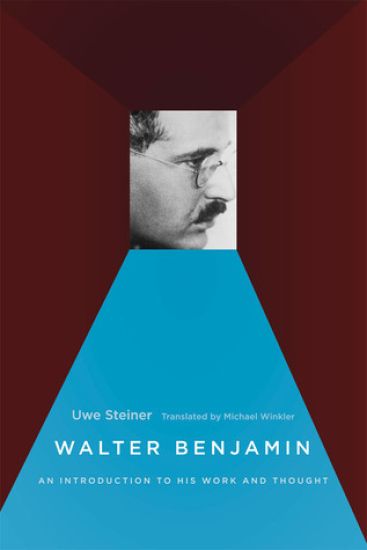
Walter Benjamin

Walter Benjamin

Uwe Steiner

University of Chicago Press
2012
nidottu
Seven decades after his death, German Jewish writer, philosopher, and literary critic Walter Benjamin (1892-1940) continues to fascinate readers and influence academic writing, both stylistically and conceptually. Here Uwe Steiner offers a comprehensive and sophisticated introduction to the oeuvre of this perpetually relevant theorist. Acknowledged only by a small circle of intellectuals during his lifetime, Benjamin is now a major figure whose work is essential to an understanding of modernity. Steiner traces the development of Benjamin's thought chronologically through his writings on philosophy, literature, history, politics, the media, art, photography, cinema, technology, and theology. "Walter Benjamin" reveals the essential coherence of its subject's thinking while also analyzing the controversial or puzzling facets of Benjamin's work. That coherence, Steiner contends, can best be appreciated by placing Benjamin in his proper context as a member of the German philosophical tradition and a participant in contemporary intellectual debates. As Benjamin's writing attracts more and more readers in the English-speaking world, "Walter Benjamin" will be a valuable guide to this fascinating body of work.
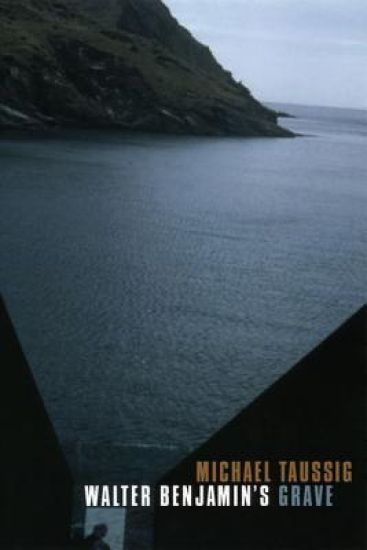
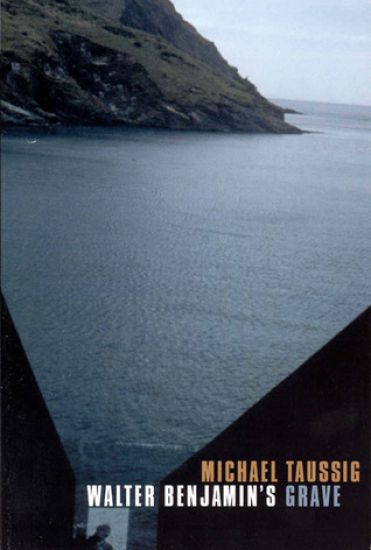
Walter Benjamin's Grave

Walter Benjamin's Grave

Michael Taussig

University of Chicago Press
2006
sidottu
In September 1940, Walter Benjamin committed suicide in Port Bou on the Spanish-French border when it appeared that he and his travelling partners would be denied passage into Spain in their attempt to escape the Nazis. In 2002, one of anthropology's - and indeed today's - most distinctive writers, Michael Taussig, visited Benjamin's grave in Port Bou. The result is "Walter Benjamin's Grave," a moving essay about the cemetery, eyewitness accounts of Benjamin's border travails, and the circumstances of his demise. It is the most recent of eight revelatory essays collected in this volume of the same name. "Looking over these essays written over the past decade," writes Taussig, "I think what they share is a love of muted and defective storytelling as a form of analysis. Strange love indeed; love of the wound, love of the last gasp." Although thematically these essays run the gamut - covering the monument and graveyard at Port Bou, discussions of peasant poetry in Colombia, a pact with the devil, the peculiarities of a shaman's body, transgression, the disappearance of the sea, New York City cops, and the relationship between flowers and violence - each shares Taussig's highly individual brand of storytelling, one that depends on a deep appreciation of objects and things as a way to retrieve even deeper philosophical and anthropological meanings. Whether he finds himself in Australia, Colombia, Manhattan, or Spain, in the midst of a book or a beach, whether talking to friends or staring at a monument, Taussig makes clear through these marvelous essays that materialist knowledge offers a crucial alternative to the increasingly abstract, globalized, homogenized, and digitized world we inhabit. Pursuing an adventure that is part ethnography, part autobiography, and part cultural criticism refracted through the object that is Walter Benjamin's grave, Taussig, with this collection, provides his own literary memorial to the twentieth century's greatest cultural critic.
Walter Benjamin's Grave

Walter Benjamin's Grave

Michael Taussig

University of Chicago Press
2006
nidottu
In September 1940, Walter Benjamin committed suicide in Port Bou on the Spanish-French border when it appeared that he and his travelling partners would be denied passage into Spain in their attempt to escape the Nazis. In 2002, one of anthropology's - and indeed today's - most distinctive writers, Michael Taussig, visited Benjamin's grave in Port Bou. The result is "Walter Benjamin's Grave," a moving essay about the cemetery, eyewitness accounts of Benjamin's border travails, and the circumstances of his demise. It is the most recent of eight revelatory essays collected in this volume of the same name. "Looking over these essays written over the past decade," writes Taussig, "I think what they share is a love of muted and defective storytelling as a form of analysis. Strange love indeed; love of the wound, love of the last gasp." Although thematically these essays run the gamut - covering the monument and graveyard at Port Bou, discussions of peasant poetry in Colombia, a pact with the devil, the peculiarities of a shaman's body, transgression, the disappearance of the sea, New York City cops, and the relationship between flowers and violence - each shares Taussig's highly individual brand of storytelling, one that depends on a deep appreciation of objects and things as a way to retrieve even deeper philosophical and anthropological meanings. Whether he finds himself in Australia, Colombia, Manhattan, or Spain, in the midst of a book or a beach, whether talking to friends or staring at a monument, Taussig makes clear through these marvelous essays that materialist knowledge offers a crucial alternative to the increasingly abstract, globalized, homogenized, and digitized world we inhabit. Pursuing an adventure that is part ethnography, part autobiography, and part cultural criticism refracted through the object that is Walter Benjamin's grave, Taussig, with this collection, provides his own literary memorial to the twentieth century's greatest cultural critic.
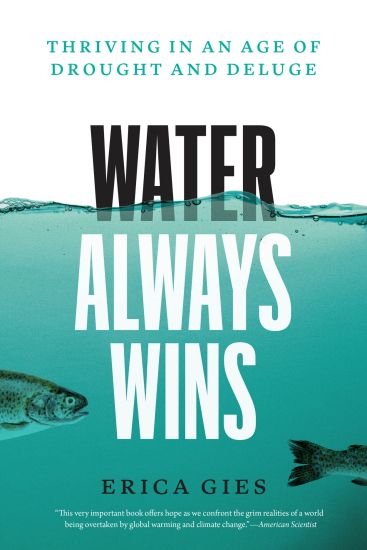
Water Always Wins: Thriving in an Age of Drought and Deluge
Winner of the Rachel Carson Award for Excellence in Environmental Journalism, Water Always Wins is a hopeful journey around the world and across time, illuminating better ways to live with water. Nearly every human endeavor on the planet was conceived and constructed with a relatively stable climate in mind. But as new climate disasters remind us every day, our world is not stable-and it is changing in ways that expose the deep dysfunction of our relationship with water. Increasingly severe and frequent floods and droughts inevitably spur calls for higher levees, bigger drains, and longer aqueducts. But as we grapple with extreme weather, a hard truth is emerging: our development, including concrete infrastructure designed to control water, is actually exacerbating our problems. Because sooner or later, water always wins. In this quietly radical book, science journalist Erica Gies introduces us to innovators in what she calls the Slow Water movement who start by asking a revolutionary question: What does water want? Using close observation, historical research, and cutting-edge science, these experts in hydrology, restoration ecology, engineering, and urban planning are already transforming our relationship with water. Modern civilizations tend to speed water away, erasing its slow phases on the land. Gies reminds us that water's true nature is to flex with the rhythms of the earth: the slow phases absorb floods, store water for droughts, and feed natural systems. Figuring out what water wants-and accommodating its desires within our human landscapes-is now a crucial survival strategy. By putting these new approaches to the test, innovators in the Slow Water movement are reshaping the future.
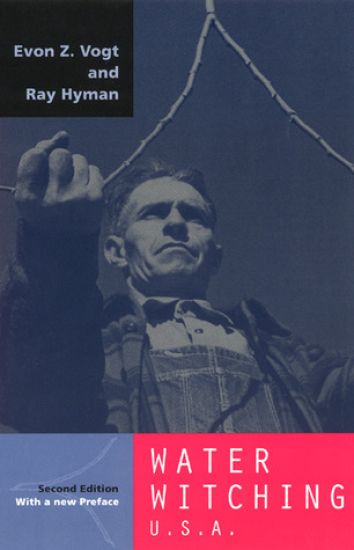
Water Witching U.S.A.

Water Witching U.S.A.

Evon Z. Vogt; Ray Hyman

University of Chicago Press
2000
nidottu
Despite advanced technology, the practice of water witching—using a forked stick to indicate an underground source of water—persists in both rural and urban areas. Water Witching U.S.A. is a lively look at "dowsing," full of personal accounts, historical background, and data from controlled experiments and a nationwide survey. This study includes a collection of photographs, drawings, and historical woodcuts showing the tools, techniques, and early instances of dowsing, as well as cross-sectional views contrasting the dowser's explanation of groundwater with the geologist's.
Water from Dragon's Well

Water from Dragon's Well

David Kim-Cragg

MCGILL-QUEEN'S UNIVERSITY PRESS
2022
sidottu
A Canadian-built mission house in the heart of Seoul became the heart of the emerging South Korean democratization movement, while a Korean minister rose to serve as the spiritual leader of Canada’s largest Protestant denomination. The century-long Korean-Canadian church relationship has had a lasting influence on Korean society and on the culture and mission of the United Church of Canada, helping to crack the colonial foundations of Canadian Protestantism.Water from Dragon’s Well explores the connection between the Korean Christian community and the Canadian church and its missionaries from the 1890s to the present. Upon the arrival of Canadian missionaries, Korean Christian churches were already voicing nationalist aspirations; by the mid-twentieth century, they were demanding independence from Canadian missionary oversight and were participating in a wider democratic movement within South Korea. David Kim-Cragg traces indigenous churches’ resistance to decades of missionary paternalism and the ways they channelled their religious and political energies. Accepting the criticism of its hosts, the United Church of Canada helped build an independent Korean Christian church and, in 1974, ended its Korean mission. This shift in the Canadian missionaries’ colonial attitudes also contributed to the transformation of the United Church of Canada back home. With the help of Korean leadership in Canada, the church reconstructed its vision of non-Western Christianity and, in a watershed moment, established an ethnic ministry council.Situated within ongoing conversations about the legacies of colonization and racism, Water from Dragon’s Well shows how wellsprings of religion and politics from Korea challenged and transformed white Canadian attitudes and institutions.
Water from Dragon's Well

Water from Dragon's Well

David Kim-Cragg

MCGILL-QUEEN'S UNIVERSITY PRESS
2022
nidottu
A Canadian-built mission house in the heart of Seoul became the heart of the emerging South Korean democratization movement, while a Korean minister rose to serve as the spiritual leader of Canada’s largest Protestant denomination. The century-long Korean-Canadian church relationship has had a lasting influence on Korean society and on the culture and mission of the United Church of Canada, helping to crack the colonial foundations of Canadian Protestantism.Water from Dragon’s Well explores the connection between the Korean Christian community and the Canadian church and its missionaries from the 1890s to the present. Upon the arrival of Canadian missionaries, Korean Christian churches were already voicing nationalist aspirations; by the mid-twentieth century, they were demanding independence from Canadian missionary oversight and were participating in a wider democratic movement within South Korea. David Kim-Cragg traces indigenous churches’ resistance to decades of missionary paternalism and the ways they channelled their religious and political energies. Accepting the criticism of its hosts, the United Church of Canada helped build an independent Korean Christian church and, in 1974, ended its Korean mission. This shift in the Canadian missionaries’ colonial attitudes also contributed to the transformation of the United Church of Canada back home. With the help of Korean leadership in Canada, the church reconstructed its vision of non-Western Christianity and, in a watershed moment, established an ethnic ministry council.Situated within ongoing conversations about the legacies of colonization and racism, Water from Dragon’s Well shows how wellsprings of religion and politics from Korea challenged and transformed white Canadian attitudes and institutions.
Water Quality

Water Quality

Cynthia Woodman Kerkham

MCGILL-QUEEN'S UNIVERSITY PRESS
2024
nidottu
I find my bearings by clouds of moon jellies / afloat beneath my anchored boat, / pulsing the sea’s bright night, / their milky way, unfurling.In these lush and vivid poems water gloves a swimmer’s body, is “satin, yes, viscous. Albumen, vernix, newborn slick.” It “rinses gai lan – bright green in a silver bowl” in Hong Kong or hibernates in the Pacific Northwest “under a silky pelt / of rain. People-less. Days, months of this / hiss, softness breaking cliffs.”Cynthia Woodman Kerkham ponders the urgent question, What does water want? Whether as the body of a beloved lake, where people wrestle with the concerns of stewardship, or as the sea in which to sail and drift, or as a gene pool simmering through a family’s veins, water is the main character here. It can be turbid, the amniotic colour of spittle, or, in a time of drought, “brilliant beads.” As “a stream flushed over granite,” water seems to want “so little it shares another’s colour,” yet here, it gets our full and necessary attention.Rich with vibrant language and intensity, these poems sizzle in lyric form, monologues, elegy, and haibun. Water Quality calls on us to consider that our very survival is at stake unless we make a vow to this vital element to cherish it as we would a partner.
Water, Wisdom and Love

Water, Wisdom and Love

Reyhaneh Moshtaghi

Tellwell Talent
2020
sidottu
An atomic love story that works at a molecular level, leading the reader on an inward journey of soul discovery and universal wisdom; Water, Wisdom and Love book is a short story about life, love and everything that happens in between.
Water, Wisdom and Love

Water, Wisdom and Love

Reyhaneh Moshtaghi

Tellwell Talent
2020
pokkari
An atomic love story that works at a molecular level, leading the reader on an inward journey of soul discovery and universal wisdom; Water, Wisdom and Love book is a short story about life, love and everything that happens in between.
Water Weaver

Water Weaver

Sandra Taylor

Tellwell Talent
2022
pokkari
Lou was used to hearing voices and seeing strange things, but this just felt . . . different. There was an urgency embedded in the plea, a plea that was getting more and more persistent and hard to ignore. Would Lou and the T-Weaves find the mystery voice in time to save an entire realm, or would evil win the battle that lies ahead?
Water Weaver

Water Weaver

Sandra Taylor

Tellwell Talent
2022
sidottu
Lou was used to hearing voices and seeing strange things, but this just felt . . . different. There was an urgency embedded in the plea, a plea that was getting more and more persistent and hard to ignore. Would Lou and the T-Weaves find the mystery voice in time to save an entire realm, or would evil win the battle that lies ahead?
Walter Benjamin and the Aesthetics of Change
Following the spirit of Benjamin's Arcades Project, this book acts as a kaleidoscope of change in the 21st century, tracing its different reflections in the international contemporary while seeking to understand individual/collective reactions to change through a series of creative methodologies.
Water from Heaven

Water from Heaven

Robert Kandel

Columbia University Press
2003
sidottu
From where-and what-does water come? How did it become the key to life in the universe? Water from Heaven presents a state-of-the-art portrait of the science of water, recounting how the oxygen needed to form H2O originated in the nuclear reactions in the interiors of stars, asking whether microcomets may be replenishing our world's oceans, and explaining how the Moon and planets set ice-age rhythms by way of slight variations in Earth's orbit and rotation. The book then takes the measure of water today in all its states, solid and gaseous as well as liquid. How do the famous El Nino and La Nina events in the Pacific affect our weather? What clues can water provide scientists in search of evidence of climate changes of the past, and how does it complicate their predictions of future global warming? Finally, Water from Heaven deals with the role of water in the rise and fall of civilizations. As nations grapple over watershed rights and pollution controls, water is poised to supplant oil as the most contested natural resource of the new century. The vast majority of water "used" today is devoted to large-scale agriculture and though water is a renewable resource, it is not an infinite one. Already many parts of the world are running up against the limits of what is readily available. Water from Heaven is, in short, the full story of water and all its remarkable properties. It spans from water's beginnings during the formation of stars, all the way through the origin of the solar system, the evolution of life on Earth, the rise of civilization, and what will happen in the future. Dealing with the physical, chemical, biological, and political importance of water, this book transforms our understanding of our most precious, and abused, resource. Robert Kandel shows that water presents us with a series of crucial questions and pivotal choices that will change the way you look at your next glass of water.
Water from Heaven

Water from Heaven

Robert Kandel

Columbia University Press
2006
pokkari
From where-and what-does water come? How did it become the key to life in the universe? Water from Heaven presents a state-of-the-art portrait of the science of water, recounting how the oxygen needed to form H2O originated in the nuclear reactions in the interiors of stars, asking whether microcomets may be replenishing our world's oceans, and explaining how the Moon and planets set ice-age rhythms by way of slight variations in Earth's orbit and rotation. The book then takes the measure of water today in all its states, solid and gaseous as well as liquid. How do the famous El Nino and La Nina events in the Pacific affect our weather? What clues can water provide scientists in search of evidence of climate changes of the past, and how does it complicate their predictions of future global warming? Finally, Water from Heaven deals with the role of water in the rise and fall of civilizations. As nations grapple over watershed rights and pollution controls, water is poised to supplant oil as the most contested natural resource of the new century. The vast majority of water "used" today is devoted to large-scale agriculture and though water is a renewable resource, it is not an infinite one. Already many parts of the world are running up against the limits of what is readily available. Water from Heaven is, in short, the full story of water and all its remarkable properties. It spans from water's beginnings during the formation of stars, all the way through the origin of the solar system, the evolution of life on Earth, the rise of civilization, and what will happen in the future. Dealing with the physical, chemical, biological, and political importance of water, this book transforms our understanding of our most precious, and abused, resource. Robert Kandel shows that water presents us with a series of crucial questions and pivotal choices that will change the way you look at your next glass of water.
Water World

Water World

Ben Rothery

Ladybird
2021
sidottu
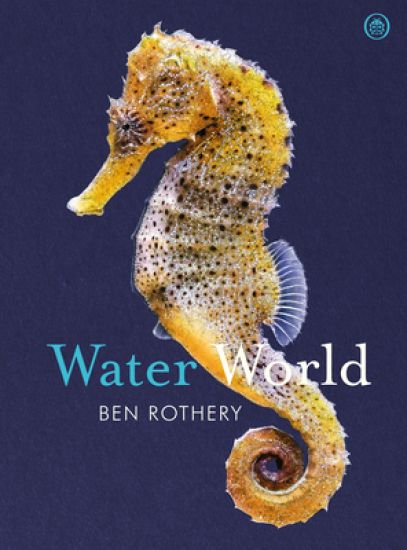
'This is a thing of rare beauty' - David Walliams on Hidden Planet (shortlisted for the Waterstones Children's Book Prize 2020)Water World is the stunning new book from Ben Rothery, author of Hidden Planet and Sensational Butterflies. Life on Earth is shaped by water, and only survives here because of it, but our ocean ecosystems are at the epicentre of global warming. Framed by the need to protect our oceans, Water World is natural-history illustrator Ben Rothery's rich exploration of the creatures from the coastal and offshore waters of the world - from penguins, seagulls, polar bears and seahorses, to plankton, sharks and deep-sea beings. Discover the longest migration and the loudest animal on Earth, and learn how our own actions affect the ocean, its inhabitants and our whole planet. Fun to read together or independently, this large-format, beautifully illustrated book is perfect for nature-lovers of all ages. Also available: Hidden Planet and Sensational Butterflies.
Water: Read It Yourself - Level 4 Fluent Reader

Water: Read It Yourself - Level 4 Fluent Reader

Penguin Random House Children's UK
2024
sidottu
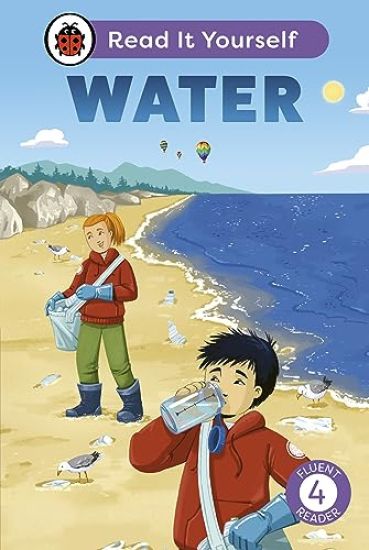
Humans, animals, and plants need water every day to survive. But where does it come from? How do we know if it is safe to drink? Learn all about how water is saved, cleaned, and shared in this fact-filled book. Water is from Fluent Reader Level 4 and is ideal for more fluent readers aged from 7+ who are starting to read independently.Each book has been carefully checked by educational and subject consultants and includes comprehension puzzles, book band information, and tips for helping children with their reading. With five levels to take children from first phonics to fluent reading and a wide range of different stories and topics for every interest, Read It Yourself helps children build their confidence and begin reading for pleasure.
Water World

Water World

Ben Rothery

Penguin Random House Children's UK
2025
nidottu
A stunning deep dive into the worlds great oceans and the incredible aquatic lifeforms that live in them!Life on Earth is shaped by water, and only survives here because of it, but our ocean ecosystems are at the epicentre of global warming. This enormous blue wilderness contains somewhere between half and three quarters of all life on Earth, including the biggest and most numerous creatures to ever live. But more than 90 per cent of Earth's warming since 1950 occurred in oceans, despite their vast capacity to absorb heat and CO2.Framed by the need to protect our fragile oceans, Water World is natural-history illustrator Ben Rothery's rich exploration of the creatures from the coastal and offshore waters of the world - from penguins, seagulls, polar bears and seahorses, to plankton, sharks and deep-sea beings. Discover the longest migration and the loudest animal on Earth, and learn how our own actions affect the ocean, its inhabitants and our whole planet.Fun to read together or independently, this beautifully illustrated book is perfect for nature-lovers of all ages.
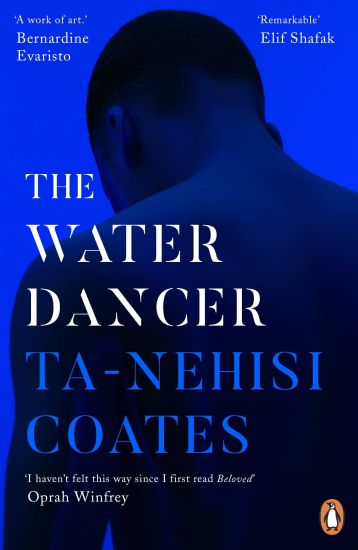
Water Dancer

Water Dancer

Ta-Nehisi Coates

Penguin
2020
pokkari
Hiram Walker is born into bondage on a Virginia plantation. But he is also born gifted with a mysterious power that he won't discover until he is almost a man, when he risks everything for a chance to escape. One fateful decision will carry him away from his makeshift plantation family - his adoptive mother, Thena, a woman of few words and many secrets, and his beloved, angry Sophia - and into the covert heart of the underground war on slavery.Hidden amidst the corrupt grandeur of white plantation society, exiled as guerrilla cells in the wilderness, buried in the coffin of the deep South and agitating for utopian ideals in the North, there exists a widespread network of secret agents working to liberate the enslaved. Hiram joins their ranks and learns fast but in his heart he yearns to return to his own still-enslaved family, to topple the plantation that was his first home. But to do so, he must first master his unique power and reclaim the story of his greatest loss.Propulsive, transcendent and blazing with truth, The Water Dancer is a story of oppression and resistance, separation and homecoming. Ta-Nehisi Coates imagines the covert war of an enslaved people in response to a generations-long human atrocity - a war for the right to life, to kin, to freedom.