J.H. Whitley came from an established business family in Halifax, where he engaged in youth work and municipal politics before becoming MP for Halifax from 1900 to 1928. He was a Liberal Radical who worked with Labour, gave his name to the industrial councils of the First World War, was Speaker of the House of Commons 1921-28 presiding over the debates at the time of the General Strike of 1926. In 1929-31 he toured India as chairman of the Royal Commission on Indian Labour and was chairman of the BBC between 1930 and 1935. He was thus a vitally important political figure who was active at the rise of Labour and the decline of Liberalism, involved in the Liberal reforms of the Edwardian age, and deeply concerned about industrial relations in early twentieth century Britain and beyond. This volume brings together leading academics and provides new information and analysis on the life, work and times of J.H. Whitley, offering a study of his career in British politics and society, focusing particularly on the last decade of the nineteenth century and the first three decades of the twentieth century.
In a rapidly changing and inter-disciplinary world it is important to understand the nature and generation of knowledge, and its social organization. This book analyzes the constitution and claims of different theories, perspectives, and paradigms.
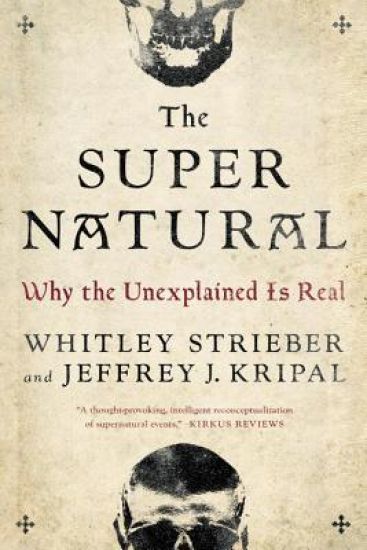
Two of today's maverick authors on anomalous experience present a perception-altering and intellectually thrilling analysis of why the paranormal is real, but radically different from what is conventionally understood. Whitley Strieber (Communion) and Jeffrey J. Kripal (J. Newton Rayzor professor of religion at Rice University) team up on this unprecedented and intellectually vibrant new framing of inexplicable events and experiences. Rather than merely document the anomalous, these authors--one the man who popularized alien abduction and the other a renowned scholar and -renegade advocate for including the paranormal in religious studies- (The New York Times)--deliver a fast-paced and exhilarating study of why the supernatural is neither fantasy nor fiction but a vital and authentic aspect of life. Their suggestion? That all kinds of -impossible- things, from extra-dimensional beings to bilocation to bumps in the night, are not impossible at all: rather, they are a part of our natural world. But this natural world is immeasurably more weird, more wonderful, and probably more populated than we have so far imagined with our current categories and cultures, which are what really make these things seem -impossible.- The Super Natural considers that the natural world is actually a -super natural world---and all we have to do to see this is to change the lenses through which we are looking at it and the languages through which we are presently limiting it. In short: The extraordinary exists if we know how to look at and think about it. From the Hardcover edition.
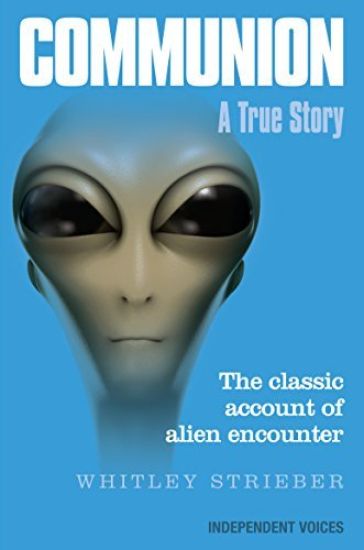
On December 26th, 1985, Whitley Strieber was woken in his isolated cabin in upstate New York, he saw a creature in his bedroom. His next memory is sitting in the woods around the cabin. Hypnosis revealed that Whitley Strieber had been abducted by a UFO and that he had been subjected to medical testing by aliens. Strieber came to realise that he had been abducted by these alien life forms for most of his life, and began to record his experiences with visitors from 'elsewhere'. Whether the reader believes or not his story it will fascinate and terrify. The sincerity and detail of Strieber's account of his experiences is powerful and it will force every reader to ask: what are the aliens trying to communicate, are they here to guide and transform mankind, has the greatest mystery of our time been solved? Is Whitley Strieber an ambassador for beings from another world to contact mankind?
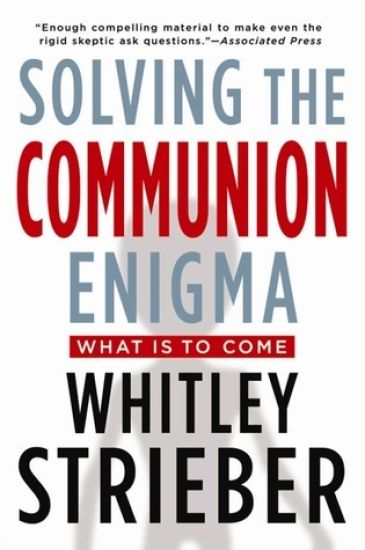
Now in paperback, the bestselling author of Communion revisits his groundbreaking work on alien abduction to explore the ultimate meaning behind today's increasing reports of UFO sightings, close encounters, alien implants, crop circles, animal mutilations - and what it means for our near-future.In 1987 writer Whitley Strieber exposed the world to the truth about alien abduction in his landmark memoir, Communion. For the first time in years, Strieber revisits his encounter with alien intelligences-but now dramatically widens his search to explore how "the visitors" connect with today's persistent and globe-spanning reports of anomalous phenomena, such as crop circles, cattle mutilations, UFO sightings, alien abductions, near-death experiences, close encounters, and unexplained bodily implants.In his magisterial style, Strieber contextualizes these bizarre and unsettling reports with his own childhood memories of strange schools, sinister experiments, and family secrets. In exploring today's most convincing cases of unexplained phenomena, Strieber reasons that they are not unrelated events. Nor are they the result of mass delusion. In some of his most persuasive writing, Strieber argues that the wave of mysterious episodes marks a transition that humanity is undergoing right now. Against all conscious understanding, we are experiencing a broadened awareness of dimensions of reality that exist beyond our current perceptions.
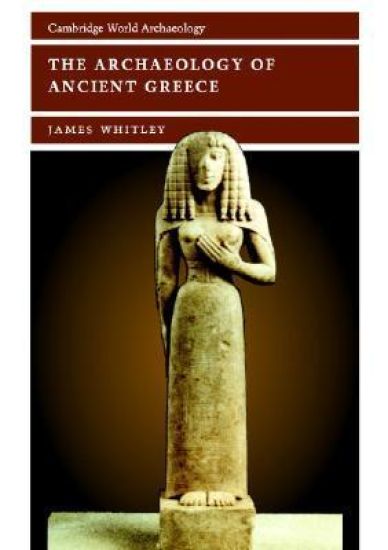
The Archaeology of Ancient Greece provides an up-to-date synthesis of current research on the material culture of Greece in the Archaic and Classical periods (1000–300 BC). The rich and diverse material culture of ancient Greece has always provoked admiration and even wonder, but it is seldom analysed as a key to our understanding of Greek civilisation. Dr Whitley shows how the material evidence can be used to address central historical questions for which literary evidence is often insufficient. He also situates Greek art within the broader field of Greek material culture, providing an historically more accurate perspective on both. This is a significant contribution to the integration of archaeological and art historical evidence.
The right of self-defense is seemingly at odds with the general presupposition that killing is wrong; numerous theories have been put forth over the years that attempt to explain how self-defense is consistent with such a presupposition. In Justified Killing: The Paradox of Self-Defense, Whitley Kaufman argues that none of the leading theories adequately explains why it is permissible even to kill an innocent attacker in self-defense, given the basic moral prohibition against killing the innocent. Kaufman suggests that such an explanation can be found in the traditional Doctrine of Double Effect, according to which self-defense is justified because the intention of the defender is to protect himself rather than harm the attacker. Given this morally legitimate intention, self-defense is permissible against both culpable and innocent aggressors, so long as the force used is both necessary and proportionate. Justified Killing will intrigue in particular those scholars interested in moral and legal philosophy.
This is the official history of the Seventh Air Force. It is not a ""brass hat"" story; it is told from the point of view of the men themselves, often in their own words, with realistic vigor and with the lively sense of humor that made it possible to achieve victory in the Pacific.A UNC Press Enduring Edition -- UNC Press Enduring Editions use the latest in digital technology to make available again books from our distinguished backlist that were previously out of print. These editions are published unaltered from the original, and are presented in affordable paperback formats, bringing readers both historical and cultural value.
In these inspiring monologues, women of the Bible speak in their own voices: the Virgin Mary, Miriam, Mary Magdalene, Elizabeth, Lydia, Ruth, Martha, Gomer, Michal, Tamar, Peter s wife, and others.
Can a loving relationship survive death? The Afterlife Revolution triumphantly says that it can. After a near-death experience in 2004, Anne Strieber became an expert in afterlife studies and created an ingenious plan of contact which, to her husband Whitley's amazement, she proceeded to carry out, starting just an hour and a half after she died. As verified by famed afterlife researcher Dr. Gary Schwartz, who wrote the foreword, the Afterlife Revolution is among the most convincing stories of afterlife communication ever told, and is a ringing endorsement not only of the fact that we do not die, but also that the power of love can create an actual bridge between the physical and nonphysical worlds. The book points the way to a new relationship between the living and, as Anne puts it, "what you call the dead." Anne tells of her experience on the other side, saying that "we are light, alive," and that "enlightenment is what comes when there is nothing left of us but love." Her descriptions of the afterlife are brilliantly articulate and nuanced, at once deeply familiar and uniquely her own. The Afterlife Revolution shows how to use basic tools such as what Anne describes as "objective love" combined with a simple but special form of meditation to build a relationship between physical and nonphysical worlds. It is intended to help us find that sweet point at which the souls of the living touch those of the dead. As Anne says, "Mankind is divided, not so much between the sexes as between the living and what are called the dead. It isn't natural and it isn't necessary. We can become whole." The Afterlife Revolution is about the joy of doing just that, and the magnificent new human experience that will unfold as more and more of us learn to live in this way. "It has been observed that belief in the afterlife is really a belief in the undying nature of love. In The Afterlife Revolution, Whitley Strieber gives form, story, and insight to that principle, mapping out in vivid, moving, and persuasive detail his continued communion with his beloved wife Anne. Our generation is passing through a renaissance of near and after-death literature. This memoir forms the gravitational center of that field." -Mitch Horowitz, PEN Award-winning author of Occult America and One Simple Idea: How Positive Thinking Reshaped Modern Life
As a jungle is clear cut in the far east, a team from a drug company work desperately to find plants that may be turned into medicines. But they find something altogether different and truly spectacular: a group of six abandoned infants. They aren't human...and they aren't apes, either. Could they be Orang Tanda, the legendary people of the forest who are believed to have been extinct for thousands of years?The scientists spirit them off to the United States and raise them in extreme secrecy in a facility in Texas. They're highly intelligent and because they're not human they can be bought and sold. As such, they are incredibly valuable, but only if they will breed offspring, and that's a problem.Enter primatologist Beth Cooke, brought in to get them making babies. But she finds the company's plans a grotesque nightmare and vows to free them instead.But can she? And if she does, what will happen to these six strange and brilliant creatures when they face the modern world?This is a story unlike any other, about hope, about human courage in an impossible situation, and, above all, about looking up at the sky for the first time, with eyes that are truly new.
Author Whitley Charee kicks off her incredible new series entitled, "The Book of Everything," with Vol 1: Self Discovery. This installment is all about discovering who you are and manifesting your dreams, goals, and ambitions into reality with soft advice, affirmations and questions that will force readers to dive inside and face themselves head on. What are you afraid of? What do you want out of life? Find out the answer to these and more in Charee's, "The Book of Everything "