Kirjojen hintavertailu. Mukana 11 627 488 kirjaa ja 12 kauppaa.

Kirjahaku

Etsi kirjoja tekijän nimen, kirjan nimen tai ISBN:n perusteella.

1000 tulosta hakusanalla William Morris

The Wood Beyond the World By: William Morris: Fantasy novel

The Wood Beyond the World By: William Morris: Fantasy novel

William Morris

Createspace Independent Publishing Platform
2017
nidottu
The Wood Beyond the World is a fantasy novel by William Morris, perhaps the first modern fantasy writer to unite an imaginary world with the element of the supernatural, and thus the precursor of much of present-day fantasy literature. It was first published in hardcover by Morris's Kelmscott Press, in 1894. The book's importance in the history of fantasy literature was recognized by its republication by Ballantine Books as the third volume of the Ballantine Adult Fantasy series in July, 1969. The Ballantine edition includes an introduction by Lin Carter. Plot: When the wife of Golden Walter betrays him for another man, he leaves home on a trading voyage to avoid the necessity of a feud with her family. However, his efforts are fruitless, as word comes to him en route that his wife's clan has killed his father. As a storm then carries him to a faraway country, the effect of this news is merely to sunder his last ties to his homeland. Walter comes to the castle of an enchantress, from which he rescues a captive maiden in a harrowing adventure (or rather, she rescues him). They flee through a region inhabited by mini-giants, and eventually reach the city of Stark-wall, whose custom, when the throne is vacant, is to take the next foreigner to arrive as ruler. The late king having died, Walter and his new love are hailed as the new monarchs. The two are married and presumably live happily ever after. Reception Morris considered his fantasies a revival of the medieval tradition of chivalrous romances. In consequence, they tend to have sprawling plots comprising strung-together adventures. His use of archaic language is a challenge to some readers. When the novel was reissued in the Ballantine Adult Fantasy Series, James Blish noted that Morris's style was a successful recapturing of the style of Sir Thomas Malory, "all the way down to the marginal glosses and the nonstop compound sentences hitched together with scores of semicolons. He also recaptured much of the poetry; and if the reader will make the small effort necessary to accommodate himself to the rhythm of the style, he will find both it and the story rewarding."...... William Morris (24 March 1834 - 3 October 1896) was an English textile designer, poet, novelist, translator, and socialist activist. Associated with the British Arts and Crafts Movement, he was a major contributor to the revival of traditional British textile arts and methods of production. His literary contributions helped to establish the modern fantasy genre, while he played a significant role in propagating the early socialist movement in Britain. Born in Walthamstow, Essex, to a wealthy middle-class family, Morris came under the strong influence of medievalism while studying Classics at Oxford University, there joining the Birmingham Set. After university, he trained as an architect, married Jane Burden, and developed close friendships with the Pre-Raphaelite artists Edward Burne-Jones and Dante Gabriel Rossetti and with the Neo-Gothic architect Philip Webb. Webb and Morris designed a family home, Red House, then in Kent, where the latter lived from 1859 to 1865, before moving to Bloomsbury, central London. In 1861, Morris founded a decorative arts firm with Burne-Jones, Rossetti, Webb, and others: the Morris, Marshall, Faulkner & Co. Becoming highly fashionable and much in demand, the firm profoundly influenced interior decoration throughout the Victorian period, with Morris designing tapestries, wallpaper, fabrics, furniture, and stained glass windows. In 1875, Morris assumed total control of the company, which was renamed Morris & Co...................

Child Christopher and Goldilind the fair. By: William Morris: Fantasy novel

Child Christopher and Goldilind the fair. By: William Morris: Fantasy novel

William Morris

Createspace Independent Publishing Platform
2017
nidottu
Child Christopher and Goldilind the Fair is a fantasy novel by William Morris, perhaps the first modern fantasy writer to unite an imaginary world with the element of the supernatural, and thus the precursor of much of present-day fantasy literature. It was first published in hardcover by Morris' Kelmscott Press in 1895. Its importance in the history of fantasy literature was recognized by its republication by the Newcastle Publishing Company as the twelfth volume of the celebrated Newcastle Forgotten Fantasy Library in April, 1977. Plot summary: Child Christopher and Goldilind the Fair, set in the forested land of Oakenrealm, was Morris' reimagining and recasting of the medieval Lay of Havelock the Dane, with his displaced royal heirs Christopher and Goldilind standing in for the original story's Havelock and Goldborough. In contrast to his source, Morris emphasizes the romantic aspect of the story, giving a prominent place to the heroine's misfortunes and bringing to the forefront the love story between her and the hero; the warfare by which the hero regains his heritage is relegated to a secondary role. Also unlike both the source and most of Morris's other fantasies, there is little or no supernatural element in this version of the story. Christopher is portrayed as initially ignorant of his true identity, leading to an emotional conflict between the protagonists to reconcile their mutual love and attraction with what they believe to be the profound disparity in their social status and shame of their forced marriage. This situation is resolved when the two fall in with Jack of the Tofts, who gives refuge to Christopher after his sons rescue the hero from an assassination attempt by a servant of the usurper Earl Rolf. Jack informs Christopher of his true station and gathers together an army to help him challenge the usurper. When the hosts meet, the commander of Rolf's forces, Baron Gandolf of Brimside, challenges Jack to single combat, but Christopher claims the honor from Jack and proves his worth by defeating the opposing champion........ William Morris (24 March 1834 - 3 October 1896) was an English textile designer, poet, novelist, translator, and socialist activist. Associated with the British Arts and Crafts Movement, he was a major contributor to the revival of traditional British textile arts and methods of production. His literary contributions helped to establish the modern fantasy genre, while he played a significant role in propagating the early socialist movement in Britain. Born in Walthamstow, Essex, to a wealthy middle-class family, Morris came under the strong influence of medievalism while studying Classics at Oxford University, there joining the Birmingham Set. After university, he trained as an architect, married Jane Burden, and developed close friendships with the Pre-Raphaelite artists Edward Burne-Jones and Dante Gabriel Rossetti and with the Neo-Gothic architect Philip Webb. Webb and Morris designed a family home, Red House, then in Kent, where the latter lived from 1859 to 1865, before moving to Bloomsbury, central London. In 1861, Morris founded a decorative arts firm with Burne-Jones, Rossetti, Webb, and others: the Morris, Marshall, Faulkner & Co......
The well at the world's end, a tale. By: William Morris (Volume I.): High fantasy novel
The Well at the World's End is a high fantasy novel by the British artist, poet, and author William Morris. It was first published in 1896 and has been reprinted a number of times since, most notably in two parts as the 20th and 21st volumes of the Ballantine Adult Fantasy series, in August and September 1970. Plot summary: Using language with elements of the medieval tales which were his models, Morris tells the story of Peter, King of Upmeads, and his four sons, Blaise, Hugh, Gregory, and Ralph. These four sons decide one day that they would like to explore the world, so their father gives them permission. From that point on, the plot centers on the youngest son, Ralph. Ralph's explorations begin at Bourton Abbas, after which he goes through the Wood Perilous. He has various adventures there, including the slaying of two men who had entrapped a woman. That woman later turns out to be the Lady of Abundance, who later becomes his lover for a short time. In one episode Ralph is staying at a castle and inquires about the Lady of the castle (the so-called Lady of Abundance), whom he has not yet seen. Descriptions of her youth and beauty suggest to him that she has drunk from the well at the world's end. "And now in his heart waxed the desire of that Lady, once seen, as he deemed, in such strange wise; but he wondered within himself if the devil had not sown that longing within him...." A short time later, while still at the castle, Ralph contemplates images of the Lady and "was filled with the sweetness of desire when he looked on them." Then he reads a book containing information about her, and his desire to meet the Lady of Abundance flames higher. When he goes to bed, he sleeps "for the very weariness of his longing." He fears leaving the castle because she might come while he is gone. Eventually he leaves the castle and meets the Lady of Abundance, who turns out to be the same lady he had rescued some weeks earlier from two men. When he meets her this time, the lady is being fought over by two knights, one of whom slays the other. That knight nearly kills Ralph, but the lady intervenes and promises to become the knight's lover if he would spare Ralph. Eventually, she leads Ralph away during the night to save Ralph's life from this knight, since Ralph had once saved hers. She tells Ralph of her trip to the Well at the World's End, her drinking of the water, the tales of her long life, and a maiden she thinks is especially suited to Ralph. Eventually, the knight catches up to them and kills her with his sword while Ralph is out hunting. Upon Ralph's return, the knight charges Ralph, and Ralph puts an arrow through his head. After Ralph buries both of them, he begins a journey that will take him to the Well at the World's End. As he comes near the village of Whitwall, Ralph meets a group of men, which includes his brother Blaise and Blaise's attendant, Richard. Ralph joins them, and Richard tells Ralph about having grown up in Swevenham, from which two men and one woman had once set out for the Well at the World's End. Richard had never learned what happened to those three. Richard promises to visit Swevenham and learn what he can about the Well at the World's End..... William Morris (24 March 1834 - 3 October 1896) was an English textile designer, poet, novelist, translator, and socialist activist. Associated with the British Arts and Crafts Movement, he was a major contributor to the revival of traditional British textile arts and methods of production. His literary contributions helped to establish the modern fantasy genre, while he played a significant role in propagating the early socialist movement in Britain. Born in Walthamstow, Essex, to a wealthy middle-class family, Morris came under the strong influence of medievalism while studying Classics at Oxford University, there joining the Birmingham Set................
The well at the world's end, a tale. By: William Morris (Volume II.): High fantasy novel
The Well at the World's End is a high fantasy novel by the British artist, poet, and author William Morris. It was first published in 1896 and has been reprinted a number of times since, most notably in two parts as the 20th and 21st volumes of the Ballantine Adult Fantasy series, in August and September 1970. Plot summary: Using language with elements of the medieval tales which were his models, Morris tells the story of Peter, King of Upmeads, and his four sons, Blaise, Hugh, Gregory, and Ralph. These four sons decide one day that they would like to explore the world, so their father gives them permission. From that point on, the plot centers on the youngest son, Ralph. Ralph's explorations begin at Bourton Abbas, after which he goes through the Wood Perilous. He has various adventures there, including the slaying of two men who had entrapped a woman. That woman later turns out to be the Lady of Abundance, who later becomes his lover for a short time. In one episode Ralph is staying at a castle and inquires about the Lady of the castle (the so-called Lady of Abundance), whom he has not yet seen. Descriptions of her youth and beauty suggest to him that she has drunk from the well at the world's end. "And now in his heart waxed the desire of that Lady, once seen, as he deemed, in such strange wise; but he wondered within himself if the devil had not sown that longing within him...." A short time later, while still at the castle, Ralph contemplates images of the Lady and "was filled with the sweetness of desire when he looked on them." Then he reads a book containing information about her, and his desire to meet the Lady of Abundance flames higher. When he goes to bed, he sleeps "for the very weariness of his longing." He fears leaving the castle because she might come while he is gone. Eventually he leaves the castle and meets the Lady of Abundance, who turns out to be the same lady he had rescued some weeks earlier from two men. When he meets her this time, the lady is being fought over by two knights, one of whom slays the other. That knight nearly kills Ralph, but the lady intervenes and promises to become the knight's lover if he would spare Ralph. Eventually, she leads Ralph away during the night to save Ralph's life from this knight, since Ralph had once saved hers. She tells Ralph of her trip to the Well at the World's End, her drinking of the water, the tales of her long life, and a maiden she thinks is especially suited to Ralph. Eventually, the knight catches up to them and kills her with his sword while Ralph is out hunting. Upon Ralph's return, the knight charges Ralph, and Ralph puts an arrow through his head. After Ralph buries both of them, he begins a journey that will take him to the Well at the World's End......... William Morris (24 March 1834 - 3 October 1896) was an English textile designer, poet, novelist, translator, and socialist activist. Associated with the British Arts and Crafts Movement, he was a major contributor to the revival of traditional British textile arts and methods of production. His literary contributions helped to establish the modern fantasy genre, while he played a significant role in propagating the early socialist movement in Britain. Born in Walthamstow, Essex, to a wealthy middle-class family, Morris came under the strong influence of medievalism while studying Classics at Oxford University, there joining the Birmingham Set. After university, he trained as an architect, married Jane Burden, and developed close friendships with the Pre-Raphaelite artists Edward Burne-Jones and Dante Gabriel Rossetti and with the Neo-Gothic architect Philip Webb. Webb and Morris designed a family home, Red House, then in Kent, where the latter lived from 1859 to 1865, before moving to Bloomsbury, central London. In 1861, Morris founded a decorative arts firm with Burne-Jones, Rossetti, Webb, and others: the Morris, Marshall, Faulkner & Co..............
The well at the world's end, a tale. By: William Morris (Complete set volume I and II).: High fantasy novel
The Well at the World's End is a high fantasy novel by the British artist, poet, and author William Morris. It was first published in 1896 and has been reprinted a number of times since, most notably in two parts as the 20th and 21st volumes of the Ballantine Adult Fantasy series, in August and September 1970. Plot summary: Using language with elements of the medieval tales which were his models, Morris tells the story of Peter, King of Upmeads, and his four sons, Blaise, Hugh, Gregory, and Ralph. These four sons decide one day that they would like to explore the world, so their father gives them permission. From that point on, the plot centers on the youngest son, Ralph. Ralph's explorations begin at Bourton Abbas, after which he goes through the Wood Perilous. He has various adventures there, including the slaying of two men who had entrapped a woman. That woman later turns out to be the Lady of Abundance, who later becomes his lover for a short time. In one episode Ralph is staying at a castle and inquires about the Lady of the castle (the so-called Lady of Abundance), whom he has not yet seen. Descriptions of her youth and beauty suggest to him that she has drunk from the well at the world's end. "And now in his heart waxed the desire of that Lady, once seen, as he deemed, in such strange wise; but he wondered within himself if the devil had not sown that longing within him...." A short time later, while still at the castle, Ralph contemplates images of the Lady and "was filled with the sweetness of desire when he looked on them." Then he reads a book containing information about her, and his desire to meet the Lady of Abundance flames higher. When he goes to bed, he sleeps "for the very weariness of his longing." He fears leaving the castle because she might come while he is gone. Eventually he leaves the castle and meets the Lady of Abundance, who turns out to be the same lady he had rescued some weeks earlier from two men. When he meets her this time, the lady is being fought over by two knights, one of whom slays the other............ William Morris (24 March 1834 - 3 October 1896) was an English textile designer, poet, novelist, translator, and socialist activist. Associated with the British Arts and Crafts Movement, he was a major contributor to the revival of traditional British textile arts and methods of production. His literary contributions helped to establish the modern fantasy genre, while he played a significant role in propagating the early socialist movement in Britain. Born in Walthamstow, Essex, to a wealthy middle-class family, Morris came under the strong influence of medievalism while studying Classics at Oxford University, there joining the Birmingham Set. After university, he trained as an architect, married Jane Burden, and developed close friendships with the Pre-Raphaelite artists Edward Burne-Jones and Dante Gabriel Rossetti and with the Neo-Gothic architect Philip Webb. Webb and Morris designed a family home, Red House, then in Kent, where the latter lived from 1859 to 1865, before moving to Bloomsbury, central London. In 1861, Morris founded a decorative arts firm with Burne-Jones, Rossetti, Webb, and others: the Morris, Marshall, Faulkner & Co. Becoming highly fashionable and much in demand, the firm profoundly influenced interior decoration throughout the Victorian period, with Morris designing tapestries, wallpaper, fabrics, furniture, and stained glass windows. In 1875, Morris assumed total control of the company, which was renamed Morris & Co. Although retaining a main home in London, from 1871 Morris rented the rural retreat of Kelmscott Manor, Oxfordshire. Greatly influenced by visits to Iceland, with Eir kr Magn sson he produced a series of English-language translations of Icelandic Sagas............
The water of the wondrous isles. By: William Morris (Volume I).: Fantasy novel (in two volumes).
The Water of the Wondrous Isles is a fantasy novel by William Morris, perhaps the first writer of modern fantasy to unite an imaginary world with the element of the supernatural, and thus a precursor of much of present-day fantasy literature. 1] It was first printed in 1897 by Morris' own Kelmscott Press on vellum and artisanal paper in a blackletter type of his own design. For the wider reading public, a hardcover trade edition was published later that year by Longmans, Green and Co. The novel was republished by Ballantine Books as the thirty-eighth volume of the Ballantine Adult Fantasy series in November, 1971. The Ballantine edition includes an introduction by Lin Carter. Morris considered his fantasies a revival of the medieval tradition of chivalrous romances; in consequence, they tend to have sprawling plots of strung-together adventures. These prose romances were written in a mock-Medieval style that modern readers may find arduous and fustian. Plot summary: Stolen as a child and raised in the wood of Evilshaw as servant to a witch, Birdalone ultimately escapes in her captress's magical boat, in which she travels to a succession of strange and wonderful islands. Among these is the Isle of Increase Unsought, an island cursed with boundless production, which Morris intended as a parable of contemporary Britain and a vehicle for his socialistic beliefs. Equally radical, during much of the first quarter of the novel, Birdalone is naked, a highly unusual detail in Victorian fiction. She is occasionally assisted out of jams by Habundia, her lookalike fairy godmother. She encounters three maidens who are held prisoner by another witch. They await deliverance by their lovers, the three paladins of the Castle of the Quest. Birdalone is clad by the maidens and seeks out their heroes, and the story goes into high gear as they set out to rescue the women. Ultimately, one lady is reunited with her knight, another finds a new love when her knight is killed, and the last is left to mourn as her champion throws her over for Birdalone......................... William Morris (24 March 1834 - 3 October 1896) was an English textile designer, poet, novelist, translator, and socialist activist. Associated with the British Arts and Crafts Movement, he was a major contributor to the revival of traditional British textile arts and methods of production. His literary contributions helped to establish the modern fantasy genre, while he played a significant role in propagating the early socialist movement in Britain. Born in Walthamstow, Essex, to a wealthy middle-class family, Morris came under the strong influence of medievalism while studying Classics at Oxford University, there joining the Birmingham Set. After university, he trained as an architect, married Jane Burden, and developed close friendships with the Pre-Raphaelite artists Edward Burne-Jones and Dante Gabriel Rossetti and with the Neo-Gothic architect Philip Webb. Webb and Morris designed a family home, Red House, then in Kent, where the latter lived from 1859 to 1865, before moving to Bloomsbury, central London. In 1861, Morris founded a decorative arts firm with Burne-Jones, Rossetti, Webb, and others: the Morris, Marshall, Faulkner & Co. Becoming highly fashionable and much in demand, the firm profoundly influenced interior decoration throughout the Victorian period, with Morris designing tapestries, wallpaper, fabrics, furniture, and stained glass windows. In 1875, Morris assumed total control of the company, which was renamed Morris & Co. Although retaining a main home in London, from 1871 Morris rented the rural retreat of Kelmscott Manor, Oxfordshire. Greatly influenced by visits to Iceland, with Eir kr Magn sson he produced a series of English-language translations of Icelandic Sagas. ....
The water of the wondrous isles. By: William Morris (Volume II).: Fantasy novel (in two volumes).
The Water of the Wondrous Isles is a fantasy novel by William Morris, perhaps the first writer of modern fantasy to unite an imaginary world with the element of the supernatural, and thus a precursor of much of present-day fantasy literature. 1] It was first printed in 1897 by Morris' own Kelmscott Press on vellum and artisanal paper in a blackletter type of his own design. For the wider reading public, a hardcover trade edition was published later that year by Longmans, Green and Co. The novel was republished by Ballantine Books as the thirty-eighth volume of the Ballantine Adult Fantasy series in November, 1971. The Ballantine edition includes an introduction by Lin Carter. Morris considered his fantasies a revival of the medieval tradition of chivalrous romances; in consequence, they tend to have sprawling plots of strung-together adventures. These prose romances were written in a mock-Medieval style that modern readers may find arduous and fustian. Plot summary: Stolen as a child and raised in the wood of Evilshaw as servant to a witch, Birdalone ultimately escapes in her captress's magical boat, in which she travels to a succession of strange and wonderful islands. Among these is the Isle of Increase Unsought, an island cursed with boundless production, which Morris intended as a parable of contemporary Britain and a vehicle for his socialistic beliefs. Equally radical, during much of the first quarter of the novel, Birdalone is naked, a highly unusual detail in Victorian fiction. She is occasionally assisted out of jams by Habundia, her lookalike fairy godmother. She encounters three maidens who are held prisoner by another witch. They await deliverance by their lovers, the three paladins of the Castle of the Quest. Birdalone is clad by the maidens and seeks out their heroes, and the story goes into high gear as they set out to rescue the women. Ultimately, one lady is reunited with her knight, another finds a new love when her knight is killed, and the last is left to mourn as her champion throws her over for Birdalone.... William Morris (24 March 1834 - 3 October 1896) was an English textile designer, poet, novelist, translator, and socialist activist. Associated with the British Arts and Crafts Movement, he was a major contributor to the revival of traditional British textile arts and methods of production. His literary contributions helped to establish the modern fantasy genre, while he played a significant role in propagating the early socialist movement in Britain. Born in Walthamstow, Essex, to a wealthy middle-class family, Morris came under the strong influence of medievalism while studying Classics at Oxford University, there joining the Birmingham Set. After university, he trained as an architect, married Jane Burden, and developed close friendships with the Pre-Raphaelite artists Edward Burne-Jones and Dante Gabriel Rossetti and with the Neo-Gothic architect Philip Webb. Webb and Morris designed a family home, Red House, then in Kent, where the latter lived from 1859 to 1865, before moving to Bloomsbury, central London. In 1861, Morris founded a decorative arts firm with Burne-Jones, Rossetti, Webb, and others: the Morris, Marshall, Faulkner & Co. Becoming highly fashionable and much in demand, the firm profoundly influenced interior decoration throughout the Victorian period, with Morris designing tapestries, wallpaper, fabrics, furniture, and stained glass windows. In 1875, Morris assumed total control of the company, which was renamed Morris & Co.............
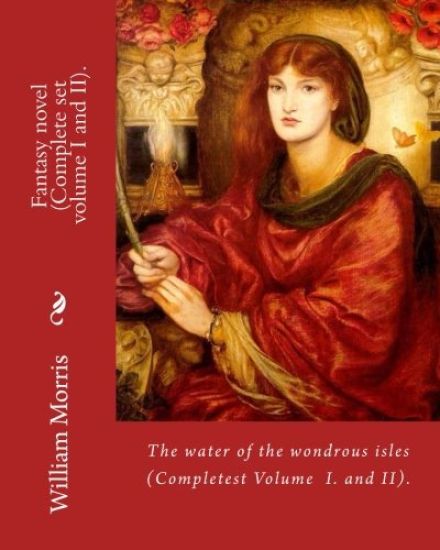
The water of the wondrous isles. By: William Morris (Complete set volume I and II).: Fantasy novel (Complete).
The Water of the Wondrous Isles is a fantasy novel by William Morris, perhaps the first writer of modern fantasy to unite an imaginary world with the element of the supernatural, and thus a precursor of much of present-day fantasy literature. 1] It was first printed in 1897 by Morris' own Kelmscott Press on vellum and artisanal paper in a blackletter type of his own design. For the wider reading public, a hardcover trade edition was published later that year by Longmans, Green and Co. The novel was republished by Ballantine Books as the thirty-eighth volume of the Ballantine Adult Fantasy series in November, 1971. The Ballantine edition includes an introduction by Lin Carter. Morris considered his fantasies a revival of the medieval tradition of chivalrous romances; in consequence, they tend to have sprawling plots of strung-together adventures. These prose romances were written in a mock-Medieval style that modern readers may find arduous and fustian. Plot summary: Stolen as a child and raised in the wood of Evilshaw as servant to a witch, Birdalone ultimately escapes in her captress's magical boat, in which she travels to a succession of strange and wonderful islands. Among these is the Isle of Increase Unsought, an island cursed with boundless production, which Morris intended as a parable of contemporary Britain and a vehicle for his socialistic beliefs. Equally radical, during much of the first quarter of the novel, Birdalone is naked, a highly unusual detail in Victorian fiction. She is occasionally assisted out of jams by Habundia, her lookalike fairy godmother. She encounters three maidens who are held prisoner by another witch. They await deliverance by their lovers, the three paladins of the Castle of the Quest. Birdalone is clad by the maidens and seeks out their heroes, and the story goes into high gear as they set out to rescue the women. Ultimately, one lady is reunited with her knight, another finds a new love when her knight is killed, and the last is left to mourn as her champion throws her over for Birdalone............ William Morris (24 March 1834 - 3 October 1896) was an English textile designer, poet, novelist, translator, and socialist activist. Associated with the British Arts and Crafts Movement, he was a major contributor to the revival of traditional British textile arts and methods of production. His literary contributions helped to establish the modern fantasy genre, while he played a significant role in propagating the early socialist movement in Britain. Born in Walthamstow, Essex, to a wealthy middle-class family, Morris came under the strong influence of medievalism while studying Classics at Oxford University, there joining the Birmingham Set. After university, he trained as an architect, married Jane Burden, and developed close friendships with the Pre-Raphaelite artists Edward Burne-Jones and Dante Gabriel Rossetti and with the Neo-Gothic architect Philip Webb. Webb and Morris designed a family home, Red House, then in Kent, where the latter lived from 1859 to 1865, before moving to Bloomsbury, central London. In 1861, Morris founded a decorative arts firm with Burne-Jones, Rossetti, Webb, and others: the Morris, Marshall, Faulkner & Co. Becoming highly fashionable and much in demand, the firm profoundly influenced interior decoration throughout the Victorian period, with Morris designing tapestries, wallpaper, fabrics, furniture, and stained glass windows. In 1875, Morris assumed total control of the company, which was renamed Morris & Co.............
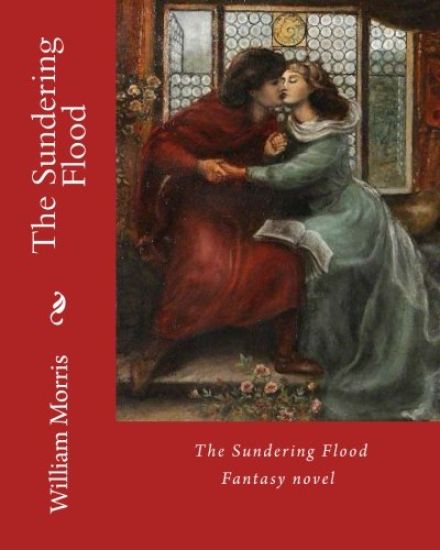
The Sundering Flood By: William Morris: Fantasy novel (World's classic's)

The Sundering Flood By: William Morris: Fantasy novel (World's classic's)

William Morris

Createspace Independent Publishing Platform
2017
nidottu
The Sundering Flood is a fantasy novel by William Morris, perhaps the first modern fantasy writer to unite an imaginary world with the element of the supernatural, and thus the precursor of much of present-day fantasy literature. The Sundering Flood was Morris' last work of fiction, completed only in rough draft, with the ending dictated from his deathbed. It was edited posthumously by his daughter May into finished form for publication and published in 1897. Morris considered his fantasies a revival of the medieval tradition of chivalrous romances; consequently, they tend to have sprawling plots of strung-together adventures. His use of archaic language has been seen as difficult by some modern readers. Plot summary: Osberne Wulfgrimsson and Elfhild are lovers who live on opposite sides of the Sundering Flood, an immense river. When Elfhild disappears during an invasion by the Red Skinners, the heartbroken Osberne takes up his magical sword Boardcleaver and joins the army of Sir Godrick of Longshaw, in whose service he helps dethrone the tyrannical king and plutocracy of merchants ruling the city at the mouth of the river. Afterwards he locates Elfhild, who had fled with a relative, a wise woman skilled in the magical arts, and taken refuge in the Wood Masterless. Elfhild tells Osberne of their adventures en route to safety. Afterwards they return together to Wethrmel, Osberne's home, and all ends happily....... William Morris (24 March 1834 - 3 October 1896) was an English textile designer, poet, novelist, translator, and socialist activist. Associated with the British Arts and Crafts Movement, he was a major contributor to the revival of traditional British textile arts and methods of production. His literary contributions helped to establish the modern fantasy genre, while he played a significant role in propagating the early socialist movement in Britain. Born in Walthamstow, Essex, to a wealthy middle-class family, Morris came under the strong influence of medievalism while studying Classics at Oxford University, there joining the Birmingham Set. After university, he trained as an architect, married Jane Burden, and developed close friendships with the Pre-Raphaelite artists Edward Burne-Jones and Dante Gabriel Rossetti and with the Neo-Gothic architect Philip Webb. Webb and Morris designed a family home, Red House, then in Kent, where the latter lived from 1859 to 1865, before moving to Bloomsbury, central London. In 1861, Morris founded a decorative arts firm with Burne-Jones, Rossetti, Webb, and others: the Morris, Marshall, Faulkner & Co. Becoming highly fashionable and much in demand, the firm profoundly influenced interior decoration throughout the Victorian period, with Morris designing tapestries, wallpaper, fabrics, furniture, and stained glass windows. In 1875, Morris assumed total control of the company, which was renamed Morris & Co...................
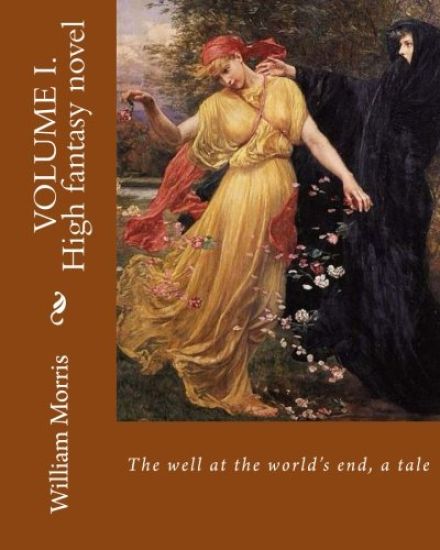
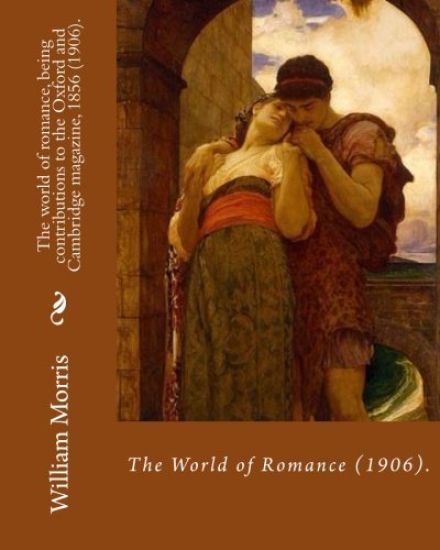
The world of romance, being contributions to the Oxford and Cambridge magazine, 1856 (1906). By: William Morris: Novel (Original Classics)
William Morris (24 March 1834 - 3 October 1896) was an English textile designer, poet, novelist, translator, and socialist activist. Associated with the British Arts and Crafts Movement, he was a major contributor to the revival of traditional British textile arts and methods of production. His literary contributions helped to establish the modern fantasy genre, while he played a significant role in propagating the early socialist movement in Britain. Born in Walthamstow, Essex, to a wealthy middle-class family, Morris came under the strong influence of medievalism while studying Classics at Oxford University, there joining the Birmingham Set. After university, he trained as an architect, married Jane Burden, and developed close friendships with the Pre-Raphaelite artists Edward Burne-Jones and Dante Gabriel Rossetti and with the Neo-Gothic architect Philip Webb. Webb and Morris designed a family home, Red House, then in Kent, where the latter lived from 1859 to 1865, before moving to Bloomsbury, central London. In 1861, Morris founded a decorative arts firm with Burne-Jones, Rossetti, Webb, and others: the Morris, Marshall, Faulkner & Co. Becoming highly fashionable and much in demand, the firm profoundly influenced interior decoration throughout the Victorian period, with Morris designing tapestries, wallpaper, fabrics, furniture, and stained glass windows. In 1875, Morris assumed total control of the company, which was renamed Morris & Co. Although retaining a main home in London, from 1871 Morris rented the rural retreat of Kelmscott Manor, Oxfordshire. Greatly influenced by visits to Iceland, with Eir kr Magn sson he produced a series of English-language translations of Icelandic Sagas. He also achieved success with the publication of his epic poems and novels, namely The Earthly Paradise (1868-1870), A Dream of John Ball (1888), the utopian News from Nowhere (1890), and the fantasy romance The Well at the World's End (1896). In 1877 he founded the Society for the Protection of Ancient Buildings to campaign against the damage caused by architectural restoration. Embracing Marxism and influenced by anarchism, in the 1880s Morris became a committed revolutionary socialist activist; after an involvement in the Social Democratic Federation (SDF), he founded the Socialist League in 1884, but broke with that organization in 1890. In 1891 he founded the Kelmscott Press to publish limited-edition, illuminated-style print books, a cause to which he devoted his final years. Morris is recognised as one of the most significant cultural figures of Victorian Britain; though best known in his lifetime as a poet, he posthumously became better known for his designs. Founded in 1955, the William Morris Society is devoted to his legacy, while multiple biographies and studies of his work have seen publication. Many of the buildings associated with his life are open to visitors, much of his work can be found in art galleries and museums, and his designs are still in production..............
William Morris

William Morris

John Drinkwater

Outlook Verlag
2023
pokkari
Trieste Publishing has a massive catalogue of classic book titles. Our aim is to provide readers with the highest quality reproductions of fiction and non-fiction literature that has stood the test of time. The many thousands of books in our collection have been sourced from libraries and private collections around the world.The titles that Trieste Publishing has chosen to be part of the collection have been scanned to simulate the original. Our readers see the books the same way that their first readers did decades or a hundred or more years ago. Books from that period are often spoiled by imperfections that did not exist in the original. Imperfections could be in the form of blurred text, photographs, or missing pages. It is highly unlikely that this would occur with one of our books. Our extensive quality control ensures that the readers of Trieste Publishing's books will be delighted with their purchase. Our staff has thoroughly reviewed every page of all the books in the collection, repairing, or if necessary, rejecting titles that are not of the highest quality. This process ensures that the reader of one of Trieste Publishing's titles receives a volume that faithfully reproduces the original, and to the maximum degree possible, gives them the experience of owning the original work.We pride ourselves on not only creating a pathway to an extensive reservoir of books of the finest quality, but also providing value to every one of our readers. Generally, Trieste books are purchased singly - on demand, however they may also be purchased in bulk. Readers interested in bulk purchases are invited to contact us directly to enquire about our tailored bulk rates.
William Morris

William Morris

John Drinkwater

Outlook Verlag
2023
sidottu
Trieste Publishing has a massive catalogue of classic book titles. Our aim is to provide readers with the highest quality reproductions of fiction and non-fiction literature that has stood the test of time. The many thousands of books in our collection have been sourced from libraries and private collections around the world.The titles that Trieste Publishing has chosen to be part of the collection have been scanned to simulate the original. Our readers see the books the same way that their first readers did decades or a hundred or more years ago. Books from that period are often spoiled by imperfections that did not exist in the original. Imperfections could be in the form of blurred text, photographs, or missing pages. It is highly unlikely that this would occur with one of our books. Our extensive quality control ensures that the readers of Trieste Publishing's books will be delighted with their purchase. Our staff has thoroughly reviewed every page of all the books in the collection, repairing, or if necessary, rejecting titles that are not of the highest quality. This process ensures that the reader of one of Trieste Publishing's titles receives a volume that faithfully reproduces the original, and to the maximum degree possible, gives them the experience of owning the original work.We pride ourselves on not only creating a pathway to an extensive reservoir of books of the finest quality, but also providing value to every one of our readers. Generally, Trieste books are purchased singly - on demand, however they may also be purchased in bulk. Readers interested in bulk purchases are invited to contact us directly to enquire about our tailored bulk rates.
A Selection from the Poems of William Morris
A Selection from the Poems of William Morris is an unchanged, high-quality reprint of the original edition of 1886. Hansebooks is editor of the literature on different topic areas such as research and science, travel and expeditions, cooking and nutrition, medicine, and other genres. As a publisher we focus on the preservation of historical literature. Many works of historical writers and scientists are available today as antiques only. Hansebooks newly publishes these books and contributes to the preservation of literature which has become rare and historical knowledge for the future.
William Morris

William Morris

Giancarlo Ascari

Prestel
2024
sidottu
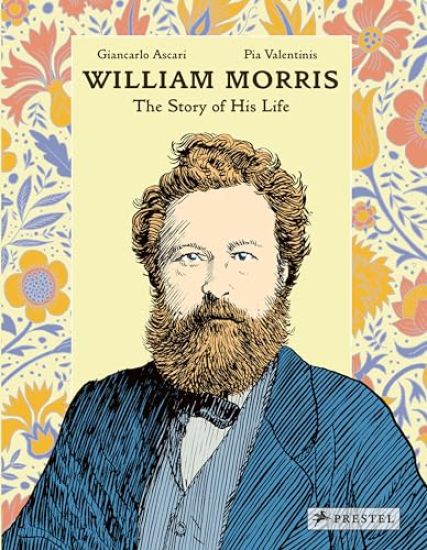
One of the most influential artists and thinkers of his time comes to life in this stunning graphic biography inspired by Morris' designs and filled with the colors and patterns that defined the Arts and Crafts Movement. Readers of all ages will learn much from this unique biography that highlights the most important aspects of the artist's life and career. It traces his childhood fascination with medieval history, nature, and his friendships with the Pre-Raphaelite Brotherhood-Dante Gabriel Rosetti, Edward Burne-Jones-and with other leading figures of the day such as Philip Webb and John Ruskin. It takes readers inside Morris' famous homes-Red House, which became a hub for artistic and intellectual activities, and served as a testing ground for his ideas about the integration of art and daily life; and Kelmscott Manor, a tranquil retreat whose natural surroundings and historic setting resonated with his romantic ideals. The visual narrative captures key moments of his foray into political activism, and details his important work in printing and book design. The volume closes with a virtual gallery, in which readers can explore the details of his tapestries, carpets, and other masterpieces as well as a section on how the Arts and Crafts Movement influenced architecture, painting, sculpture, graphics, illustration, publishing, photography, and design for decades to come. The perfect introduction to a true Renaissance man, this fascinating presentation provides readers with an indelible impression of a polymath and free-thinker who was ahead of his time, and of his lasting legacy in the fields of art, preservation, and social justice.
William Morris

William Morris

Pepin Van Roojen

Pepin Press
2020
sidottu
Pepin Press Art Portfolios contain 8 high-quality art reproductions printed on 200 gsm watercolour paper or satin coated art paper. These papers are non-ageing, manufactured from chlorine-free pulp by FSC and PEFC certified mills. The prints are enclosed in hardback portfolio covers made of premium paperboard with inner end papers along with flaps for further protection. The portfolios have a high-quality cloth spine (made of rayon, a plant-based fiber) and a cotton ribbon closure. All images reproduced come from our own archives, except for the van Gogh and Monet volumes. In our selections we have sought to combine complimentary images, striking a balance between the familiar and those lesser known. Alongside traditionally famous images many uncommon but delightful drawings and prints can also be found.