Kirjojen hintavertailu. Mukana 11 244 527 kirjaa ja 12 kauppaa.

Kirjahaku

Etsi kirjoja tekijän nimen, kirjan nimen tai ISBN:n perusteella.

487 tulosta hakusanalla "Opera Omnia..."

Archimedis Opera Omnia: Volume 1

Archimedis Opera Omnia: Volume 1

Archimedes

Cambridge University Press
2013
pokkari
Published in 1880–1, this three-volume edition of the extant works of the Greek mathematician Archimedes of Syracuse (c.287–c.212 BCE) was edited by the Danish philologist and historian Johan Ludvig Heiberg (1854–1928), whose Quaestiones Archimedeae (1879) is also reissued in this series. He later discovered a medieval palimpsest containing lost works by Archimedes, which significantly expanded the canon, but the present collection was produced long before this and therefore contains the works known at the time of publication. Heiberg consulted a Florentine codex, which he painstakingly compared with other sources to produce his edition. This first volume contains On the Sphere and the Cylinder (in two books), On the Measurement of a Circle and On Conoids and Spheroids. The texts are given in the original Greek with parallel Latin translation, notes and introductory material.
Archimedis Opera Omnia: Volume 2

Archimedis Opera Omnia: Volume 2

Archimedes

Cambridge University Press
2013
pokkari
Published in 1880–1, this three-volume edition of the extant works of the Greek mathematician Archimedes of Syracuse (c.287–c.212 BCE) was edited by the Danish philologist and historian Johan Ludvig Heiberg (1854–1928), whose Quaestiones Archimedeae (1879) is also reissued in this series. He later discovered a medieval palimpsest containing lost works by Archimedes, which significantly expanded the canon, but the present collection was produced long before this and therefore contains the works known at the time of publication. Heiberg consulted a Florentine codex, which he painstakingly compared with other sources to produce his edition. This second volume contains On Spirals, On the Equilibrium of Planes, The Sand Reckoner, The Quadrature of the Parabola, On Floating Bodies, the Liber Assumptorum (now thought to be apocryphal), the cattle problem and fragments. The texts are given in the original Greek with parallel Latin translation, notes and introductory material.
Archimedis Opera Omnia: Volume 3

Archimedis Opera Omnia: Volume 3

Archimedes

Cambridge University Press
2013
pokkari
Published in 1880–1, this three-volume edition of the extant works of the Greek mathematician Archimedes of Syracuse (c.287–c.212 BCE) was edited by the Danish philologist and historian Johan Ludvig Heiberg (1854–1928), whose Quaestiones Archimedeae (1879) is also reissued in this series. He later discovered a medieval palimpsest containing lost works by Archimedes, which significantly expanded the canon, but the present collection was produced long before this and therefore contains the works known at the time of publication. Heiberg consulted a Florentine codex, which he painstakingly compared with other sources to produce his edition. This third volume contains the editor's Latin prolegomena - his own extended essay on the works of Archimedes - followed by the commentaries on Archimedes by Eutocius of Ascalon (c.480–c.540) and indexes. The texts are given in the original Greek with parallel Latin translation, notes and introductory material.
Archimedes Opera Omnia 3 Volume Set

Archimedes Opera Omnia 3 Volume Set

Archimedes

Cambridge University Press
2013
muu
Published in 1880–1, this three-volume edition of the extant works of the Greek mathematician Archimedes of Syracuse (c.287–c.212 BCE) was edited by the Danish philologist and historian Johan Ludvig Heiberg (1854–1928), whose Quaestiones Archimedeae (1879) is also reissued in this series. He compiled this edition from a Florentine codex, which he compared with other extant sources. Volume 1 contains On the Sphere and the Cylinder (in two books), On the Measurement of a Circle and On Conoids and Spheroids. Volume 2 contains On Spirals, On the Equilibrium of Planes, The Sand Reckoner, The Quadrature of the Parabola, On Floating Bodies, the Liber Assumptorum (now thought to be apocryphal), the cattle problem and fragments. Volume 3 contains the editor's own Latin prolegomena, the commentaries on Archimedes by Eutocius of Ascalon (c.480–c.540) and indexes. The texts are given in Greek with parallel Latin translation, notes and introductory material.
Hornbostel Opera Omnia

Hornbostel Opera Omnia

Kluwer Academic Publishers
1977
nidottu
VORWORT Erich M. von Hornbostel's list of publica- Erich M. von Hornbostels Schriftenver- zeichnis umfasst 154 Titel; in seinem ge- tions includes 154 original writings; his druckten Gesamtwerk werden n61 ver- printed works contain references to n61 schiedene Literaturhinweise gegeben. Die different sources in the literature. This bibliographischen Angaben sowohl fur volume presents the bibliography of Horn- Hornbostels eigene Schriften, ihre N ach- bostel's works including their reprints and drucke und ubersetzungen, als auch fur translations, and a comprehensive biblio- die von ihm zitierte Literatur werden hier graphy of the references that he made. mit vorgelegt. Der Bibliographien-Band stellt nicht nur The Bibliographies volume provides a den Schlussel zu den in den Textbanden key to the abbreviated citations as they der zweisprachigen Hornbostel-Gesamt- appear in the bilingual texts of the ausgabe in abgekurzter Form enthaltenen HORNBOSTEL OPERA OMNIA. But it Literaturhinweisen dar und ist somit ein is not only a tool necessary for their study; fur die Benutzung der HORNBOSTEL it also provides insights into the world of OPERA OMNIA notwendiges Werkzeug; a scholar interested in music and percep- er bietet auch einen Einblick in die geistige tion, whose quest for knowledge went be- Welt eines Forschers, dessen Interesse der yond the limitations of academic disci- Musik und den Sinnen galt und dessen plines. In this sense, the bibliographies Erkenntnisdrang nicht vor den Grenzen reflect Hornbostel's contribution to the akademischer Facher haltmachte. In die- history of ideas.
Hornbostel Opera Omnia
VORWORT 1 Erich Moritz von Hornbostel (1877-1935) Erich Moritz von Hornbostel (1877-1935) 1 gilt allgemein als der Begriinder der Ver- is generally regarded as the founder of gleichenden Musikwissenschaft. Comparative Musicology. 2 Wahrend der achtundfiinfzig Jahre sei- The fifty-eight years of his lifetime saw 2 nes Lebens erweiterten sich die musika- an extraordinary expansion of the Western lischen Horizonte des Abendlandes in musical horizon; it was not only a period ausserordentlicher Weise. Es war dies nicht of ever accelerating progress toward an nur eine Zeit des immer schnelleren Fort- unpredictable future but also an era of rediscovery of a musical past with which schreitens in eine unvorhersehbare Zu- kunft hinein, es war gleichermassen eine the listeners of 1900 had lost touch. Epoche der Wiederentdeckung einer musi- kalischen Vergangenheit, zu der der Horer von 1900 jedes Verhaltnis verloren hatte. 3 Oberschaut man heute die musikali- Surveying the musical events of those 3 schen Ereignisse jener fast 60 Jahre, so almost three score years, we see that zeigt sich, dass Hornbostels Wirken ein Hornbostel's work formed an integral integraler Teil des Musiklebens seiner Zeit part of the musical life of his time. Horn- war. Hornbostel war kein isoliertes Pha- bostel was not an isolated phenomenon.
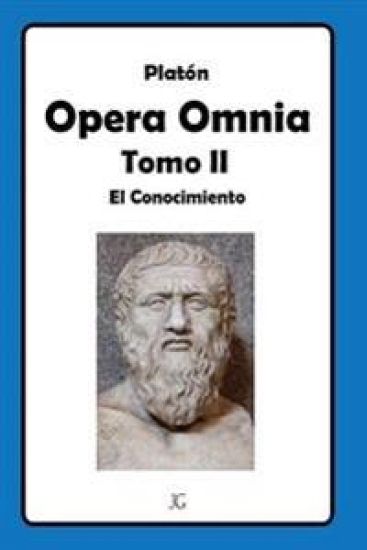
Platón Opera Omnia Tomo II: El Conocimiento
Los di logos incluidos en este tomo: Cr tilo, o de la propiedad de los nombres; di logo entre S crates, Cr tilo y Herm genes sobre el origen de los nombres y, por extensi n, de las pal-abras, expediente para discutir sobre las cosas reales y sus representaciones. Teetetes, o sobre la ciencia; S crates y el matem tico Teetetes, discuten sobre el conocimiento, o el saber, y c mo estos conducen a la verdadera sabidur a, o sea al Bien Supre-mo. El Sofista, o del Ser; S crates discute sobre el arte de la palabra y c mo esta no pueda representar la realidad. El Politico, o de la Soberan a, S crates discute sobre la ciencia de mandar a los hombres. Esta ciencia, la m s dif cil de todas, necesariamente est lejos del alcance de la multitud y de la generalidad de las personas.