

Kirjahaku
Etsi kirjoja tekijän nimen, kirjan nimen tai ISBN:n perusteella.
1000 tulosta hakusanalla A. Michele Henderson

Branded: A Father's Best Friend Short Story
Ryan Michele
Createspace Independent Publishing Platform
2017
nidottu
Grady shouldn't make my body quiver. He's my father's best friend and everywhere. A misunderstanding taught me one hard lesson in love. Coming home is supposed to help me clear my head. With Grady around, I can't turn off my mind or my body. He's decided to set me straight on the past and rewrite our future. I'm in more trouble than I ever thought possible. **This is a short story which contains insta-everything. If you're not in the mood for a short, fast, hot read, this isn't the book for you. For the rest of you, enjoy Grady-he's hot.**
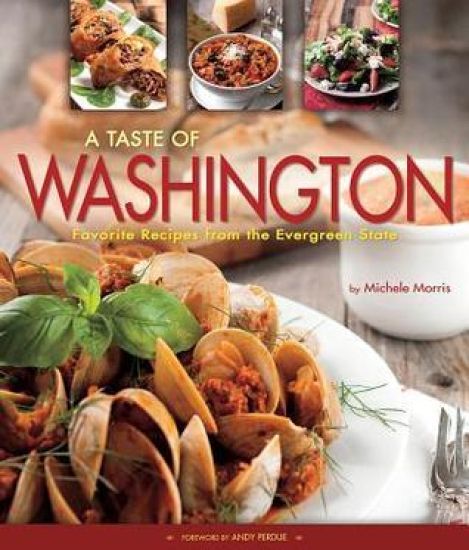
A Taste of Washington: Favorite Recipes from the Evergreen State
Michele Morris
Farcountry Press
2014
sidottu
"Here in your hands," writes Seattle Times wine columnist Andy Perdue in the foreword, "Michele Morris' cookbook does a beautiful job of capturing the amazing breadth and depth of Washington's . . . bounty from a culinary point of view." Featuring 120 recipes from 68 of the Evergreen State's best restaurants, bistros, cafes, lodges, and bed-and-breakfasts, A Taste of Washington, includes classic Northwest fare as well as flavor fusions of global cuisines. For a fresh take on fabulous food, sample these irresistible dishes: Blueberry Morning Glories with Warm Blueberry Sauce, Crispy Fried Walla Walla Sweet Onions, Cherry Chipotle Short Ribs, Northwest Fish Tacos, and Theo Chocolate Ganache Cake.
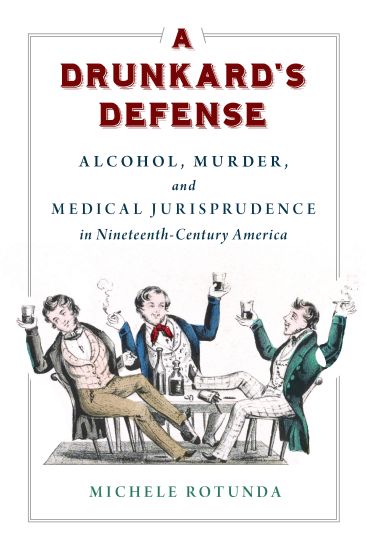
Is drunkenness a defense for murder? In the early nineteenth century, the answer was a resounding no. Intoxication was considered voluntary, and thus provided no defense. Yet as the century progressed, American courts began to extend exculpatory value to heavy drinking. The medicalization of alcohol use created new categories of mental illness which, alongside changes in the law, formed the basis for defense arguments that claimed unintended consequences and lack of criminal intent. Concurrently, advocates of prohibition cast "demon rum" and the "rum-seller" as the drunkard's accomplices in crime, mitigating offenders' actions. By the postbellum period, a backlash, led by medical professionals and an influential temperance movement, left the legacy of an unsettled legal standard. In A Drunkard's Defense, Michele Rotunda examines a variety of court cases to explore the attitudes of nineteenth-century physicians, legal professionals, temperance advocates, and ordinary Americans toward the relationship between drunkenness, violence, and responsibility, providing broader insights into the country's complicated relationship with alcohol.
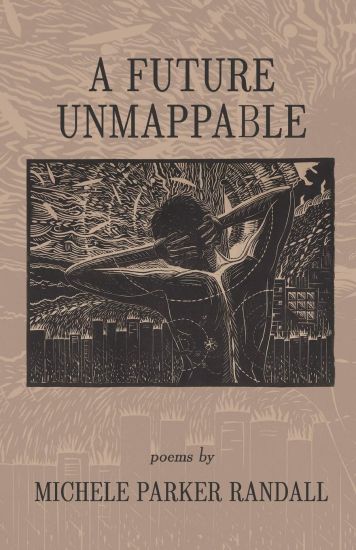
There's a rope between two burning towers. One tower burns anxiously. The other tower (the left side of the brain) burns orderly. Randall is dancing on that rope. It is the motion-a footfall, a locomotive blowing hard, a wave-that keeps her from falling. An ecstasy is a song to motion, to ex stasis, and Randall belts it true enough to pop the deepest bass string on your Fender Squier guitar. -Barrett Warner, Why Is It So Hard to Kill You?These powerful poems erode our physical boundaries leaving us to explore mental illness as a patient and as a caregiver alternatively. With ferocity yet in a ceremony of revelation, Michele Parker Randall's A Future Unmapable artfully discloses the unfathomable struggle of helping a beloved come back from the brink. Honest and courageous, each poem is a study of the much-needed conversation of what it is like to live with and recover from such a destabilizing experience. -Didi Jackson, Moon JarIn A Future Unmappable, Michele Parker Randall explores the nakedness of mental uncertainty: What is real? what is not? when "unable to tell the dream-state from the wake-state / Try to free someone from inside a balloon." Muted tension screams in the torque of Randall's lines: "coiledspring / a snake" "between the wardscape / walls" "how many worlds we / fit in one day." These panoptic poems offer a view from the in-between lest any of us be too sure. -Tanya Grae, Undoll

A Mother's Manual for the Women of Ferrara – A Fifteenth–Century Guide to Pregnancy and Pediatrics
Michele Savonarola; Gabriella Zuccolin; Martin Marafioti
Iter Press
2022
nidottu
The first treatise of its kind to be written in a European vernacular. Around 1460, Michele Savonarola produced the extraordinary Mother’s Manual for the Women of Ferrara, a gynecological, obstetrical, and pediatric treatise composed in the vernacular so that it could be read not only by the learned but also by pregnant and nursing mothers and the midwives and wet nurses who presided over childbirth. Savonarola’s work is not merely a trivial set of instructions, but the work of a learned scholar who drew on, among others, the ancient Greek physicians Hippocrates and Galen, and Avicenna’s Canon of Medicine. The first of its kind, Savonarola’s Mother’s Manual helps readers understand both the development of late-medieval and early-modern obstetrics and gynecology, as well as the experiences of women who turn to advice books for help with reproductive issues. This book also provides a key to understanding why and how a new genre of book—the midwifery manual or advice book for pregnant women—arose in sixteenth-century Italy and eventually became a popular genre all over Europe from the early modern period to the present day.

Carelessness and lackadaisical has caused pollution. Only one person cares. He is a beaver whose cavorting has come to a halt. He seeks to find the cures of his Big Brother, a river. Join him on his search and become a steward.

The Twelve Days of Christmas explains a very traditional song sang during the Christmas holidays. The song story is set in the 1500s when Catholics had to go underground to escape persecution from the King of England, the first king to splinter religion on a massive level.
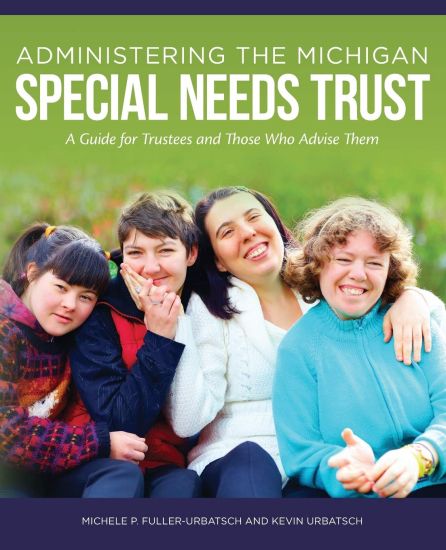
Administering the Michigan Special Needs Trust: A guide for trustees and those who advise them
Kevin Urbatsch; Michele P. Fuller
Independently Published
2020
nidottu
Administering a special needs trust (SNT) is a very important job, which often has a profound impact on the life of persons with disabilities. In most cases, the SNT trustee is providing the beneficiary goods and services that enhances their quality of life. In some cases, the SNT trustee may be the only person looking to the beneficiary's welfare. Thus, the role of an SNT trustee is often a more substantial and complex role than in many other types of trusteeships. The great SNT trustee is a solid financial manager, accountant, record keeper, legal counselor, public benefits advisor, social worker, housing coordinator, civil rights advocate, guardian, and life coach. Moreover, the world of public benefits for the disabled is a complex one that requires careful study. It is very easy to mess up these rules and using common sense will generally lead to a loss of public benefits and potential liability for an SNT trustee. This is why authors Michele P. Fuller-Urbatsch and Kevin Urbatsch published their book titled Administering the Michigan Special Needs Trust. The book is written in question and answer format to cover all aspects of administering a special needs trust. In addition, there are multiple checklists, sample forms, and summaries included that will allow a trustee to confidently manage any type of special needs trust.

Could the wink of a metal goat sculpture, tucked in the corner of a dusty, junk-filled hardware shop, make nine-year-old Jack believe in magic again? "It has to," Jack's father decides as he hauls the odd metal creature home in the back of his pickup. After the death of his grandfather, Jack has refused to perform any magic tricks; actually, he won't speak of his grandfather at all.And so goes the tale of A Goat Named Lucky, a middle-aged chapter book that captures the need of all children to believe in magic, especially Jack's, after the loss of someone so dear.





A Survivor's Guide to Triple Negative Breast Cancer
Michele Solak-Edwards
Michele Solak-Edwards
2022
nidottu

A Survivor's Guide To Triple Negative Breast Cancer
Michele Solak-Edwards
Michele Solak-Edwards
2022
sidottu
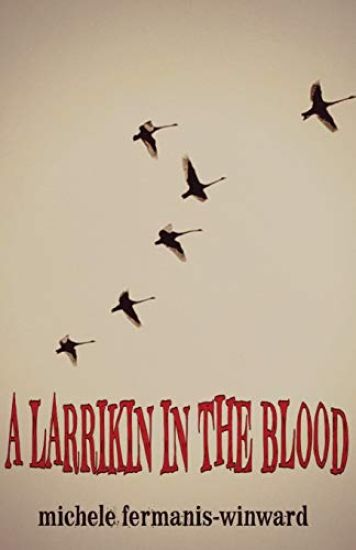
John Avery was aged twenty-four with a wife and young child when he was arrested for stealing a grey mare, his death sentence commuted to life transportation. After twenty years in Van Diemen's Land he was charged with sheep stealing and sentenced to fourteen years on Sarah Island. From a small Hampshire village in 1750s England to 1870s boom-town Melbourne, here are the stories of six women whose lives were impacted by the choices made by John Avery, my four times great grandfather. This is a family history told in poetic long-form, the bald facts on official registers fleshed out through imagining how I would respond in their place given what choices were open to them. There is Sarah, John's mother, then his two wives, Jane and Mary Ann, an Irish rebel; his son William's two wives, Matilda, a Soho child prostitute, and Emily, a runaway. The final story is of William and Matilda's daughter, Tilly. Through their eyes we see the impact of crime and punishment in England and Ireland and the young colony in Van Diemen's Land, how some will prosper while others fail. The six women find their own ways to get by.

Where Your Mind Goes Energy Flows: A Self-Healing Manual for the Mind and Body
Valerie Woelk; Michele Bourgeois B. Sc N.
Library and Archives Canada
2018
nidottu
Michele Bourgeois's thoughtful and comprehensive guidance empowers you to actively participate in your own health and healing. This information and these meditations guide you to explore the connections between your personal thoughts, emotions, and your physical health. Through mindful meditations designed for each specific body system, you'll discover how to activate soothing energy to enhance your body's powerful healing capacity. Restoring physical, mental, and spiritual balance to the body systems will allow you to expand your sense of well being, accelerate your healing and thrive more fully in your life.
Inequality is part and parcel of our lives. What degree of inequality we find acceptable or unacceptable informs the foundational values of our societies, and shapes our political and economic structures. Yet until recently the study of economic inequality (unlike poverty) was considered by economists as a problem not worth examining. That has changed. With the dramatic increase in the concentration of wealth in the hands of a few, inequality has become recognised by all shades of political opinion as a potential threat to economic growth and the functioning of society and democracy. In A Short History of Inequality, Michele Alacevich and Anna Soci chart the emergence of the inequality question and in so doing provide a masterly overview of the work of recent scholars and the main concepts and debates that have arisen within inequality studies. Their analysis highlights how the historical diffidence to examining inequality, the relationship of inequality to the processes of globalization, and the adverse effects of inequality on democracy are all strongly intertwined. The book is an ideal introduction for students and the general reader looking to understand what’s at stake when the rewards of capitalism are distributed unjustly.
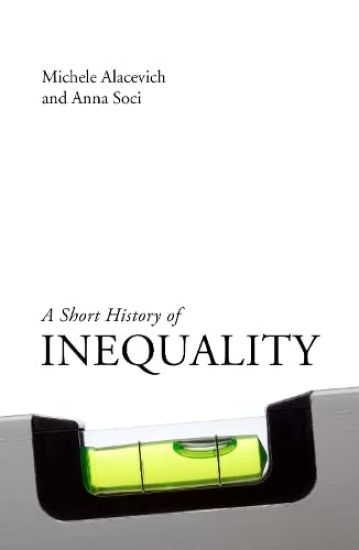
Inequality is part and parcel of our lives. What degree of inequality we find acceptable or unacceptable informs the foundational values of our societies, and shapes our political and economic structures. Yet until recently the study of economic inequality (unlike poverty) was considered by economists as a problem not worth examining. That has changed. With the dramatic increase in the concentration of wealth in the hands of a few, inequality has become recognised by all shades of political opinion as a potential threat to economic growth and the functioning of society and democracy. In A Short History of Inequality, Michele Alacevich and Anna Soci chart the emergence of the inequality question and in so doing provide a masterly overview of the work of recent scholars and the main concepts and debates that have arisen within inequality studies. Their analysis highlights how the historical diffidence to examining inequality, the relationship of inequality to the processes of globalization, and the adverse effects of inequality on democracy are all strongly intertwined. The book is an ideal introduction for students and the general reader looking to understand what’s at stake when the rewards of capitalism are distributed unjustly.