Kirjojen hintavertailu. Mukana 12 083 983 kirjaa ja 12 kauppaa.

Kirjahaku

Etsi kirjoja tekijän nimen, kirjan nimen tai ISBN:n perusteella.

1000 tulosta hakusanalla ALASTAIR CHISHOLM

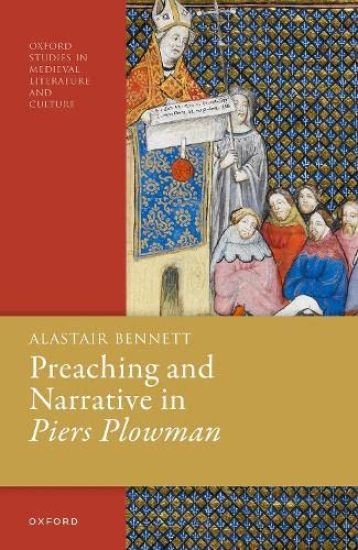
Preaching and Narrative in Piers Plowman

Preaching and Narrative in Piers Plowman

Alastair Bennett

Oxford University Press
2023
sidottu
William Langland's Piers Plowman was written and read during a “golden age” of English preaching. The poem describes a world where sermons took many different forms and were delivered in many different contexts, from public events in the life of the realm to pastoral instruction in the parish. It dramatises preaching as part of its allegorical action, showing how sermons shaped their listeners' understanding of the world; it also includes polemical critique of corrupt, self-interested preaching, and offers radical prescriptions for its reform. This book argues that Langland's central insight into the way that sermons moved and engaged their audiences had to do with their characteristic use of narrative. Preachers in the poem address listeners who are absorbed in the concerns of their present moment, and encourage them to new forms of social and spiritual endeavour by locating that moment in a larger, interpreted plot: the story of an individual life, or an emergent community, or of salvation history as a whole. The book employs a critical vocabulary derived from Paul Ricoeur to describe the process by which these narratives are composed, and to show how they mediate and reconfigure their listeners' experiences.

André Du Ryer and Oriental Studies in Seventeenth-Century France

André Du Ryer and Oriental Studies in Seventeenth-Century France

Alastair Hamilton; Francis Richard

Oxford University Press
2004
sidottu
André Du Ryer was French vice-consul in Egypt from 1623 to 1626, and both as adviser and interpreter to the French ambassador in Istanbul and ambassador extraordinary of the sultan to France in the early 1630s, he assembled a fine collection of Turkish, Persian, and Arabic manuscripts most of which are now in the Bibliothèque Nationale de France. After reconstructing his diplomatic career and his life after his return to France in 1633, the authors assess Du Ryer's contribution to Turkish and Persian studies, his translation of the Quran both in France and in the countries where it was translated (England, Holland, and Germany), and his manuscript collection. Du Ryer is presented in the historical context of French diplomatic relations with the Ottoman Empire and in the context both of contemporary European orientalism and of the development of French literature in the reign of Louis XIII and the minority of Louis XIV. He emerges as an important and influential figure whose significance has never previously been appreciated.
The Apocryphal Apocalypse

The Apocryphal Apocalypse

Alastair Hamilton

Oxford University Press
1999
sidottu
This is the first study of the reception of the apocryphal Second Book of Esdras (4 Ezra) from the fifteenth to the eighteenth century. Professor Hamilton discusses the concepts of biblical apocrypha and canonicity in connection with the increasingly critical attitude to religious authority which developed with the humanists and intensified with the Reformation. The Book owed its initial success to Hebraists such as Pico della Mirandola and Bibliander. It was used to account for the origins of Jewish Kabbalah and to prophesy political and religious events: the fall of the Ottoman empire, or the destruction of the papacy. Anabaptists, dissident Protestants of various persuasions, Rosicrucians and Paracelsians consulted it not only as a work of prophecy but, it is argued, as an emblem of dissent, rejected by the official Churches. At the same time more sober scholars, both Protestants and Catholics, scrutinized 2 Esdras with greater objectivity, endeavouring to date it correctly and establish its authorship. This study also investigates the interaction between their views and those of the Book's enthusiastic supporters.
Time's Purpled Masquers

Time's Purpled Masquers

Alastair Fowler

Clarendon Press
1996
sidottu
Alastair Fowler's fascinating study explores the extraordinary prominence of astronomical imagery in Renaissance literature. Although the stars were important astrologically, this is at best a partial explanation for the popularity of such imagery, and the impact of astronomical discoveries (particularly their implications for stellification, or translation to the stars) is also an important factor. Seventeenth-century culture was both religious and materialistic and the literature of the period shows a great variety of negotiated reconciliations of the two.
Magister Amoris: The Roman de la Rose and Vernacular Hermeneutics
The Roman de la Rose was a major bestseller - largely due to its robust treatment of 'natural' sexuality. This study concentrates on the ways in which Jean de Meun, in imitation of Ovid, assumed the mock-magisterium (or mastership) of love. From Latin texts and literary theory Jean derived many hermeneutic rationales and generic categorizations, without allowing any one to dominate. Alastair J. Minnis considers allegorical versus literalistic expression in the poem, its competing discourses of allegorical covering and satiric stripping, Jean's provocative use of plain and sometimes obscene language in a widely accessible French work, the challenge of its homosocial and perhaps even homoerotic constructions, the subversive effects of coital comedy within a text characterized by intermittent aspirations to moral and scientific truth, and - placing the Rose's reception within the European history of vernacular hermeneutics - the problematic translation of literary authority from Latin into the vulgar tongue.
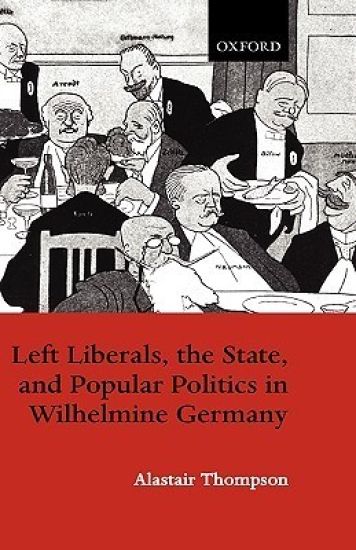
Left Liberals, the State, and Popular Politics in Wilhelmine Germany
Although often viewed as ineffectual intellectuals, or a spent political force, Left Liberals had become the third largest party in German politics by 1914 and in the German Revolution of 1918/19 it was Left Liberals who effectively wrote the new Weimar constitution. This study, based on extensive original research, investigates Left Liberals in the locality, as well as at the national level, with case studies ranging from Kiel to Kattowitz. Overturning old notions of German liberalism as the helpless victim of mass mobilization and political polarization, it is central to understanding both increasing left liberal influence and support on the eve of the First World War, and why liberal values could not be consolidated after 1918. This study has powerful general implications for the history of imperial Germany, reassessing the role of political parties, public perceptions of politics, and the impact and character of the state.
Quasiconformal Maps and Teichmüller Theory

Quasiconformal Maps and Teichmüller Theory

Alastair Fletcher; Vladimir Markovic

Oxford University Press
2006
sidottu
Based on a series of graduate lectures given by Vladimir Markovic at the University of Warwick in spring 2003, this book is accessible to those with a grounding in complex analysis looking for an introduction to the theory of quasiconformal maps and Teichmüller theory. Assuming some familiarity with Riemann surfaces and hyperbolic geometry, topics covered include the Grötzch argument, analytical properties of quasiconformal maps, the Beltrami differential equation, holomorphic motions and Teichmüller spaces. Where proofs are omitted, references to where they may be found are always given, and the text is clearly illustrated throughout with diagrams, examples, and exercises for the reader.
Literary Names

Literary Names

Alastair Fowler

Oxford University Press
2014
nidottu
Why do authors use pseudonyms and pen-names, or ingeniously hide names in their work with acrostics and anagrams? How has the range of permissible given names changed and how is this reflected in literature? Why do some characters remain mysteriously nameless? In this rich and learned book, Alastair Fowler explores the use of names in literature of all periods - primarily English but also Latin, Greek, French, and Italian - casting an unusual and rewarding light on the work of literature itself. He traces the history of names through Homer, Spenser, Shakespeare, Milton, Thackeray, Dickens, Joyce, and Nabokov, showing how names often turn out to be the thematic focus. Fowler shows that the associations of names, at first limited, become increasingly salient and sophisticated as literature itself develops.
The Mind of the Book

The Mind of the Book

Alastair Fowler

Oxford University Press
2017
sidottu
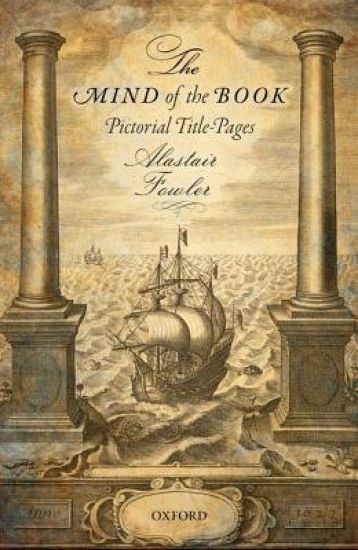
Alastair Fowler presents a fascinating study of title-pages printed in England from the early modern period to the nineteenth century. He examines pictorial title-pages in the context of the History of the Book for the first time. The first part of The Mind of the Book explores the forerunner of the frontispiece in late antiquity; the use of frames and borders in title-pages; portraits; printers' devices; emblematic title-pages of the sixteenth and seventeenth centuries, especially attending to explanatory verses and arcane features such as chronograms; title-pages as 'memory prompts'; and eighteenth and nineteenth-century title-pages, tracing 'the rejection of emblematic and symbolic features and the introduction of unadorned, unpictorial, title-pages'. The second part of the book presents illustrations of sixteen significant title-pages with commentaries, ranging from Chaucer's Works in 1532 through Bacon's Instauratio Magna in 1620, Dicken's The Mystery of Edwin Drood in 1870, and arriving back at Chaucer with Edward Burnes-Jones's illustrated title-page for the Works of 1896.
The Copts and the West, 1439-1822

The Copts and the West, 1439-1822

Alastair Hamilton

Oxford University Press
2014
nidottu
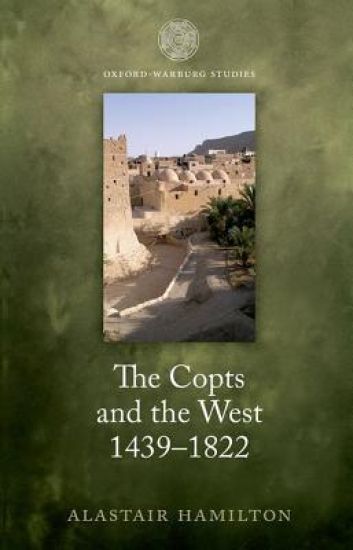
In seventeenth-century Europe the Copts, or the Egyptian members of the Church of Alexandria, were widely believed to hold the key to an ancient wisdom and an ancient theology. Their language was thought to lead to the deciphering of the hieroglyphs and their Church to retain traces of early Christian practices as well as early Egyptian customs. Now available in paperback for the first time, this first, full-length study of the subject, discusses the attempts of Catholic missionaries to force the Church of Alexandria into union with the Church of Rome and the slow accumulation of knowledge of Coptic beliefs, undertaken by Catholics and Protestants. It ends with a survey of the study of the Coptic language in the West and of the uses to which it was put by Biblical scholars, antiquarians, theologians, and Egyptologists.
Generalized Method of Moments

Generalized Method of Moments

Alastair R. Hall

Oxford University Press
2004
nidottu
This book has become one of the main statistical tools for the analysis of economic and financial data. Designed for both theoreticians and practitioners, this book provides a comprehensive treatment of GMM estimation and inference. All the main statistical results are discussed intuitively and proved formally, and all the inference techniques are illustrated using empirical examples in macroeconomics and finance. This book is the first to provide an intuitive introduction to the method combined with a unified treatment of GMM statistical theory and a survey of recent important developments in the field. About the SeriesAdvanced Texts in Econometrics is a distinguished and rapidly expanding series in which leading econometricians assess recent developments in such areas as stochastic probability, panel and time series data analysis, modeling, and cointegration. In both hardback and affordable paperback, each volume explains the nature and applicability of a topic in greater depth than possible in introductory textbooks or single journal articles. Each definitive work is formatted to be as accessible and convenient for those who are not familiar with the detailed primary literature.
Generalized Method of Moments

Generalized Method of Moments

Alastair R. Hall

Oxford University Press
2004
sidottu
Generalized Method of Moments (GMM) has become one of the main statistical tools for the analysis of economic and financial data. This book is the first to provide an intuitive introduction to the method combined with a unified treatment of GMM statistical theory and a survey of recent important developments in the field. Providing a comprehensive treatment of GMM estimation and inference, it is designed as a resource for both the theory and practice of GMM: it discusses and proves formally all the main statistical results, and illustrates all inference techniques using empirical examples in macroeconomics and finance. Building from the instrumental variables estimator in static linear models, it presents the asymptotic statistical theory of GMM in nonlinear dynamic models. Within this framework it covers classical results on estimation and inference techniques, such as the overidentifying restrictions test and tests of structural stability, and reviews the finite sample performance of these inference methods. And it discusses in detail recent developments on covariance matrix estimation, the impact of model misspecification, moment selection, the use of the bootstrap, and weak instrument asymptotics.
'All manner of ingenuity and industry'

'All manner of ingenuity and industry'

Alastair Compston

Oxford University Press
2021
sidottu
This book celebrates the quatercentenary of the birth of Thomas Willis on 27 January 1621. As a physician in Oxford, Willis's work in the 1650s provides an example of rural medical practice in early modern England. As a member of the Oxford Philosophical Club that met from the 1640s, he was central to the move from classical scholasticism to accounts of anatomy and physiology based on observation and experiment. As Sedleian professor of natural philosophy in Oxford, the surviving records of his lectures from the 1660s provide an example of pedagogy in medicine at that time. And, after moving to London in 1667, Willis continued to interact with a community of scientists and physicians who transformed ideas on respiration, muscular movement and the nervous system. Despite a busy clinical practice, Willis found time to write extensively on anatomy and physiology, clinical medicine and therapeutics. These contributions are recognized as wise, original and influential. Between 1659 and 1675, Willis published fourteen treatises. These appeared in six published works, one in two parts, written in Latin. Four of the titles contain engraved plates depicting the brain, muscle, lungs and stomach. The illustrators were Christopher Wren, Richard Lower, Edmund King and possibly Willis himself. Soon after his death, the treatises were published as collected works, also in Latin. Starting in 1679, his writings were translated into English and published as Dr Willis's practice of physic, eventually completed in 1684. The eighteen chapters of this bio-bibliography are in four sections: chapter 1 is biographical; chapters 2 - 4 describe aspects of the history of the book and illustration relevant to Willis's printed works; chapters 5 - 14 provide bibliographical details of Willis's treatises contained in 102 copies printed in Latin, English, Dutch and French between 1659 and 1721; and chapters 15 - 18 summarise the content of Willis's works and their contribution to medical science.
Historians on Chaucer

Historians on Chaucer

Alastair Minnis

Oxford University Press
2018
nidottu
As literary scholars have long insisted, an interdisciplinary approach is vital if modern readers are to make sense of works of medieval literature. In particular, rather than reading the works of medieval authors as addressing us across the centuries about some timeless or ahistorical 'human condition', critics from a wide range of theoretical approaches have in recent years shown how the work of poets such as Chaucer constituted engagements with the power relations and social inequalities of their time. Yet, perhaps surprisingly, medieval historians have played little part in this 'historical turn' in the study of medieval literature. The aim of this volume is to allow historians who are experts in the fields of economic, social, political, religious, and intellectual history the chance to interpret one of the most famous works of Middle English literature, Geoffrey Chaucer's 'General Prologue' to the Canterbury Tales, in its contemporary context. Rather than resorting to traditional historical attempts to see Chaucer's descriptions of the Canterbury pilgrims as immediate reflections of historical reality or as portraits of real life people whom Chaucer knew, the contributors to this volume have sought to show what interpretive frameworks were available to Chaucer in order to make sense of reality and how he adapted his literary and ideological inheritance so as to engage with the controversies and conflicts of his own day. Beginning with a survey of recent debates about the social meaning of Chaucer's work, the volume then discusses each of the Canterbury pilgrims in turn. Historians on Chaucer should be of interest to all scholars and students of medieval culture whether they are specialists in literature or history.
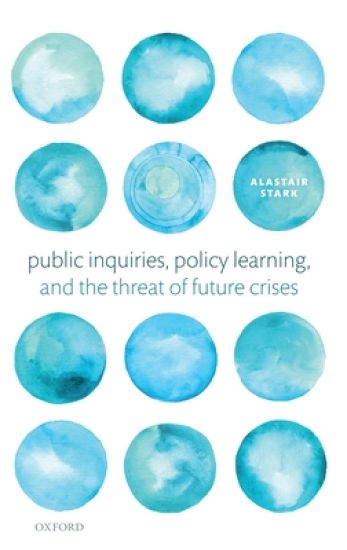
Public Inquiries, Policy Learning, and the Threat of Future Crises
In the aftermath of major crises governments turn to public inquiries to learn lessons. Inquiries often challenge established authority, frame heroes and villains in the public spotlight and deliver courtroom-like drama to hungry journalists. As such, they can become high-profile political stories in their own right. Inquiries also have a policy learning mandate with big implications because they are ultimately responsible for identifying policy lessons which, if implemented, should keep us safe from the next big event. However, despite their high-profile nature and their position as the pre-eminent means of learning about crises, we still know very little about what inquiries produce in terms of learning and what factors influence their effectiveness in this regard. In light of this, the question that animates this book is as important as it is simple. Can post-crisis inquiries deliver effective lesson-learning which will reduce our vulnerability to future threats? Conventional wisdom suggests that the answer to this question should be an emphatic no. Outside of the academy, for example, inquiries are regularly vilified as costly wastes of time that illuminate very little while inside social scientists echo similar concerns, regularly describing inquiries as unhelpful. These commentaries, however, lack robust, generalizable evidence to support their claims. This volume provides evidence from the first international comparison of post-crisis inquiries in Australia, Canada, New Zealand, and the United Kingdom, which shows that, contrary to conventional wisdom, the post-crisis inquiry is an effective means of policy learning after crises and that they consistently encourage policy reforms that enhance our resilience to future threats.
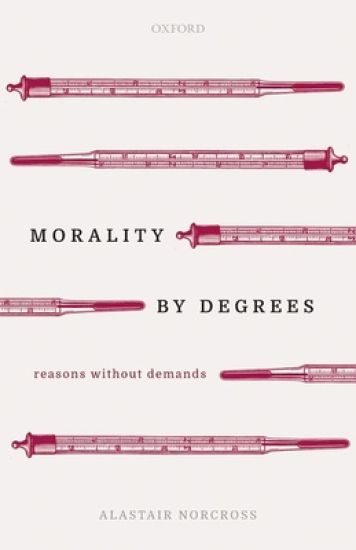
Morality by Degrees

Morality by Degrees

Alastair Norcross

Oxford University Press
2020
sidottu
In Morality by Degrees, Alastair Norcross articulates and defends a radical new approach to ethical theory. Consequentialist theories of the right connect the rightness and wrongness (and related notions) of actions with the intrinsic goodness and badness of states of affairs consequential on those actions. The most popular such theory is maximization, which is said to demand of agents that they maximize the good, that they do the best they can, at all times. Thus it may seem that consequentialist theories are overly demanding, and, relatedly, that they cannot accommodate the phenomenon of going above and beyond the demands of duty. However, a clear understanding of consequentialism leaves no room for a theory of the right, at least not at the fundamental level of the theory. A consequentialist theory, such as utilitarianism, is a theory of how to rank outcomes, and derivatively actions, which provides reasons for choosing some actions over others. It is thus a purely scalar theory, with no demands that certain actions be performed, and no fundamental classification of actions as right or wrong. However, such notions may have pragmatic benefits at the level of application, since many people find it easier to guide their conduct by simple commands, rather than to think in terms of reasons of varying strength to do one thing rather than another. A contextualist semantics for various terms, such as "right", "permissible", "harm", when combined with the scalar approach to consequentialism, allows for the expression of truth-apt propositions with sentences containing such terms.
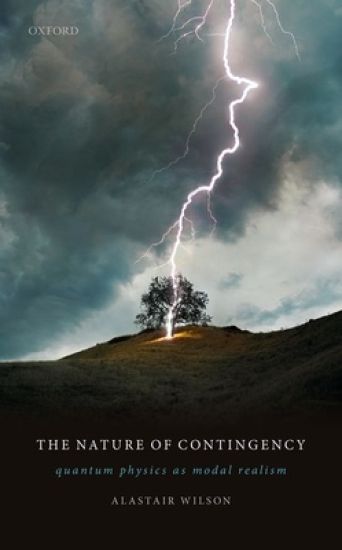
The Nature of Contingency

The Nature of Contingency

Alastair Wilson

Oxford University Press
2020
sidottu
This book defends a radical new theory of contingency as a physical phenomenon. Drawing on the many-worlds approach to quantum theory and cutting-edge metaphysics and philosophy of science, it argues that quantum theories are best understood as telling us about the space of genuine possibilities, rather than as telling us solely about actuality. When quantum physics is taken seriously in the way first proposed by Hugh Everett III, it provides the resources for a new systematic metaphysical framework encompassing possibility, necessity, actuality, chance, counterfactuals, and a host of related modal notions. Rationalist metaphysicians argue that the metaphysics of modality is strictly prior to any scientific investigation; metaphysics establishes which worlds are possible, and physics merely checks which of these worlds is actual. Naturalistic metaphysicians respond that science may discover new possibilities and new impossibilities. This book's quantum theory of contingency takes naturalistic metaphysics one step further, allowing that science may discover what it is to be possible. As electromagnetism revealed the nature of light, as acoustics revealed the nature of sound, as statistical mechanics revealed the nature of heat, so quantum physics reveals the nature of contingency.
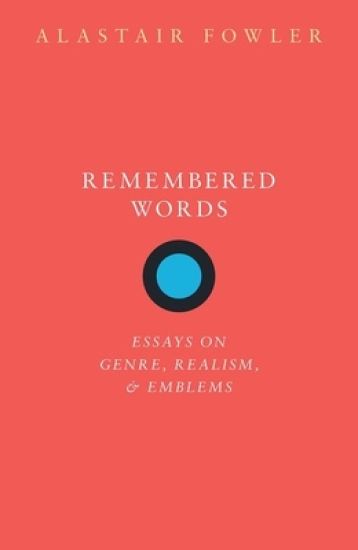
Remembered Words

Remembered Words

Alastair Fowler

Oxford University Press
2021
sidottu
Remembered Words is a selection of Alastair Fowler's essays on genre, realism, and the emblem (three interrelated subjects), published over six decades. It offers readers a way to arrive at a sense of how approaches to these subjects have changed over that period. Specifically, it shows how genre has come to be understood in terms of family resemblance theory. Remembered Words argues that realism can be seen as altering historically, so that Renaissance realism, for example, differs from those of later periods. Similar changes are traced in the emblem, which Fowler shows to be not only a particular genre, but an element of various kinds of realism. Famous passages in ancient literature are remembered in the familiar emblems of the Renaissance; and Renaissance emblems form the basis of metaphors in later literature. Meanwhile, the general approach of the critic and the reader has been altering over the years--as becomes evident when one takes into account the time-scale of sixty years (an unusually long working life for a critic). Modern theoretical approaches--which are often casually regarded as self-evident--may appear less inevitable and more arbitrary. This is not to say that they are necessarily wrong, just that they need to be argued for. Remembered Words is intended for senior undergraduates and for graduate students, who may use it to form ideas of Fowler's approach and that of his contemporaries and predecessors over the last half century.