Kirjojen hintavertailu. Mukana 11 244 527 kirjaa ja 12 kauppaa.

Kirjahaku

Etsi kirjoja tekijän nimen, kirjan nimen tai ISBN:n perusteella.

1000 tulosta hakusanalla Adam Dailey

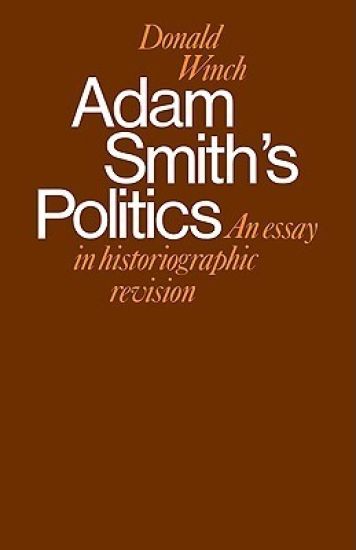
Adam Smith's Politics

Adam Smith's Politics

Donald Winch

Cambridge University Press
1978
pokkari
For most of the two hundred years or so that have passed since the publication of the Wealth of Nations, Adam Smith's writings on political and economic questions have been viewed within a liberal capitalist perspective of nineteenth- and twentieth- century provenance. This essay in interpretation seeks to provide a more historical reading of certain political themes which recur in Smith's writings by bringing eighteenth-century perspectives to bear on the problem. Contrary to the view that sees Smith's work as marking the point at which 'politics' was being eclipsed by 'economics', it claims that Smith has a 'politics' which goes beyond certain political attitudes connected with the role of the state in economic affairs. It argues that he employs a consistent mode of political analysis which cannot be encompassed within the standard liberal capitalist categories, but can be understood by reference to the language and qualities of contemporary political debate, and of the eighteenth-century science of politics cultivated by Montesquieu and, above all, Hume, particularly as revealed by recent scholarship. A concluding chapter draws the various strands of the interpretation together to form a portrait of what Smith might legitimately be said to have been doing when he wrote on these matters.
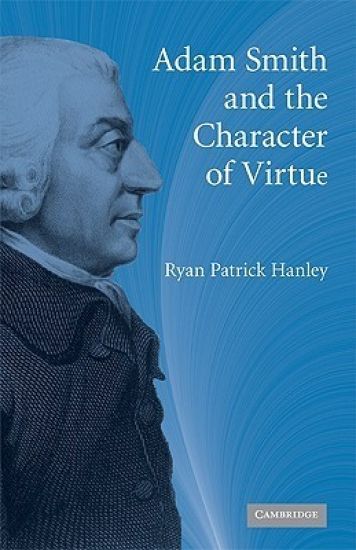
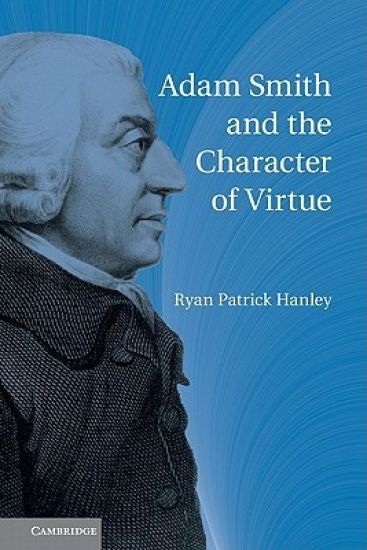
Adam Smith and the Character of Virtue

Adam Smith and the Character of Virtue

Ryan Patrick Hanley

Cambridge University Press
2009
sidottu
Recent years have witnessed a renewed debate over the costs at which the benefits of free markets have been bought. This book revisits the moral and political philosophy of Adam Smith, capitalism's founding father, to recover his understanding of the morals of the market age. In so doing it illuminates a crucial albeit overlooked side of Smith's project: his diagnosis of the ethical ills of commercial societies and the remedy he advanced to cure them. Focusing on Smith's analysis of the psychological and social ills endemic to commercial society - anxiety and restlessness, inauthenticity and mediocrity, alienation and individualism - it argues that Smith sought to combat corruption by cultivating the virtues of prudence, magnanimity and beneficence. The result constitutes a new morality for modernity, at once a synthesis of commercial, classical and Christian virtues and a normative response to one of the most pressing political problems of Smith's day and ours.
Adam Smith: The Theory of Moral Sentiments

Adam Smith: The Theory of Moral Sentiments

Adam Smith

Cambridge University Press
2002
sidottu
Adam Smith's Theory of Moral Sentiments (1759) lays the foundation for a general system of morals, and is a text of central importance in the history of moral and political thought. It presents a theory of the imagination which Smith derived from David Hume but which encompasses an idea of sympathy that in some ways is more sophisticated than anything in Hume's philosophy. By means of sympathy and the mental construct of an impartial spectator, Smith formulated highly original theories of conscience, moral judgment and the virtues. The enduring legacy of his work is its reconstruction of the Enlightenment idea of a moral, or social, science encompassing both political economy and the theory of law and government. This 2002 volume offers a new edition of the text with clear and helpful notes for the student reader, together with a substantial introduction that sets the work in its philosophical and historical context.
Adam Smith: The Theory of Moral Sentiments

Adam Smith: The Theory of Moral Sentiments

Smith Adam

Cambridge University Press
2002
pokkari
Adam Smith’s Theory of Moral Sentiments (1759) lays the foundation for a general system of morals, and is a text of central importance in the history of moral and political thought. It presents a theory of the imagination which Smith derived from David Hume but which encompasses an idea of sympathy that in some ways is more sophisticated than anything in Hume’s philosophy. By means of sympathy and the mental construct of an impartial spectator, Smith formulated highly original theories of conscience, moral judgment and the virtues. The enduring legacy of his work is its reconstruction of the Enlightenment idea of a moral, or social, science encompassing both political economy and the theory of law and government. This volume offers a new edition of the text with clear and helpful notes for the student reader, together with a substantial introduction that sets the work in its philosophical and historical context.
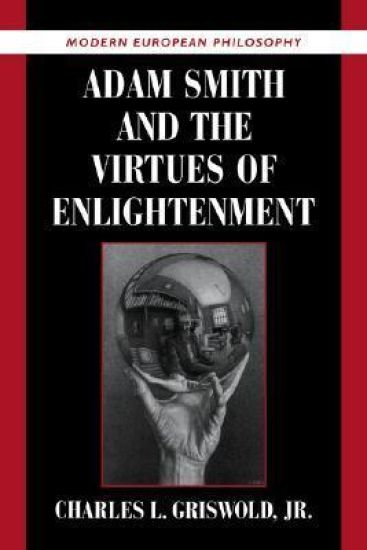
Adam Smith and the Virtues of Enlightenment

Adam Smith and the Virtues of Enlightenment

Jr Griswold

Cambridge University Press
1998
sidottu
Charles Griswold has written the first comprehensive philosophical study of Smith’s moral and political thought. Griswold sets Smith’s work in the context of the Enlightenment and relates it to current discussions in moral and political philosophy. Smith’s appropriation as well as criticism of ancient philosophy, and his carefully balanced defence of a liberal and humane moral and political outlook, are also explored. This is a major philosophical and historical reassessment of a key figure in the Enlightenment that will be of particular interest to philosophers and political and legal theorists, as well as historians of ideas, rhetoric, and political economy.
Adam Smith and the Virtues of Enlightenment

Adam Smith and the Virtues of Enlightenment

Jr Griswold

Cambridge University Press
1998
pokkari
Charles Griswold has written a comprehensive philosophical study of Smith's moral and political thought. Griswold sets Smith's work in the context of the Enlightenment and relates it to current discussions in moral and political philosophy. Smith's appropriation as well as criticism of ancient philosophy, and his carefully balanced defence of a liberal and humane moral and political outlook, are also explored. This 1999 book is a major philosophical and historical reassessment of a key figure in the Enlightenment that will be of particular interest to philosophers and political and legal theorists, as well as historians of ideas, rhetoric, and political economy.
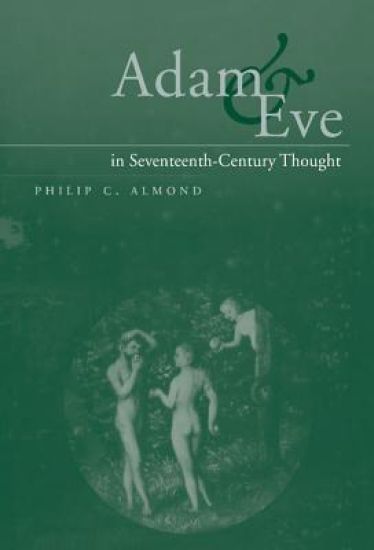
Adam and Eve in Seventeenth-Century Thought

Adam and Eve in Seventeenth-Century Thought

Philip C. Almond

Cambridge University Press
1999
sidottu
This book offers a fascinating account of the central myth of Western culture - the story of Adam and Eve in the Garden of Eden. Philip Almond examines the way in which the gaps, hints and illusions within this biblical story were filled out in seventeenth-century English thought. At this time, the Bible formed a fundamental basis for studies in all subjects, and influenced greatly the way that people understood the world. Drawing extensively on primary sources he covers subjects as diverse as theology, history, philosophy, botany, language, anthropology, geology, vegetarianism, and women. He demonstrates the way in which the story of Adam and Eve was the fulcrum around which moved lively discussions on topics such as the place and nature of Paradise, the date of creation, the nature of Adamic language, the origins of the American Indians, agrarian communism, and the necessity and meaning of love, labour and marriage.
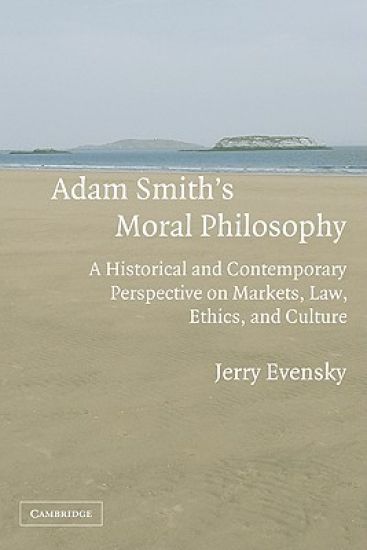
Adam Smith's Moral Philosophy

Adam Smith's Moral Philosophy

Jerry Evensky

Cambridge University Press
2007
pokkari
Adam Smith is the best known among economists for his book, The Wealth of Nations, often viewed as the keystone of modern economic thought. For many he has become associated with a quasi-libertarian laissez-faire philosophy. Others, often heterodox economists and social philosophers, on the contrary, focus on Smith's Theory of Moral Sentiments, and explore his moral theory. There has been a long debate about the relationship or lack thereof between these, his two great works. This work treats these dimensions of Smith's work as elements in a seamless moral philosophical vision, demonstrating the integrated nature of these works and Smith's other writings. This book weaves Smith into a constructive critique of modern economic analysis (engaging along the way the work of Nobel Laureates Gary Becker, Amarty Sen, Douglass North, and James Buchanan) and builds bridges between that discourse and the other social sciences.
Adam Smith and the Circles of Sympathy

Adam Smith and the Circles of Sympathy

Fonna Forman-Barzilai

Cambridge University Press
2010
sidottu
This 2010 text pursues Adam Smith's views on moral judgement, humanitarian care, commerce, justice and international law both in historical context and through a twenty-first-century cosmopolitan lens, making this a major contribution not only to Smith studies but also to the history of cosmopolitan thought and to contemporary cosmopolitan discourse itself. Forman-Barzilai breaks ground, demonstrating the spatial texture of Smith's moral psychology and the ways he believed that physical, affective and cultural distance constrain the identities, connections and ethical obligations of modern commercial people. Forman-Barzilai emphasizes his resistance to the sort of relativism, moral insularity and cultural chauvinism that too often accompany localist critiques of cosmopolitan thought today. This is a fascinating, revisionist study that integrates the perspectives of intellectual history, moral philosophy, political theory, cultural theory, international relations theory and political economy, and will appeal across the humanities and social sciences.
Adam Smith's Marketplace of Life

Adam Smith's Marketplace of Life

James R. Otteson

Cambridge University Press
2002
sidottu
Adam Smith wrote two books, one about economics and the other about morality. His Wealth of Nations argues for a largely free-market economy, while his Theory of Moral Sentiments argues that human morality develops out of a mutual sympathy that people seek with one another. How do these books go together? How do markets and morality mix? James Otteson's 2002 book provides a comprehensive examination and interpretation of Smith's moral theory and shows how his conception of the nature of morality applies to his understanding of markets, language and other social institutions. Considering Smith's notions of natural sympathy, the impartial spectator, human nature, and human conscience the author also addresses the issue of whether Smith thinks that moral judgments enjoy a transcendent sanction. James Otteson sees Smith's theory of morality as an institution that develops unintentionally but nevertheless in an orderly way according to a market model.
Adam Smith's Moral Philosophy

Adam Smith's Moral Philosophy

Jerry Evensky

Cambridge University Press
2005
sidottu
Adam Smith is the best known among economists for his book, The Wealth of Nations, often viewed as the keystone of modern economic thought. For many he has become associated with a quasi-libertarian laissez-faire philosophy. Others, often heterodox economists and social philosophers, on the contrary, focus on Smith's Theory of Moral Sentiments, and explore his moral theory. There has been a long debate about the relationship or lack thereof between these, his two great works. This work treats these dimensions of Smith's work as elements in a seamless moral philosophical vision, demonstrating the integrated nature of these works and Smith's other writings. This book weaves Smith into a constructive critique of modern economic analysis (engaging along the way the work of Nobel Laureates Gary Becker, Amarty Sen, Douglass North, and James Buchanan) and builds bridges between that discourse and the other social sciences.