Kirjojen hintavertailu. Mukana 11 529 600 kirjaa ja 12 kauppaa.

Kirjahaku

Etsi kirjoja tekijän nimen, kirjan nimen tai ISBN:n perusteella.

1000 tulosta hakusanalla Adam Rapp

The Essential Adam Smith

The Essential Adam Smith

Adam Smith

WW Norton Co
1987
nidottu
The sheer strength of his great work, The Wealth of Nations, discourages many from attempting to explore its rich and lucid arguments. In this brilliantly crafted volume, one of the most eminent economists of our day provides a generous selection from the entire body of Smith's work, ranging from his fascinating psychological observations on human nature to his famous treatise on what Smith called a "society of natural liberty," The Wealth of Nations. Among the works represented in this volume in addition to The Wealth of Nations are The History of Astronomy, Lectures on Jurisprudence, The Theory of Moral Sentiments, and Smith's correspondence with David Hume. Before each of Smith's writings Robert Heilbroner presents a clear and lively discussion that will interest the scholar as much as it will clarify the work for the non-specialist. Adam Smith emerges from this collection of his writings, as he does from his portrait in Professor Heilbroner's well-known book, as the first economist to deserve the title of "worldly philosopher."
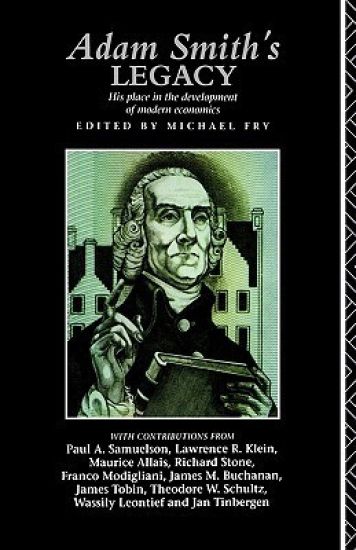
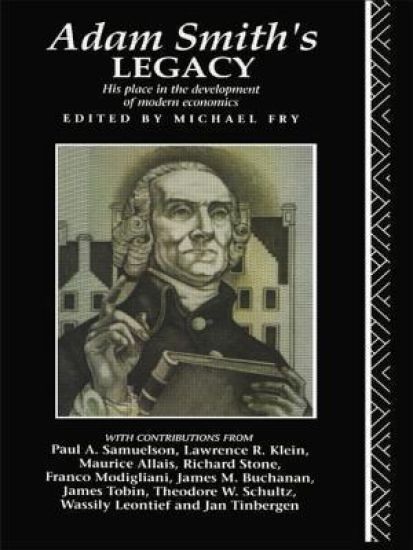
Adam Smith's Legacy
Although Adam Smith, the father of modern economics, died over two hundred years ago his presence is still felt in many areas of contemporary economics. In this volume some of the world's leading economists pay tribute to Smith's continuing importance. The contributors, including ten Nobel Laureates, consider themes as diverse as Smith's use of data, his attitude to human capital and his views on economic policy. Heirs to Smith as leaders of the discipline, they also reflect upon the current state of economics, assessing the extent to which it measures up to the benchmark established by its founder.
Adam Smith's Discourse

Adam Smith's Discourse

Vivienne Brown

Routledge
1994
sidottu
Adam Smith's name has become synonymous with free market economics; The Wealth of Nations is taken as the definitive account of the benefits of free competitive markets. Yet recent scholarship has challenged this view and given us a richer, more nuanced figure, steeped in the intricacies of enlightenment social and political philosophy. Adam Smith's Discourse both develops this literature and gives it a radical new extension by taking into account recent debates in literary theory.
Adam Smith
Adam Smith:Second Series completes the project of the earlier assessments by making available the many significant articles which have appeared subsequently. Providing immediate access to one of the world's greatest economics theorists.
Adam Smith's Discourse

Adam Smith's Discourse

Vivienne Brown

Routledge
1994
nidottu
Adam Smith's name has become synonymous with free market economics; The Wealth of Nations is taken as the definitive account of the benefits of free competitive markets. Yet recent scholarship has challenged this view and given us a richer, more nuanced figure, steeped in the intricacies of enlightenment social and political philosophy. Adam Smith's Discourse both develops this literature and gives it a radical new extension by taking into account recent debates in literary theory.
Adam Smith
This collection gathers together comments and reviews to all the works of Adam Smith, published and unpublished. All introductions to the later editions of his works, either in English or newly translated, are included as well as the editor's notes, where possible.
Adam Smith's Political Philosophy
When Adam Smith published his celebrated writings on economics and moral philosophy he famously referred to the operation of an 'invisible hand'. Adam Smith’s Political Philosophy makes visible this hand by examining its significance in Smith’s political philosophy and relating it to similar concepts used by other philosophers, thus revealing a distinctive approach to social theory that stresses the importance of the unintended consequences of human action.The first book to examine the history of Smith’s political philosophy from this perspective, this work introduces greater conceptual clarity to the discussion of the invisible hand and the related notion of unintended order in the work of Smith, as well as in political theory more generally. By examining the application of spontaneous order ideas in the work of Smith, Hume, Hayek and Popper, this important volume traces similarities in approach, and from these constructs a conceptual, composite model of an invisible hand argument. While setting out a clear framework of the idea of spontaneous order, the book also builds the case for using this as an explanatory social theory, with chapters on its application in the fields of science, moral philosophy, law and government.
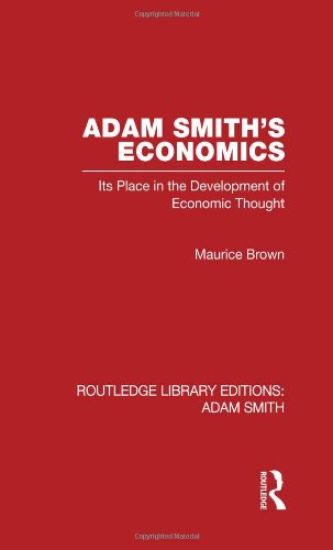
Adam Smith's Economics

Adam Smith's Economics

Maurice Brown

Routledge
2012
nidottu
The conventional received opinion of Adam Smith as an isolated figure, the founder of ‘modern’ economics, is thoroughly mistaken and misleading. This is the central premise of this book, first published in 1988, in which the author argues that by placing Smith’s work in its historical context, we discover profound continuities between Smith’s work and that of his predecessors, and his contemporaries. The effect is to re-orientate our perception of Smith and his achievement. No longer the single-handed champion of free markets and competition whose work revolutionised and completely redirected economics. He appears instead as a brilliant contributor to a deep-rooted contemporary debate, someone who can be placed in a line of thinkers that stretches between Machiavelli and Kant.
Adam Smith's Science of Morals

Adam Smith's Science of Morals

Tom Campbell

Routledge
2012
nidottu
This critical exposition of Adam Smith’s Theory of Moral Sentiments, first published in 1971, gives an appreciation of Smith’s conception of scientific method as applied to the study of social phenomena. The work is placed in the context of Smith’s other writings including of course The Wealth of Nations, but making special use of the theory of scientific development contained in his posthumous work, Essays on Philosophical Subjects.By concentrating on Smith’s methodological approach to the study of society, this book provides an illuminating interpretation of his moral theory and defends it against any mistaken criticisms. It also includes a much needed analysis of the important differences between Smith’s ‘impartial spectator’ and the ‘ideal observer’ of modern ethical society. The result is a pointed study, bringing out the close connection between his moral, legal and ethical theories, which will be welcomed by all students of 18th century thought, specialists in moral theory, and the interested lay-reader.
Adam Smith's Science of Morals

Adam Smith's Science of Morals

Tom Campbell

Routledge
2009
sidottu
This critical exposition of Adam Smith’s Theory of Moral Sentiments, first published in 1971, gives an appreciation of Smith’s conception of scientific method as applied to the study of social phenomena. The work is placed in the context of Smith’s other writings including of course The Wealth of Nations, but making special use of the theory of scientific development contained in his posthumous work, Essays on Philosophical Subjects.By concentrating on Smith’s methodological approach to the study of society, this book provides an illuminating interpretation of his moral theory and defends it against any mistaken criticisms. It also includes a much needed analysis of the important differences between Smith’s ‘impartial spectator’ and the ‘ideal observer’ of modern ethical society. The result is a pointed study, bringing out the close connection between his moral, legal and ethical theories, which will be welcomed by all students of 18th century thought, specialists in moral theory, and the interested lay-reader.
Adam Smith's Economics

Adam Smith's Economics

Maurice Brown

Routledge
2009
sidottu
The conventional received opinion of Adam Smith as an isolated figure, the founder of ‘modern’ economics, is thoroughly mistaken and misleading. This is the central premise of this book, first published in 1988, in which the author argues that by placing Smith’s work in its historical context, we discover profound continuities between Smith’s work and that of his predecessors, and his contemporaries. The effect is to re-orientate our perception of Smith and his achievement. No longer the single-handed champion of free markets and competition whose work revolutionised and completely redirected economics. He appears instead as a brilliant contributor to a deep-rooted contemporary debate, someone who can be placed in a line of thinkers that stretches between Machiavelli and Kant.
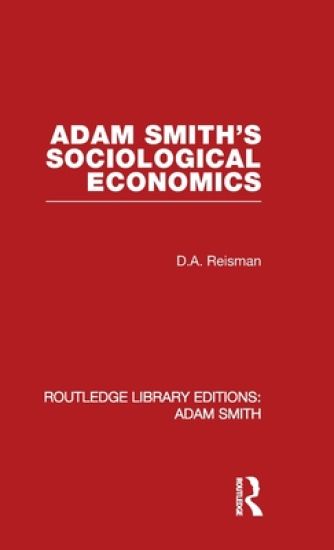
Adam Smith's Sociological Economics

Adam Smith's Sociological Economics

David Alexander Reisman

Routledge
2009
sidottu
First published in 1976, this book provides an interdiciplinary study fo the thoughts of Adam Smith, showing it particular how the link between economic basis and social superstructure was central to his work. The work is split into six sections, dividing Smith's views along the following lines: 'methology', 'conduct and character', 'consumer behaviour', 'the upper classes', 'the lower classes', and finally 'the State'.
Adam Smith

Adam Smith

R. H. Campbell; A. S. Skinner

Routledge
2009
sidottu
This reissued biography of Adam Smith, first published in 1982, presents both an intellectual and personal portrait of the man. It is not intended as a full-scale scholarly biography burdened with heavy footnotes. Although written by two of the world's foremost authorities on Adam Smith, the book is intended as an accessible study of a great thinker and philosopher which will help to introduce the reader to both his ideas and his period.
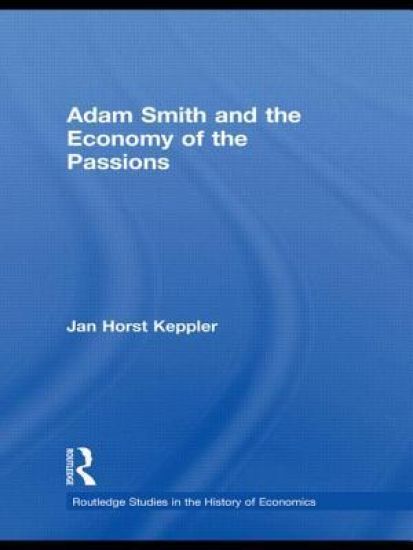
Adam Smith and the Economy of the Passions
The fertility of Adam Smith’s work stems from a paradoxical structure where the pursuit of economic self-interest and wealth accumulation serve wider social objectives. The incentive for this wealth accumulation comes from a desire for social recognition or "sympathy" – the need to recognise ourselves in our peers – which is the primary incentive for moderating and transforming our violent and egotistical passions. Adam Smith thus examines in detail the subliminal emotional structure underlying market behaviour. This new book by Professor Jan Horst Keppler presents an Adam Smith for the 21st century, more sceptical, searching and daring than he has ever been portrayed before. Without disputing the benefits of Adam Smith’s liberal economic system, Professor Keppler’s original contribution explores the anarchic passions constantly threatening to destroy all social bounds, and how the overarching "desire for love" and social recognition provides the Smithian individual with the incentive to transform his unsocial passions into a desire for social advancement and economic wealth with the view to gaining the vital approbation of his peers. One of the most striking results of this new reading of Adam Smith is the latter’s insistence on the primacy of exchange value over use value. In other words, the quest for wealth is exclusively driven by the value it represents in the eyes of others rather than by any value in individual use. At a moment of crisis, where the link between "true" economic values and "virtual" financial values is more fragile than ever, Adam Smith’s work is a profoundly contemporary reminder that in the absence of personal, ethical groundings our economic actions are only grounded in the game of mirrors we play with our peers. This book will be of interest to postgraduate students and researchers in the History of Economics, or indeed any reader with an interest in the psychological foundations of a market economy and its theoretical representations as developed by Adam Smith.
Adam Smith and the Economy of the Passions
The fertility of Adam Smith’s work stems from a paradoxical structure where the pursuit of economic self-interest and wealth accumulation serve wider social objectives. The incentive for this wealth accumulation comes from a desire for social recognition or "sympathy" – the need to recognise ourselves in our peers – which is the primary incentive for moderating and transforming our violent and egotistical passions. Adam Smith thus examines in detail the subliminal emotional structure underlying market behaviour. This new book by Professor Jan Horst Keppler presents an Adam Smith for the 21st century, more sceptical, searching and daring than he has ever been portrayed before. Without disputing the benefits of Adam Smith’s liberal economic system, Professor Keppler’s original contribution explores the anarchic passions constantly threatening to destroy all social bounds, and how the overarching "desire for love" and social recognition provides the Smithian individual with the incentive to transform his unsocial passions into a desire for social advancement and economic wealth with the view to gaining the vital approbation of his peers. One of the most striking results of this new reading of Adam Smith is the latter’s insistence on the primacy of exchange value over use value. In other words, the quest for wealth is exclusively driven by the value it represents in the eyes of others rather than by any value in individual use. At a moment of crisis, where the link between "true" economic values and "virtual" financial values is more fragile than ever, Adam Smith’s work is a profoundly contemporary reminder that in the absence of personal, ethical groundings our economic actions are only grounded in the game of mirrors we play with our peers. This book will be of interest to postgraduate students and researchers in the History of Economics, or indeed any reader with an interest in the psychological foundations of a market economy and its theoretical representations as developed by Adam Smith.
Adam Smith's Legacy
Although Adam Smith, the father of modern economics, died over two hundred years ago his presence is still felt in many areas of contemporary economics. In this volume some of the world's leading economists pay tribute to Smith's continuing importance. The contributors, including ten Nobel Laureates, consider themes as diverse as Smith's use of data, his attitude to human capital and his views on economic policy. Heirs to Smith as leaders of the discipline, they also reflect upon the current state of economics, assessing the extent to which it measures up to the benchmark established by its founder.
Adam Smith

Adam Smith

Samuel Fleischacker

Routledge
2021
nidottu
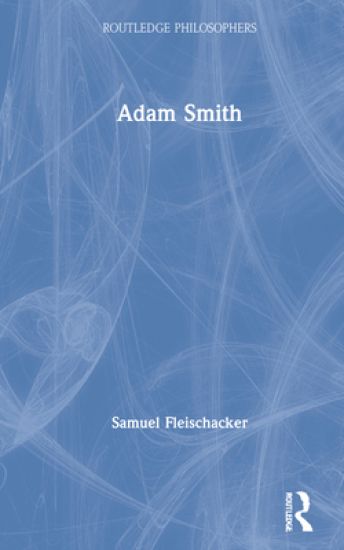
Adam Smith (1723–1790) is widely regarded as one of the great thinkers of the Enlightenment period. Best-known for his founding work of economics, The Wealth of Nations, Smith engaged equally with the nature of morality in his Theory of Moral Sentiments. He also gave lectures on literature and jurisprudence, and wrote papers on art and science. In this outstanding philosophical introduction Samuel Fleischacker argues that Smith is a superb example of the broadly curious thinkers who flourished in the Enlightenment—for whom morality, politics, law, and economics were just a few of the many fascinating subjects that could be illuminated by naturalistic modes of investigation.After a helpful overview of his life and work, Fleischacker examines the full range of Smith’s thought, on such subjects as: epistemology, philosophy of science, and aestheticsthe nature of sympathymoral approval and moral judgementvirtuereligionjustice and jurisprudencegovernmental policyeconomic principlesliberalism.Including chapter summaries, suggestions for further reading, and a glossary, Adam Smith is essential reading for those studying ethics, political philosophy, the history of philosophy, and the Enlightenment, as well as those reading Smith in related disciplines such as economics, law, and religion.
Adam Smith

Adam Smith

Samuel Fleischacker

Routledge
2021
sidottu
Adam Smith (1723–1790) is widely regarded as one of the great thinkers of the Enlightenment period. Best-known for his founding work of economics, The Wealth of Nations, Smith engaged equally with the nature of morality in his Theory of Moral Sentiments. He also gave lectures on literature and jurisprudence, and wrote papers on art and science. In this outstanding philosophical introduction Samuel Fleischacker argues that Smith is a superb example of the broadly curious thinkers who flourished in the Enlightenment—for whom morality, politics, law, and economics were just a few of the many fascinating subjects that could be illuminated by naturalistic modes of investigation.After a helpful overview of his life and work, Fleischacker examines the full range of Smith’s thought, on such subjects as: epistemology, philosophy of science, and aestheticsthe nature of sympathymoral approval and moral judgementvirtuereligionjustice and jurisprudencegovernmental policyeconomic principlesliberalism.Including chapter summaries, suggestions for further reading, and a glossary, Adam Smith is essential reading for those studying ethics, political philosophy, the history of philosophy, and the Enlightenment, as well as those reading Smith in related disciplines such as economics, law, and religion.
Adam Smith's Political Philosophy
When Adam Smith published his celebrated writings on economics and moral philosophy he famously referred to the operation of an 'invisible hand'. Adam Smith’s Political Philosophy makes visible this hand by examining its significance in Smith’s political philosophy and relating it to similar concepts used by other philosophers, thus revealing a distinctive approach to social theory that stresses the importance of the unintended consequences of human action.The first book to examine the history of Smith’s political philosophy from this perspective, this work introduces greater conceptual clarity to the discussion of the invisible hand and the related notion of unintended order in the work of Smith, as well as in political theory more generally. By examining the application of spontaneous order ideas in the work of Smith, Hume, Hayek and Popper, this important volume traces similarities in approach, and from these constructs a conceptual, composite model of an invisible hand argument. While setting out a clear framework of the idea of spontaneous order, the book also builds the case for using this as an explanatory social theory, with chapters on its application in the fields of science, moral philosophy, law and government.