Kirjojen hintavertailu. Mukana 11 342 296 kirjaa ja 12 kauppaa.

Kirjahaku

Etsi kirjoja tekijän nimen, kirjan nimen tai ISBN:n perusteella.

1000 tulosta hakusanalla Adrian Lysenko

Adrian Frutiger – Typefaces

Adrian Frutiger – Typefaces

Heidrun Osterer; Philipp Stamm

Birkhauser
2021
sidottu
The Swiss type designer Adrian Frutiger decisively influenced the international creation of typefaces after 1950. His Univers typeface and the machine-readable font OCR-B are milestones, as is his type for the Paris airports, which evolved into the Frutiger typeface. All set new standards for signage types. In all, he created some fifty types, including Ondine, Méridien, Avenir, and Vectora. Based on conversations with Frutiger himself and on extensive research, this publication provides a highly detailed and accurate account of the type designer’s artistic development. All of his types – from the design phase to the marketing stage – are illustrated and analyzed with reference to the technology and related types. Hitherto unpublished types that were never realized and more than one hundred logos complete the picture.
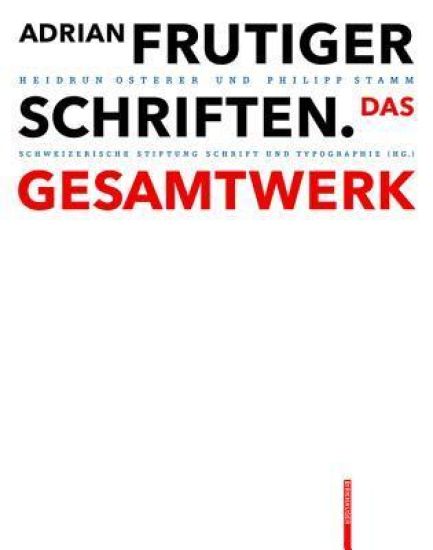
Adrian Frutiger – Schriften

Adrian Frutiger – Schriften

Heidrun Osterer; Philipp Stamm

Birkhauser
2014
sidottu
The international creation of typefaces after 1950 was decisively influenced by the Swiss type designer Adrian Frutiger. His Univers typeface and the machine-readable font OCR-B, which was adopted as an ISO standard, are milestones, as is his type for the Paris airports, which set new standards for signage types and evolved into the Frutiger typeface. With his corporate types, he helped to define the public profiles of companies such as the Japanese Shiseido line of cosmetics. In all he created some fifty types, including Ondine, Méridien, Avenir, and Vectora.Based on conversations with Frutiger himself and on extensive research in France, England, Germany, and Switzerland, this publication provides a highly detailed and accurate account of the type designer’s artistic development. All of his types – from the design phase to the marketing stage – are illustrated and analyzed with reference to the technology and related types. Hitherto unpublished types that were never realized and more than one hundred logos complete the picture.This second, revised and expanded study edition, which now has an index, makes Frutiger’s achievement even more accessible.
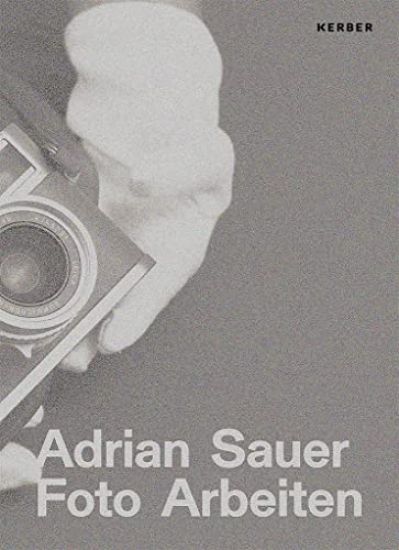
Adrian Sauer

Adrian Sauer

Kerber Verlag
2020
sidottu
Adrian Sauer (*1976) explores the nature of photography, occupying himself with the current state of the medium in pictures, self-written programs, texts, and installations. In his artistic work, he examines the functionality and pitfalls of photography and questions its big promise of being a reliable, objective reproduction of reality. His new book of works brings together “photo works” of the past ten years and simultaneously provides insights into the migration to digital photography and the new possibilities for showing and seeing that arise from it. Text in English and German.
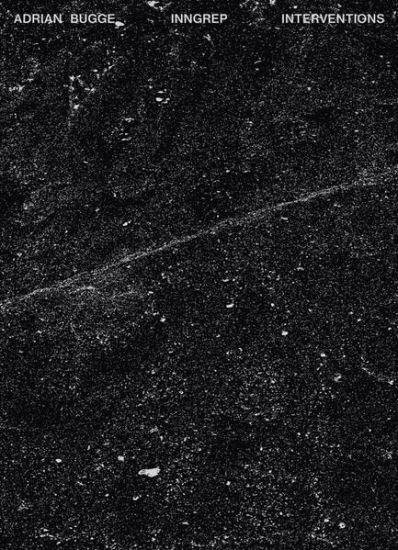
Adrian Bugge

Adrian Bugge

Kerber Verlag
2023
sidottu
Interventions is a photobook by Adrian Bugge (b. 1981) presenting 57 images of human intervention in Norwegian nature. Bugge has been taking photographs for 15 years, from Kirkenes in the far north of Norway to Oslo in the south. Along the way he has stumbled across interventions on a magnitude of which many in Norway are unaware. The book contains a foreword by Bugge with an account of the background to the project, and a research-oriented text by the geologist Henrik H. Svensen, who addresses the consequences of these interventions. Text in English and Norwegian.
Adrian Flemming

Adrian Flemming

Marinus Lester Cerdic

Books on Demand
2015
pokkari
Adrian Flemming ist mit all seinen St rken und seinen Schw chen ein bodenst ndiger Tr umer( ?) aus der Welt von heute. Adrian ger t mit seiner Gef hlswelt zwischen zwei Frauen und von keiner kann er seine Finger lassen. Seine Gef hle und Sehns chte lassen ihn bald durch ein Wechselbad der Sinne gehen. Mit seinen Antworten auf die vielen Fragen und Aufgaben strapaziert er aber oftmals die Standards von Anstand und Treue doch arg. Immer ist er auf der Suche nach "der" optimalen L sung. Einer L sung, die das Unm gliche m glich machen soll: Seine Gef hle, seine W nsche und der Hunger nach dem perfekten Leben sollen einen gemeinsamer Nenner finden, der Platz f r zwei Frauen bietet. Aber kann das gut gehen? Kann das gut ausgehen? Noch dazu, wenn Adrian Flemming in seinem t glichen Leben mit vielen "urm nnlichen" Unzul nglichkeiten zu k mpfen hat? Aber er will ja ein starker Mann sein. Die spannenden Geschehnisse um Adrian und seine Freunde sind eingebettet in eine Welt aus Fantasy, Mystik und Realit t. Die Hauptpersonen ver ndern teils freiwillig, immer wieder durch Zeitspr nge Zeit und Ort der Geschehnisse. Auch so wird der Weg der Gef hrten zu einem Sturm an Gef hlen und berraschungen.
Adrian Rome

Adrian Rome

Ernest Christopher Dowson; Arthur Collins Moore

Hansebooks
2017
pokkari
Adrian Rome is an unchanged, high-quality reprint of the original edition of 1899. Hansebooks is editor of the literature on different topic areas such as research and science, travel and expeditions, cooking and nutrition, medicine, and other genres. As a publisher we focus on the preservation of historical literature. Many works of historical writers and scientists are available today as antiques only. Hansebooks newly publishes these books and contributes to the preservation of literature which has become rare and historical knowledge for the future.
Adrian Frutiger – Caractères
The international creation of typefaces after 1950 was decisively influenced by the Swiss type designer Adrian Frutiger. His Univers typeface and the machine-readable font OCR-B, which was adopted as an ISO standard, are milestones, as is his type for the Paris airports, which set new standards for signage types and evolved into the Frutiger typeface. With his corporate types, he helped to define the public profiles of companies such as the Japanese Shiseido line of cosmetics. In all he created some fifty types, including Ondine, Méridien, Avenir, and Vectora.Based on conversations with Frutiger himself and on extensive research in France, England, Germany, and Switzerland, this publication provides a highly detailed and accurate account of the type designer’s artistic development. For the first time, all of his types – from the design phase to the marketing stage – are illustrated and analyzed with reference to the technology and related types. Hitherto unpublished types that were never realized and more than one hundred logos complete the picture.
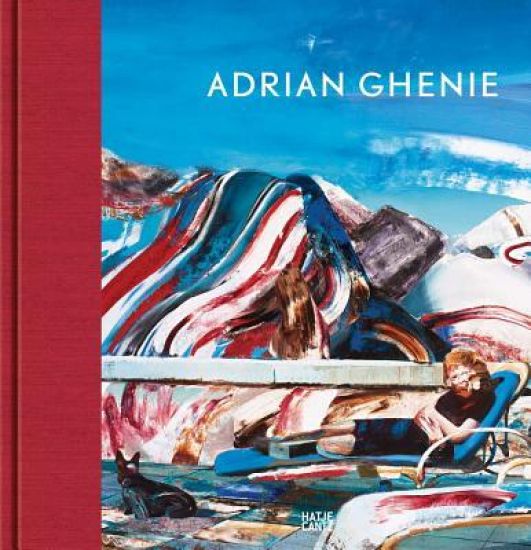
Adrian Ghenie

Adrian Ghenie

Hatje Cantz
2020
sidottu
At least since his spectacular exhibition in the Romanian Pavilion at the 56th Venice Biennale in 2015, Adrian Ghenie (*1977 in Baia Mare, Romania) has been known to the broad public as one of the most interesting and unconventional painters of his generation. His works—painted in oils that have been scratched, applied with a palette knife, orthrown onto the canvas—have already gained entry into the collections of the Metropolitan Museum of Art in New York, the Tate Modern in London, and the Centre Pompidou in Paris, and have achieved one auction record after another in the art market. Yet neither Ghenie’s subjects nor his technique cater to the taste of the public: the history of the “century of humiliation”—which is how Ghenie refers tothe twentieth century—its perpetrators and victims are the most important sources for his collage-like compositions. These subjects are joined by his positive heroes alike, such as Van Gogh and Darwin, and time after time, his self portrait.
Adrian Paci: Lost Communities

Adrian Paci: Lost Communities

Florian Steininger; Andreas Hopper

Hirmer Verlag
2020
sidottu
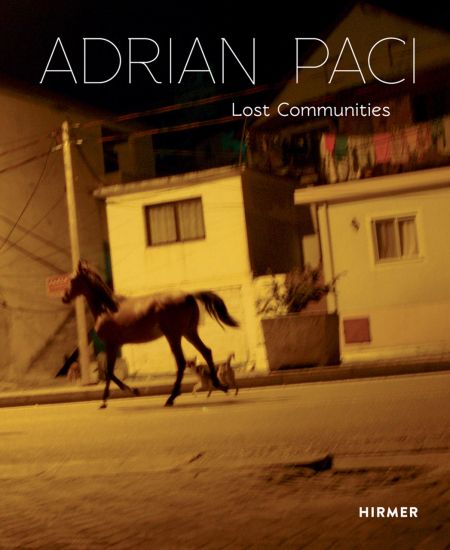
Emigration, being lost in a strange world, the search for a new identityand longing for things and people that have been lost form the central topics in the work of the Albanian artist Adrian Paci. The volume presents his iconic works which have earned him a world reputation. Adrian Paci emigrated from Albania to Italy with his family in the late 1990s. His own experience of flight, of giving up shared communities and his searching for a new identity have left their mark on his artistic work. Over the last 20 years expressive works have been created in the form of videos, photos, painting and sculptures which treat theseexistential experiences. The accompanying essays take up this politically topical subject and examine Paci’s oeuvre from various angles. An interview with the artist rounds out the volume.