

Kirjahaku
Etsi kirjoja tekijän nimen, kirjan nimen tai ISBN:n perusteella.
1000 tulosta hakusanalla Al Olinde
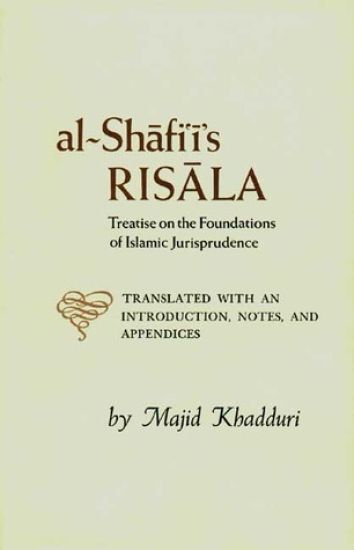
Written in the second Islamic century by al-Imam al-Shafi'i (d. 204AH/820AD), the founder of one of the four Sunni schools of law, this important work gives the fundamental principles of Islamic jurisprudence and its influence continues to the present day. During the early years of the spread of Islam, the exponents of Islamic legal doctrine were faced with the problems raised by ruling and administering a diverse and rapidly growing empire. In Medina and Kufa, as well as other cities of early Muslim rule, schools of law had to be developed, but it took the genius of Muhammad b. Idris al-Shafi'i, born in the year 150AH/767AD, to establish the principles by which the various legal doctrines could be synthesised into a coherent system. In the 'Risala', which laid down the basis for such a synthesis, al-Shafi'i established the overriding authority, next only to the Qur'an, of the 'Sunna' or example of the Prophet Muhammad as transmitted in the traditions.
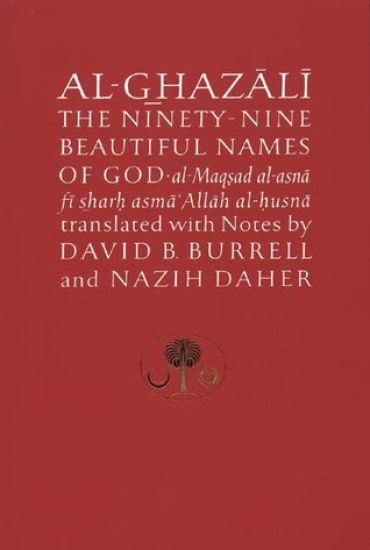
Al-Ghazali on the Ninety-nine Beautiful Names of God
Abu Hamid Al-Ghazali
The Islamic Texts Society
1992
nidottu
"Al-Ghazali on the Ninety-nine Beautiful Names of God" (al-Masad al-asna fi sharh asma'Allah al-husna) is based on the Prophet's teaching that `Ninety-nine Beautiful Names' are truly predicated of God. In this work, Abu Hamid al-Ghazali explores the meaning and resonance of each of these divine Names, and reveals the functions they perform both in the cosmos and in the soul of the spiritual adept. In addition, Ghazali explains how man's perfection and happiness consists in being moulded by the qualities of God. Although some of the book is rigorously analytical, the author never fails to attract the reader with his profound mystical and ethical insights, which has made this book one of the perennial classics of Muslim thought, popular among Muslims to this day.
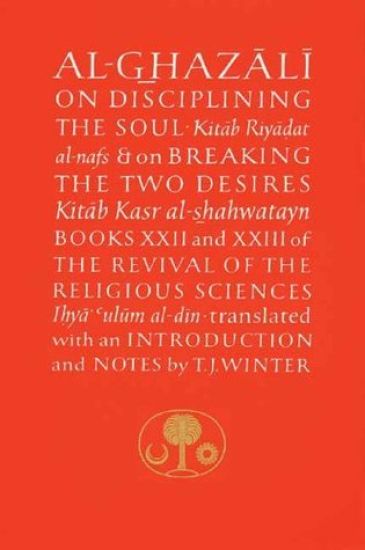
Al-Ghazali on Disciplining the Soul & on Breaking the Two Desires
Abu Hamid al-Ghazali
The Islamic Texts Society
1995
sidottu
The spiritual life in Islam begins with 'riyadat al-nafs,' the inner warfare against the ego. Distracted and polluted by worldliness, the lower self has a tendency to drag the human creature down into arrogance and vice. Only by a powerful effort of will can the sincere worshipper achieve the purity of soul which enables him to attain God's proximity. This translation of two chapters from "The Revival of the Religious Sciences" (Ihya' 'Ulum al-Din) details the sophisticated spiritual techniques adopted by classical Islam. In the first step, "On Disciplining the Soul," which cites copious anecdotes from the Islamic scriptures and biographies of the saints, Ghazali explains how to acquire good character traits, and goes on to describe how the sickness of the heart may be cured. In the second part, "Breaking the Two Desires," he focusses on the question of gluttony and sexual desire, concluding, in the words of the Prophet, that 'the best of all matters is the middle way'. The translator has added an introduction and notes which explore Ghazali's ability to make use of Greek as well as Islamic ethics.The work will prove of special interest to those interested in Sufi mysticism, comparative ethics, and the question of sexuality in Islam.

Imam Nawawi composed "al-Maqasid" as a synopsis of the practical requirements of Islam for students to memorise. The handbook's clear and concise style will help anyone seeking to learn the essentials of Islamic practice and spirituality from a reliable, traditional source.
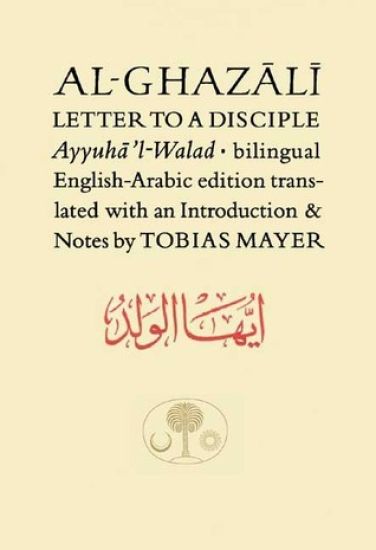
'Work for your terrestrial life in proportion to your location in it, and work for your afterlife in proportion to your eternity in it.' This is part of the advice that the great theologian and mystic Abu Hamid al-Ghazali (1058-1111 AD) put down in his Letter to a Disciple. An old disciple of al-Ghazali had studied the Islamic sciences, including the many works of his master, for most of his life. Faced with the proximity of death, he turns again to his master this time asking for a summary of all his teachings. Letter to a Disciple is al-Ghazali's response. The emphasis in this short treatise is on religious and spiritual action and on putting into practice the knowledge that one has acquired. Letter to a Disciple can be considered as the last testament of he who is regarded as Hujjat al-Islam, the 'Proof of Islam'. This new translation is presented here as a bilingual Arabic-English edition.
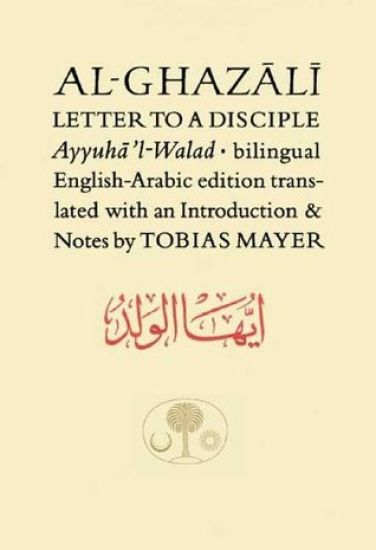
'Work for your terrestrial life in proportion to your location in it, and work for your afterlife in proportion to your eternity in it.' This is part of the advice that the great theologian and mystic Abu Hamid al-Ghazali (1058-1111 AD) put down in his 'Letter to a Disciple'. An old disciple of Ghazali had studied the Islamic sciences, including the many works of his master, for most of his life. Faced with the proximity of death, he turns again to his master this time asking for a summary of all his teachings. 'Letter to a Disciple' is Ghazali's response. The emphasis in this short treatise is on religious and spiritual action and on putting into practice the knowledge that one has acquired. 'Letter to a Disciple' can be considered as the last testament of he who is regarded as 'Hujjat al-Islam', the 'Proof of Islam'. This new translation is presented here as a bilingual, English-Arabic, edition.
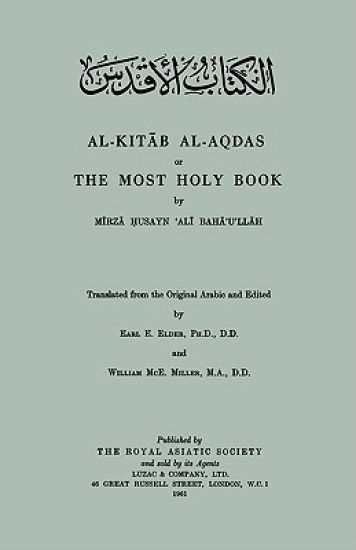
Al-Kitab Al-Aqdas or The Most Holy Book
E. Elder; Mirza Husayn; W. McE. Miller
RoutledgeCurzon
2002
nidottu
A translation and edits from Arabic of 'The Most Holy book', a sacred volume of the study Baha'ism. The translation relies on an edition published on Arabic in Baghdad, Iraq in 1931 as well as an autographed copy by Abdul Baha from 1899.


Elliott Landy's Jimi Hendrix: Favorite Photos with a story by Al Aronowitz
Al Aronowitz; Tommy Fuller; Elliott Landy
Landyvision
2020
nidottu
Elliott Landy's photographs of Jimi Hendrix, 1968




Al este del arco iris: Antología de Microrrelatistas Latinos
Latin Heritage Foundation
Latin Heritage Foundation
2011
nidottu

September 30, 2000, Netzarim Junction in the Gaza Strip. State-owned France 2 TV channel reports the shooting of a Palestinian youth, Mohamed Al Dura and the wounding of his father Jamal, "targets of gunfire from the Israeli position." Jerusalem bureau chief Charles Enderlin intones, "the child is dead, his father critically wounded." The accusation enflames the news stream, ignites a wave of Jew hatred unlike anything known since the Shoah. Blood libel. Israelis are branded as child-killers. A war of atrocities, the "Al Aqsa Intifada," is unleashed against Israeli civilians, Jews by the thousands are attacked in France and throughout Europe. Is the "death of Mohamed al Dura" a news broadcast? Or is it a staged scene, the creation of a myth, a lethal narrative launched in a war of conquest disguised as the pathetic cries of helpless victims. How did a crudely fabricated video leap into Western media from a Palestinian source and circulate without encountering a critical eye? Astute observers did in fact notice incongruities in the fleeting images of the alleged incident. They have investigated, analyzed, reported on their findings. But it takes something more than rational expos s to counter an explosive myth.
Al-Kafi, Volume 7 of 8: English Translation
Thiqatu Al Al-Kulayni
Islamic Seminary Incorporated
2015
nidottu

Al the Alpaca: Forever Friends
Creative Kids Unplugged
2014
nidottu
Al-Kafi, Volume 3 of 8: English Translation
Thiqatu Al Al-Kulayni
Islamic Seminary Incorporated
2015
nidottu

Al-Kafi, Volume 1 of 8: English Translation
Thiqatu Al Al-Kulayni
Islamic Seminary Incorporated
2015
nidottu