Kirjojen hintavertailu. Mukana 12 595 353 kirjaa ja 12 kauppaa.

Kirjahaku

Etsi kirjoja tekijän nimen, kirjan nimen tai ISBN:n perusteella.

1000 tulosta hakusanalla Alan D. Watson

Nineteenth-Century Philosophy

Nineteenth-Century Philosophy

Alan D. Schrift; Daniel Conway

Acumen Publishing Ltd
2013
sidottu
The second half of the 19th Century saw a revolution in both European politics and philosophy. Philosophical fervour reflected political fervour. Five great critics dominated the European intellectual scene: Ludwig Feuerbach, Karl Marx, Soren Kierkegaard, Fyodor Dostoevsky, and Friedrich Nietzsche. "Nineteenth-Century Philosophy" assesses the response of each of these leading figures to Hegelian philosophy - the dominant paradigm of the time - to the shifting political landscape of Europe and the United States, and also to the emerging critique of modernity itself. Both individually and collectively, these thinkers succeeded in revolutionizing theology, philosophy, psychology, and politics. The period also saw the emergence of new schools of thought and new disciplinary thinking. The volume covers the birth of sociology and the social sciences, the development of French spiritualism, the beginning of American pragmatism, the rise of science and mathematics, and the maturation of hermeneutics and phenomenology.

Poststructuralism and Critical Theory's Second Generation
"Poststructuralism and Critical Theory's Second Generation" analyses the major themes and developments in a period that brought continental philosophy to the forefront of scholarship in a variety of humanities and social science disciplines and that set the agenda for philosophical thought on the continent and elsewhere from the 1960s to the present. Focusing on the years 1960-1984, the volume examines the major figures associated with poststructuralism and the second generation of critical theory, the two dominant movements that emerged in the 1960s: Althusser, Foucault, Deleuze, Derrida, Lyotard, Irigaray, and Habermas. Influential thinkers such as Serres, Bourdieu, and Rorty, who are not easily placed in "standard" histories of the period, are also covered. Beyond this, thematic essays engage with issues as diverse as the Nietzschean legacy, the linguistic turn in continental thinking, the phenomenological inheritance of Gadamer and Ricoeur, the influence of psychoanalysis, the emergence of feminist thought and a philosophy of sexual difference, the renewal of the critical theory tradition, and the importation of continental philosophy into literary theory.
Nineteenth-Century Philosophy

Nineteenth-Century Philosophy

Alan D. Schrift; Daniel Conway

Acumen Publishing Ltd
2013
nidottu
The second half of the 19th Century saw a revolution in both European politics and philosophy. Philosophical fervour reflected political fervour. Five great critics dominated the European intellectual scene: Ludwig Feuerbach, Karl Marx, Soren Kierkegaard, Fyodor Dostoevsky, and Friedrich Nietzsche. "Nineteenth-Century Philosophy" assesses the response of each of these leading figures to Hegelian philosophy - the dominant paradigm of the time - to the shifting political landscape of Europe and the United States, and also to the emerging critique of modernity itself. Both individually and collectively, these thinkers succeeded in revolutionizing theology, philosophy, psychology, and politics. The period also saw the emergence of new schools of thought and new disciplinary thinking. The volume covers the birth of sociology and the social sciences, the development of French spiritualism, the beginning of American pragmatism, the rise of science and mathematics, and the maturation of hermeneutics and phenomenology.

Poststructuralism and Critical Theory's Second Generation
"Poststructuralism and Critical Theory's Second Generation" analyses the major themes and developments in a period that brought continental philosophy to the forefront of scholarship in a variety of humanities and social science disciplines and that set the agenda for philosophical thought on the continent and elsewhere from the 1960s to the present. Focusing on the years 1960-1984, the volume examines the major figures associated with poststructuralism and the second generation of critical theory, the two dominant movements that emerged in the 1960s: Althusser, Foucault, Deleuze, Derrida, Lyotard, Irigaray, and Habermas. Influential thinkers such as Serres, Bourdieu, and Rorty, who are not easily placed in "standard" histories of the period, are also covered. Beyond this, thematic essays engage with issues as diverse as the Nietzschean legacy, the linguistic turn in continental thinking, the phenomenological inheritance of Gadamer and Ricoeur, the influence of psychoanalysis, the emergence of feminist thought and a philosophy of sexual difference, the renewal of the critical theory tradition, and the importation of continental philosophy into literary theory.
Degrees Of Freedom: Living In Dynamic Boundaries

Degrees Of Freedom: Living In Dynamic Boundaries

Alan D M Rayner

Imperial College Press
1997
sidottu
Drawing especially on insights emerging from studies of the cellular networks formed by fungi, this book describes the fundamental indeterminacy that enables life forms to thrive in and create inconstant circumstances. It explains how indeterminacy arises from counteraction between associative and dissociative processes at the reactive interfaces between living systems and their surroundings. It stresses the relevance of these processes to understanding the dynamic contexts within which living systems of all kinds — including human societies-explore for, use up, conserve and recycle sources of energy.By focusing on dynamic boundaries, the book counterbalances the discretist view that living systems are assembled entirely from building-block-like units — individuals and genes — that can be freely sifted, as opposed to channeled, by natural selection. It also shows how the versatility that enables life forms to proliferate in rich environments, whilst minimizing losses in restrictive environments, depends on capacities for error and co-operation within a fluid, non-hierarchical power structure. Understanding this point yields a more compassionate, less competitive and less self-centred outlook on life's successes and failures.
Degrees Of Freedom: Living In Dynamic Boundaries

Degrees Of Freedom: Living In Dynamic Boundaries

Alan D M Rayner

Imperial College Press
1997
nidottu
Drawing especially on insights emerging from studies of the cellular networks formed by fungi, this book describes the fundamental indeterminacy that enables life forms to thrive in and create inconstant circumstances. It explains how indeterminacy arises from counteraction between associative and dissociative processes at the reactive interfaces between living systems and their surroundings. It stresses the relevance of these processes to understanding the dynamic contexts within which living systems of all kinds — including human societies-explore for, use up, conserve and recycle sources of energy.By focusing on dynamic boundaries, the book counterbalances the discretist view that living systems are assembled entirely from building-block-like units — individuals and genes — that can be freely sifted, as opposed to channeled, by natural selection. It also shows how the versatility that enables life forms to proliferate in rich environments, whilst minimizing losses in restrictive environments, depends on capacities for error and co-operation within a fluid, non-hierarchical power structure. Understanding this point yields a more compassionate, less competitive and less self-centred outlook on life's successes and failures.
Sarah's Journey

Sarah's Journey

Alan D Wolfelt

Companion Press,US
1992
pokkari
Based on the belief that children mourn in their own unique ways and need love and support of the adults who care for them, this book describes the grief experience of Sarah, an eight-year-old whose father was killed in a car accident, and offers compassionate, practical counsel for adults who want to help grieving children. Covered are common concerns such as normal behaviors in grieving kids, helping children with funerals, grieving kids at school, “misbehavior” in the grieving child, and helping children heal. Within each chapter, Sarah’s story is followed by a counselor’s perspective that offers practical do's and dont's.
Healing Your Grieving Heart for Teens

Healing Your Grieving Heart for Teens

Alan D Wolfelt

Companion Press,US
2001
pokkari
With sensitivity and insight, this series offers suggestions for healing activities that can help survivors learn to express their grief and mourn naturally. Acknowledging that death is a painful, ongoing part of life, they explain how people need to slow down, turn inward, embrace their feelings of loss, and seek and accept support when a loved one dies. Each book, geared for mourning adults, teens, or children, provides ideas and action-oriented tips that teach the basic principles of grief and healing. These ideas and activities are aimed at reducing the confusion, anxiety, and huge personal void so that the living can begin their lives again. Included in the books for teens and kids are age-appropriate activities that teach younger people that their thoughts are not only normal but necessary.
Healing a Friend's Grieving Heart

Healing a Friend's Grieving Heart

Alan D Wolfelt

Companion Press,US
2001
nidottu
A compassionate resource for friends, parents, relatives, teachers, volunteers, and caregivers, this series offers suggestions to help the grieving cope with the loss of a loved one. Often people do not know what to say—or what not to say—to someone they know who is mourning; this series teaches that the most important thing a person can do is listen, have compassion, be there for support, and do something helpful. This volume provides the fundamental principles of being a true companion, from committing to contact the friend regularly to being mindful of the anniversary of the death. Included in each book are tested, sensitive ideas for “carpe diem” actions that people can take right this minute—while still remaining supportive and honoring the mourner’s loss.
Healing a Child's Grieving Heart

Healing a Child's Grieving Heart

Alan D Wolfelt

Companion Press,US
2001
nidottu
A compassionate resource for friends, parents, relatives, teachers, volunteers, and caregivers, this series offers suggestions to help the grieving cope with the loss of a loved one. Often people do not know what to say—or what not to say—to someone they know who is mourning; this series teaches that the most important thing a person can do is listen, have compassion, be there for support, and do something helpful. This volume addresses what to expect from grieving young people, and how to provide safe outlets for children to express emotion. Included in each book are tested, sensitive ideas for “carpe diem” actions that people can take right this minute—while still remaining supportive and honoring the mourner’s loss.
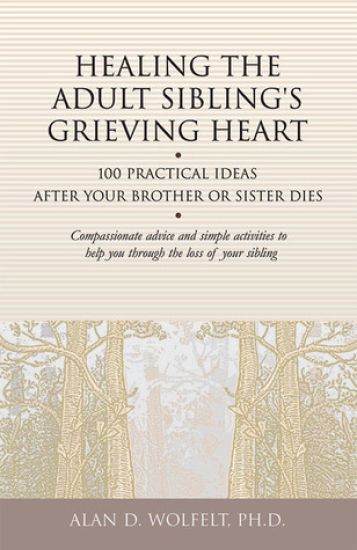
Healing the Adult Sibling's Grieving Heart

Healing the Adult Sibling's Grieving Heart

Alan D Wolfelt

Companion Press,US
2008
pokkari
Compassionate and heartfelt, this collection offers 100 practical ideas to help understand and accept the passing of a sibling in order to practice self-healing. The principles of grief and mourning are clearly defined, accompanied by action-oriented tips for embracing bereavement. Whether a sibling has died as a young or older adult or the death was sudden or anticipated, this resource provides a healthy approach to dealing with the aftermath.
Healing the Adult Child's Grieving Heart

Healing the Adult Child's Grieving Heart

Alan D Wolfelt

Companion Press,US
2002
pokkari
Offering heartfelt and simple advice, this book provides realistic suggestions and relief for an adult child whose parent has died. Practical advice is presented in a one-topic-per-page format that does not overwhelm with psychological language, but provides small, immediate ways to understand and reconcile grief. Some of the action-oriented tips include writing down memories, completing a task or goal left unfinished by your deceased parent, or honoring the parent's birthday. In addition the common challenges that face grieving adult children, such as helping the surviving parent, resolving sibling conflicts, and legal and financial issues, are addressed clearly and concisely.
Healing Your Traumatized Heart

Healing Your Traumatized Heart

Alan D Wolfelt

Companion Press,US
2002
pokkari
Dealing with grief in a practical manner, this guide offers compassionate tips for those affected by a traumatic death. Included are topics such as coping with family stress, expressing feelings of hurt and anger, dealing with hurtful comments, and exploring feelings of guilt. Each of the 100 suggestions is aimed at reducing the confusion, anxiety, and huge personal void in order to help survivors begin their lives again. Some of the tips include understanding the special characteristics of trauma grief, planting a tree in memory of the person who died, and making connections with others affected by a similar death.
The Healing Your Grieving Heart Journal for Teens

The Healing Your Grieving Heart Journal for Teens

Alan D Wolfelt

Companion Press,US
2002
pokkari
In light of how difficult it is just to survive the teenage years, the grieving process can be especially difficult and overwhelming for teenagers. This diary affirms the grieving teen's journey and offers gentle, healing guidance. In order to sort through their confusing feelings and thoughts, teens are prompted to explore simple, open-ended questions. Teens are encouraged to write what they miss about the person who died, the specific feelings that have been most difficult since the death, or the things they wish they had said to the person before they died.
When Your Pet Dies

When Your Pet Dies

Alan D Wolfelt

Companion Press,US
2004
nidottu
Affirming a pet owner's struggle with grief when his or her pet dies, this book helps mourners understand why their feelings are so strong and helps them overcome the loss. Included are practical suggestions for mourning and ideas for remembering and memorializing one's pet. Among the issues covered are understanding the many emotions experienced after the death of a pet; understanding why grief for pets is unique; pet funerals and burial or cremation; celebrating and remembering the life of one's pet; coping with feelings about euthanasia; helping children understand the death of their pet; and things to keep in mind before getting another pet.
Healing a Spouse's Grieving Heart

Healing a Spouse's Grieving Heart

Alan D Wolfelt

Companion Press,US
2003
pokkari
Helping widows and widowers to learn how to cope with the grief of losing their helpmate, their lover, and perhaps their financial provider, this guide shows them how to find continued meaning in life when doing so seems difficult. Bereaved spouses will find advice on when and how to dispose of their mate's belongings, dealing with their children, and redefining their role with friends and family. Suggestions are provided for elderly mourners, young widows and widowers, unmarried lovers, and same-sex partners. The information and comfort offered apply to individuals whose spouse died recently or long ago.
Companioning the Bereaved

Companioning the Bereaved

Alan D Wolfelt

Companion Press,US
2005
sidottu
Renowned author and educator Alan Wolfelt redefines the role of the grief counselor in this guide for caregivers. His new model for "companioning" the bereaved gives a viable alternative to the limitations of the medical establishment, encouraging counselors and other caregivers to aspire to a more compassionate philosophy. This approach argues that grief need no longer be defined, diagnosed, and treated as an illness but rather should be an acknowledgement of an event that forever changes a person's worldview. Through careful listening and observation, the caregiver learns to support mourners and help them help themselves heal.
Healing Grief at Work

Healing Grief at Work

Alan D Wolfelt

Companion Press,US
2005
pokkari
With a gentle and considerate style, this handbook explores what happens when grief and the workplace meet, and the drastic effects of grieving on employees, their performance, and the overall workplace environment. Touching on the different kinds of grief workers can experience, such as death, divorce, and layoffs, the effective ways to channel grief during the workday, how to support coworkers who mourn, participation in group memorials, and negotiating appropriate bereavement leave, this concise and practical resource gives both ideas for the mourner and the mourner's coworkers. A special introduction for employers, owners, managers, and human resource personnel addresses the economic impact of grief in the workplace and provides practical and cost effective ideas for maintaining morale and creating a productive yet compassionate work environment.
Healing Your Holiday Grief

Healing Your Holiday Grief

Alan D Wolfelt

Companion Press,US
2005
pokkari
With compassionate insight, this handbook helps those in mourning through what can be the hardest time of year—the holiday season. Mourners will better understand their complex emotions after reading about such topics as honoring thoughts and feelings, creating new traditions, finding ways to de-stress, and incorporating healing rituals into the holiday season. This book's practical wisdom also covers issues such as decision-making during the holidays and coping with the blending of mourning and celebration. All of the answers and advice in this guide are provided in the popular 100 ideas format that features one idea per page, allowing readers to fully absorb each suggestion.
Living in the Shadow of the Ghosts of Grief

Living in the Shadow of the Ghosts of Grief

Alan D Wolfelt

Companion Press,US
2007
pokkari
Are you depressed? Anxious? Angry? Do you have trouble with trust and intimacy? Do you feel a lack of meaning and purpose in your life? You may be living in the shadow of the ghosts of grief. When you suffer a loss of any kind—whether through abuse, divorce, job loss, the death of someone loved or other transitions, you naturally grieve inside. To heal your grief, you must express it. That is, you must mourn your grief. If you don't, you will carry your grief into your future, and it will undermine your happiness for the rest of your life. This compassionate guide from one of North America's most beloved grief educators will help you learn to identify and mourn your carried grief so you can go on to live the joyful, whole life you deserve. Embrace your grief and step into the light.