

Kirjahaku
Etsi kirjoja tekijän nimen, kirjan nimen tai ISBN:n perusteella.
1000 tulosta hakusanalla Alexandra Mattisson

Alexandra Feodorowna: Kaiserin von Russland
Antigonos Verlag
2025
sidottu

Alexandra Feodorowna: Kaiserin von Russland
Antigonos Verlag
2025
sidottu

Alexandra Bircken. SomaSemaSoma
König, Walther
2025
pokkari

Alexandra Kollontai Lyingigakami Vimochithayaya oru Communist Vanithayude Athmakadha oppam Thirenjedutha Rachanakalum
Arya Jinadevan Praseetha K
Chintha Publishers
2023
pokkari
Alexandra Kollontai Lyingigakami Vimochithayaya Oru Communist Vanithayude Athmakadha Oppam Thirenjedutha Rachanakalum by Dr. Praseetha K, Arya Jinadevan, published by Chintha Publishers, stands as a beacon of knowledge and inspiration. With its insightful content and engaging narrative style, this book transcends genres, offering something valuable for every reader.

Alexandra Kollontai zur Einführung: Kommunismus und sexuelle Befreiung
Ingar Solty
Brumaire Verlag GmbH
2026
pokkari

The Artists' Prison looks askance at the workings of personality and privilege, sexuality, authority, and artifice in the art world. Imagined through the heavily redacted testimony of the prison's warden, written by Alexandra Grant, and powerfully allusive images by Eve Wood, the prison is a brutal, Kafkaesque landscape where creativity can be a criminal offence and sentences range from the allegorical to the downright absurd. In The Artists' Prison, the act of creating becomes a strangely erotic condemnation, as well as a means of punishment and transformation. It is in these very transformations--sometimes dubious, sometimes oddly sentimental--that the book's critical edge is sharpest. In structural terms, The Artists' Prison represents a unique visual and literary intersection, in which Wood's drawings open spaces of potential meaning in Grant's text, and the text, in turn, acts as a framework in which the images can resonate and intensify in significance.

Alexandra Burke
OmniScriptum
2026
pokkari

Alexandra Knatchbull
VDM Publishing House
2010
nidottu
Observera att förlaget som ger ut denna produkt baserar innehållet i sina produkter på fria källor som Wikipedia. Boken är med stor sannolikhet endast ett utdrag ur dessa informationskällor, alltså inte en vanlig bok i den bemärkelsen.

Alexandra Gardens, Melbourne
VDM Publishing House
2010
nidottu
Observera att förlaget som ger ut denna produkt baserar innehållet i sina produkter på fria källor som Wikipedia. Boken är med stor sannolikhet endast ett utdrag ur dessa informationskällor, alltså inte en vanlig bok i den bemärkelsen.

Alexandra Du Bois
VDM Publishing House
2010
nidottu
Observera att förlaget som ger ut denna produkt baserar innehållet i sina produkter på fria källor som Wikipedia. Boken är med stor sannolikhet endast ett utdrag ur dessa informationskällor, alltså inte en vanlig bok i den bemärkelsen.

Alexandra Park, Manchester
OmniScriptum
2026
pokkari

Alexandra Daddario
OmniScriptum
2026
pokkari

Alexandra Feodorovna (Charlotte of Prussia)
OmniScriptum
2026
pokkari
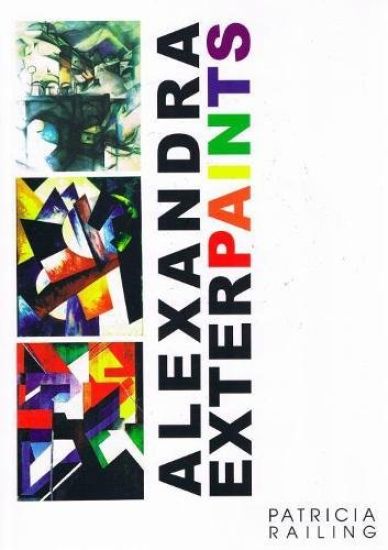
A collection of 16 essays on the artist’s painting and works for the theatre between 1910 and 1924. The essays explore the colour theories that gave rise to her abstract painting and the basic laws of structure that gave order to her Cubist, Simultaneist, Non-Objective painting and her stage and costume design. Contemporary accounts of her three plays, Famira Kifared, Salome, and Romeo and Juliet are included together with extracts from Alexander Tairov’s, Notes of a Director (1921). The book closes with a detailed and illustrated Chronology of Exter’s exhibitions and paintings.

Alexandra Bircken
Anna Grande; Florian Forestbild; Florian Waldvogel
Buchhandlung Walther Konig GmbH Co. KG. Abt. Verlag
2008
nidottu
Alexandra Bircken's sculptures and installations consist of knitted-together bits of wood, branches, stone, metal, dried plants and leather. Her interest in the preciousness and abjection of fashion and flower arrangement synthesizes a homely, therapeutic, arts-and-crafts aesthetic to create amuletlike objects that border on the spiritual, if not the occult.

Alexandra of Denmark
VDM Publishing House
2010
nidottu
Observera att förlaget som ger ut denna produkt baserar innehållet i sina produkter på fria källor som Wikipedia. Boken är med stor sannolikhet endast ett utdrag ur dessa informationskällor, alltså inte en vanlig bok i den bemärkelsen.

Alexandra Kollontai
OmniScriptum
2026
pokkari
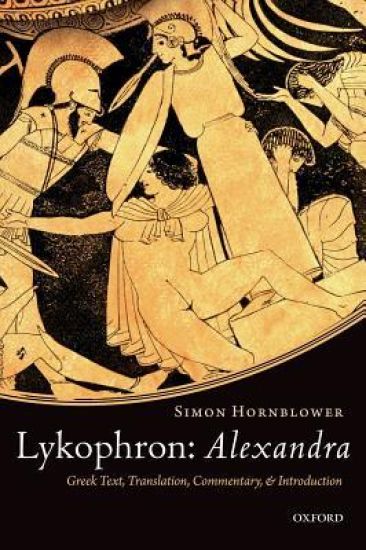
The Alexandra attributed to Lykophron is a minor poetic masterpiece. At 1474 lines, it is one of the most important and notoriously difficult Greek poems dating from the Hellenistic period (most likely the early second century BC). Most of the poem purports to be a prophecy by the mythical Trojan princess, Kassandra, the most beautiful of the daughters of King Priam, and her prophecy ranges from the Trojan War to the Roman defeat of Macedon in 197 BC, which took place in the poet's own time. The poem's importance arises from the light which it sheds on Greek religion (in particular the role of women), on foundation myths and myths of colonial identity, and on local - especially Italian - cults and cult places. The difficulty of the poem stems from its unusual vocabulary - many words of ancient Greek are found only in this poem - and the riddling and indirect way in which most of the many mythological characters are introduced. As well as providing the Greek text in full and its English translation, this volume provides the first ever full-length commentary in English on the poem.

Lykophron: Alexandra
Oxford University Press
2022
nidottu
Traditionally ascribed to the early third-century BCE tragedian Lykophron, the Alexandra is a powerful Greek poem by an unknown author, probably written c. 190, when Rome had defeated Hannibal and the Carthaginians and was poised to humble the Seleukid king Antiochos III. The poem is an ingeniously constructed masterpiece, a generic mix with elements of tragedy, epic, and history. Priam's beautiful daughter, the prophetic Kassandra, foresees her rape in Athena's temple by the hateful Greek warrior Ajax after Troy's fall, and warns of disastrous returns (nostoi) for all the Greek 'heroes'. But Troy will rise again as Rome, founded by Trojan refugees. Alexandra (another name for Kassandra), narrates these Mediterranean foundation myths, adopting a bitterly disillusioned female perspective, but culminating in prophecies of Roman rule over land and sea.