

Kirjahaku
Etsi kirjoja tekijän nimen, kirjan nimen tai ISBN:n perusteella.
1000 tulosta hakusanalla Amit Tevar



In Transmitted Wounds, Amit Pinchevski explores the ways media technology and logic shape the social life of trauma both clinically and culturally. Bringing media theory to bear on trauma theory, Pinchevski reveals the technical operations that inform the conception and experience of traumatic impact and memory. He offers a bold thesis about the deep association of media and trauma: media bear witness to the human failure to bear witness, making the traumatic technologically transmissible and reproducible. Taking up a number of case studies--the radio broadcasts of the Eichmann trial; the videotaping of Holocaust testimonies; recent psychiatric debates about trauma through media following the 9/11 attacks; current controversy surrounding drone operators' post-trauma; and digital platforms of algorithmic-holographic witnessing and virtual reality exposure therapy for PTSD--Pinchevski demonstrates how the technological mediation of trauma feeds into the traumatic condition itself. The result is a novel understanding of media as constituting the material conditions for trauma to appear as something that cannot be fully approached and yet somehow must be. While drawing on contemporary materialist media theory, especially the work of Friedrich Kittler and his followers, Pinchevski goes beyond the anti-humanistic tendency characterizing the materialist approach, discovering media as bearing out the human vulnerability epitomized in trauma, and finding therein a basis for moral concern in the face of violence and atrocity. Transmitted Wounds unfolds the ethical and political stakes involved in the technological transmission of mental wounds across clinical, literary, and cultural contexts.
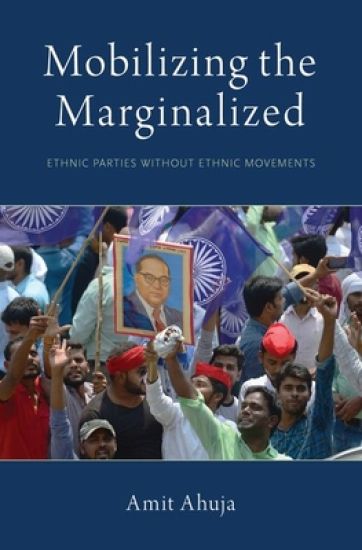
India's over 200 million Dalits, once called "untouchables," have been mobilized by social movements and political parties, but the outcomes of this mobilization are puzzling. Dalits' ethnic parties have performed poorly in elections in states where movements demanding social equality have been strong while they have succeeded in states where such movements have been entirely absent or weak. In Mobilizing the Marginalized, Amit Ahuja demonstrates that the collective action of marginalized groups--those that are historically stigmatized and disproportionately poor — is distinct. Drawing on extensive original research conducted across four of India's largest states, he shows, for the marginalized, social mobilization undermines the bloc voting their ethnic parties' rely on for electoral triumph and increases multi-ethnic political parties' competition for marginalized votes. He presents evidence showing that a marginalized group gains more from participating in a social movement and dividing support among parties than from voting as a bloc for an ethnic party.
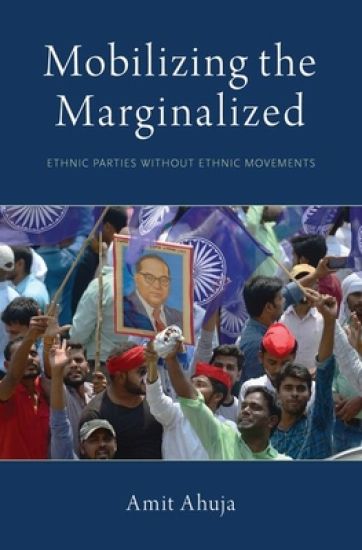
India's over 200 million Dalits, once called "untouchables," have been mobilized by social movements and political parties, but the outcomes of this mobilization are puzzling. Dalits' ethnic parties have performed poorly in elections in states where movements demanding social equality have been strong while they have succeeded in states where such movements have been entirely absent or weak. In Mobilizing the Marginalized, Amit Ahuja demonstrates that the collective action of marginalized groups--those that are historically stigmatized and disproportionately poor — is distinct. Drawing on extensive original research conducted across four of India's largest states, he shows, for the marginalized, social mobilization undermines the bloc voting their ethnic parties' rely on for electoral triumph and increases multi-ethnic political parties' competition for marginalized votes. He presents evidence showing that a marginalized group gains more from participating in a social movement and dividing support among parties than from voting as a bloc for an ethnic party.

Why are relations between minorities and the police in France so fraught? Stripping away the myth that this tension is a sudden and recent disruption of its universalist republican tradition brought on by the presence of North African immigrants, Amit Prakash locates the origins of contemporary conflicts in race and empire in France's history. In Empire on the Seine, Prakash argues that the métropole and the colony dynamically co-developed a policing regime over the course of the nineteenth and twentieth centuries to manage colonial and racial difference. With the North African community emerging as a sizable and durable presence in Paris after World War I, this policing became a key state practice in imagining and administering the immigrant population. Prakash shows that despite the French state's current reluctance to use race as an official category, racial thought and racial targets animated police services, social services, and urban planning schemes from the 1920s until the 1970s. Using police archival records, reports from colonial officials, urban planning and housing studies, and the records of French social workers and immigrant associations, Prakash shows that colonial racism was integrated into the policing of Paris and that architecture, urbanism, and social housing assumed police functions for colonial and postcolonial migrants. In light of this history, contemporary social and racial segregation, periodic protests and rioting against police violence, and the aggressive posture of the Parisian police emerge as the material traces of French colonialism in the métropole. The city of Paris was the capital of an empire and its imperial shadows are long.

In Transmitted Wounds, Amit Pinchevski explores the ways media technology and logic shape the social life of trauma both clinically and culturally. Bringing media theory to bear on trauma theory, Pinchevski reveals the technical operations that inform the conception and experience of traumatic impact and memory. He offers a bold thesis about the deep association of media and trauma: media bear witness to the human failure to bear witness, making the traumatic technologically transmissible and reproducible. Taking up a number of case studies--the radio broadcasts of the Eichmann trial; the videotaping of Holocaust testimonies; recent psychiatric debates about trauma through media following the 9/11 attacks; current controversy surrounding drone operators' post-trauma; and digital platforms of algorithmic-holographic witnessing and virtual reality exposure therapy for PTSD--Pinchevski demonstrates how the technological mediation of trauma feeds into the traumatic condition itself. The result is a novel understanding of media as constituting the material conditions for trauma to appear as something that cannot be fully approached and yet somehow must be. While drawing on contemporary materialist media theory, especially the work of Friedrich Kittler and his followers, Pinchevski goes beyond the anti-humanistic tendency characterizing the materialist approach, discovering media as bearing out the human vulnerability epitomized in trauma, and finding therein a basis for moral concern in the face of violence and atrocity. Transmitted Wounds unfolds the ethical and political stakes involved in the technological transmission of mental wounds across clinical, literary, and cultural contexts.

'Strategic thinking for a writer articulates itself as dislike and as allegiance.' In this wonderfully rich and diverse collection of essays, Amit Chaudhuri explores the way in which writers understand and promote their own work in antithesis to writers and movements that have gone before. Chaudhuri's criticism disproves and questions several assumptions—that a serious and original artist cannot think critically in a way that matters; that criticism can't be imaginative, and creative work contain radical argumentation; that a writer reflecting on their own position and practice cannot be more than a testimony of their work, but open up how we think of literary history and reading. Illuminating new ways of thinking about Western and non-Western traditions, prejudices, and preconceptions, Chaudhuri shows us again that he takes nothing as a given: literary tradition, the prevalent definitions of writing and culture; and the way the market determines the way culture and language express themselves. He asks us to look again at what we mean by the modern, and how it might be possible to think of the literary today.
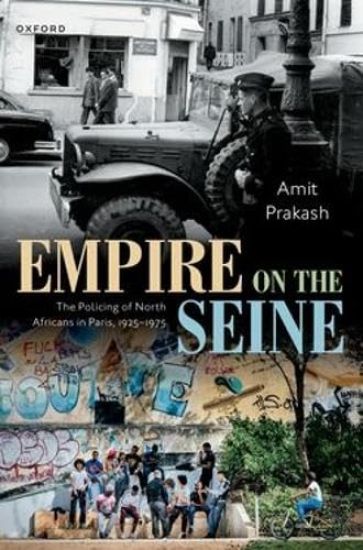
Why are relations between minorities and the police in France so fraught? Stripping away the myth that this tension is a sudden and recent disruption of its universalist republican tradition brought on by the presence of North African immigrants, Amit Prakash locates the origins of contemporary conflicts in race and empire in France's history. In Empire on the Seine, Prakash argues that the métropole and the colony dynamically co-developed a policing regime over the course of the nineteenth and twentieth centuries to manage colonial and racial difference. With the North African community emerging as a sizable and durable presence in Paris after World War I, this policing became a key state practice in imagining and administering the immigrant population. Prakash shows that despite the French state's current reluctance to use race as an official category, racial thought and racial targets animated police services, social services, and urban planning schemes from the 1920s until the 1970s. Using police archival records, reports from colonial officials, urban planning and housing studies, and the records of French social workers and immigrant associations, Prakash shows that colonial racism was integrated into the policing of Paris and that architecture, urbanism, and social housing assumed police functions for colonial and postcolonial migrants. In light of this history, contemporary social and racial segregation, periodic protests and rioting against police violence, and the aggressive posture of the Parisian police emerge as the material traces of French colonialism in the métropole. The city of Paris was the capital of an empire and its imperial shadows are long.

This important study from the prizewinning novelist and critic Amit Chaudhuri explores D. H. Lawrence's position as a 'foreigner' in the English canon. Focusing on the poetry, Chaudhuri examines how Lawrence's works, and Lawrence himself, have been read, and misread, in terms of their 'difference.' In contrast to the Leavisite project of placing Lawrence in the English 'great tradition,' this study demonstrates how Lawrence's writing brings into question the notion of 'Englishness' itself. It also shows how Lawrence's aesthetic sets him apart radically from both his Modernist contemporaries and his Romantic forbears. The starting-point of this enquiry into Lawrentian 'difference' is, for the purposes of this study, the poetry, its stylistic features, the ways in which it has been read, and, importantly, involves a search for a critical language by which it, and its 'difference', might be addressed. In doing so, it takes recourse to Jacques Derrida's notions of 'grammatalogy' and 'ecriture', and Michel Foucault's notion of 'discourse'. Referring to Lawrence's travel writings about Mexico and Italy, his essays on European and Etruscan art, on Mexican marketplaces and rituals, and American literature, and especially to his poetic manifesto, 'The Poetry of the Present,' this book shows how Lawrence was working towards both a theory and a practice that critique the post-Enlightenment unitary European self. Chaudhuri also, radically, allows his own post-colonial identity to inform his reading of the poetry, and to let the poems enter into a conversation with that identity. This is the first time that Lawrence's poetry has been discussed in this way, in the light of post-colonial and post-structuralist theory; it is also the first time a leading post-colonial writer of his generation has taken as his subject a major canonical English writer, and, through him, remapped the English canon as a site of 'difference.'

Business is political. What are the ethics of it? Businesses are political actors. They not only fund political campaigns, take stances on social issues, and wave the flags of identity groups – they also affect politics in their everyday hiring and investment decisions. As a highly polarized public demands political alignment from the powerful businesses they deal with, what’s a company to do? Amit Ron and Abraham Singer show that the unavoidably political role of companies in modern life is both the fundamental problem and inescapable fact of business ethics: corporate power makes business ethics necessary, and business ethics must strive to mitigate corporate power. Because of its economic and social influence, Ron and Singer forcefully argue that modern business’s primary social responsibility is to democracy. Businesses must work to avoid wielding their power in ways that undermine key democratic practices like elections, public debate, and social movements. Pragmatic and urgent, Everyone’s Business offers an essential new framework for how we pursue profit—and democracy—in our increasingly divided world.

Business is political. What are the ethics of it? Businesses are political actors. They not only fund political campaigns, take stances on social issues, and wave the flags of identity groups – they also affect politics in their everyday hiring and investment decisions. As a highly polarized public demands political alignment from the powerful businesses they deal with, what’s a company to do? Amit Ron and Abraham Singer show that the unavoidably political role of companies in modern life is both the fundamental problem and inescapable fact of business ethics: corporate power makes business ethics necessary, and business ethics must strive to mitigate corporate power. Because of its economic and social influence, Ron and Singer forcefully argue that modern business’s primary social responsibility is to democracy. Businesses must work to avoid wielding their power in ways that undermine key democratic practices like elections, public debate, and social movements. Pragmatic and urgent, Everyone’s Business offers an essential new framework for how we pursue profit—and democracy—in our increasingly divided world.

When an investor believes a stock is overvalued and will soon drop in price, he might decide to "short" it. First, he borrows an amount of the stock, and then sells it. He waits for the stock to tank before buying back the same amount of shares at a deflated price. After returning the shares to his lender, he pockets the difference-unless any one of several hard-to-predict variables interferes, and the stock fails to drop. Since these variables are so hard to predict, short selling is difficult for even seasoned investors. It takes great talent and experience to isolate the best short ideas for falling stocks-skills Amit Kumar developed and honed over decades of market analysis and trading. This book shares his short-selling framework, built on themes common to falling stocks and the market's endemic strengths and cycles. Featuring key case studies and exclusive interviews with successful fund managers Bill Ackman (Pershing Square Capital Management) and Mark Roberts (Off Wall Street Consulting Group), Kumar shows investors how to avoid traps and profit from well-researched short ideas. Investors may not always act on short ideas, but they can avoid losses by using Kumar's framework to identify overvalued stocks. Professionals and amateur investors alike will benefit from this fundamental research approach, which transforms short selling into a long-term strategy.

The result of years of critical analysis of Israeli media law, this book argues that the laws governing Israeli electronic media are structured to limit the boundaries of public discourse. Amit M. Schejter posits the theory of a "mute democracy," one in which the media are designed to provide a platform for some voices to be heard over others. While Israel's institutions may be democratic, and while the effect of these policies may be limited, this book contends that free speech in Israel is institutionally muted to ensure the continued domination of the Jewish majority and its preferred interpretation of what Israel means as a Jewish-democratic state. Analyzing a wide range of legal documents recorded in Israel from 1961 to 2007, Muting Israeli Democracy demonstrates in scrupulous detail how law and policy are used to promote the hegemonic national culture through the constraints and obligations set on electronic media.

A study of science and technology practices that shows how even emergent aspects of research and development remain entangled with established hierarchies.In the last four decades, during which magnetic resonance imaging (MRI) has emerged as a cutting-edge medical technology and a cultural icon, technoscientific imaginaries and practices have undergone a profound change across the globe. Shifting transnational geography of tecchnoscientific innovations is making commonly deployed Euro/West-centric divides such as west versus non-west or "innovating north" versus "non-innovating south" increasingly untenable-the world is indeed becoming flatter. Nevertheless, such dualist divides, which are intimately tied to other dualist categories that have been used to describe scientific knowledge and practice, continue to undergird analyses and imaginaries of transnational technoscience. Imperial Technoscience puts into broad relief the ambivalent and contradictory folding of Euro/west-centrism with emergent features of technoscience. It argues, Euro/West-centric historicism, and resulting over-determinations, not only hide the vibrant, albeit hierarchical, transnational histories of technoscience, but also tell us little about shifting geography of technoscientific innovations. The book utilizes a deconstructive-empirical approach to explore "entangled" histories of MRI across disciplines (physics, chemistry, medicine, etc.), institutions (university, hospitals, industry, etc.), and nations (United States, Britain, and India). Entangled histories of MRI, it shows, better explain emergence and consolidation of particular technoscientific trajectories and shifts in transnational geography of science and technology (e.g. centers and peripheries).
The definitive book on leadership in the digital era: why digital technologies call for leadership that emphasizes creativity, collaboration, and inclusivity.Certain ideas about business leadership are held to be timeless, and certain characteristics of leaders-often including a square jaw, a deep voice, and extroversion-are said to be universal. In Leading in the Digital World, Amit Mukherjee argues that since digital technologies are changing everything else, how could they not change leadership ideologies and styles? As more people worldwide participate equally in business, those assumptions of a leader's ideal profile have become irrelevant. Offering a radical rethinking of leadership, Mukherjee shows why digital technologies call for a new kind of leader-one who emphasizes creativity, collaboration, and inclusivity.Drawing on a global survey of 700 mid-tier to senior executives and interviews with C-level executives from around the world, Mukherjee explains how digital technologies are already reshaping organizations and work and what this means for leaders. For example, globally dispersed businesses can't reserve key leadership roles for people from exclusive groups; leadership must become inclusive, or fail. Leaders must learn to collaborate in a multipolar world of networked organizations, working with co-located and non-co-located colleagues. Leaders must lead for creativity rather than productivity. Focusing on practice, Mukherjee outlines goals and strategies, warns against unthinking assumptions, and explains how leaders can identify the mindsets, behaviors, and actions they need to pursue. With Leading in the Digital World, Mukherjee offers the definitive book on leadership for the digital era.


In the new world disorder, U.S. forces and military doctrine are being reconfigured to deal with the threat posed by regional powers. This change in military doctrine has resulted from the perceived intentions of various regional powers to build advanced conventional weapons and weapons of mass destruction. Gupta argues that such a strategy is a response to the announced or supposed intentions of regional powers rather than to their actual capabilities. He follows the pathologies of the Cold War where the Soviet Union's military intentions were countered without taking into account its actual military capability. The result was an escalating arms race. In the post-Cold War context, continuing such Cold War pathologies not only sustains high defense spending but also leads to losing opportunities for co-opting regional powers into institutional mechanisms for creating a more peaceful and stable international system. In order to study the gap between intentions and capabilities, Gupta carries out an in-depth analysis of the weapons acquisition process in India, Israel, and Brazil. He then uses his analyses of regional power military capability to examine the sort of role that this class of countries can play in the emerging international system.

This book is designed as a textbook for students who need to fulfil their science requirements. Part I explores classical physics from its beginnings with Descartes, Galileo, Kepler, and Newton, to the relativity theories of Einstein. Special emphasis is given to the development of the objective, materialist, and deterministic worldview of classical physics. The influence of Newtonian physics on other fields of science and on society is emphasized. Finally, some of the problems with the worldview of classical physics are discussed and a preview of quantum physics is given.